Harper Lewis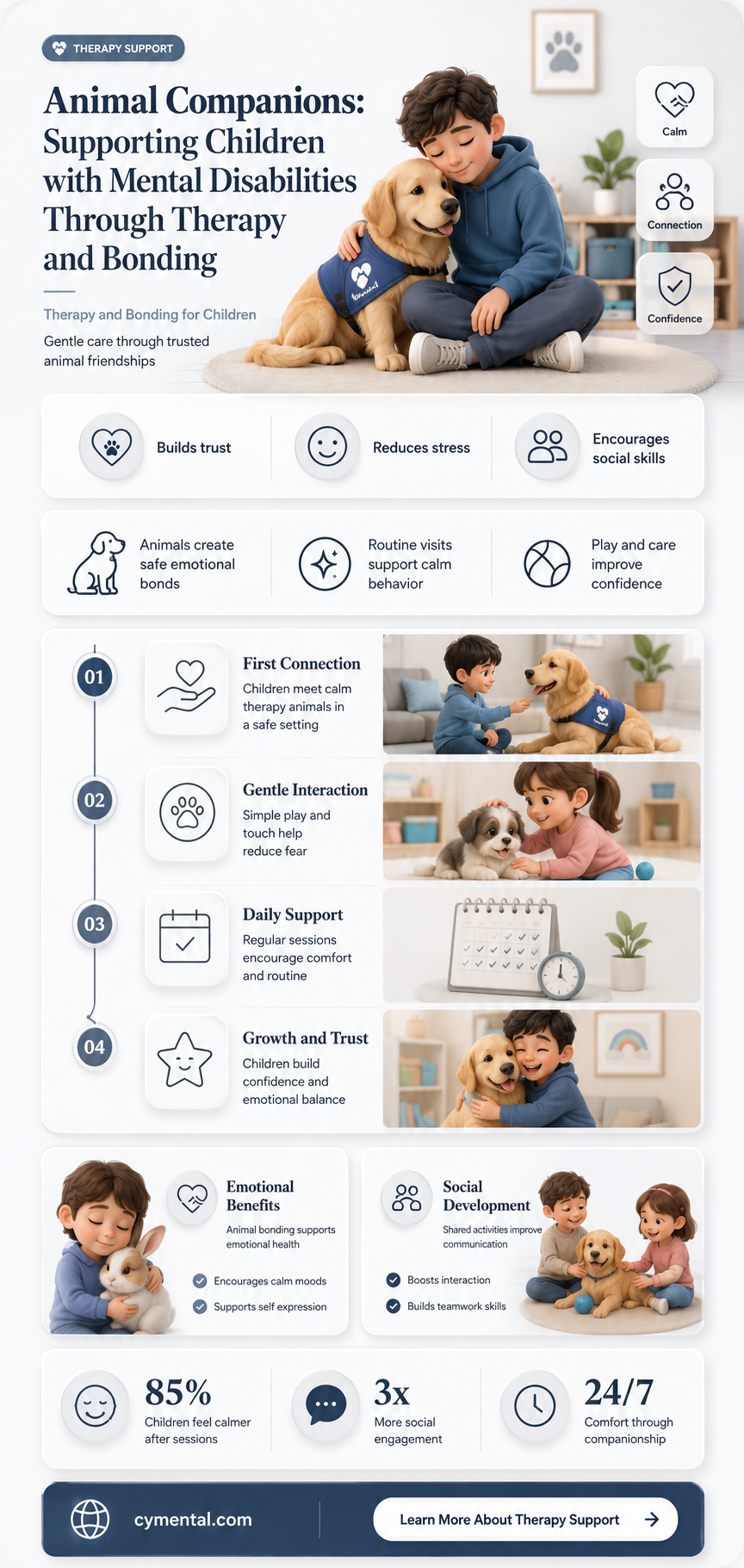
Animals have long been recognized as powerful allies in supporting children with mental disabilities, offering unique benefits that complement traditional therapies. Through animal-assisted interventions, such as therapy dogs, horses, or even smaller pets like rabbits, children can experience improved emotional regulation, reduced anxiety, and enhanced social skills. The non-judgmental and unconditional nature of animals fosters a sense of safety and trust, encouraging children to engage more openly and confidently. For instance, equine therapy helps children with autism develop focus and communication, while interactions with dogs can boost self-esteem and reduce stress. Beyond emotional support, animals also provide sensory stimulation and structured routines, which are particularly beneficial for children with conditions like ADHD or sensory processing disorders. By creating a nurturing and interactive environment, animals play a vital role in promoting mental well-being and personal growth for these children.
Explore related products


$13.79 $15.49

$65.7 $74.95


What You'll Learn
- Emotional Support Animals: Provide comfort, reduce anxiety, and foster emotional stability for children with mental disabilities
- Therapy Animals in Schools: Enhance focus, social skills, and classroom participation through animal-assisted interventions
- Sensory Integration with Pets: Animals help regulate sensory processing, improving calmness and responsiveness in children
- Building Confidence through Care: Caring for animals teaches responsibility and boosts self-esteem in disabled children
- Animal-Assisted Play Therapy: Encourages communication, creativity, and emotional expression in therapeutic play sessions

Emotional Support Animals: Provide comfort, reduce anxiety, and foster emotional stability for children with mental disabilities
Children with mental disabilities often face unique emotional challenges that can be alleviated through the presence of emotional support animals (ESAs). These animals, typically dogs or cats, are specifically trained or naturally inclined to provide comfort and companionship. Unlike service animals, ESAs do not perform specific tasks but instead offer consistent emotional reassurance, which can be particularly beneficial for children experiencing anxiety, depression, or sensory processing disorders. Research shows that interaction with ESAs can lower cortisol levels, the hormone associated with stress, while increasing oxytocin, which promotes feelings of trust and bonding. This physiological response underscores the profound impact ESAs can have on a child’s emotional well-being.
Incorporating an ESA into a child’s daily routine requires careful consideration of the child’s specific needs and the animal’s temperament. For instance, a calm, gentle dog may be ideal for a child with autism who struggles with sensory overload, while a playful cat could engage a child with ADHD in a soothing, repetitive activity. Parents and caregivers should consult with therapists or animal behaviorists to match the child with the most suitable animal. Additionally, establishing a structured schedule for interaction—such as 30 minutes of cuddling or playtime before bedtime—can maximize the therapeutic benefits. Consistency is key, as the predictable presence of the animal helps foster a sense of security and stability.
One of the most compelling aspects of ESAs is their ability to act as nonjudgmental companions, which can be particularly comforting for children who struggle with social interactions or self-esteem issues. For example, a child with social anxiety may find it easier to express their emotions to a pet than to a person. This dynamic not only reduces feelings of isolation but also encourages emotional expression in a safe environment. Over time, this can translate into improved communication skills with humans, as the child learns to articulate their feelings through their interactions with the animal.
However, it’s essential to approach the integration of ESAs with realistic expectations and practical considerations. Not all children will respond equally to animal companionship, and some may require additional therapeutic interventions. Parents should monitor the child’s progress and adjust the ESA’s role as needed. Financial and logistical factors, such as veterinary care and living arrangements, must also be taken into account. Despite these challenges, when implemented thoughtfully, ESAs can be a transformative tool in supporting the emotional development of children with mental disabilities.
Boost Mental Health, Shed Pounds: The Mind-Body Weight Loss Connection
You may want to see also
Explore related products


Therapy Animals in Schools: Enhance focus, social skills, and classroom participation through animal-assisted interventions
Children with mental disabilities often face challenges in maintaining focus, engaging socially, and participating actively in classroom activities. Therapy animals, when integrated into school environments, offer a unique and effective solution to these issues. Animal-assisted interventions (AAI) leverage the calming presence and non-judgmental nature of animals to create a supportive learning atmosphere. For instance, a study published in the *Journal of Alternative and Complementary Medicine* found that students with ADHD showed significant improvements in attention and task completion when working alongside therapy dogs during lessons. This approach not only addresses immediate behavioral concerns but also fosters long-term emotional and cognitive development.
Implementing therapy animals in schools requires careful planning to maximize benefits. Start by identifying the specific needs of the students—whether it’s improving focus, reducing anxiety, or enhancing social interactions. For younger children (ages 5–10), short, structured sessions with a therapy dog or rabbit can be particularly effective. For example, a 15-minute reading session with a therapy animal can encourage reluctant readers to engage more confidently. Older students (ages 11–18) may benefit from longer, goal-oriented activities, such as group discussions facilitated by the presence of a calm animal like a guinea pig or cat. Consistency is key; regular interactions, ideally 2–3 times per week, yield the best results.
One of the most compelling aspects of therapy animals in schools is their ability to bridge social gaps. Children with autism spectrum disorder (ASD), for instance, often struggle with peer interactions. Therapy animals act as social catalysts, encouraging students to communicate and collaborate. A practical tip is to pair students in small groups for animal-care tasks, such as grooming or feeding, which promotes teamwork and shared responsibility. Teachers should also model appropriate behavior around the animals, emphasizing kindness and respect, to reinforce positive social norms.
While the benefits are clear, schools must navigate potential challenges. Allergies, fear of animals, and classroom disruptions are valid concerns. To mitigate these, schools should conduct thorough assessments before introducing therapy animals. For example, hypoallergenic breeds like poodles or hairless guinea pigs can be used for allergy-prone students. Additionally, creating a designated "animal zone" within the classroom ensures that activities remain structured and non-disruptive. Training both staff and students on how to interact safely with the animals is essential for a successful program.
In conclusion, therapy animals in schools are a powerful tool for enhancing focus, social skills, and classroom participation among children with mental disabilities. By tailoring interventions to specific age groups, maintaining consistency, and addressing practical challenges, schools can create an inclusive and supportive learning environment. The bond between a child and a therapy animal not only improves academic outcomes but also nurtures emotional resilience and confidence, making it a valuable addition to special education programs.
School Shooters and Mental Health: Addressing the Crisis and Seeking Solutions
You may want to see also
Explore related products


Sensory Integration with Pets: Animals help regulate sensory processing, improving calmness and responsiveness in children
Children with sensory processing difficulties often struggle with overwhelming stimuli, leading to meltdowns, withdrawal, or hyperactivity. Pets, particularly dogs and horses, act as natural regulators in these situations. For instance, a therapy dog’s steady presence can ground a child during a sensory overload episode. The dog’s rhythmic breathing, consistent body warmth, and gentle movements provide predictable sensory input, helping the child refocus and self-soothe. This is not merely anecdotal; studies show that interaction with animals reduces cortisol levels in children, promoting a calmer physiological state. For optimal results, sessions should last 20–30 minutes, 2–3 times per week, tailored to the child’s tolerance and the animal’s energy level.
Consider the mechanics of sensory integration through pet interaction. A child brushing a cat’s fur engages their tactile system in a controlled, repetitive manner, which can desensitize overresponsive touch receptors. Similarly, the deep pressure from a large dog leaning against a child’s legs provides proprioceptive input, aiding body awareness and reducing anxiety. These activities are not random; they are structured interventions, often guided by occupational therapists, to target specific sensory needs. For younger children (ages 3–6), simpler tasks like feeding a fish or holding a guinea pig can introduce sensory regulation without overwhelming them. Older children (ages 7–12) may benefit from more complex interactions, such as walking a dog or grooming a horse, which require coordination and sustained attention.
While the benefits are clear, implementation requires careful planning. Not all pets are suited for sensory integration work. Animals must be temperamentally stable, well-trained, and comfortable around children. For example, a therapy dog should remain calm during sudden movements or loud noises, common behaviors in children with sensory processing issues. Additionally, hygiene is critical; pets should be regularly groomed and vaccinated to prevent health risks. Parents and therapists must also monitor interactions to ensure the child does not become overstimulated or the animal stressed. A gradual introduction, starting with short, supervised sessions, allows both child and pet to acclimate to each other’s presence.
The long-term impact of sensory integration with pets extends beyond immediate calmness. Consistent interaction helps children develop self-regulation skills, reducing their reliance on external interventions over time. For example, a child who learns to seek out a pet’s presence during moments of stress may internalize this coping mechanism, applying it in other situations. This is particularly valuable for children with conditions like autism or ADHD, where sensory challenges often coexist with emotional dysregulation. Schools and therapy centers incorporating animal-assisted activities report improved focus and social engagement in participating children, highlighting the dual cognitive and emotional benefits of these interactions.
In conclusion, pets are not just companions but powerful tools for sensory integration. Their innate ability to provide predictable, soothing stimuli makes them ideal partners in helping children manage sensory processing difficulties. By incorporating animals into structured, supervised activities, parents and therapists can create a supportive environment that fosters calmness, responsiveness, and independence. Whether through the gentle purr of a cat or the steady gait of a horse, these interactions offer a unique, non-invasive way to address sensory challenges, one petting session at a time.
Hydration's Mental Boost: Unlocking Cognitive Benefits for a Sharper Mind
You may want to see also
Explore related products




Building Confidence through Care: Caring for animals teaches responsibility and boosts self-esteem in disabled children
Caring for animals places disabled children in a role of authority, shifting their self-perception from dependent to capable. Unlike therapy sessions or structured interventions, animal care is a daily, hands-on responsibility that demands consistency and attentiveness. For instance, a child tasked with feeding a guinea pig twice daily learns to prioritize another’s needs, a skill that translates into a sense of purpose and reliability. Studies show that children with autism or ADHD who engage in structured pet care routines exhibit higher levels of task completion and reduced anxiety, as the predictability of caregiving fosters a sense of control.
To maximize the confidence-building potential, start with low-maintenance animals like fish or hamsters, which require minimal physical strength but consistent attention. For children aged 5–8, assign simple tasks like refilling water bowls or brushing fur under supervision. Gradually increase responsibilities as the child’s confidence grows, ensuring each task is achievable yet challenging. For example, a 10-year-old might progress to monitoring a pet’s health, recording food intake, or administering medication, tasks that reinforce problem-solving skills and self-efficacy.
Critics argue that placing caregiving responsibilities on disabled children risks overwhelming them, but the key lies in tailoring tasks to individual abilities and providing unwavering support. For children with severe motor impairments, adaptive tools like lightweight leashes or automated feeders can make participation feasible. Additionally, pairing caregiving with positive reinforcement—such as verbal praise or a sticker chart—amplifies the child’s sense of accomplishment. A 2019 study found that children with cerebral palsy who cared for pets showed a 30% increase in self-reported confidence levels after just six months, highlighting the transformative power of this approach.
The emotional bond formed through caregiving is equally critical. Animals provide unconditional acceptance, which disabled children often crave in social settings where they may feel judged or excluded. A child who successfully nurtures a pet internalizes the belief that they are capable of meaningful relationships, a mindset that extends to human interactions. For instance, a nonverbal child with autism might learn to interpret a dog’s body language, translating that skill into better understanding of social cues in peers. This dual benefit—emotional connection and skill development—makes animal care a uniquely effective tool for building confidence.
In practice, integrating animal care into a child’s routine requires collaboration between caregivers, therapists, and educators. Schools or therapy centers can introduce group activities like grooming sessions or pet training, fostering teamwork while individualizing tasks. At home, parents can create visual schedules or use timers to help children manage their caregiving duties without feeling overwhelmed. The goal is not to create a burden but to provide a platform for growth, where each act of care becomes a step toward self-assurance. By framing animal care as both a privilege and a responsibility, disabled children learn to see themselves as competent, caring individuals—a lesson no textbook can teach.
Pats and Mental Health: Unlocking the Healing Power of Touch
You may want to see also
Explore related products


Animal-Assisted Play Therapy: Encourages communication, creativity, and emotional expression in therapeutic play sessions
Animals have an uncanny ability to connect with children, particularly those with mental disabilities, in ways that humans often struggle to achieve. This connection forms the foundation of Animal-Assisted Play Therapy (AAPT), a therapeutic approach that leverages the natural bond between animals and children to foster communication, creativity, and emotional expression. Unlike traditional therapy, AAPT integrates playful interactions with animals into structured sessions, creating a safe and engaging environment where children feel more at ease. For instance, a child with autism might use a dog’s movements to initiate a game of fetch, unknowingly practicing turn-taking and verbal cues in the process. This organic interaction bypasses the pressure of formal communication, allowing the child to express themselves more freely.
To implement AAPT effectively, therapists must carefully pair the child with an appropriate animal based on the child’s needs and comfort level. Dogs are commonly used due to their sociable nature, but smaller animals like guinea pigs or rabbits can be ideal for children who feel overwhelmed by larger creatures. Sessions typically last 30–45 minutes, with the animal present for the majority of the time. The therapist acts as a facilitator, guiding the child through activities that encourage interaction, such as brushing the animal, playing with toys, or creating stories together. For example, a child with ADHD might be asked to build an obstacle course for a therapy dog, fostering creativity and problem-solving skills while also addressing impulsivity.
One of the most compelling aspects of AAPT is its ability to unlock emotional expression in children who struggle to articulate their feelings. Animals provide a nonjudgmental audience, allowing children to project their emotions onto the animal or express them through play. A child with anxiety, for instance, might gently pet a calm rabbit to self-soothe, or act out feelings of frustration by pretending the rabbit is a character in a dramatic story. This symbolic play helps children externalize and process complex emotions in a way that feels safe and natural. Over time, these interactions can build emotional resilience and improve self-regulation.
While AAPT is highly effective, it’s essential to approach it with caution and professionalism. Therapists must ensure the animal is trained, healthy, and comfortable in therapeutic settings. Additionally, sessions should be tailored to the child’s developmental stage and specific challenges. For younger children (ages 3–6), simple activities like feeding or grooming the animal can be particularly engaging, while older children (ages 7–12) might benefit from more complex role-playing scenarios. Parents and caregivers should also be involved, as they can reinforce the skills learned during sessions in everyday life. For example, a child who learns to communicate more clearly with a therapy dog can practice similar strategies with family pets at home.
In conclusion, Animal-Assisted Play Therapy is a powerful tool for supporting children with mental disabilities, offering a unique blend of emotional connection, creative expression, and skill-building. By harnessing the natural affinity between children and animals, AAPT creates a therapeutic space where communication feels less daunting and emotional expression becomes more accessible. With careful planning and a focus on individual needs, this approach can yield transformative results, helping children navigate their challenges with greater confidence and joy.
Edison Municipal Mental Health Support: Resources and Assistance Available
You may want to see also
Frequently asked questions
Animals, such as therapy dogs, provide non-judgmental companionship, encouraging children to engage in social interactions. Interacting with animals can boost confidence, teach empathy, and help children practice communication skills in a low-pressure environment.
Yes, animals have a calming effect on children with mental disabilities. Petting an animal releases oxytocin, a hormone that reduces stress, while lowering cortisol levels. This interaction can help children feel more relaxed and emotionally regulated.
Animals provide consistent emotional support, helping children learn to recognize and manage their emotions. For example, a therapy animal can respond to a child’s mood, teaching them to identify and express feelings in a healthy way.
Dogs and horses are commonly used due to their trainability and ability to form strong bonds with humans. However, other animals like cats, rabbits, or even guinea pigs can also be effective depending on the child’s needs and preferences.
Animal-assisted therapy can be integrated into occupational, physical, or speech therapy sessions to make activities more engaging and motivating. Trained professionals work with the child and animal to set goals, such as improving focus, motor skills, or emotional expression.