Noah Parker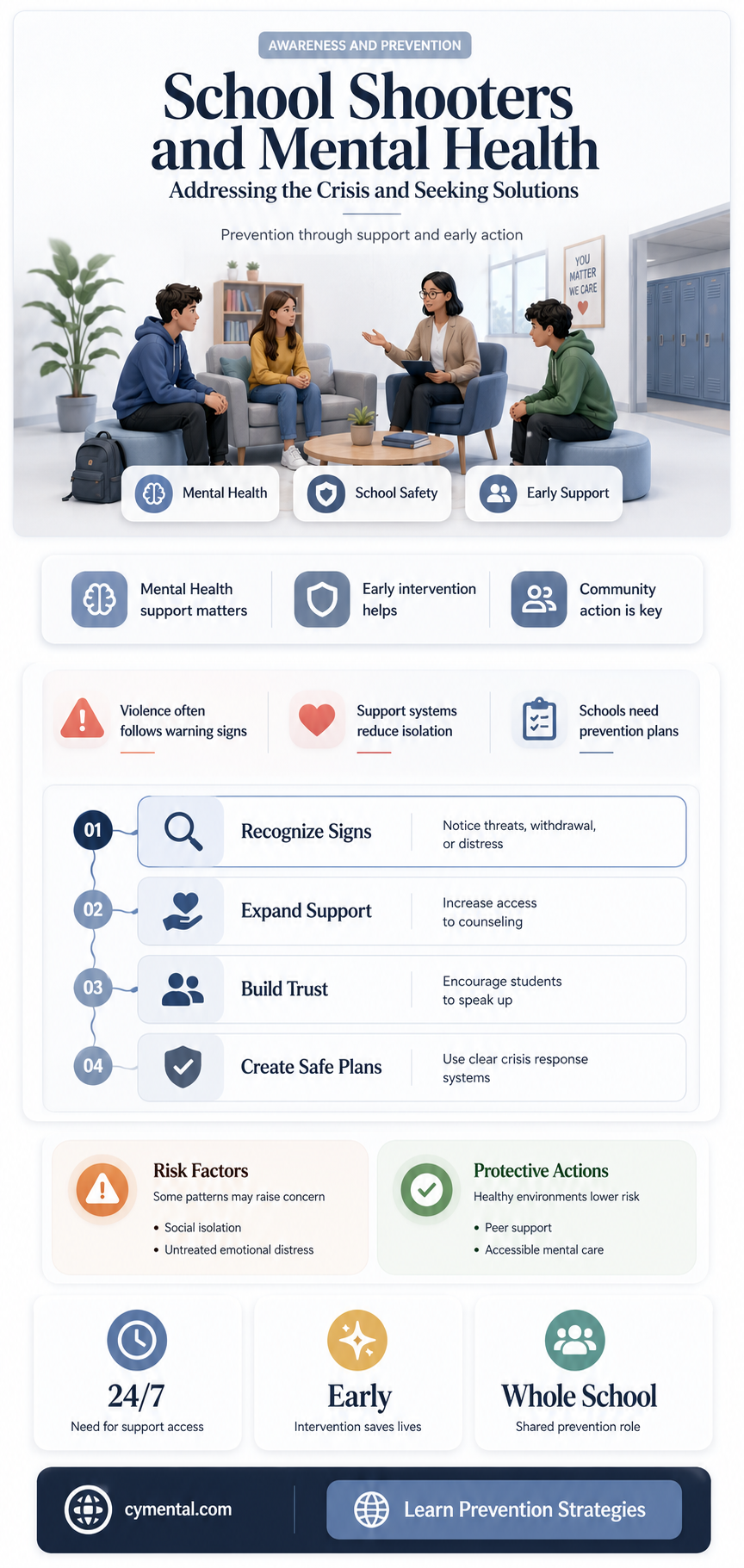
The question of whether school shooters receive adequate mental health support is a critical and complex issue that intersects with public safety, mental health care, and the criminal justice system. School shootings often prompt debates about the underlying causes of such violence, with mental health frequently cited as a contributing factor. However, the reality is that many perpetrators of these tragedies may not have received timely or effective mental health intervention, either due to lack of access, stigma, or failure to recognize warning signs. Addressing this issue requires a multifaceted approach, including improving mental health resources in schools and communities, reducing barriers to care, and fostering a culture that encourages early intervention and support for individuals at risk. Understanding whether and how school shooters receive mental health help is essential for preventing future tragedies and addressing the root causes of such devastating acts.
| Characteristics | Values |
|---|---|
| Mental Health Treatment | Many school shooters have a history of untreated or inadequately treated mental health issues. Studies show a significant percentage (60-80%) had mental health concerns prior to the attack. |
| Access to Mental Health Care | Limited access to mental health services is common among perpetrators, often due to socioeconomic barriers, lack of awareness, or stigma. |
| Diagnosed Mental Illness | Common diagnoses include depression, anxiety, psychotic disorders, and personality disorders. However, not all shooters have a formal diagnosis. |
| Warning Signs Ignored | Many shooters exhibited warning signs (e.g., threats, violent behavior, social isolation) that were overlooked or not addressed by peers, family, or authorities. |
| School Support Systems | Schools often lack adequate resources or protocols to identify and intervene with students showing signs of mental distress or violent tendencies. |
| Family and Social Isolation | A significant number of shooters experienced family dysfunction, social isolation, or a lack of supportive relationships, exacerbating mental health issues. |
| Policy and Legal Barriers | Legal and policy gaps often prevent timely intervention, such as privacy laws restricting information sharing between mental health providers and schools. |
| Post-Incident Mental Health Care | Incarcerated shooters may receive mental health treatment in prison, but the quality and accessibility vary widely. |
| Public Perception | There is a common misconception that all school shooters are "crazy," but mental illness alone is not a sufficient explanation; other factors like access to weapons and societal influences play a role. |
| Prevention Efforts | Efforts to improve mental health support in schools and communities are increasing, but implementation remains inconsistent and underfunded. |
Explore related products


What You'll Learn

Access to mental health services in schools
School shooters often exhibit signs of mental distress long before they commit violent acts, yet many slip through the cracks of a fragmented support system. Access to mental health services in schools could serve as a critical intervention point, but the reality is far from uniform. According to the National Center for Education Statistics, only 41% of public schools have a full-time school counselor, and even fewer have on-site mental health professionals. This disparity leaves students in underfunded districts particularly vulnerable, as they are less likely to receive timely assessments or ongoing support. Without consistent access to these resources, schools risk missing opportunities to identify and address the underlying issues that contribute to extreme behaviors.
Implementing robust mental health services in schools requires a multi-faceted approach, starting with staffing. Schools should aim to meet the American School Counselor Association’s recommendation of a 250:1 student-to-counselor ratio, though many currently operate at double or triple that. Integrating licensed therapists or psychologists into the school environment can provide more specialized care, such as cognitive-behavioral therapy for students exhibiting aggression or depression. Additionally, training educators to recognize warning signs—like withdrawal, sudden changes in behavior, or explicit threats—can create a network of first responders within the school itself. Pairing these measures with regular mental health screenings for at-risk age groups, such as middle and high school students, could significantly improve early detection.
Critics argue that increasing mental health services in schools alone won’t solve the problem, pointing to systemic issues like gun access and societal desensitization to violence. While these concerns are valid, schools remain a central hub for youth development, making them an ideal setting for proactive intervention. For instance, programs like the Sources of Strength curriculum, which combines peer leadership with professional guidance, have shown promise in reducing suicidal ideation and aggressive tendencies. Such initiatives not only address individual needs but also foster a culture of empathy and support among students. By focusing on prevention rather than reaction, schools can play a transformative role in breaking cycles of violence.
Despite the potential benefits, expanding mental health services in schools faces significant barriers, including funding and stigma. Federal and state governments must prioritize allocating resources to schools in low-income areas, where the need is often greatest. Simultaneously, public awareness campaigns can help normalize seeking mental health support, encouraging students to utilize available services without fear of judgment. Schools can also partner with community organizations to provide off-site care for students whose needs exceed in-school capabilities. While no single solution can eliminate the risk of school shootings, strengthening mental health infrastructure in schools is a tangible step toward creating safer, more supportive environments for all students.
Effective Strategies and Tools to Help You Overcome Daily Challenges
You may want to see also
Explore related products





Stigma around seeking mental health treatment
The stigma surrounding mental health treatment often prevents individuals, including potential school shooters, from seeking the help they desperately need. This barrier is rooted in societal misconceptions that equate mental illness with weakness, danger, or moral failing. For instance, media portrayals frequently link mass shooters to mental health issues, reinforcing the idea that seeking treatment is an admission of being a threat to society. This narrative discourages those at risk from reaching out, fearing they will be labeled as violent or unstable. As a result, untreated mental health conditions can escalate, increasing the likelihood of harmful behaviors.
Consider the steps needed to dismantle this stigma. First, education is critical. Schools, workplaces, and communities must normalize conversations about mental health, emphasizing that seeking help is a sign of strength, not a precursor to violence. Second, policymakers should fund campaigns that highlight success stories of individuals who received treatment and led productive lives. Third, mental health professionals must advocate for confidential, accessible services that reduce the fear of judgment or repercussions. Practical tips include creating safe spaces for open dialogue and training educators to recognize signs of distress without stigmatizing students.
A comparative analysis reveals that countries with lower stigma around mental health, such as Norway and the Netherlands, report higher treatment-seeking rates and fewer instances of untreated severe mental illness. These nations invest in public awareness campaigns and integrate mental health services into primary care, making them less intimidating to access. In contrast, the U.S. often treats mental health as a separate, specialized field, which can feel alienating. By adopting similar strategies, we can reduce stigma and ensure that individuals, including those at risk of violence, receive timely interventions.
Finally, the takeaway is clear: stigma is a preventable obstacle that exacerbates mental health crises. Addressing it requires collective effort, from changing media narratives to implementing systemic reforms. For example, schools can partner with mental health organizations to provide on-site counseling services, removing the logistical and emotional barriers to seeking help. Until we prioritize destigmatization, vulnerable individuals will continue to suffer in silence, and society will remain at risk of preventable tragedies. The solution lies not in fear, but in fostering a culture of empathy and support.
Psychology's Role in Healing: Can Studying Minds Aid Mental Health Recovery?
You may want to see also
Explore related products


Early intervention programs for at-risk students
School shooters often exhibit warning signs long before they act, yet many slip through the cracks of a fragmented support system. Early intervention programs for at-risk students aim to close this gap by identifying and addressing mental health issues, behavioral concerns, and social isolation before they escalate. These programs typically target students aged 10–18, a critical developmental period when intervention can significantly alter trajectories. For instance, threat assessment teams in schools analyze concerning behaviors—such as violent writings, weapon fascination, or persistent bullying—and connect students to resources like counseling, mentorship, or family support. Research shows that structured interventions, when implemented consistently, reduce aggressive behaviors by up to 40% in at-risk youth.
Designing effective early intervention programs requires a multi-tiered approach, often modeled after frameworks like PBIS (Positive Behavioral Interventions and Supports) or RTI (Response to Intervention). Tier 1 involves universal supports for all students, such as social-emotional learning curricula integrated into daily lessons. Tier 2 targets students showing mild to moderate risk factors, offering small-group counseling sessions (e.g., 8–12 weeks of anger management or conflict resolution training). Tier 3 provides intensive, individualized support for high-risk students, including weekly therapy, case management, and collaboration with external mental health providers. A key caution: avoid over-relying on punitive measures, as suspension or expulsion can exacerbate isolation and resentment.
Persuasive arguments for investing in these programs are rooted in both ethics and economics. The cost of a single school shooting—in lives lost, trauma inflicted, and community upheaval—far exceeds the funding required to implement comprehensive early intervention. For example, a study by the RAND Corporation found that every dollar spent on school-based mental health programs yields a return of $2–10 in reduced healthcare costs, criminal justice involvement, and improved academic outcomes. Policymakers should view this as a preventative measure, akin to vaccinating against a deadly disease. Schools cannot afford to wait until a crisis occurs; proactive strategies save lives and resources.
Comparing successful programs reveals common elements: strong partnerships between schools, families, and community agencies; consistent data tracking to identify at-risk students; and culturally responsive practices that address diverse needs. For instance, the *Sources of Strength* program, implemented in over 2,000 U.S. schools, trains peer leaders to promote help-seeking behaviors and connects students to trusted adults. Similarly, Finland’s *KiVa* anti-bullying program reduced victimization by 50% through a combination of student training, teacher intervention, and parental involvement. These examples underscore the importance of a holistic, collaborative approach rather than relying solely on school counselors or law enforcement.
Practical tips for educators and administrators include creating safe reporting mechanisms (e.g., anonymous tip lines or trusted adult campaigns), training staff to recognize red flags (such as sudden withdrawal, violent language, or access to weapons), and fostering a culture of empathy and inclusion. Parents can play a role by monitoring their child’s online activity, engaging in open conversations about mental health, and advocating for school-wide prevention initiatives. Ultimately, early intervention is not about predicting violence but about nurturing resilience, connection, and hope—the antidotes to despair.
Kick Stress Away: Soccer's Surprising Mental Health Benefits
You may want to see also
Explore related products



Role of school counselors in identifying mental health issues
School counselors are often the first line of defense in identifying mental health issues among students, a role that becomes critically important when considering the broader question of whether school shooters receive adequate mental health support. These professionals are uniquely positioned to observe behavioral changes, engage in meaningful conversations, and connect students with appropriate resources. However, their effectiveness hinges on several factors, including training, caseload, and institutional support. For instance, counselors trained in trauma-informed care are better equipped to recognize subtle signs of distress, such as withdrawal, aggression, or sudden changes in academic performance, which could indicate underlying mental health challenges.
To maximize their impact, school counselors should adopt a proactive rather than reactive approach. This involves regular check-ins with students, particularly those identified as at-risk, and fostering an environment where students feel safe discussing their struggles. For example, implementing weekly "wellness chats" for students in grades 6–12 can provide a structured yet informal setting for counselors to assess emotional well-being. Additionally, counselors should collaborate with teachers and administrators to develop a tiered system of support, ensuring that students exhibiting mild, moderate, or severe symptoms receive interventions tailored to their needs. Early intervention is key; research shows that addressing mental health concerns within the first 3–6 months of onset significantly improves outcomes.
Despite their crucial role, school counselors face significant barriers, including overwhelming caseloads and limited resources. On average, counselors in U.S. public schools serve 424 students each, far exceeding the recommended ratio of 250:1. This disparity makes it nearly impossible to provide individualized attention, particularly in identifying students who may be at risk of violent behavior. To address this, schools should prioritize funding for additional counseling staff and integrate technology, such as mental health screening tools, to streamline early detection. For instance, platforms like *Bungee* or *Kognito* offer virtual simulations that train educators to recognize and respond to mental health crises effectively.
A comparative analysis of schools with robust counseling programs versus those with minimal support reveals stark differences in student outcomes. Schools with comprehensive mental health services report lower rates of disciplinary issues, higher academic achievement, and fewer instances of self-harm or violence. For example, a study in *Psychology Today* found that students in schools with a 1:200 counselor-to-student ratio were 30% more likely to seek help for mental health concerns compared to those in under-resourced schools. This underscores the need for systemic change, including policy reforms that mandate adequate funding and staffing for school counseling programs nationwide.
Ultimately, the role of school counselors in identifying mental health issues is indispensable, yet it requires strategic enhancements to fulfill its potential. By investing in training, reducing caseloads, and leveraging technology, schools can empower counselors to act as early detectors of mental health challenges, potentially preventing tragedies like school shootings. The takeaway is clear: strengthening the infrastructure of school counseling is not just a matter of student well-being—it’s a critical step toward creating safer, more supportive learning environments for all.
Omega-3 Oil: A Potential Ally for Mental Health Disorders?
You may want to see also
Explore related products


Effectiveness of therapy for potential school shooters
School shooters often exhibit a complex interplay of mental health issues, social isolation, and access to firearms, yet the question of whether they receive adequate mental health support remains contentious. Research indicates that while many perpetrators have histories of mental illness, only a fraction receive targeted therapeutic interventions before their actions. This gap underscores the need to evaluate the effectiveness of therapy for individuals at risk of committing such acts. Early intervention, particularly through evidence-based modalities like cognitive-behavioral therapy (CBT) and dialectical behavior therapy (DBT), has shown promise in addressing underlying anger, impulsivity, and suicidal ideation—common traits among school shooters. However, the success of these therapies hinges on timely identification and consistent engagement, which are often hindered by stigma, lack of resources, and the reluctance of at-risk individuals to seek help.
Consider the case of a 16-year-old male exhibiting signs of severe social withdrawal, violent fantasies, and access to firearms. A tailored therapeutic approach might involve weekly CBT sessions focusing on anger management, coupled with family therapy to address communication breakdowns. Additionally, school-based interventions, such as threat assessment teams, could monitor behavioral changes and ensure collaboration between mental health professionals, educators, and law enforcement. However, such comprehensive care is rarely implemented due to fragmented systems and insufficient funding. For instance, a 2020 study found that only 40% of U.S. schools have access to full-time mental health professionals, limiting early detection and intervention opportunities.
Critics argue that therapy alone cannot mitigate the risk of school shootings, emphasizing the need for broader societal changes, such as gun control and improved social support systems. While valid, this perspective overlooks the transformative potential of therapy in addressing the root causes of violence. For example, DBT has been shown to reduce self-harm and aggression in adolescents by teaching emotional regulation and distress tolerance skills. A meta-analysis of 30 studies revealed that DBT participants experienced a 50% reduction in suicidal behavior compared to control groups. Applying such evidence-based practices to at-risk individuals could significantly lower the likelihood of violent outbursts, provided interventions are initiated early and sustained over time.
To maximize therapy’s effectiveness, a multi-pronged strategy is essential. First, schools must implement universal screening programs to identify students exhibiting risk factors, such as persistent bullying, substance abuse, or threats of violence. Second, mental health professionals should adopt a trauma-informed approach, recognizing that many at-risk individuals have experienced adverse childhood experiences (ACEs) that contribute to their behavior. Third, policymakers must allocate funding to ensure accessible, long-term mental health services, particularly in underserved communities. Finally, public awareness campaigns can reduce stigma, encouraging at-risk individuals and their families to seek help without fear of judgment or legal repercussions.
In conclusion, while therapy is not a panacea for preventing school shootings, its potential to address underlying psychological issues cannot be ignored. By integrating evidence-based modalities, fostering systemic collaboration, and prioritizing early intervention, mental health support can play a pivotal role in mitigating the risk of violence. The challenge lies in overcoming barriers to access and implementation, ensuring that those who need help receive it before tragedy strikes.
Travel Therapy: How Exploring New Places Boosts Mental Well-Being
You may want to see also
Frequently asked questions
Yes, many school shooters receive mental health treatment while in prison, as correctional facilities are legally obligated to provide necessary medical and psychological care to inmates.
Mental health treatment is not always mandatory, but it is often recommended or provided based on assessments of the individual’s needs and legal requirements for inmate care.
Access to mental health resources before a crime depends on individual circumstances, such as availability of services, awareness of needs, and willingness to seek help. Many shooters have untreated mental health issues.
While mental health treatment can address underlying issues, school shootings are often influenced by a combination of factors, including access to weapons, social isolation, and ideological motivations, not just mental illness.