Harper Lewis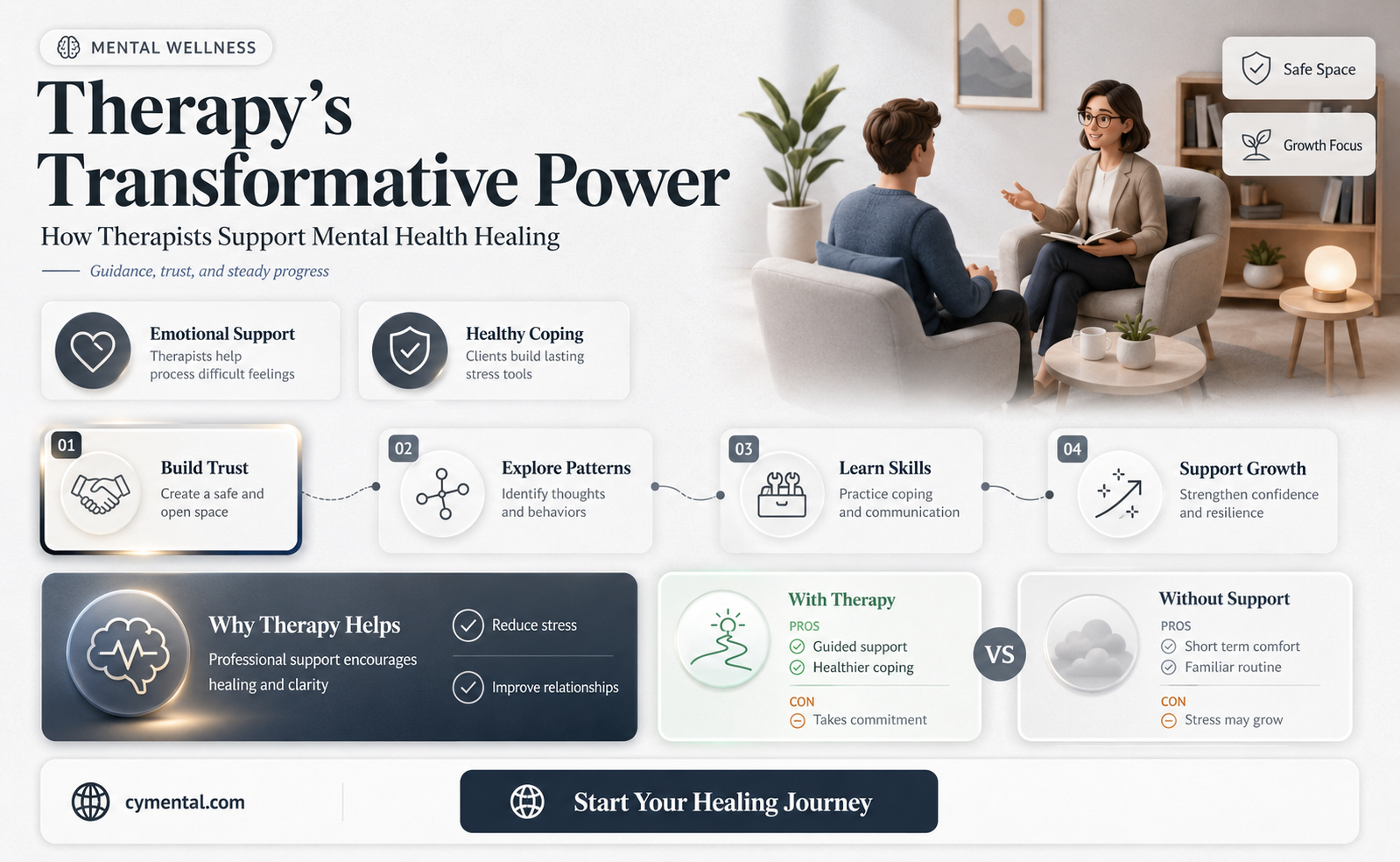
Therapists play a crucial role in supporting individuals struggling with mental health challenges by offering a safe, non-judgmental space to explore thoughts, emotions, and behaviors. Through evidence-based techniques such as cognitive-behavioral therapy, mindfulness, or psychodynamic approaches, therapists help clients identify and address underlying issues, develop coping strategies, and foster self-awareness. They provide personalized guidance tailored to each individual’s unique needs, whether managing anxiety, depression, trauma, or relationship difficulties. Beyond symptom relief, therapists empower clients to build resilience, improve communication, and cultivate healthier thought patterns, ultimately enhancing overall well-being and quality of life. Their expertise and compassionate support make therapy an invaluable tool for navigating mental health struggles and achieving lasting positive change.
| Characteristics | Values |
|---|---|
| Providing a Safe Space | Therapists offer a confidential, non-judgmental environment where individuals can openly discuss their thoughts, feelings, and experiences without fear of criticism or rejection. |
| Diagnosis and Assessment | They can accurately diagnose mental health conditions, assess severity, and develop personalized treatment plans based on evidence-based practices. |
| Evidence-Based Therapies | Therapists utilize proven therapeutic techniques like Cognitive Behavioral Therapy (CBT), Dialectical Behavior Therapy (DBT), and Eye Movement Desensitization and Reprocessing (EMDR) to address specific mental health concerns. |
| Skill Building | They teach coping mechanisms, stress management techniques, emotional regulation skills, and communication strategies to empower individuals in managing their mental health. |
| Insight and Self-Awareness | Therapists help individuals understand the root causes of their struggles, identify negative thought patterns, and develop greater self-awareness. |
| Support and Guidance | They provide ongoing support, encouragement, and guidance throughout the healing process, helping individuals navigate challenges and setbacks. |
| Medication Management (in conjunction with psychiatrists) | While therapists cannot prescribe medication, they can collaborate with psychiatrists to ensure a comprehensive treatment approach. |
| Crisis Intervention | Therapists are trained to provide immediate support and resources during mental health crises, helping individuals de-escalate and access appropriate care. |
| Improving Relationships | Therapy can help individuals improve communication, resolve conflicts, and build healthier relationships with others. |
| Promoting Overall Well-being | Therapists address not only mental health symptoms but also encourage lifestyle changes that promote overall well-being, such as exercise, healthy eating, and sleep hygiene. |
Explore related products
$9.59 $16.99
$6.79 $14.99

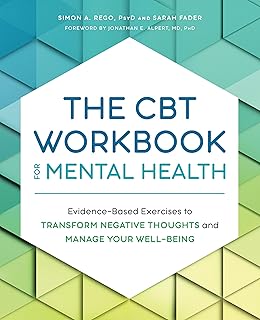

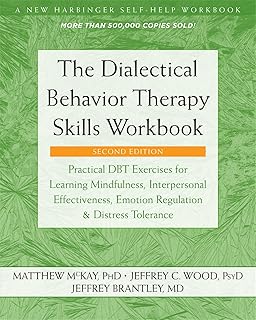
What You'll Learn
- Cognitive Behavioral Therapy (CBT): Helps identify and change negative thought patterns and behaviors
- Emotion Regulation Skills: Teaches strategies to manage and cope with intense emotions effectively
- Trauma Processing: Assists in healing from past traumas using evidence-based techniques like EMDR
- Stress Management Tools: Provides techniques to reduce stress and improve overall well-being
- Relationship Improvement: Helps enhance communication and resolve conflicts in personal relationships

Cognitive Behavioral Therapy (CBT): Helps identify and change negative thought patterns and behaviors
Negative thought patterns can become deeply ingrained, often operating below conscious awareness. Cognitive Behavioral Therapy (CBT) acts as a spotlight, illuminating these automatic thoughts and the behaviors they trigger. By bringing them into conscious awareness, individuals can begin to challenge their validity and accuracy. For instance, someone might automatically think, "I always mess everything up," after a minor mistake. CBT encourages questioning this thought: Is it true? What evidence supports or contradicts it? This process of examination disrupts the cycle of negative thinking, creating space for more balanced perspectives.
CBT is structured and goal-oriented, typically involving 12 to 20 sessions. Each session focuses on specific issues, with homework assignments to practice new skills between meetings. For example, a therapist might ask a client to keep a thought diary, recording situations, emotions, and corresponding thoughts. This practice helps identify recurring negative thought patterns, such as catastrophizing or black-and-white thinking. Over time, clients learn to replace these patterns with more realistic and constructive thoughts, leading to improved emotional regulation and behavior.
While CBT is effective for various mental health conditions—anxiety, depression, PTSD, and more—it’s not a one-size-fits-all solution. Its success depends on active participation and a willingness to confront uncomfortable thoughts and emotions. For adolescents and adults, CBT can be particularly beneficial, as it requires a level of self-reflection and cognitive flexibility that younger children may not yet possess. However, adapted versions of CBT, such as play-based techniques, can be used with children to address behavioral issues and emotional challenges.
A key strength of CBT lies in its practical, skill-building approach. Clients don’t just talk about their problems; they learn tangible strategies to manage them. For example, a person with social anxiety might practice gradual exposure to feared situations, starting with smaller challenges (e.g., initiating a conversation with a coworker) and progressing to larger ones (e.g., speaking in a group). This step-by-step method builds confidence and reduces avoidance behaviors. By the end of therapy, individuals often have a toolkit of coping strategies they can use long after sessions conclude.
CBT’s effectiveness is well-documented, with research showing significant improvements in symptoms for many clients. However, it’s not a quick fix; it requires commitment and effort. Therapists often emphasize that progress is incremental, and setbacks are part of the process. For those seeking a structured, evidence-based approach to changing negative thought patterns and behaviors, CBT offers a clear path forward. Its focus on actionable change makes it a powerful tool for anyone looking to improve their mental health and overall well-being.
Athletes and Mental Health: Why Seeking Help Remains a Challenge
You may want to see also
Explore related products


$8.99 $19.99


Emotion Regulation Skills: Teaches strategies to manage and cope with intense emotions effectively
Intense emotions can feel like a storm, overwhelming and unpredictable. Therapists specializing in emotion regulation skills act as navigators, teaching clients to chart a course through these turbulent waters. Dialectical Behavior Therapy (DBT), for instance, offers a structured approach, equipping individuals with a toolkit of strategies. These include mindfulness techniques to observe emotions without judgment, distress tolerance skills to ride out emotional waves, and emotion regulation strategies to modulate their intensity.
Consider a 28-year-old struggling with panic attacks. A therapist might introduce diaphragmatic breathing, a technique proven to activate the parasympathetic nervous system, calming the body’s "fight or flight" response. The client practices this for 5–10 minutes daily, gradually increasing duration. Paired with cognitive reappraisal—reframing catastrophic thoughts like "I’m dying" to "This is uncomfortable, but temporary"—the client gains control over their emotional responses. Research shows such practices reduce anxiety symptoms by up to 40% in 12 weeks.
Not all strategies work for everyone, and therapists tailor interventions to individual needs. For a teenager with anger issues, a therapist might employ opposite action—encouraging behaviors opposite to the emotion (e.g., smiling when angry). For someone with depression, pleasurable activity scheduling helps counteract emotional numbness. Caution: Emotion regulation isn’t about suppressing feelings but understanding and managing them healthily. Over-reliance on distraction, for example, can delay processing underlying issues.
The takeaway? Emotion regulation skills are not a quick fix but a lifelong practice. Therapists act as coaches, helping clients experiment with techniques, track progress, and adapt strategies as needed. With consistent practice, individuals can transform their relationship with emotions, moving from being controlled by them to skillfully navigating their ebb and flow. This empowerment is a cornerstone of mental health resilience.
Creatine's Cognitive Benefits: Enhancing Mental Clarity and Focus
You may want to see also
Explore related products


Trauma Processing: Assists in healing from past traumas using evidence-based techniques like EMDR
Trauma casts a long shadow, often lingering in the subconscious and manifesting as anxiety, depression, or unexplained physical symptoms. For those burdened by past traumatic events, therapy offers a beacon of hope through specialized techniques like Eye Movement Desensitization and Reprocessing (EMDR). Unlike traditional talk therapy, EMDR targets the root of trauma by reprocessing distressing memories, reducing their emotional charge, and fostering adaptive coping mechanisms. This evidence-based approach has been endorsed by organizations like the World Health Organization for its efficacy in treating PTSD and related conditions.
Consider a 35-year-old survivor of a car accident who experiences recurring nightmares and panic attacks. During EMDR sessions, the therapist guides the client to recall the traumatic event while simultaneously engaging in bilateral stimulation, such as side-to-side eye movements or tactile tapping. This dual focus mimics the rapid eye movement (REM) stage of sleep, believed to facilitate memory reprocessing. Over 6–12 sessions, the client’s distress diminishes as the memory is reframed from a source of terror to a neutral narrative. Practical tips for clients include maintaining a consistent sleep schedule and journaling between sessions to track progress.
While EMDR is highly effective, it’s not a one-size-fits-all solution. Cautions include its potential to resurface intense emotions, requiring a skilled therapist to navigate safely. Individuals with severe dissociative disorders or unstable mental health may need preparatory work before starting EMDR. Additionally, the technique is most effective when combined with other therapeutic modalities, such as cognitive-behavioral therapy, to address broader psychological needs. For adolescents and adults alike, EMDR offers a structured yet flexible framework for healing, typically administered in 50–90-minute sessions.
The analytical strength of EMDR lies in its ability to bridge the gap between neuroscience and psychotherapy. By leveraging the brain’s natural healing mechanisms, it bypasses the limitations of verbal processing, making it particularly effective for individuals who struggle to articulate their trauma. Comparative studies show that EMDR often yields results in fewer sessions than traditional therapy, though individual responses vary. For those seeking relief from trauma’s grip, EMDR stands as a testament to the power of evidence-based innovation in mental health care.
Nutritional Supplements: Potential Benefits for Mentally Retarded Children Explored
You may want to see also
Explore related products





Stress Management Tools: Provides techniques to reduce stress and improve overall well-being
Stress is an inevitable part of life, but its management is a skill that can be cultivated. Therapists often employ a variety of stress management tools to help individuals regain control over their mental and emotional well-being. One such technique is progressive muscle relaxation (PMR), a structured process where patients tense and then release different muscle groups in a systematic manner. For instance, starting with the feet, tense the muscles for 5 seconds, then release for 15 seconds, moving upward to the legs, abdomen, arms, and face. This practice not only reduces physical tension but also calms the mind, making it particularly effective for those experiencing stress-related insomnia or anxiety.
Another powerful tool is mindfulness-based stress reduction (MBSR), which integrates mindfulness meditation and yoga to foster present-moment awareness. Therapists guide clients through exercises like body scans or mindful breathing, encouraging them to observe thoughts and sensations without judgment. Research shows that MBSR can decrease cortisol levels by up to 14% after an 8-week program, highlighting its physiological benefits. For busy individuals, even 10 minutes of daily mindfulness practice can yield noticeable improvements in stress resilience and emotional regulation.
Cognitive-behavioral techniques also play a critical role in stress management. Therapists help clients identify and challenge negative thought patterns that exacerbate stress, replacing them with more adaptive beliefs. For example, someone overwhelmed by work deadlines might reframe "I’ll never finish this" to "I can tackle this one step at a time." Pairing this with time management strategies, such as the Pomodoro Technique (25 minutes of focused work followed by a 5-minute break), can further enhance productivity and reduce stress.
A lesser-known but highly effective tool is biofeedback, which uses sensors to monitor physiological responses like heart rate and muscle tension in real time. By learning to control these responses through guided exercises, individuals can develop greater self-regulation. For instance, a therapist might teach a client deep diaphragmatic breathing while observing their heart rate decrease on a biofeedback monitor, reinforcing the connection between technique and outcome. This method is particularly useful for stress-related conditions like hypertension.
Finally, lifestyle adjustments are integral to long-term stress management. Therapists often recommend regular physical activity, as exercise releases endorphins and reduces stress hormones. Even moderate activities, such as a 30-minute daily walk, can significantly improve mood and energy levels. Additionally, dietary changes—like reducing caffeine intake and increasing magnesium-rich foods (e.g., spinach, almonds)—can mitigate stress symptoms. Combining these strategies with therapeutic techniques creates a holistic approach to stress reduction, empowering individuals to lead more balanced and resilient lives.
Ginkgo Biloba: Enhancing Mental Function and Memory – Fact or Fiction?
You may want to see also
Explore related products


Relationship Improvement: Helps enhance communication and resolve conflicts in personal relationships
Personal relationships often thrive or falter based on the quality of communication and conflict resolution. A therapist acts as a neutral guide, helping individuals identify destructive patterns—like passive-aggression, stonewalling, or blame-shifting—that erode trust over time. By analyzing these behaviors in a safe space, clients gain insight into their triggers and learn to replace reactive responses with intentional, constructive dialogue. For instance, instead of escalating an argument, a therapist might teach the "speaker-listener technique," where one partner expresses their feelings uninterrupted for two minutes, followed by the other paraphrasing to ensure understanding. This structured approach fosters empathy and reduces misunderstandings.
Consider the case of a couple struggling with financial disagreements. One partner feels criticized for spending habits, while the other worries about long-term stability. A therapist might introduce the "I-statement" framework, encouraging them to say, "I feel anxious when we don’t discuss our budget," rather than, "You’re irresponsible with money." This shift from accusation to vulnerability opens the door for collaborative problem-solving. Over 6–12 sessions, couples often report a 40–60% improvement in communication effectiveness, according to studies on emotionally focused therapy (EFT). The key is consistency: practicing these techniques outside therapy ensures they become second nature, not just session-specific skills.
Not all conflicts stem from poor communication; some arise from unmet needs or mismatched expectations. Therapists help partners clarify their emotional "love languages"—whether it’s quality time, acts of service, or words of affirmation—and align their behaviors accordingly. For example, a partner who values physical touch might feel neglected if their significant other expresses love primarily through gift-giving. By mapping these differences, therapists bridge gaps that might otherwise widen over time. Practical homework, like scheduling weekly "state of the union" conversations, keeps these insights actionable and prevents small issues from festering.
However, relationship improvement isn’t solely about fixing problems; it’s also about strengthening bonds. Therapists often incorporate positive psychology exercises, such as gratitude journaling or shared goal-setting, to highlight strengths and shared values. One study found that couples who spent 15 minutes weekly listing three things they appreciated about each other experienced a 25% increase in relationship satisfaction within three months. These practices counteract the negativity bias—our tendency to dwell on flaws—and create a reservoir of goodwill to draw from during tougher times.
Ultimately, therapy for relationship improvement is an investment in emotional resilience. It equips individuals with tools to navigate not just current challenges but future ones as well. Whether through cognitive reframing, behavioral experiments, or emotional validation, therapists empower clients to break cycles of dysfunction and build connections that endure. The takeaway? Healthy relationships aren’t about avoiding conflict but mastering the art of resolving it—and therapy provides the roadmap.
Mental Health Treatment: Boosting Welfare-to-Work Program Success?
You may want to see also
Frequently asked questions
A therapist can help by teaching coping strategies, such as mindfulness, cognitive-behavioral techniques, and relaxation exercises. They also help identify triggers and develop personalized plans to reduce anxiety and stress.
Yes, therapy is highly effective for depression. Therapists use approaches like cognitive-behavioral therapy (CBT) to challenge negative thought patterns, explore underlying causes, and build skills to improve mood and functioning.
A therapist helps individuals or couples improve communication, resolve conflicts, and understand relationship dynamics. They provide tools to foster healthier connections and address patterns that may be causing distress.
Therapists use evidence-based methods like EMDR or trauma-focused CBT to help process traumatic experiences, reduce symptoms like flashbacks or nightmares, and rebuild a sense of safety and control.