Noah Parker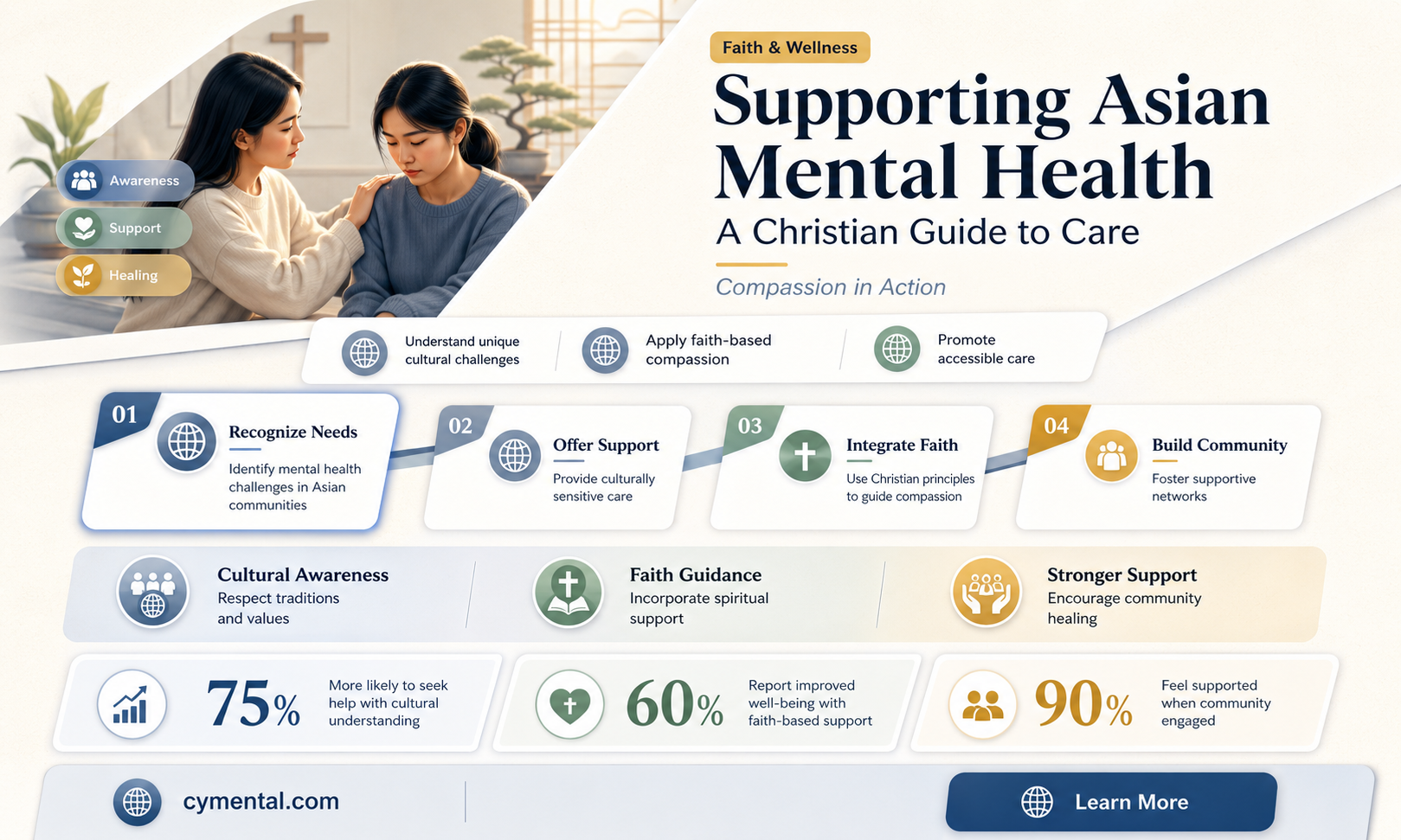
Christians seeking to support Asians struggling with mental health issues can play a vital role by fostering culturally sensitive and compassionate care. Recognizing the unique cultural, familial, and societal pressures often faced by Asian communities, Christians can offer support by actively listening without judgment, educating themselves on Asian cultural norms surrounding mental health, and encouraging open dialogue to reduce stigma. They can also connect individuals with culturally competent mental health professionals, provide safe spaces for expression within faith communities, and integrate faith-based practices like prayer and community support in ways that resonate with Asian cultural values. By approaching this issue with empathy, understanding, and respect, Christians can become allies in promoting healing and well-being for Asians navigating mental health challenges.
Explore related products



What You'll Learn
- Cultural Sensitivity Training: Educate Christians on Asian cultural norms to foster understanding and empathy
- Language Support: Provide bilingual resources and counseling to bridge communication gaps effectively
- Community Outreach: Organize mental health awareness events tailored to Asian Christian communities
- Stigma Reduction: Address mental health taboos through sermons and faith-based discussions
- Practical Assistance: Offer financial or logistical help for therapy access and support groups

Cultural Sensitivity Training: Educate Christians on Asian cultural norms to foster understanding and empathy
Cultural sensitivity training is not just a buzzword but a necessary bridge between Christians and Asians struggling with mental health issues. Without understanding the cultural nuances that shape Asian perspectives on mental health, well-intentioned Christians may inadvertently cause harm through miscommunication or insensitivity. For instance, Asians often prioritize collective well-being over individual needs, a concept deeply rooted in Confucian values. Christians, who may emphasize personal salvation and individual faith, must grasp this collectivist mindset to offer support that resonates. Training should begin with an exploration of these foundational cultural principles, using case studies to illustrate how they manifest in real-life mental health scenarios.
To implement effective training, start with interactive workshops that combine lectures, role-playing, and group discussions. For example, a role-play scenario could involve a Christian counselor addressing a Chinese family hesitant to seek therapy due to stigma. The counselor, trained in cultural sensitivity, acknowledges the family’s concerns about "losing face" and reframes therapy as a way to strengthen family harmony rather than individual weakness. Such exercises not only educate but also build empathy by placing participants in the shoes of those they aim to help. Include resources like *The Culture Map* by Erin Meyer or culturally specific mental health guides to supplement learning.
One critical aspect often overlooked is the role of language in cultural sensitivity. Asians may express mental distress through somatic symptoms like headaches or fatigue rather than directly stating emotional pain. Christians trained to recognize these indirect cues can respond more appropriately, avoiding misinterpretations that could alienate the individual. For instance, instead of asking, "Are you depressed?" a culturally sensitive approach might be, "You’ve mentioned feeling tired a lot lately—how is your overall well-being?" This phrasing respects cultural communication styles while opening a door for deeper conversation.
However, cultural sensitivity training is not without its pitfalls. Overgeneralization is a common risk, as Asia is not a monolith; differences between Japanese, Indian, and Filipino cultures, for example, are vast. Trainers must emphasize the importance of avoiding stereotypes and encourage participants to seek specific knowledge about the communities they serve. Additionally, Christians should be cautioned against imposing their cultural or religious beliefs as solutions. The goal is not to "fix" but to accompany, listen, and support within the framework of the individual’s cultural identity.
In conclusion, cultural sensitivity training equips Christians with the tools to navigate the complex intersection of faith, culture, and mental health. By fostering understanding and empathy, it enables more effective and compassionate support for Asians facing mental health challenges. Practical, culturally informed actions—rooted in awareness of collectivism, communication styles, and the diversity of Asian cultures—can transform well-intentioned efforts into meaningful, impactful assistance.
CBD and Mental Health: Uncovering the Science Behind Its Benefits
You may want to see also
Explore related products






Language Support: Provide bilingual resources and counseling to bridge communication gaps effectively
Language barriers can exacerbate mental health struggles for Asians, often preventing them from seeking or understanding available support. A 2021 study by the National Alliance on Mental Illness (NAMI) found that 60% of Asian Americans cite language difficulties as a primary reason for avoiding mental health services. This isn't merely about translation—it's about conveying nuance, cultural context, and emotional depth in a way that resonates. For Christians aiming to help, providing bilingual resources and counseling isn't just a convenience; it's a necessity for effective care.
Consider the practical steps: Churches and Christian organizations should invest in training bilingual counselors or partnering with existing services that offer culturally sensitive, language-specific therapy. For instance, a Mandarin-speaking therapist can help a Chinese immigrant navigate depression while addressing familial expectations rooted in Confucian values. Similarly, providing written materials—pamphlets, devotionals, or self-help guides—in native languages ensures accessibility. Apps like *Calm* or *Headspace* offer some content in Asian languages, but Christian-specific resources like bilingual Bible studies on anxiety or grief remain scarce. Filling this gap could be transformative.
However, bilingual support isn't without challenges. Literal translations of psychological terms often fall flat. For example, the English word "depression" lacks direct equivalents in many Asian languages, requiring counselors to explain symptoms rather than rely on labels. Christians must also be cautious not to impose Western theological frameworks on Asian cultural expressions of faith and suffering. A Filipino struggling with shame might need a counselor who understands *hiya*, a cultural concept of dishonor, rather than a generic sermon on sin.
The takeaway is clear: Language support must be intentional, contextual, and deeply respectful of cultural nuances. Start by auditing your church’s resources—are they available in the languages of your congregation? Advocate for funding bilingual mental health programs or volunteer to translate materials. Small steps, like offering a Cantonese grief support group or a Korean-language hotline, can dismantle barriers and foster trust. In bridging language gaps, Christians can embody the Gospel’s call to meet people where they are—linguistically, culturally, and emotionally.
Seeking Support: A Guide to Finding Help When You Need It Most
You may want to see also
Explore related products

$21.49 $32.99


$8.85 $18.99


Community Outreach: Organize mental health awareness events tailored to Asian Christian communities
Mental health stigma runs deep in many Asian cultures, often compounded by religious beliefs that prioritize spiritual strength over emotional vulnerability. Asian Christians, in particular, may face a unique double bind: the cultural reluctance to discuss mental health and the fear of being judged as lacking faith. Community outreach events tailored to this demographic can bridge this gap by creating safe, culturally sensitive spaces for dialogue and education.
Start by partnering with local Asian churches and mental health organizations led by Asian professionals. This ensures cultural competency and builds trust within the community. Events could include workshops led by Christian counselors who understand Asian cultural nuances, panel discussions featuring Asian Christians who’ve navigated mental health challenges, or faith-based support groups that integrate prayer and biblical teachings with evidence-based coping strategies.
A successful event requires careful planning. Begin by surveying your target audience to identify specific concerns, such as anxiety, depression, or intergenerational trauma. Tailor the content to address these issues while incorporating biblical principles. For instance, a workshop on managing stress could draw parallels between mindfulness techniques and Philippians 4:6-7, emphasizing prayer and gratitude. Provide practical tools like bilingual mental health resources, contact information for culturally sensitive therapists, and self-care guides that align with Christian values.
One caution: avoid tokenism. Don’t assume all Asian Christians share the same beliefs or experiences. Acknowledge the diversity within the community, whether it’s generational differences, varying levels of acculturation, or distinct denominational practices. For example, older attendees might resonate more with traditional hymns and scripture-based teachings, while younger generations may prefer contemporary worship styles and interactive activities.
Ultimately, these events should foster a sense of belonging and empowerment. By combining cultural understanding, Christian faith, and mental health education, you can create a supportive environment where Asian Christians feel seen, heard, and equipped to address their mental health needs. Remember, the goal isn’t to provide clinical treatment but to destigmatize the conversation, encourage help-seeking behaviors, and remind participants that faith and mental wellness are not mutually exclusive.
Praying for Peace: Exploring the Mental Health Benefits of Prayer
You may want to see also
Explore related products


Stigma Reduction: Address mental health taboos through sermons and faith-based discussions
Mental health stigma is deeply rooted in many Asian communities, often compounded by cultural expectations of resilience and familial honor. Christians can leverage their faith platforms to dismantle these barriers by addressing mental health taboos directly in sermons and faith-based discussions. Start by framing mental health struggles not as moral failings but as part of the human condition, aligning with biblical teachings on suffering and compassion. For instance, referencing Psalm 34:18—"The Lord is close to the brokenhearted"—can normalize vulnerability and encourage empathy. This approach not only educates but also reassures congregants that seeking help is consistent with their faith.
Instruct pastors and church leaders to incorporate mental health narratives into their teachings, using relatable examples from both scripture and contemporary life. For example, the story of Elijah in 1 Kings 19, where he experiences profound despair, can illustrate that even biblical figures faced mental health challenges. Pair these stories with practical advice, such as encouraging church members to use phrases like, "I’m here for you," instead of dismissive comments like, "Just pray harder." Provide resources during these discussions, such as contact information for Christian counselors or mental health organizations that align with Asian cultural values.
Persuasively, emphasize that reducing stigma is a matter of spiritual obedience. Jesus’ ministry prioritized healing and restoring the marginalized, and addressing mental health taboos is a modern extension of this mission. Challenge congregants to reflect on how their attitudes might inadvertently isolate those struggling with mental health issues. For example, ask, "Would Jesus turn away someone because their pain is invisible?" This rhetorical approach can inspire collective responsibility and action.
Comparatively, contrast the silence surrounding mental health in many Asian churches with the openness found in Western Christian communities. Highlight how faith-based discussions in the West have successfully reduced stigma by fostering safe spaces for sharing and support. Encourage Asian churches to adopt similar practices, such as hosting small group discussions or inviting mental health professionals to speak during services. These steps can bridge cultural gaps while maintaining cultural sensitivity.
Descriptively, envision a church environment where mental health is discussed with the same candor as physical health. Picture a sermon series titled "Healing for the Whole Person," where each week addresses a different aspect of mental well-being, from anxiety to grief. Imagine congregants leaving these services equipped with both spiritual insights and actionable steps, like knowing how to initiate conversations about mental health or recognizing warning signs in loved ones. Such an environment not only reduces stigma but also cultivates a community of care and understanding.
Brahmi's Impact: Enhancing Mental Wellbeing and Cognitive Health Naturally
You may want to see also
Explore related products


$9.95 $14.99


Practical Assistance: Offer financial or logistical help for therapy access and support groups
Financial barriers often prevent Asians from accessing mental health services, a disparity exacerbated by cultural stigma and limited insurance coverage. Christians can bridge this gap by establishing funds or scholarships specifically for therapy sessions, medication, or support group fees. For instance, a church could allocate a portion of its budget to a "Mental Health Access Fund," offering grants of $50 to $100 per session for individuals who cannot afford therapy. This direct financial assistance removes a critical obstacle, making professional help more attainable for those in need.
Logistical challenges, such as transportation or childcare, further complicate access to mental health resources, particularly for Asian families with limited mobility or time. Christians can address this by organizing carpool systems, providing childcare during therapy sessions, or even arranging for therapists to conduct home visits in culturally sensitive cases. For example, a church volunteer network could pair drivers with individuals needing transportation to therapy appointments, ensuring consistency and reliability. Such practical support demonstrates tangible care and reduces the stress associated with accessing help.
Support groups tailored to Asian cultural contexts are rare but invaluable, offering a safe space for shared experiences and collective healing. Christians can facilitate these groups by providing free venue spaces, such as church halls or community rooms, and covering costs for materials or refreshments. Additionally, partnering with bilingual mental health professionals to lead these groups can enhance their effectiveness. A weekly support group, for instance, could focus on topics like intergenerational trauma or cultural identity, fostering a sense of belonging and understanding among participants.
While offering financial or logistical help, Christians must approach this assistance with humility and cultural sensitivity. Avoid paternalism by involving Asian community leaders in decision-making processes and ensuring that all initiatives are collaborative rather than prescriptive. For example, before launching a fund, consult with local Asian mental health organizations to understand specific needs and preferences. This inclusive approach not only maximizes the impact of the assistance but also builds trust and respect within the community.
Exercise and Mental Health: Unlocking the Mind-Body Connection
You may want to see also
Frequently asked questions
Christians can educate themselves about Asian cultural values, such as saving face, family honor, and collectivism, and approach conversations with empathy and respect. Avoid assumptions and actively listen to their experiences, integrating faith-based encouragement without imposing Western perspectives.
Prayer can offer comfort, hope, and a sense of connection to God. Christians can pray with and for individuals, respecting their comfort level, and emphasize God’s love and care while avoiding spiritualizing their struggles as a lack of faith.
Churches can foster inclusivity by offering bilingual resources, hosting culturally relevant workshops, and training leaders to address stigma. Creating small groups or support networks specifically for Asians can encourage open dialogue in a familiar cultural context.
Christians can help by researching and sharing information about culturally competent therapists, mental health organizations, or helplines. They can also offer to accompany individuals to appointments or provide financial assistance if needed.
Christians can lead by example by openly discussing mental health from a biblical perspective, emphasizing that seeking help is a sign of strength, not weakness. Sharing testimonies of healing and recovery can also normalize the conversation and reduce shame.