Madison Cole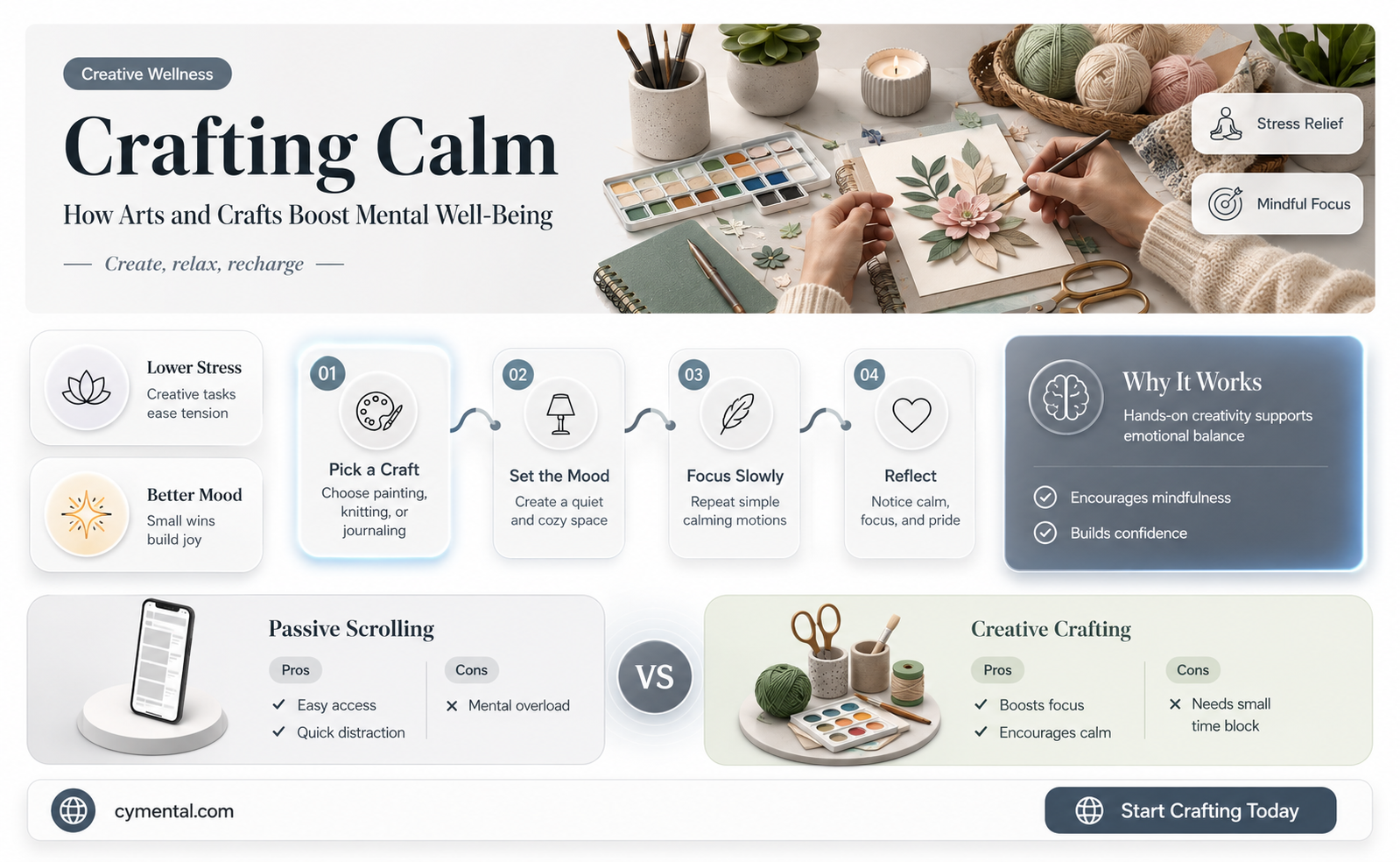
Engaging in arts and crafts can significantly enhance mental health by providing a therapeutic outlet for self-expression, stress reduction, and mindfulness. Creative activities like painting, knitting, or sculpting encourage focus on the present moment, helping to quiet anxious thoughts and promote relaxation. The sense of accomplishment from completing a project boosts self-esteem and fosters a positive mindset, while the repetitive motions in many crafts can induce a meditative state, reducing symptoms of anxiety and depression. Additionally, arts and crafts offer a means of emotional release, allowing individuals to process complex feelings in a non-verbal way. Whether pursued as a hobby or structured therapy, these activities can cultivate resilience, improve mood, and contribute to overall mental well-being.
| Characteristics | Values |
|---|---|
| Stress Reduction | Engaging in arts and crafts lowers cortisol levels, promoting relaxation and reducing anxiety. |
| Emotional Expression | Provides a safe outlet for processing and expressing complex emotions, aiding in emotional regulation. |
| Mindfulness | Encourages present-moment awareness, reducing rumination and improving focus. |
| Sense of Accomplishment | Completing projects boosts self-esteem and fosters a sense of achievement. |
| Cognitive Stimulation | Enhances problem-solving skills, creativity, and fine motor skills, benefiting brain health. |
| Social Connection | Group activities reduce loneliness and foster community, improving overall well-being. |
| Coping Mechanism | Offers a healthy distraction from negative thoughts and traumatic experiences. |
| Improved Mood | Releases dopamine, the "feel-good" neurotransmitter, enhancing mood and reducing depression symptoms. |
| Self-Discovery | Encourages introspection and personal growth through creative exploration. |
| Accessible Therapy | A low-cost, non-verbal therapeutic option for individuals who struggle with traditional talk therapy. |
Explore related products

$8.99 $19.99


What You'll Learn

Creative Expression Reduces Stress
Engaging in creative expression through arts and crafts can significantly lower stress levels by activating the brain’s reward system and promoting mindfulness. When you focus on painting, knitting, or sculpting, your attention shifts away from stressors, triggering the release of dopamine, a neurotransmitter associated with pleasure and relaxation. Studies show that just 45 minutes of creative activity can reduce cortisol, the stress hormone, by up to 75%. This physiological response is why therapists often recommend art-based interventions for stress management.
Consider this step-by-step approach to harness the stress-reducing benefits of creative expression: start with a simple activity like coloring or doodling, as these require minimal skill and allow for immediate immersion. Gradually move to more complex projects like pottery or embroidery, which provide a sense of accomplishment and deeper focus. Aim for 20–30 minutes daily, as consistency amplifies the calming effects. Pair your activity with calming music or a quiet environment to enhance relaxation. Avoid self-criticism; the goal is process over product.
For those skeptical of its effectiveness, compare creative expression to meditation. Both practices encourage present-moment awareness, but art adds a tangible outcome, making it more engaging for some. Unlike meditation, which can feel abstract, crafting provides a physical distraction from racing thoughts. A 2020 study found that participants who engaged in art activities reported a 30% greater reduction in stress compared to those who practiced traditional meditation alone. This suggests that creative expression may be a more accessible stress-relief tool for individuals who struggle with stillness.
Finally, creative expression fosters emotional release, a critical component of stress reduction. Through art, you can externalize feelings that are difficult to articulate verbally. For instance, abstract painting allows you to symbolize anxiety or frustration, while journaling combines words and imagery to process emotions. This cathartic process can be particularly beneficial for teens and adults who find verbal communication challenging. Incorporating art into your routine not only alleviates stress but also builds emotional resilience over time.
Beyond Reach: Can Some Minds Resist Mental Health Treatment?
You may want to see also
Explore related products


Crafting Enhances Mindfulness Focus
Engaging in arts and crafts naturally directs your attention to the present moment, a core principle of mindfulness. Unlike passive activities, crafting demands focus on the task at hand—whether it’s threading a needle, blending colors, or shaping clay. This immersion in the process quiets mental chatter, reducing anxiety and fostering a sense of calm. Research suggests that even 20–30 minutes of focused crafting daily can significantly lower stress levels by lowering cortisol, the body’s primary stress hormone.
Consider the act of knitting, for instance. Each stitch requires deliberate movement and concentration, leaving little room for intrusive thoughts. This repetitive yet intentional action mimics meditative practices, encouraging a flow state where time seems to disappear. Similarly, painting or sculpting demands attention to detail, texture, and form, pulling you away from worries about the past or future. The result? A clearer mind and heightened awareness of the here and now.
To maximize mindfulness through crafting, create a dedicated space free from distractions. Turn off notifications, dim harsh lighting, and play soft, instrumental music if it enhances focus. Start with simple projects to avoid frustration, gradually increasing complexity as your skills grow. For example, beginners might try origami or coloring intricate patterns, while experienced crafters could explore pottery or embroidery. The key is to prioritize the process over the end product, allowing yourself to fully engage without judgment.
A cautionary note: crafting should complement, not replace, professional mental health treatment when needed. While it’s a powerful tool for mindfulness, it’s not a cure-all. Additionally, avoid overloading yourself with overly ambitious projects, as this can lead to stress rather than relief. Instead, set realistic goals—perhaps one small crafting session per day or a few times a week—and adjust based on your energy levels.
In conclusion, crafting serves as a tangible pathway to mindfulness, offering both mental respite and creative fulfillment. By anchoring your focus in the present, it transforms simple materials into a practice of self-care. Whether you’re a seasoned artist or a curious beginner, the mindful act of creating can be a profound ally in nurturing your mental well-being.
Mental Therapists and SSI Disability: Can Therapy Strengthen Your Claim?
You may want to see also
Explore related products


Art Boosts Self-Esteem Confidence
Engaging in arts and crafts can significantly enhance self-esteem and confidence by providing tangible evidence of one’s abilities and creativity. Completing a project, no matter how small, offers a sense of accomplishment that reinforces self-worth. For instance, a beginner painter finishing their first canvas or a knitter crafting a scarf can visually see their progress, which translates into a deeper belief in their capabilities. This process of creation and completion acts as a powerful antidote to self-doubt, proving that one is capable of achieving goals and expressing themselves effectively.
Analytically, the act of creating art activates the brain’s reward system, releasing dopamine, a neurotransmitter associated with pleasure and motivation. This biochemical response not only boosts mood but also fosters a positive self-image. Studies show that individuals who regularly engage in creative activities report higher levels of confidence compared to those who do not. For example, a 2019 study published in *Art Therapy* found that participants who spent just 20 minutes daily on art projects over six weeks experienced a measurable increase in self-esteem. The key takeaway here is consistency—even short, regular sessions can yield significant psychological benefits.
Instructively, to harness this benefit, start with simple, achievable projects tailored to your skill level. For adults, journaling through collage or drawing can be particularly effective, as it combines self-expression with minimal pressure. For children and teens, structured activities like pottery or beadwork provide immediate feedback and a sense of mastery. Pairing these activities with positive self-talk, such as acknowledging effort rather than focusing on perfection, amplifies their impact. For instance, instead of saying, “This looks great,” try, “I can see how much effort you put into this, and it shows.”
Persuasively, art’s role in building confidence extends beyond the individual to social settings. Sharing creations with others, whether through exhibitions, online platforms, or community groups, fosters validation and connection. Receiving feedback, even constructive criticism, reinforces the idea that one’s voice and work matter. This external affirmation complements internal growth, creating a cycle of increasing self-assurance. For those hesitant to share, starting with a trusted friend or family member can be a low-stakes way to build confidence gradually.
Comparatively, while other activities like exercise or meditation also boost mental health, art uniquely combines cognitive, emotional, and physical engagement. Unlike physical fitness, which often emphasizes external results, art focuses on internal expression and personal growth. Unlike meditation, which is introspective, art allows for tangible output that can be reflected upon and celebrated. This multifaceted approach makes arts and crafts particularly effective for individuals seeking a holistic way to enhance self-esteem and confidence.
School Nurses: Prepared to Address Student Mental Health Challenges?
You may want to see also
Explore related products


Handicrafts Promote Relaxation Calm
Engaging in handicrafts like knitting, pottery, or embroidery can significantly reduce stress by shifting focus from mental clutter to the task at hand. This phenomenon, often referred to as "flow state," occurs when you become fully immersed in an activity, temporarily quieting the mind’s chatter. Studies show that repetitive, rhythmic motions—such as crocheting stitches or shaping clay—activate the parasympathetic nervous system, which promotes relaxation. For instance, a 2019 study published in *The Journal of Positive Psychology* found that participants who spent 20 minutes daily on creative tasks like knitting reported lower cortisol levels, a key stress hormone. To harness this benefit, set aside 15–30 minutes daily for a handicraft, ensuring the environment is free from distractions like phones or loud noises.
Consider the tactile nature of handicrafts, which grounds individuals in the present moment, a principle central to mindfulness practices. Working with materials like yarn, wood, or fabric engages multiple senses, making it harder for the mind to wander into anxious or depressive thoughts. For example, the texture of clay under your fingers during pottery or the sound of needles clicking in knitting creates a sensory experience that anchors you in the now. Beginners can start with simple projects like a scarf or a small clay bowl, gradually increasing complexity as skills improve. Pairing this practice with deep breathing enhances its calming effects, turning it into a meditative ritual.
Handicrafts also offer a sense of accomplishment, which counteracts feelings of helplessness or overwhelm. Completing a project, no matter how small, releases dopamine, a neurotransmitter associated with pleasure and reward. This boost in mood can break the cycle of negative thinking often linked to anxiety and depression. For instance, a study by the British Journal of Occupational Therapy highlighted that 81% of participants reported increased happiness after completing a crafting project. To maximize this benefit, choose projects with clear, achievable milestones, such as knitting a row per day or painting a section of a canvas weekly. Celebrate each milestone, even if it’s just acknowledging progress in a journal.
Finally, handicrafts foster a sense of community, which is vital for mental well-being. Joining crafting groups, either in-person or online, provides social support and reduces feelings of isolation. Sharing tips, patterns, or finished pieces creates connections and a sense of belonging. For those hesitant to join groups, starting with virtual communities or sharing work on platforms like Instagram can be less intimidating. Pairing crafting with social interaction amplifies its calming effects, as it combines the therapeutic benefits of creativity with the emotional support of human connection. Whether you’re a beginner or an expert, the act of creating with your hands offers a sanctuary of calm in a chaotic world.
Supporting Loved Ones: A Guide to Accessing Mental Health Assistance
You may want to see also
Explore related products


Creative Hobbies Combat Anxiety Depression
Engaging in creative hobbies like arts and crafts can significantly reduce symptoms of anxiety and depression by providing a structured outlet for emotional expression. When you immerse yourself in activities such as painting, knitting, or sculpting, your focus shifts from distressing thoughts to the task at hand, activating a meditative state known as "flow." Research indicates that just 20–30 minutes of daily creative activity can lower cortisol levels, the hormone associated with stress, by up to 30%. For instance, journaling through collage-making allows you to externalize emotions visually, offering clarity and release without the pressure of verbal communication.
Consider the therapeutic benefits of tactile crafts like pottery or cross-stitching. These activities engage both hands and mind, fostering a sense of accomplishment as you transform raw materials into something tangible. A study published in *Art Therapy: Journal of the American Art Therapy Association* found that participants who engaged in hands-on crafts reported a 45% reduction in depressive symptoms after eight weeks. For beginners, start with simple projects like clay pinch pots or embroidery kits to build confidence gradually. Pairing these activities with calming music or nature sounds can enhance relaxation, creating a multisensory experience that deepens focus and emotional relief.
While creativity is inherently personal, structured guidance can amplify its mental health benefits. Joining a local art group or online community provides accountability and social connection, combating the isolation often linked to anxiety and depression. For example, community knitting circles not only teach new skills but also foster a sense of belonging. If group settings feel overwhelming, start with guided tutorials or apps like *Skillshare* or *YouTube* to learn at your own pace. Remember, the goal isn’t perfection but process—embracing imperfections can reduce self-criticism, a common trigger for depressive episodes.
One often overlooked aspect is the role of color and texture in mood regulation. Bright, warm hues like yellow and orange can stimulate positivity, while cooler tones like blue and green promote calmness. Experiment with different mediums—watercolor for fluidity, acrylics for boldness, or textiles for sensory richness—to discover what resonates with your emotional needs. Keep a small kit of supplies accessible to encourage spontaneous creativity, even on difficult days. Over time, this practice can rewire neural pathways, making it easier to access feelings of calm and satisfaction.
Finally, integrating creative hobbies into a routine requires intentionality but yields compounding benefits. Schedule dedicated time, even if it’s just 15 minutes daily, and treat it as non-negotiable self-care. Combine creativity with mindfulness by focusing on your breath as you work, grounding yourself in the present moment. Track your progress through photos or a journal to visually witness growth, both in skill and emotional resilience. While arts and crafts are not a substitute for professional therapy, they serve as a powerful adjunctive tool, offering a tangible way to heal and reconnect with yourself.
Moving Out: A Mental Health Boost or Added Stress?
You may want to see also
Frequently asked questions
Arts and crafts promote mindfulness by focusing your attention on the present moment, reducing worries about the past or future. The repetitive motions in activities like knitting or coloring can trigger a relaxation response, lowering cortisol levels and easing anxiety.
Yes, creating art releases dopamine, a feel-good neurotransmitter, which boosts mood and reduces feelings of sadness. Expressing emotions through art can also provide a sense of release and help process complex feelings.
Completing a craft project provides a sense of accomplishment, reinforcing self-worth and confidence. Additionally, receiving positive feedback on your creations can further boost self-esteem.
Yes, engaging in creative activities can provide a sense of purpose and structure, which is often lacking in depression. Art therapy, in particular, can help individuals express and cope with difficult emotions in a non-verbal way.
Absolutely, activities like painting, sculpting, or even puzzles stimulate the brain, improving problem-solving skills, memory, and focus. They also encourage creativity, which can enhance mental flexibility and clarity.