Harper Lewis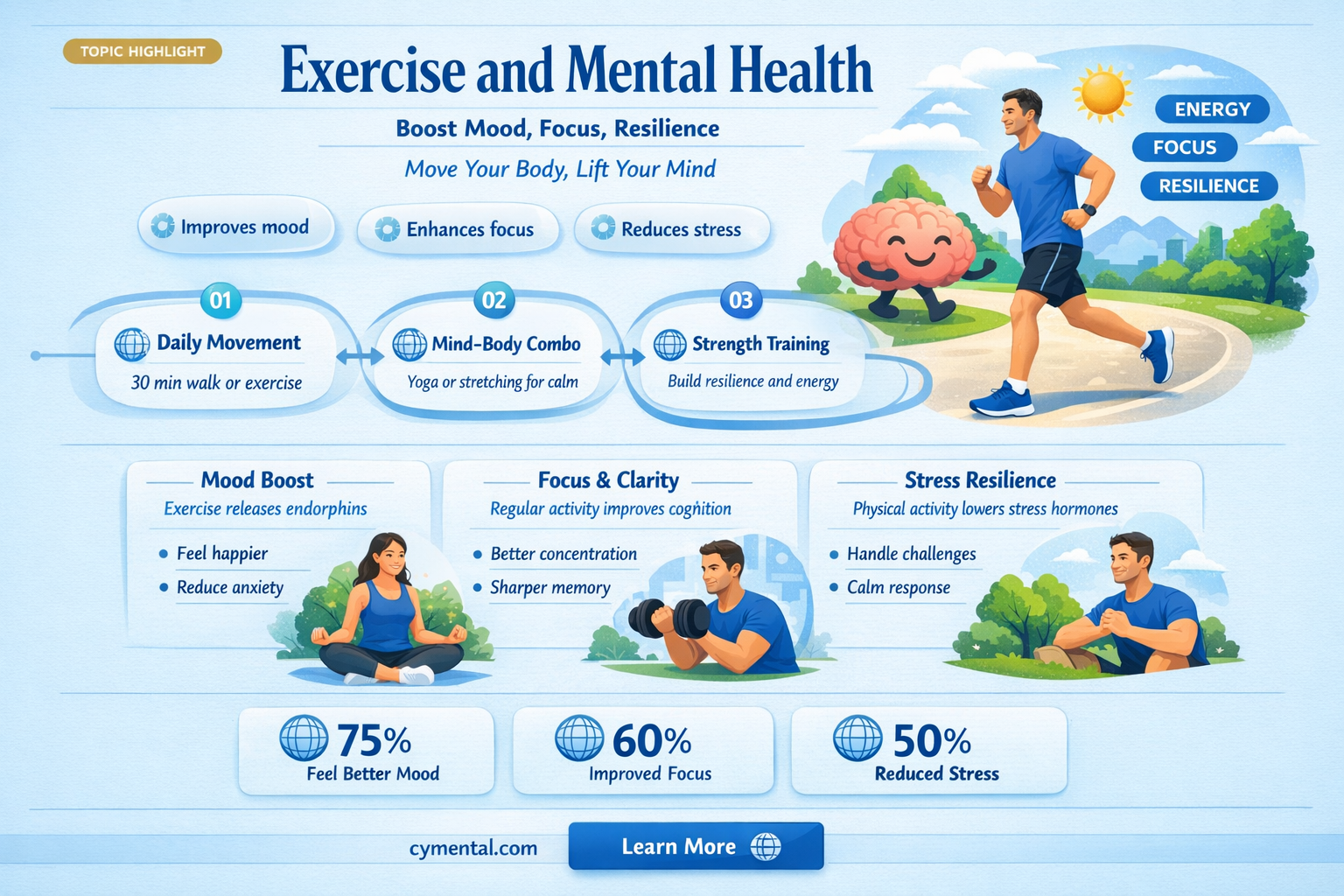
Exercise is a powerful tool for enhancing mental health, offering a wide range of psychological benefits beyond physical fitness. Regular physical activity stimulates the release of endorphins, often referred to as feel-good hormones, which can reduce stress, anxiety, and symptoms of depression. It also promotes better sleep, boosts self-esteem, and improves cognitive function by increasing blood flow to the brain and encouraging the growth of new neurons. Additionally, exercise provides a healthy coping mechanism for managing daily pressures, fosters a sense of accomplishment, and can even create opportunities for social interaction, all of which contribute to a more resilient and positive mental state. Whether it’s a brisk walk, yoga, or strength training, incorporating exercise into one’s routine can be a transformative step toward mental well-being.
| Characteristics | Values |
|---|---|
| Reduces Stress | Exercise decreases the body's stress hormones, such as cortisol, and stimulates the production of endorphins, which are natural mood lifters. |
| Alleviates Anxiety | Physical activity can reduce anxiety by promoting neural growth and reducing inflammation, leading to a calmer mind. |
| Improves Mood | Regular exercise boosts overall mood and can reduce symptoms of depression by increasing brain sensitivity to serotonin and norepinephrine. |
| Enhances Cognitive Function | Exercise increases heart rate, promoting the flow of blood and oxygen to the brain, which enhances cognitive abilities like memory and problem-solving. |
| Boosts Self-Esteem | Achieving fitness goals, even small ones, can improve self-confidence and foster a positive self-image. |
| Promotes Better Sleep | Physical activity helps regulate sleep patterns, improving the quality and duration of sleep, which is essential for mental health. |
| Reduces Symptoms of ADHD | Exercise can improve concentration, motivation, and memory in individuals with ADHD by increasing dopamine, norepinephrine, and serotonin levels. |
| Decreases Risk of Cognitive Decline | Regular physical activity can reduce the risk of developing dementia and Alzheimer's disease by promoting better brain health. |
| Encourages Social Interaction | Group exercises or team sports can provide social support and reduce feelings of loneliness, positively impacting mental health. |
| Increases Resilience | Exercise can build mental resilience, helping individuals cope better with mental health challenges and life stressors. |
Explore related products


$10.99 $18.99

$10.6 $19.99


What You'll Learn
- Reduces Stress and Anxiety: Physical activity lowers cortisol levels, promoting relaxation and reducing tension
- Boosts Mood: Exercise releases endorphins, enhancing happiness and combating symptoms of depression
- Improves Sleep Quality: Regular workouts regulate sleep patterns, aiding mental clarity and emotional stability
- Enhances Cognitive Function: Increases blood flow to the brain, improving focus, memory, and decision-making
- Builds Resilience: Exercise fosters discipline and coping skills, strengthening mental toughness over time

Reduces Stress and Anxiety: Physical activity lowers cortisol levels, promoting relaxation and reducing tension
Stress and anxiety often feel like an inescapable part of modern life, but physical activity offers a powerful antidote. When you engage in exercise, your body releases endorphins, often referred to as "feel-good" hormones, which act as natural painkillers and mood elevators. Simultaneously, cortisol, the primary stress hormone, decreases. Studies show that even moderate exercise, such as a 30-minute brisk walk, can significantly lower cortisol levels, promoting a sense of calm and relaxation. This biochemical response is your body’s way of resetting its stress response, making exercise a practical tool for managing daily pressures.
Consider this: a 2018 study published in *The Lancet Psychiatry* analyzed data from 1.2 million adults and found that people who exercised regularly reported 43% fewer days of poor mental health compared to those who did not. The key takeaway? Consistency matters more than intensity. Aim for at least 150 minutes of moderate aerobic activity or 75 minutes of vigorous activity per week, as recommended by the World Health Organization. For older adults or beginners, starting with shorter sessions, like 10-minute walks, and gradually increasing duration can be equally effective. The goal is to create a sustainable routine that fits your lifestyle.
For those dealing with acute stress or anxiety, incorporating mindfulness into your exercise can amplify its benefits. Practices like yoga or tai chi combine physical movement with breath control and meditation, directly targeting both the body and mind. A 2019 review in *Frontiers in Psychiatry* highlighted that yoga reduces cortisol levels and improves symptoms of anxiety and depression. If structured classes aren’t your style, try a simple mindful walking routine: focus on your breath, the sensation of your feet touching the ground, and the rhythm of your steps. This dual approach—physical activity plus mindfulness—can provide immediate relief while building long-term resilience.
However, it’s important to approach exercise as a complement to, not a replacement for, other mental health strategies. Over-exercising or pushing yourself too hard can backfire, increasing stress and cortisol levels. Listen to your body and avoid comparing your progress to others. For individuals with pre-existing mental health conditions, consulting a healthcare provider before starting a new exercise regimen is crucial. Remember, the goal is not to achieve perfection but to use movement as a tool for balance and well-being.
Incorporating stress-reducing exercises into your daily routine doesn’t require a gym membership or fancy equipment. Simple activities like dancing, gardening, or even household chores can count toward your physical activity goals. The key is to choose something you enjoy, as this increases the likelihood of sticking with it. Pairing exercise with social interaction, such as joining a walking group or taking a fitness class with a friend, can further enhance its stress-relieving effects. By making physical activity a regular part of your life, you’re not just lowering cortisol levels—you’re investing in a healthier, more resilient mind.
Psychology's Role in Healing: Can Studying Minds Aid Mental Health Recovery?
You may want to see also
Explore related products

$14.99 $19.99


$20.09 $25.99


Boosts Mood: Exercise releases endorphins, enhancing happiness and combating symptoms of depression
Exercise has a profound impact on mood, and the science behind it is both fascinating and actionable. When you engage in physical activity, your brain releases endorphins, often referred to as "feel-good" hormones. These chemicals act as natural painkillers and trigger positive feelings, effectively enhancing your overall sense of happiness. For instance, a 30-minute brisk walk or a 20-minute jog can stimulate this release, making it an accessible tool for anyone looking to boost their mood quickly.
Consider the comparative benefits: while medication or therapy may take weeks to alleviate symptoms of depression, exercise can provide immediate relief. Studies show that regular physical activity, such as three to five sessions of moderate exercise per week, can reduce symptoms of depression as effectively as antidepressants in some cases. This isn’t to replace professional treatment but to highlight exercise as a complementary strategy. For older adults, low-impact activities like swimming or yoga can be particularly effective, combining mood enhancement with joint-friendly movement.
To maximize the mood-boosting effects, focus on consistency and enjoyment. Choose activities you genuinely like—whether it’s dancing, cycling, or team sports—to increase the likelihood of sticking with it. Pairing exercise with social interaction, such as joining a fitness class or walking with a friend, can amplify the benefits by adding a sense of connection. For those with busy schedules, even short bursts of activity, like a 10-minute stretch or a quick stair climb, can trigger endorphin release and improve mood throughout the day.
However, it’s important to manage expectations. While exercise is a powerful tool, it’s not a cure-all. Individuals with severe depression or anxiety should consult a healthcare professional for a comprehensive treatment plan. That said, incorporating regular physical activity into your routine can serve as a proactive step toward mental well-being. Start small, stay consistent, and let the science of endorphins work in your favor.
Revitalize Your Mind: Strategies to Overcome Mental Exhaustion Effectively
You may want to see also
Explore related products


Improves Sleep Quality: Regular workouts regulate sleep patterns, aiding mental clarity and emotional stability
Quality sleep is the cornerstone of mental resilience, yet it eludes many in our fast-paced, screen-dominated lives. Regular exercise acts as a natural sleep regulator, synchronizing your body’s internal clock and promoting deeper, more restorative rest. Studies show that moderate aerobic exercise, such as brisk walking or cycling for 30 minutes daily, can improve sleep quality by up to 65%. This isn’t about exhausting yourself with intense workouts; consistency matters more than intensity. Even older adults, who often struggle with insomnia, can benefit—a gentle evening yoga session or a 20-minute walk can make a noticeable difference in sleep duration and depth.
The science behind this is fascinating. Physical activity increases body temperature, which then drops post-exercise, signaling to your brain that it’s time to wind down. Additionally, exercise reduces levels of cortisol, the stress hormone that often keeps us awake, while boosting serotonin, a precursor to melatonin, the sleep hormone. For those with anxiety or racing thoughts, this physiological shift can mean the difference between tossing and turning and falling asleep within minutes. However, timing is key—avoid vigorous workouts within 2–3 hours of bedtime, as they may have the opposite effect, leaving you wired.
Practical implementation requires a tailored approach. Morning or afternoon workouts are ideal for most, but if evenings are your only option, opt for low-impact activities like stretching or tai chi. Pair exercise with other sleep hygiene practices, such as dimming lights and limiting screen time before bed, for maximum benefit. For shift workers or those with irregular schedules, even short bursts of activity—like a 10-minute stair climb during a break—can help recalibrate sleep patterns over time. The goal is to create a routine that feels sustainable, not stressful.
The mental payoff of improved sleep extends far beyond the bedroom. Better sleep enhances cognitive functions like memory, focus, and problem-solving, while stabilizing mood and reducing irritability. It’s a domino effect: exercise improves sleep, sleep sharpens mental clarity, and clarity fosters emotional resilience. For individuals battling depression or anxiety, this cycle can be transformative. A study published in the *Journal of Clinical Sleep Medicine* found that participants who exercised regularly reported a 20% reduction in anxiety symptoms, largely attributed to improved sleep quality.
Incorporating exercise into your routine doesn’t require a gym membership or fancy equipment. Start small—a 15-minute jog, a home workout video, or even dancing to your favorite playlist. The key is to move your body in a way that feels enjoyable, not obligatory. Over time, as sleep quality improves, you’ll notice a ripple effect in your mental well-being—fewer mood swings, sharper focus, and a greater sense of calm. It’s a simple yet powerful tool, one that costs nothing but yields dividends in mental health.
Setting Goals: A Powerful Tool for Enhancing Mental Wellness
You may want to see also
Explore related products


Enhances Cognitive Function: Increases blood flow to the brain, improving focus, memory, and decision-making
Exercise isn't just about building muscles or shedding pounds; it's a powerful tool for sharpening your mind. One of the most direct ways it achieves this is by increasing blood flow to the brain. This surge in circulation delivers essential nutrients and oxygen, fueling neural activity and promoting the growth of new brain cells, particularly in the hippocampus, a region vital for memory and learning.
Think of it as a natural brain fertilizer, nourishing your cognitive garden.
This increased blood flow translates to tangible improvements in focus, memory, and decision-making. Studies show that regular aerobic exercise, such as brisk walking, swimming, or cycling, can significantly enhance attention span and concentration. Aim for at least 150 minutes of moderate-intensity aerobic activity or 75 minutes of vigorous activity per week, as recommended by the World Health Organization. Even shorter bursts of exercise, like a 10-minute walk, can provide a temporary cognitive boost.
For optimal results, incorporate strength training exercises twice a week to further stimulate brain health.
The benefits extend beyond the immediate post-workout glow. Regular exercise has been linked to long-term improvements in memory and learning abilities, particularly in older adults. It can even help reduce the risk of cognitive decline and dementia. Imagine exercise as a long-term investment in your brain's future, safeguarding its health and functionality as you age.
To maximize the cognitive benefits of exercise, consider incorporating activities that challenge both your body and mind. Yoga, for instance, combines physical postures with breath control and mindfulness, promoting focus and mental clarity. Similarly, dancing requires coordination, memory, and quick decision-making, providing a stimulating workout for both body and brain. Remember, consistency is key. Make exercise a regular part of your routine, and reap the rewards of a sharper, more focused mind.
Technology's Role in Supporting Mental Health: Opportunities and Challenges
You may want to see also
Explore related products



Builds Resilience: Exercise fosters discipline and coping skills, strengthening mental toughness over time
Exercise isn't just about physical transformation; it's a powerful tool for building mental resilience. The discipline required to stick to a workout routine translates directly into a stronger ability to handle life's challenges. Think of it as a microcosm of perseverance: each rep, each mile, each moment of pushing through discomfort trains your mind to endure and adapt. This mental toughness, forged in the gym or on the trail, becomes a resource you can draw upon when facing stress, setbacks, or uncertainty in other areas of life.
Research shows that regular exercise, particularly aerobic activities like running, swimming, or cycling, increases the production of neurotransmitters like serotonin and norepinephrine, which play a key role in regulating mood and stress response. Aim for at least 150 minutes of moderate-intensity aerobic exercise or 75 minutes of vigorous-intensity exercise per week, as recommended by the World Health Organization. Consistency is key – even short, daily sessions can yield significant mental health benefits.
Consider the act of running a marathon. It's not just about physical endurance; it's a test of mental fortitude. The training process demands discipline, forcing you to prioritize workouts, manage fatigue, and overcome self-doubt. These coping skills, honed through months of preparation, become ingrained, equipping you to tackle other long-term goals with greater confidence and resilience. The sense of accomplishment from completing a marathon further reinforces this mental toughness, providing a tangible reminder of your ability to overcome challenges.
For those new to exercise, start small and gradually increase intensity and duration. Incorporate activities you enjoy to make the process more sustainable. Remember, building resilience through exercise is a journey, not a destination. Embrace the process, celebrate small victories, and allow the discipline and coping skills cultivated through physical activity to permeate other aspects of your life. Over time, you'll find yourself better equipped to navigate life's inevitable obstacles with a stronger, more resilient mindset.
Amy Bouzaglo's Mental Health Journey: Did She Seek Professional Help?
You may want to see also
Frequently asked questions
Exercise stimulates the release of endorphins, often called "feel-good" hormones, which reduce stress and boost mood. It also increases serotonin and dopamine levels, which are linked to happiness and well-being.
Yes, regular physical activity can lower anxiety by reducing cortisol (the stress hormone) and promoting relaxation. Activities like yoga, walking, or jogging are particularly effective for calming the mind.
Exercise is a proven natural remedy for depression. It increases brain-derived neurotrophic factor (BDNF), which supports neuron growth and improves brain function, helping alleviate depressive symptoms.
Exercise enhances cognitive function by increasing blood flow to the brain, promoting neuroplasticity, and improving memory and focus. It also reduces the risk of cognitive decline and dementia.
Yes, regular exercise helps regulate sleep patterns by promoting deeper sleep cycles. It reduces insomnia and improves overall sleep quality, which is essential for mental health and recovery.