Ava Ramirez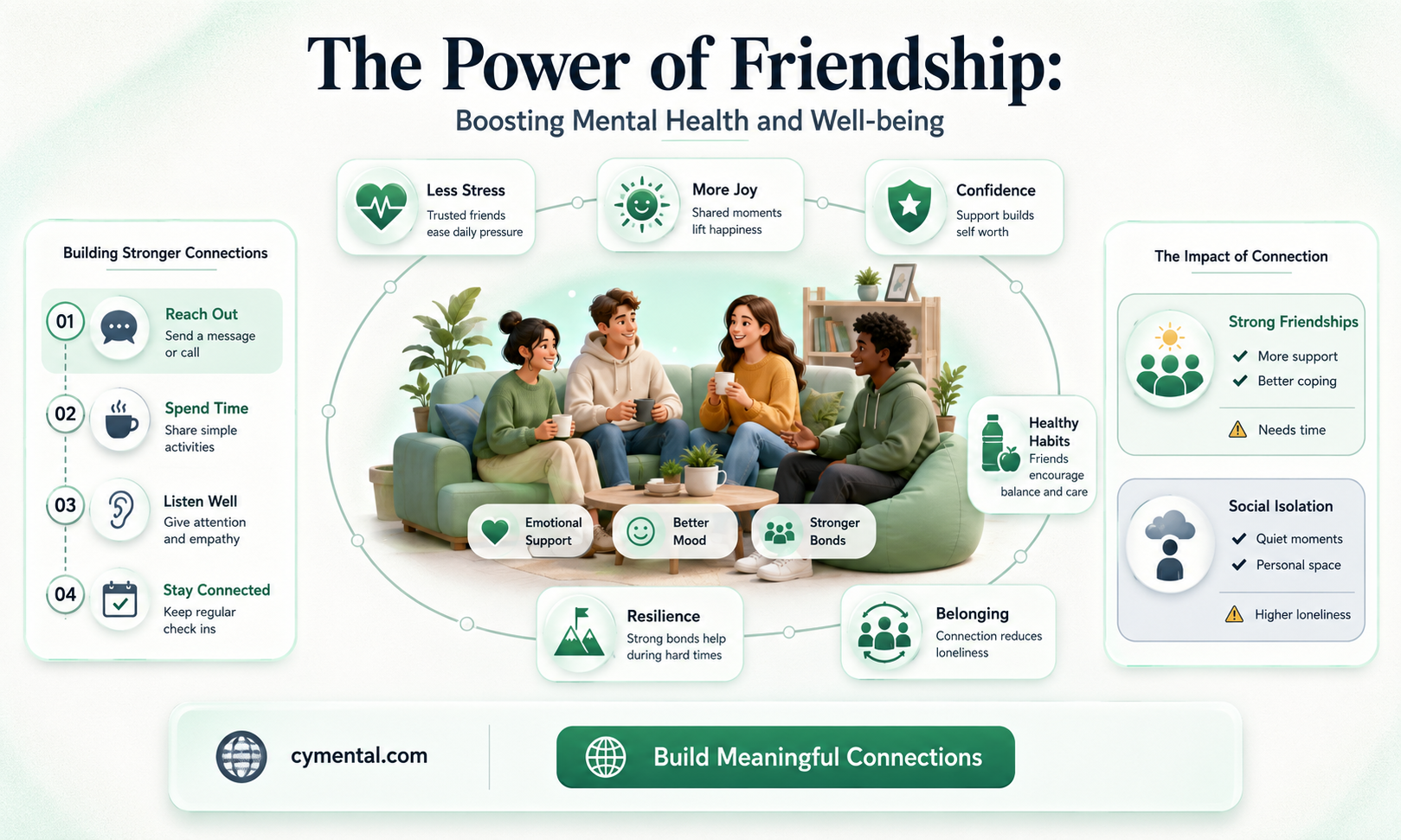
Friends play a crucial role in supporting our mental health by providing emotional comfort, practical assistance, and a sense of belonging. Their presence can alleviate feelings of loneliness and isolation, which are often linked to mental health challenges. Through active listening, empathy, and non-judgmental conversations, friends create a safe space for us to express our thoughts and feelings, reducing the burden of stress and anxiety. They also encourage healthy habits, such as exercise, mindfulness, or seeking professional help, and can offer perspective during difficult times. By fostering connection and understanding, friends act as a vital buffer against mental health struggles, reminding us that we are not alone in our journey toward well-being.
| Characteristics | Values |
|---|---|
| Emotional Support | Friends provide a safe space to express feelings, reducing stress and anxiety. They offer comfort, empathy, and validation during difficult times. |
| Social Connection | Regular interaction with friends combats loneliness, fosters a sense of belonging, and enhances overall well-being. |
| Encouragement and Motivation | Friends inspire and motivate us to pursue goals, adopt healthier habits, and maintain a positive outlook. |
| Practical Help | Friends assist with tasks, provide resources, or offer advice, reducing the burden of daily challenges. |
| Accountability | Friends help us stay accountable for our actions, encouraging consistency in self-care and mental health practices. |
| Perspective and Feedback | Friends offer different viewpoints, helping us navigate problems and make informed decisions. |
| Humor and Joy | Sharing laughter and enjoyable experiences with friends boosts mood and reduces stress hormones. |
| Crisis Support | Friends provide immediate assistance and reassurance during crises, preventing feelings of isolation. |
| Healthy Modeling | Friends who prioritize mental health can inspire us to adopt similar behaviors, such as mindfulness or therapy. |
| Non-Judgmental Listening | Friends offer a judgment-free environment to share thoughts and feelings, promoting emotional release. |
Explore related products


What You'll Learn
- Active Listening: Friends provide a safe space to express feelings without judgment, fostering emotional release
- Social Support: Regular interaction reduces loneliness, boosting mood and overall mental well-being
- Encouragement: Friends motivate healthy habits, like exercise, sleep, and self-care routines
- Humor & Joy: Shared laughter reduces stress, releases endorphins, and improves mental resilience
- Accountability: Friends help set goals, track progress, and offer gentle reminders for self-improvement

Active Listening: Friends provide a safe space to express feelings without judgment, fostering emotional release
Friends who master the art of active listening become sanctuaries for emotional release, offering a judgment-free zone where feelings can flow uninhibited. This practice goes beyond mere hearing; it involves full engagement, empathy, and validation. When a friend leans in, maintains eye contact, and reflects back what’s being said, they signal, “Your emotions matter, and I’m here to hold space for them.” This simple yet profound act can dismantle the isolation often felt in mental health struggles, replacing it with a sense of connection and understanding.
To cultivate this safe space, start by silencing distractions—put away phones, turn off notifications, and focus entirely on the speaker. Use open-ended questions like, “How did that make you feel?” to encourage deeper expression. Avoid interrupting or offering solutions unless asked; instead, mirror emotions with phrases like, “It sounds like you’re really frustrated.” Research shows that feeling heard activates the brain’s reward centers, reducing stress hormones like cortisol and fostering a sense of calm. For instance, a study in *Communication Monographs* found that individuals who perceived their friends as attentive listeners reported lower levels of anxiety and depression.
However, active listening isn’t without its challenges. It requires patience, especially when the speaker’s emotions are intense or their thoughts scattered. Resist the urge to fix or minimize their experience. Instead, acknowledge the complexity with statements like, “That sounds really overwhelming.” For friends supporting someone with chronic mental health issues, it’s crucial to set boundaries to avoid emotional burnout. Dedicate specific times for these conversations, ensuring both parties feel respected and supported.
The takeaway is clear: active listening is a powerful tool for mental health support, but it’s not about perfection. It’s about presence, patience, and the willingness to hold space for another’s pain without judgment. By practicing this skill, friends can transform ordinary conversations into therapeutic exchanges, offering relief and validation in moments of vulnerability. Remember, sometimes the greatest gift isn’t advice—it’s simply being there, fully and authentically.
Shipping the Mentally Ill to California: Nevada's Controversial Solution
You may want to see also
Explore related products


Social Support: Regular interaction reduces loneliness, boosting mood and overall mental well-being
Human connection is a powerful antidote to loneliness, a pervasive issue that affects mental health across all ages. Studies show that individuals with strong social support networks report significantly lower levels of loneliness and depression. This isn't merely anecdotal; research indicates that regular social interaction can increase oxytocin levels, often referred to as the "love hormone," which promotes feelings of trust and bonding. Conversely, loneliness can trigger a stress response, elevating cortisol levels and contributing to anxiety and depression.
Consider this: a 2019 study published in the *Journal of Social and Personal Relationships* found that individuals who interacted with friends or family at least three times per week experienced a 30% reduction in feelings of loneliness compared to those with less frequent social contact. This "dosage" of social interaction highlights the importance of consistency. It's not about marathon socializing; it's about regular, meaningful connections.
For older adults, who are particularly vulnerable to loneliness due to retirement, loss of loved ones, or reduced mobility, structured social activities can be transformative. Joining a book club, volunteering, or participating in community classes not only provides interaction but also a sense of purpose. For younger adults, digital tools can complement in-person interactions. Group chats, video calls, or even online gaming can foster a sense of belonging, though they shouldn’t replace face-to-face time entirely.
Practical tips for maximizing social support include scheduling regular meetups, even if it’s just a weekly coffee or a monthly dinner. For introverts, smaller, more intimate gatherings can be just as effective as large social events. Additionally, being proactive in reaching out—whether to check in on a friend or invite someone to an activity—strengthens bonds and reinforces mutual support.
The takeaway is clear: regular social interaction isn’t a luxury; it’s a necessity for mental well-being. By prioritizing consistent, meaningful connections, we can combat loneliness, elevate our mood, and build resilience against life’s challenges. It’s an investment in ourselves and in those around us.
Can You Require a Spouse to Seek Mental Health Treatment?
You may want to see also
Explore related products




Encouragement: Friends motivate healthy habits, like exercise, sleep, and self-care routines
Friends play a pivotal role in fostering mental well-being by actively encouraging healthy habits that might otherwise slip through the cracks of our busy lives. Consider the power of a friend suggesting a morning jog or a yoga session—not as a chore, but as a shared experience. Research shows that individuals who exercise with a partner are 34% more likely to stick to their fitness routines compared to those who go solo. This isn’t just about physical health; exercise releases endorphins, which reduce stress and improve mood. A friend’s invitation can turn a daunting task into an enjoyable ritual, making it easier to prioritize mental health through movement.
Sleep, another cornerstone of mental health, often suffers in our hyper-connected world. Friends can intervene here too, not by nagging, but by modeling and reinforcing healthy sleep patterns. For instance, a friend might suggest a "digital sunset" pact, where both agree to turn off screens an hour before bed. Studies indicate that adults aged 18–64 need 7–9 hours of sleep per night, yet 35% report sleeping less than 7 hours. By holding each other accountable, friends can help break the cycle of sleep deprivation, which is linked to increased anxiety and depression. Small gestures, like a late-night text reminding you to wind down, can make a significant difference.
Self-care routines, often overlooked in the hustle of daily life, thrive under the encouragement of friends. Whether it’s a weekly face mask session, a meditation challenge, or simply carving out time for a hobby, friends can inspire consistency. For example, a friend might propose a 10-minute daily mindfulness practice, backed by research showing that just 8 weeks of mindfulness meditation can reduce symptoms of anxiety and depression. The key is mutual support—celebrating small wins, like completing a week of journaling, reinforces the habit and deepens the bond.
However, encouragement isn’t one-size-fits-all. Friends must tailor their approach to individual needs and preferences. For instance, someone struggling with social anxiety might benefit from low-pressure activities like a walk in the park rather than a crowded gym class. The goal is to create an environment where healthy habits feel accessible and enjoyable, not forced. By understanding each other’s triggers and strengths, friends can provide the right kind of motivation at the right time, turning abstract goals into actionable steps.
In essence, friends act as catalysts for mental health by embedding healthy habits into the fabric of our relationships. Their encouragement transforms solitary struggles into shared victories, making exercise, sleep, and self-care feel less like obligations and more like acts of connection. The takeaway? Lean on your friends—and let them lean on you—to build a foundation of well-being that benefits both of you. After all, mental health is not a solo journey; it’s a shared path made smoother with the right companions.
Seeking Support: A Guide to Asking for Mental Health Assistance
You may want to see also
Explore related products


Humor & Joy: Shared laughter reduces stress, releases endorphins, and improves mental resilience
Laughter is a powerful antidote to stress, and sharing it with friends amplifies its benefits. When we laugh together, our bodies release endorphins, often referred to as "feel-good" hormones, which act as natural painkillers and mood elevators. Studies show that even the anticipation of laughter can reduce stress hormones like cortisol. For instance, a group of friends planning a comedy night or sharing memes can experience a collective drop in tension before the laughter even begins. This physiological response not only provides immediate relief but also builds mental resilience over time, making it easier to cope with future stressors.
To harness the power of shared laughter, consider incorporating humor into your social interactions deliberately. Start by setting aside dedicated time for activities that naturally induce laughter, such as watching stand-up comedy, playing humorous games, or reminiscing about funny memories. For example, a weekly "laughter hour" with friends can become a ritual that everyone looks forward to. Even in serious conversations, injecting light-hearted comments or anecdotes can diffuse tension and create a more supportive atmosphere. The key is consistency—regular doses of laughter, even in small amounts, can have a cumulative effect on mental well-being.
However, not all humor is created equal. It’s important to ensure that laughter is inclusive and kind, avoiding jokes that might exclude or hurt others. Shared joy should strengthen bonds, not weaken them. For instance, inside jokes that everyone finds funny can foster a sense of belonging, while sarcasm or teasing at someone’s expense can have the opposite effect. Pay attention to the dynamics of your friend group and adjust your humor accordingly. This mindful approach ensures that laughter remains a positive force for everyone involved.
Finally, shared laughter isn’t just about the moment—it leaves a lasting impact. Research suggests that recalling humorous experiences can evoke the same endorphin release as the original event, providing a mental health boost long after the laughter fades. Encourage your friends to document funny moments, whether through photos, videos, or a shared group chat. Revisiting these memories during challenging times can serve as a reminder of the joy and support your friendships provide. In this way, humor becomes a tool not just for immediate relief but for long-term mental resilience.
Dropping Mental Filters: Unveiling New Perspectives on Everyday Experiences
You may want to see also
Explore related products




Accountability: Friends help set goals, track progress, and offer gentle reminders for self-improvement
Friends often serve as our unofficial life coaches, and their role in fostering accountability can be a game-changer for mental health. Setting goals is the first step toward self-improvement, but it’s easy to lose momentum without someone to keep us on track. For instance, if you’re trying to establish a meditation routine, a friend can help you define a realistic goal—like meditating for 5 minutes daily—and then check in weekly to ensure you’re sticking to it. This shared responsibility transforms abstract intentions into actionable habits, reducing the overwhelm that often accompanies personal growth.
The power of accountability lies in its dual nature: it’s both supportive and challenging. Friends can offer gentle reminders without judgment, like a text saying, “Hey, did you journal today?” These nudges aren’t about policing behavior but about reinforcing commitment. Research shows that social accountability increases the likelihood of goal achievement by up to 95%, making it a potent tool for mental health. For example, if you’re working on reducing screen time before bed, a friend can remind you to put your phone away at 9 p.m., helping you build a healthier sleep routine.
However, accountability works best when it’s reciprocal. Both parties should agree on the terms of support to avoid resentment or pressure. Start by setting clear boundaries—perhaps you only want reminders during weekdays or prefer a specific tone for check-ins. For instance, instead of a demanding “Why haven’t you done this yet?” a friend could say, “I noticed you’ve been struggling with this—how can I help?” This collaborative approach ensures accountability feels like a partnership, not a burden.
Practical tips can amplify the effectiveness of this dynamic. Use shared apps like Habitica or Google Calendar to track progress together, or schedule weekly accountability calls to discuss wins and challenges. For younger adults (ages 18–25), who often face transitions and uncertainty, this structure can provide much-needed stability. Older adults (ages 40+) might benefit from focusing on long-term goals, like maintaining a gratitude practice, with friends serving as consistent motivators. The key is to tailor the accountability system to individual needs, ensuring it’s sustainable and supportive.
Ultimately, accountability through friendship isn’t about perfection—it’s about progress. Friends help us celebrate small victories, like meditating for a full week or cutting screen time by 30 minutes daily. These milestones, no matter how modest, build confidence and resilience. By combining goal-setting, progress tracking, and gentle reminders, friends create a safety net that encourages growth while safeguarding mental well-being. It’s a reminder that self-improvement doesn’t have to be a solo journey—sometimes, the best way forward is together.
Counseling for Mental Health: Effective Support or Overrated Solution?
You may want to see also
Frequently asked questions
Friends can provide emotional support by actively listening without judgment, offering empathy, and validating feelings. They can also check in regularly, show genuine care, and create a safe space for open conversations about struggles.
Friends can help reduce stress and anxiety by encouraging relaxation, engaging in fun activities together, and providing distractions from negative thoughts. They can also offer perspective, remind you of your strengths, and help you feel less alone.
Friends can encourage healthy habits by inviting you to join them in activities like exercise, meditation, or hobbies. They can also model positive behaviors, hold you accountable gently, and celebrate small achievements together.