Caleb Wright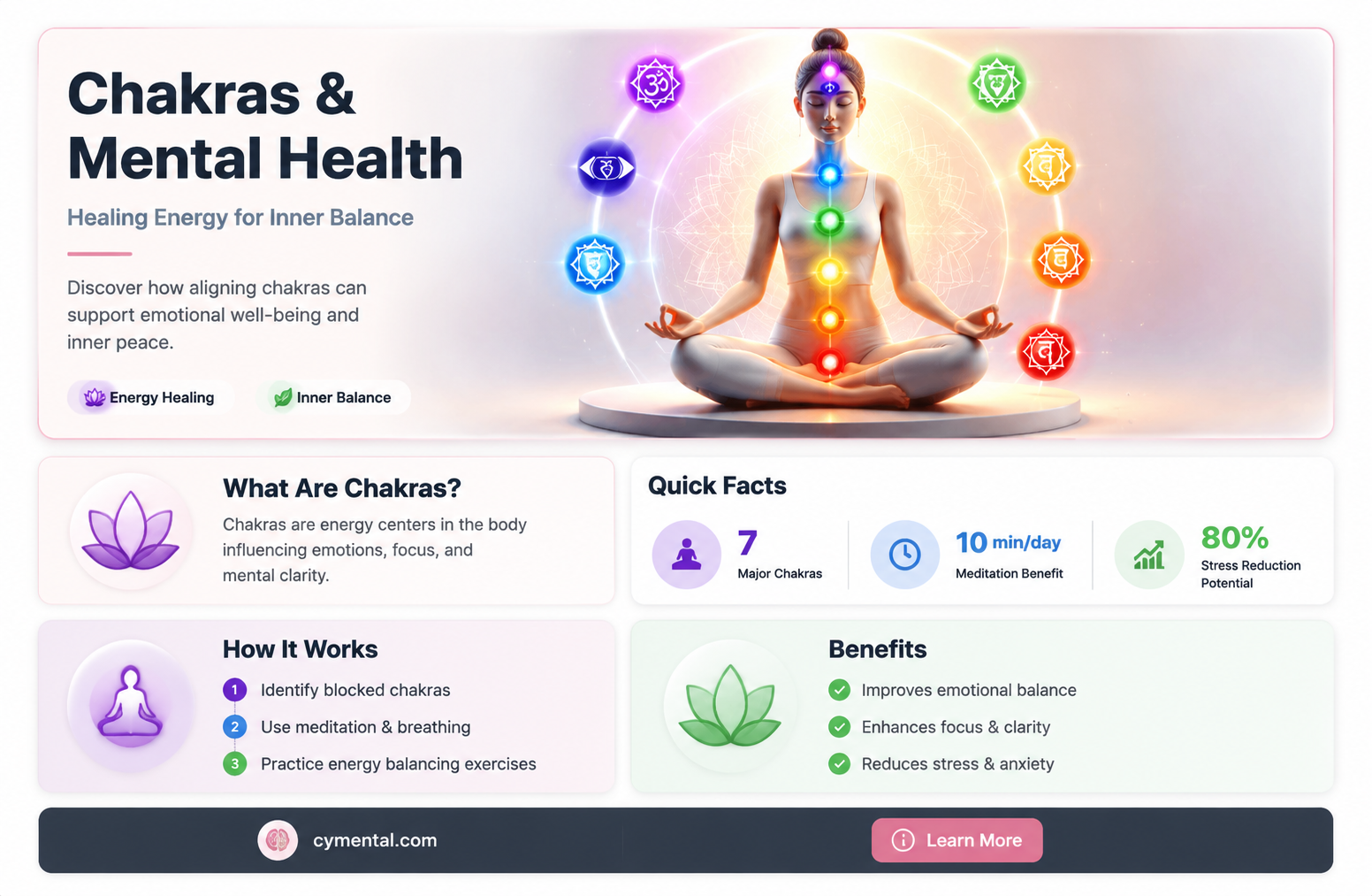
The concept of chakras, originating from ancient Indian spiritual traditions, describes seven energy centers in the body, each associated with specific physical, emotional, and mental functions. While chakras are not recognized in conventional Western medicine, many holistic practitioners and individuals explore their potential to support mental health and well-being. Among the chakras, the *Crown Chakra* (Sahasrara), linked to higher consciousness and spiritual connection, and the *Third Eye Chakra* (Ajna), associated with intuition and mental clarity, are often discussed in relation to mental illness. Additionally, the *Heart Chakra* (Anahata), which governs love and emotional balance, and the *Solar Plexus Chakra* (Manipura), tied to self-esteem and confidence, are believed to influence mental and emotional stability. While scientific evidence is limited, some people find that chakra-balancing practices, such as meditation, yoga, or energy healing, complement traditional therapies in managing symptoms of anxiety, depression, and other mental health challenges. Ultimately, whether chakras can help with mental illness remains a subject of personal belief and exploration, often integrated into holistic approaches to wellness.
| Characteristics | Values |
|---|---|
| Root Chakra (Muladhara) | Provides grounding and stability, which can help reduce anxiety and feelings of insecurity. Imbalance may contribute to anxiety disorders and PTSD. |
| Sacral Chakra (Svadhisthana) | Linked to emotional well-being and creativity. Imbalance may lead to depression, mood swings, or emotional numbness. |
| Solar Plexus Chakra (Manipura) | Associated with self-esteem and confidence. Imbalance can result in low self-worth, anxiety, or control issues. |
| Heart Chakra (Anahata) | Connected to love, compassion, and emotional balance. Imbalance may cause loneliness, grief, or difficulty in relationships. |
| Throat Chakra (Vishuddha) | Relates to communication and self-expression. Imbalance can lead to anxiety, fear of speaking up, or repressed emotions. |
| Third Eye Chakra (Ajna) | Linked to intuition and mental clarity. Imbalance may contribute to confusion, anxiety, or difficulty focusing. |
| Crown Chakra (Sahasrara) | Associated with spiritual connection and higher consciousness. Imbalance can lead to feelings of disconnection, depression, or existential anxiety. |
| General Chakra Healing | Chakra balancing techniques (e.g., meditation, yoga, energy healing) are believed to support mental health by promoting emotional and energetic harmony. |
| Scientific Evidence | Limited scientific research directly links chakras to mental illness, but mindfulness and energy-based practices have shown benefits for mental health. |
| Complementary Approach | Chakra work is often used as a complementary practice alongside traditional mental health treatments, not as a replacement. |
Explore related products

$9.99 $12.99


What You'll Learn
- Root Chakra and Anxiety: Grounding techniques to reduce anxiety through root chakra balancing
- Sacral Chakra and Depression: Emotional healing by activating the sacral chakra for mood regulation
- Solar Plexus and Confidence: Boosting self-esteem and reducing self-doubt via solar plexus energy
- Heart Chakra and Trauma: Healing emotional wounds and fostering self-love through heart chakra practices
- Crown Chakra and Clarity: Enhancing mental clarity and reducing stress by aligning the crown chakra

Root Chakra and Anxiety: Grounding techniques to reduce anxiety through root chakra balancing
The root chakra, or Muladhara, is often referred to as the foundation of our energetic system, governing our sense of safety, stability, and connection to the earth. When this chakra is imbalanced, it can manifest as anxiety, fear, or a constant feeling of being "ungrounded." For those struggling with anxiety, focusing on root chakra balancing can provide a tangible, somatic approach to calming the mind and body. Techniques such as grounding exercises, physical activity, and mindful practices can help restore equilibrium to this vital energy center.
One effective grounding technique to balance the root chakra is mindful walking. Begin by standing barefoot on grass, soil, or sand, allowing your feet to connect directly with the earth. As you walk, focus on the sensation of each step, noticing the texture and temperature beneath your feet. Inhale deeply through your nose, imagining you’re drawing stability from the ground, and exhale slowly through your mouth, releasing tension. Aim for 10–15 minutes daily, especially during moments of heightened anxiety. This practice not only strengthens your connection to the root chakra but also activates the parasympathetic nervous system, promoting relaxation.
Another powerful method is the use of crystals and essential oils associated with the root chakra. Red jasper, garnet, and black tourmaline are stones believed to enhance feelings of security and stability. Carry one in your pocket or place it at the base of your spine during meditation. Pair this with essential oils like cedarwood, patchouli, or vetiver, which are known for their grounding properties. Add 3–5 drops to a diffuser or dilute with a carrier oil for a soothing massage. These sensory tools can serve as anchors, reminding your body and mind of safety and presence.
For a more active approach, incorporate yoga poses that target the root chakra, such as Mountain Pose (Tadasana) or Child’s Pose (Balasana). Tadasana encourages a sense of rootedness, while Balasana fosters surrender and release. Hold each pose for 5–7 breaths, focusing on deep, intentional breathing. Pairing these asanas with affirmations like "I am safe" or "I am grounded" can amplify their calming effects. Consistency is key—practice these poses daily, even for just 5 minutes, to gradually rebalance your root chakra.
Lastly, consider dietary choices that support root chakra health. Root vegetables like carrots, beets, and sweet potatoes are not only nourishing but also energetically aligned with the Muladhara chakra. Incorporate these foods into your meals, focusing on mindful eating—chew slowly, savor each bite, and acknowledge the sustenance they provide. Combining these physical and energetic practices creates a holistic approach to managing anxiety, offering both immediate relief and long-term resilience.
Jehovah's Witnesses and Mental Health: Seeking Professional Help or Faith Alone?
You may want to see also
Explore related products


Sacral Chakra and Depression: Emotional healing by activating the sacral chakra for mood regulation
The sacral chakra, located just below the navel, is often associated with emotions, creativity, and sensuality. When this energy center is balanced, it fosters emotional well-being and resilience, making it a potential ally in managing depression. Depression frequently manifests as emotional numbness, disconnection, or overwhelming sadness, all of which correlate with sacral chakra imbalances. By focusing on activating and harmonizing this chakra, individuals may find a complementary approach to mood regulation and emotional healing.
One practical way to engage the sacral chakra is through movement and creativity. Engaging in activities like dancing, painting, or even journaling can stimulate this energy center. For instance, a 20-minute daily dance session, set to music that resonates emotionally, can help release stagnant energy and encourage emotional flow. Similarly, using orange, the sacral chakra’s associated color, in your environment—through clothing, decor, or meditation tools—can subtly reinforce its activation. These practices are particularly beneficial for adults aged 18–65, as they align with the chakra’s role in emotional expression and creativity.
However, activating the sacral chakra isn’t a standalone cure for depression; it’s a supportive practice. Caution should be exercised to avoid overstimulation, as excessive focus on this chakra can lead to emotional volatility. Pairing sacral chakra work with grounding practices, such as root chakra meditation or mindful breathing, ensures emotional release remains balanced. For example, after a creative session, spend 5–10 minutes focusing on your breath and visualizing roots extending from your feet into the earth to stabilize your energy.
Comparatively, while the heart chakra is often emphasized for emotional healing, the sacral chakra addresses the root of emotional stagnation. The heart chakra focuses on love and connection, whereas the sacral chakra deals with processing and expressing emotions. For those with depression, this distinction is crucial: addressing emotional blockages at the sacral level can pave the way for deeper heart-centered healing. Incorporating both chakras in a holistic practice—such as alternating sacral-activating dance with heart-opening yoga poses—can yield more comprehensive results.
In conclusion, the sacral chakra offers a unique pathway to emotional healing for those struggling with depression. By integrating movement, creativity, and mindful practices, individuals can activate this energy center to foster emotional flow and mood regulation. While not a replacement for professional treatment, sacral chakra work provides a tangible, empowering tool for managing emotional challenges. Start small, remain consistent, and observe how this ancient practice complements modern approaches to mental well-being.
Shipping the Mentally Ill to California: Nevada's Controversial Solution
You may want to see also
Explore related products


Solar Plexus and Confidence: Boosting self-esteem and reducing self-doubt via solar plexus energy
The solar plexus chakra, or Manipura, is often referred to as the "powerhouse" of the body's energy system. Located just above the navel, it is associated with personal power, confidence, and self-esteem. When this chakra is balanced, individuals tend to feel assertive, motivated, and in control of their lives. Conversely, an imbalanced solar plexus chakra can manifest as self-doubt, anxiety, or a lack of direction. For those struggling with mental health issues tied to low self-worth, focusing on this energy center can be a transformative practice.
One practical way to engage with the solar plexus is through mindfulness and visualization techniques. Start by finding a quiet space and placing your hand over your navel. Close your eyes and take deep, intentional breaths, imagining a warm, golden light radiating from this area. As you inhale, visualize this light expanding outward, filling your entire body with strength and confidence. Exhale any feelings of self-doubt or fear. Repeating affirmations such as "I am capable," "I trust myself," or "I am worthy" during this practice can amplify its effects. Aim to dedicate 5–10 minutes daily to this ritual, especially during moments of heightened self-criticism.
Physical activity can also stimulate the solar plexus chakra, as it is closely tied to the body's core. Practices like yoga, Pilates, or even simple core-strengthening exercises can help activate this energy center. Poses such as Boat Pose (Navasana) or Warrior II (Virabhadrasana II) are particularly effective, as they engage the abdominal muscles while fostering a sense of empowerment. Incorporating these exercises 2–3 times per week can not only improve physical strength but also enhance mental resilience and self-assurance.
For a more holistic approach, consider integrating essential oils or crystals known to resonate with the solar plexus chakra. Oils like lemon, grapefruit, or ginger can be diffused or applied topically (diluted with a carrier oil) to invigorate and balance this energy center. Crystals such as citrine, tiger’s eye, or yellow calcite can be carried or placed on the solar plexus during meditation. These tools serve as reminders of your intention to cultivate confidence and can be particularly helpful for individuals who benefit from tangible, sensory aids in their healing journey.
While working with the solar plexus chakra can be profoundly beneficial, it’s essential to approach this practice with patience and self-compassion. Healing self-doubt or boosting self-esteem is not an overnight process, and setbacks are a natural part of growth. Combining chakra work with other therapeutic modalities, such as counseling or journaling, can provide a more comprehensive support system. By consistently nurturing your solar plexus energy, you can gradually rebuild a foundation of confidence that empowers you to navigate life’s challenges with greater ease and resilience.
Positive Relationships: A Powerful Tool for Mental Health and Well-Being
You may want to see also
Explore related products


Heart Chakra and Trauma: Healing emotional wounds and fostering self-love through heart chakra practices
The heart chakra, or Anahata, is often associated with love, compassion, and emotional healing. For individuals grappling with trauma, this energy center can become blocked, leading to feelings of isolation, fear, or difficulty in forming connections. Unresolved emotional wounds manifest as physical symptoms like chest tightness, respiratory issues, or even cardiovascular problems, highlighting the mind-body connection. Practices targeting the heart chakra aim to release these blockages, fostering self-love and emotional resilience.
One effective method to engage the heart chakra is through mindfulness meditation focused on compassion. Begin by sitting comfortably, placing your hand over your heart, and repeating affirmations like, "I am worthy of love" or "I forgive myself and others." Incorporate visualization by imagining a green light radiating from your chest, symbolizing healing and openness. For beginners, start with 5–10 minutes daily, gradually increasing the duration as you become more comfortable. Consistency is key; regular practice rewires neural pathways, promoting emotional balance.
Yoga poses that open the chest, such as Camel Pose (Ustrasana) or Bridge Pose (Setu Bandhasana), physically activate the heart chakra while encouraging vulnerability and release. Pair these postures with deep, intentional breathing to enhance their therapeutic effects. For those with physical limitations, modified poses or chair yoga can be equally beneficial. Always listen to your body and avoid pushing beyond your comfort level, as trauma can be stored in muscles and tissues.
Sound therapy, particularly using the heart chakra’s resonant frequency of 639 Hz, can also aid in healing. Listen to solfeggio tones or chant the seed mantra "Yam" to harmonize this energy center. Combine this with journaling to process emotions that arise during practice. Write freely about past hurts or fears, then consciously shift your focus to gratitude and self-compassion. This dual approach addresses both the energetic and psychological aspects of trauma.
While heart chakra practices are powerful tools, they are not a substitute for professional therapy. Individuals with severe trauma should integrate these techniques into a comprehensive treatment plan, under the guidance of a mental health professional. The goal is not to bypass pain but to create a safe space for it to be acknowledged and released, fostering a deeper sense of self-love and emotional freedom. By nurturing the heart chakra, one can begin to rebuild trust—in themselves and in the world around them.
School Counselors and Mental Health: Effective Support or Overburdened Role?
You may want to see also
Explore related products




Crown Chakra and Clarity: Enhancing mental clarity and reducing stress by aligning the crown chakra
The Crown Chakra, or Sahasrara, is often associated with higher consciousness, spiritual connection, and mental clarity. Located at the top of the head, this energy center is believed to govern our ability to perceive beyond the physical realm, fostering a sense of unity and purpose. When aligned, it can act as a conduit for reducing stress and enhancing cognitive function, making it a valuable focus for those seeking mental wellness. However, its role in addressing mental illness is not merely metaphysical; it intersects with practices like meditation and mindfulness, which have empirical support in psychological research.
To align the Crown Chakra, start with a daily meditation practice focused on this energy center. Sit comfortably, close your eyes, and visualize a vibrant violet or white light at the crown of your head. Silently repeat affirmations such as, "I am connected to infinite wisdom," or "My mind is clear and at peace." Aim for 10–15 minutes daily, gradually increasing the duration as you become more comfortable. Incorporating essential oils like frankincense or lavender during meditation can enhance the sensory experience, deepening your focus and relaxation.
While meditation is a cornerstone, physical practices like yoga can also stimulate the Crown Chakra. Poses such as *Headstand* (Sirsasana) or *Lotus Pose* (Padmasana) direct energy upward, encouraging alignment. However, caution is advised: avoid inversions like Headstand if you have high blood pressure, neck injuries, or are pregnant. Instead, opt for seated poses or gentle stretches that still engage the upper body and mind. Pairing these practices with deep, intentional breathing amplifies their effectiveness, as oxygenation supports both physical and energetic balance.
A less obvious but equally powerful method is sound therapy, specifically using the frequency of 963 Hz, which is said to resonate with the Crown Chakra. Listening to this frequency for 15–20 minutes daily can help clear mental fog and induce a state of calm. Combine this with journaling to reflect on any insights or emotions that arise, as the Crown Chakra’s alignment often brings subconscious thoughts to the surface. For those skeptical of energy work, consider this: sound therapy has been shown to reduce anxiety and improve focus, aligning with the chakra’s purported benefits.
Finally, lifestyle adjustments can reinforce Crown Chakra alignment. Reduce exposure to negativity, whether from media or relationships, as this chakra thrives on positivity and higher vibrations. Engage in activities that foster a sense of wonder, such as stargazing, reading philosophical texts, or practicing gratitude. While these steps may seem simple, their cumulative effect can be profound, offering a holistic approach to mental clarity and stress reduction. Remember, the Crown Chakra’s role is not to cure mental illness but to complement therapeutic interventions by fostering inner peace and resilience.
Can Psychologists Accurately Diagnose Mental Illness? Expert Insights Revealed
You may want to see also
Frequently asked questions
Yes, the chakras, particularly the Crown Chakra (Sahasrara) and Third Eye Chakra (Ajna), are often associated with mental clarity, intuition, and emotional balance. Balancing these chakras through meditation, yoga, or energy healing practices may support mental well-being and reduce symptoms of anxiety or depression.
The Root Chakra is linked to feelings of safety, stability, and grounding. When balanced, it can help reduce anxiety, fear, and feelings of insecurity, which are common in mental health struggles. Practices like grounding exercises or physical activity can help activate and balance this chakra.
Yes, the Heart Chakra is associated with love, compassion, and emotional healing. Balancing this chakra through practices like loving-kindness meditation or self-compassion exercises can help alleviate symptoms of depression, loneliness, and emotional distress, fostering a sense of inner peace and connection.