Harper Lewis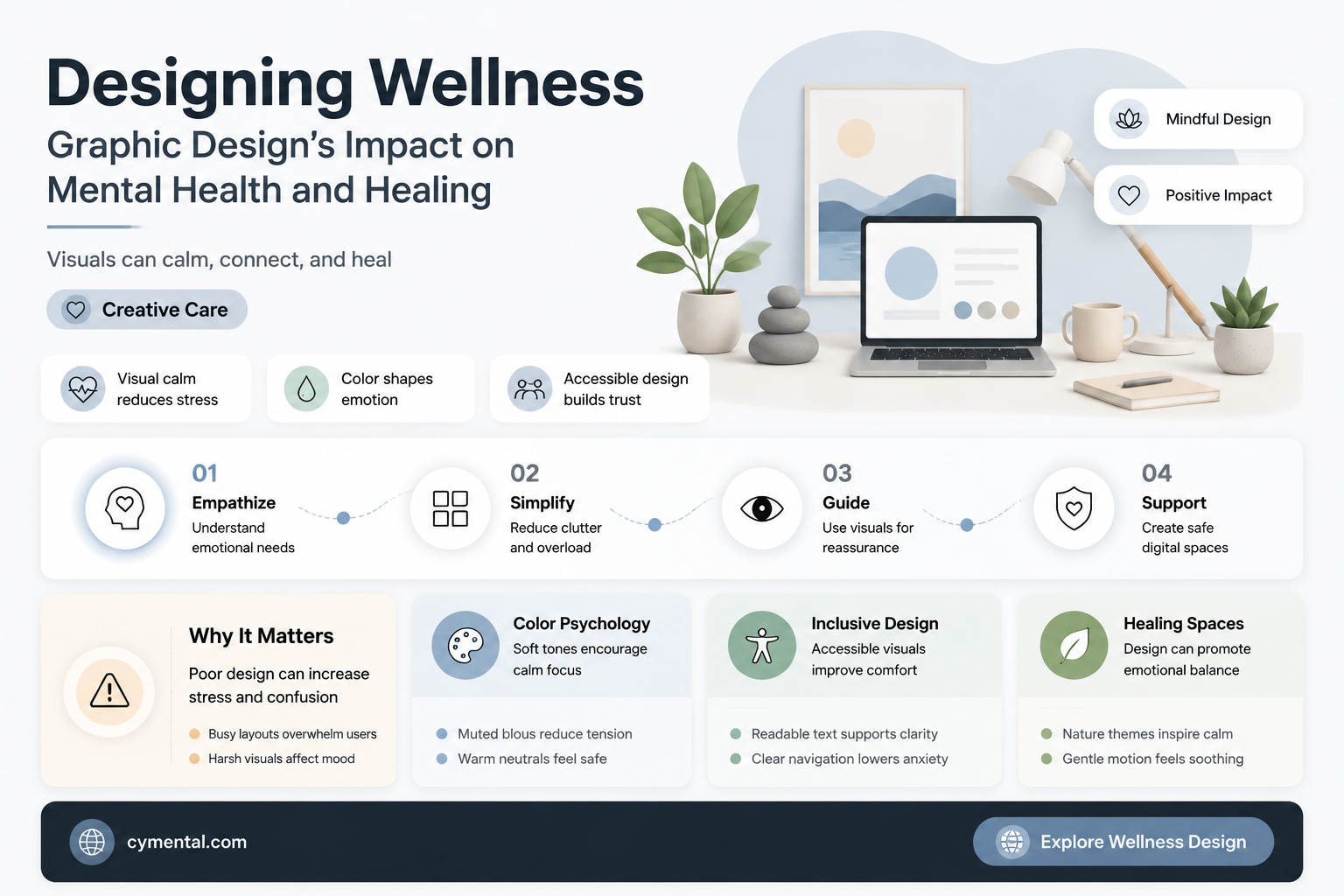
Graphic design can play a significant role in supporting mental health by creating visually engaging and accessible resources that promote awareness, reduce stigma, and provide comfort. Thoughtfully designed materials, such as infographics, posters, and digital content, can simplify complex mental health information, making it easier for individuals to understand and seek help. Additionally, calming visuals, color palettes, and typography can evoke positive emotions and reduce stress, while inclusive design ensures that diverse audiences feel represented and supported. By fostering empathy and communication, graphic design can empower individuals to prioritize their mental well-being and connect with available resources, ultimately contributing to a more compassionate and informed society.
| Characteristics | Values |
|---|---|
| Visual Expression | Graphic design provides a medium for individuals to express emotions, thoughts, and experiences visually, aiding in processing and communicating mental health struggles. |
| Therapeutic Creativity | Engaging in design activities can reduce stress, anxiety, and depression by promoting mindfulness and focus, similar to art therapy. |
| Positive Messaging | Designs with uplifting messages or affirmations can boost mood, self-esteem, and resilience, fostering a positive mindset. |
| Awareness Campaigns | Graphic design plays a crucial role in creating impactful mental health awareness campaigns, reducing stigma, and encouraging help-seeking behaviors. |
| Personalized Tools | Custom-designed journals, apps, or trackers can help individuals monitor moods, set goals, and track progress in their mental health journey. |
| Accessible Communication | Visual aids like infographics simplify complex mental health information, making it more accessible and understandable for diverse audiences. |
| Community Building | Collaborative design projects or workshops can foster connections, reduce isolation, and create supportive communities for mental health. |
| Empowerment Through Design | Designing personal projects or branding for mental health initiatives can empower individuals to take control of their narrative and advocate for change. |
| Sensory Stimulation | Thoughtfully designed visuals, colors, and patterns can positively impact mood, reduce stress, and create calming environments. |
| Digital Mental Health Tools | Graphic design enhances the user experience of mental health apps, websites, and platforms, making them more engaging and effective. |
Explore related products


What You'll Learn
- Visual Therapy Techniques: Using design principles to create calming, therapeutic visuals for stress reduction
- Mindful Design Practices: Incorporating mindfulness into the design process to enhance focus and creativity
- Emotional Communication Tools: Designing visuals to express emotions and improve mental health awareness
- Accessible Mental Health Resources: Creating user-friendly, visually appealing materials for mental health education
- Creative Outlets for Healing: Graphic design as a therapeutic activity to process emotions and trauma

Visual Therapy Techniques: Using design principles to create calming, therapeutic visuals for stress reduction
Graphic design, with its ability to communicate complex ideas visually, holds untapped potential in the realm of mental health. By leveraging design principles, we can create calming, therapeutic visuals that actively reduce stress and promote well-being. This approach, often referred to as visual therapy, harnesses the power of color, composition, and imagery to soothe the mind and provide a sense of tranquility.
Color Psychology in Action
The strategic use of color is a cornerstone of visual therapy. Soft, muted tones like pastel blues, greens, and lavenders are scientifically proven to lower heart rates and induce relaxation. For instance, a study published in the *Journal of Orthomolecular Medicine* found that blue hues can decrease anxiety levels by up to 15%. When designing therapeutic visuals, avoid harsh contrasts and opt for gradients that mimic natural transitions, such as a sunset or ocean waves. Pair these colors with minimalist layouts to prevent sensory overload, ensuring the visual remains a sanctuary rather than a stimulus.
Composition as a Calming Tool
The arrangement of elements within a design can either agitate or alleviate stress. Symmetrical compositions create balance and predictability, which the brain interprets as safety. Incorporate negative space generously to allow the eye to rest, reducing cognitive strain. For example, a centered mandala or a repeating geometric pattern can serve as a focal point for mindfulness practices. Avoid cluttered designs or chaotic arrangements, as these can trigger feelings of overwhelm. Instead, use the rule of thirds to place key elements in a way that feels harmonious and intentional.
Imagery That Heals
The choice of imagery plays a pivotal role in visual therapy. Nature-inspired visuals, such as forests, mountains, or flowing water, tap into biophilic design principles, which connect humans to the natural world. These images have been shown to reduce cortisol levels by up to 20%, according to research from the University of Exeter. Abstract art, when executed with soft lines and fluid shapes, can also evoke a sense of calm by encouraging open interpretation without imposing stress. For maximum impact, ensure the imagery is high-resolution and free of sharp edges or aggressive forms.
Practical Applications and Dosage
Incorporating these visuals into daily life can amplify their therapeutic effects. Create a "calm corner" in your home or workspace, featuring prints or digital displays of therapeutic designs. Spend 5–10 minutes daily focusing on these visuals, pairing the practice with deep breathing exercises for enhanced relaxation. For digital applications, consider designing phone wallpapers or screensavers that serve as micro-moments of tranquility throughout the day. Avoid overexposure by rotating visuals weekly to maintain their effectiveness.
Cautions and Considerations
While visual therapy is a powerful tool, it’s not a substitute for professional mental health treatment. Individual responses to color and imagery can vary, so personalize designs based on personal preferences and sensitivities. For instance, someone with a phobia of water may find ocean-themed visuals counterproductive. Additionally, ensure the visuals are accessible to all age groups by avoiding overly complex designs for children or seniors, who may benefit from simpler, more intuitive compositions.
By thoughtfully applying design principles, we can transform visuals into active agents of stress reduction, offering a non-invasive, accessible way to support mental well-being. Whether through a carefully curated poster or a digital interface, these techniques demonstrate how graphic design can be both art and therapy.
Chiropractic Care and Mental Health: Exploring the Mind-Body Connection
You may want to see also
Explore related products


Mindful Design Practices: Incorporating mindfulness into the design process to enhance focus and creativity
Graphic designers often face the challenge of balancing creativity with tight deadlines, leading to stress and burnout. Incorporating mindfulness into the design process can serve as a powerful antidote, enhancing focus and fostering innovation. By integrating mindful practices, designers can transform their workflow into a more intentional and calming experience, ultimately benefiting both their mental health and the quality of their work.
One effective method is to begin each design session with a brief mindfulness exercise. Spend 5–10 minutes practicing deep breathing or a short meditation to center your thoughts. This simple act can clear mental clutter, allowing you to approach the task with a fresh perspective. For instance, apps like Headspace or Calm offer guided sessions tailored for focus and creativity, making it easy to incorporate mindfulness into your routine. Pairing this with a clean, organized workspace can further reduce distractions, creating an environment conducive to mindful design.
Another strategy is to adopt a "single-tasking" mindset during the design process. Instead of juggling multiple tasks, focus on one element at a time—whether it’s sketching, selecting color palettes, or refining typography. This approach not only improves the quality of your work but also reduces cognitive overload. Research shows that multitasking can decrease productivity by up to 40%, so single-tasking aligns with mindfulness principles by encouraging full engagement with the present moment. Tools like the Pomodoro Technique (25 minutes of focused work followed by a 5-minute break) can structure this practice effectively.
Mindful design also involves being intentional about feedback and self-critique. Instead of harshly judging your work, approach it with curiosity and openness. Ask yourself, "What does this piece communicate?" rather than "Is this good enough?" This shift in perspective fosters a growth mindset, reducing anxiety and encouraging experimentation. Additionally, sharing your work with peers in a constructive, non-judgmental space can provide valuable insights without triggering self-doubt.
Finally, incorporating mindfulness into the design process extends beyond the screen. Engage your senses by taking short breaks to stretch, listen to calming music, or even sketch by hand. These activities not only refresh your mind but also stimulate creativity by breaking the monotony of digital work. For example, studies show that doodling can enhance cognitive performance and problem-solving skills, making it a practical mindful practice for designers.
By weaving mindfulness into the design process, graphic designers can cultivate a healthier relationship with their work, enhancing both mental well-being and creative output. These practices are not just tools for better design—they are investments in a sustainable, fulfilling career.
Breaking the Silence: Why Men Resist Seeking Mental Health Support
You may want to see also
Explore related products


$0.99 $21.95


Emotional Communication Tools: Designing visuals to express emotions and improve mental health awareness
Graphic design has the power to transcend language barriers, making it an invaluable tool for expressing emotions and fostering mental health awareness. By leveraging visual elements such as color, shape, and typography, designers can create imagery that resonates deeply with individuals, offering a universal language for emotional expression. For instance, warm tones like orange and yellow often evoke feelings of warmth and optimism, while cooler tones like blue and green can convey calmness or sadness. These visual cues can help individuals articulate complex emotions when words fail, serving as a bridge between internal feelings and external communication.
Consider the therapeutic potential of visual journaling, a practice that combines graphic design principles with personal expression. By designing templates that incorporate mood-specific color palettes, emotive icons, or abstract shapes, individuals can track their emotional states over time. For example, a daily mood tracker might use a gradient scale from dark to light to represent varying degrees of anxiety or happiness. This not only helps users reflect on their mental health but also provides mental health professionals with a tangible tool for assessment. Practical tip: Start with a simple grid-based layout, allowing users to color-code their emotions daily, and include a legend for consistency.
In the digital realm, interactive visuals can further enhance emotional communication. Apps and websites can employ animated graphics or customizable avatars to help users express emotions in real-time. For instance, a mental health app might feature a "mood wheel" where users drag a selector to indicate their current emotional state, triggering a corresponding visual change in the interface. Such tools not only make emotional expression more engaging but also normalize discussions around mental health. Caution: Ensure these designs are inclusive by testing them with diverse age groups, particularly adolescents and older adults, who may have varying levels of digital literacy.
Comparatively, traditional graphic design mediums like posters and infographics play a crucial role in public mental health campaigns. A well-designed poster with a powerful visual metaphor—such as a heart cracked open to symbolize emotional vulnerability—can capture attention and spark conversations. Pairing these visuals with concise, actionable messages (e.g., "It’s okay to not be okay. Reach out today.") amplifies their impact. Takeaway: When designing for public awareness, prioritize clarity and emotional resonance over complexity, ensuring the message is accessible to all audiences.
Finally, the act of creating emotional communication tools itself can be a therapeutic process for designers. Engaging in projects that focus on mental health fosters empathy and self-awareness, encouraging designers to reflect on their own emotional experiences. This dual benefit—helping others while nurturing personal well-being—highlights the transformative potential of graphic design in the mental health space. Practical tip: Designers can collaborate with mental health professionals to ensure their work is both aesthetically compelling and psychologically informed, maximizing its effectiveness.
Later School Start Times: Boosting Mental Health for Students?
You may want to see also
Explore related products


Accessible Mental Health Resources: Creating user-friendly, visually appealing materials for mental health education
Graphic design has the power to transform complex mental health information into digestible, engaging content. By leveraging visual hierarchy, color psychology, and intuitive layouts, designers can create materials that reduce cognitive load and increase comprehension. For instance, infographics can break down symptoms of anxiety or depression into easily scannable sections, using icons and color-coding to differentiate severity levels. This approach not only makes information more accessible but also encourages individuals to engage with potentially life-changing resources.
Consider the design of mental health apps or brochures targeting teenagers. This demographic often responds better to bold, vibrant visuals and concise messaging. A well-designed poster with a simple tagline like "It’s Okay to Not Be Okay" paired with a QR code linking to a crisis hotline can be more effective than a text-heavy pamphlet. Designers must prioritize clarity and empathy, ensuring that the tone and visuals align with the audience’s emotional and developmental needs. For younger audiences, incorporating characters or mascots can make mental health topics less intimidating.
However, accessibility in graphic design goes beyond aesthetics. It involves adhering to principles like high contrast ratios (minimum 4.5:1 for text) and using sans-serif fonts for readability. For digital resources, ensuring compatibility with screen readers and providing alt text for images is crucial. Physical materials should be designed with tactile considerations, such as using matte finishes to reduce glare for individuals with sensory sensitivities. These small but impactful details can make mental health resources inclusive for people with disabilities or neurodivergent conditions.
A practical example of this is the redesign of mental health worksheets. Traditional therapy handouts are often cluttered and overwhelming. By applying grid-based layouts, ample white space, and step-by-step visual cues, designers can create tools that guide users through exercises like journaling or mindfulness practices. Including progress trackers or visual milestones can also enhance motivation. For instance, a mood tracker could use a color gradient to represent emotional shifts over time, making patterns easier to identify.
Ultimately, the goal of accessible mental health resources is to remove barriers to understanding and action. Graphic designers play a critical role in this process by marrying form and function. By focusing on user-centered design, they can create materials that not only educate but also empower individuals to take control of their mental well-being. Whether it’s a digital toolkit, a printed guide, or an interactive poster, thoughtful design can turn passive readers into active participants in their mental health journey.
Sleep's Healing Power: Repairing Emotional and Mental Health Naturally
You may want to see also
Explore related products


$2.49




Creative Outlets for Healing: Graphic design as a therapeutic activity to process emotions and trauma
Graphic design, often seen as a professional skill, holds untapped potential as a therapeutic tool for processing emotions and trauma. By translating complex feelings into visual forms, individuals can externalize their inner experiences, making them more manageable and understandable. This process, akin to journaling but with a visual twist, allows for the expression of emotions that words alone cannot capture. For instance, a person grappling with anxiety might create a poster with fragmented shapes and overlapping colors to represent the chaos in their mind, providing a tangible outlet for their distress.
To harness graphic design as a healing activity, start with simple exercises that require minimal technical skill. One effective method is creating mood boards that reflect emotional states. Gather images, textures, and colors that resonate with your current feelings and arrange them in a collage. This activity not only helps identify and acknowledge emotions but also fosters a sense of control over them. For those dealing with trauma, designing a visual timeline of their journey can be particularly powerful. Use icons, gradients, or typography to represent milestones, setbacks, and moments of resilience, transforming a linear narrative into a multidimensional story.
While graphic design can be deeply therapeutic, it’s essential to approach it with mindfulness. Avoid overthinking the aesthetic outcome; focus instead on the process of creation. Set aside dedicated time—even 15–20 minutes daily—to engage in this practice without distractions. Tools like digital software (e.g., Canva, Procreate) or traditional materials (paper, markers, scissors) can be used based on preference. For beginners, guided prompts such as “Design a safe space” or “Visualize a difficult emotion” can provide structure without limiting creativity.
Comparing graphic design to traditional therapy reveals its unique advantages. Unlike verbal communication, which can feel restrictive or overwhelming, visual expression bypasses the need for precise language. It’s particularly beneficial for individuals who struggle to articulate their feelings or prefer non-verbal communication. Moreover, the tangible result of a graphic design project offers a sense of accomplishment, reinforcing the idea that emotions can be confronted and transformed. For example, a teenager processing grief might design a memorial poster, turning their sorrow into a creative tribute that honors their loss.
Incorporating graphic design into therapeutic routines requires no formal training, making it accessible to people of all ages and backgrounds. Schools, therapy centers, and community groups can integrate simple design activities into their programs to support emotional well-being. For instance, a group activity where participants collaboratively design a mural can foster connection and shared healing. Ultimately, graphic design as a therapeutic activity is not about creating masterpieces but about using creativity as a bridge to emotional clarity and recovery. By embracing this approach, individuals can turn their pain into a canvas for healing, one design at a time.
Gaming's Surprising Benefits: Boosting Mental Health and Well-Being
You may want to see also
Frequently asked questions
Graphic design can promote relaxation through calming visuals, such as soft color palettes, minimalist layouts, and nature-inspired imagery. These elements can create soothing environments or materials that help reduce anxiety and stress.
Yes, graphic design can be therapeutic when used in activities like journaling, creating mood boards, or designing personal projects. These creative processes allow individuals to express emotions, process thoughts, and focus their minds in a constructive way.
Graphic design plays a crucial role in creating impactful campaigns, infographics, and posters that educate the public about mental health issues. Visual storytelling can simplify complex topics, reduce stigma, and encourage empathy and understanding.
Absolutely. Thoughtful graphic design, such as clear typography, intuitive layouts, and calming visuals, can make information more accessible for individuals with anxiety, ADHD, or sensory sensitivities, helping them engage without feeling overwhelmed.