Caleb Wright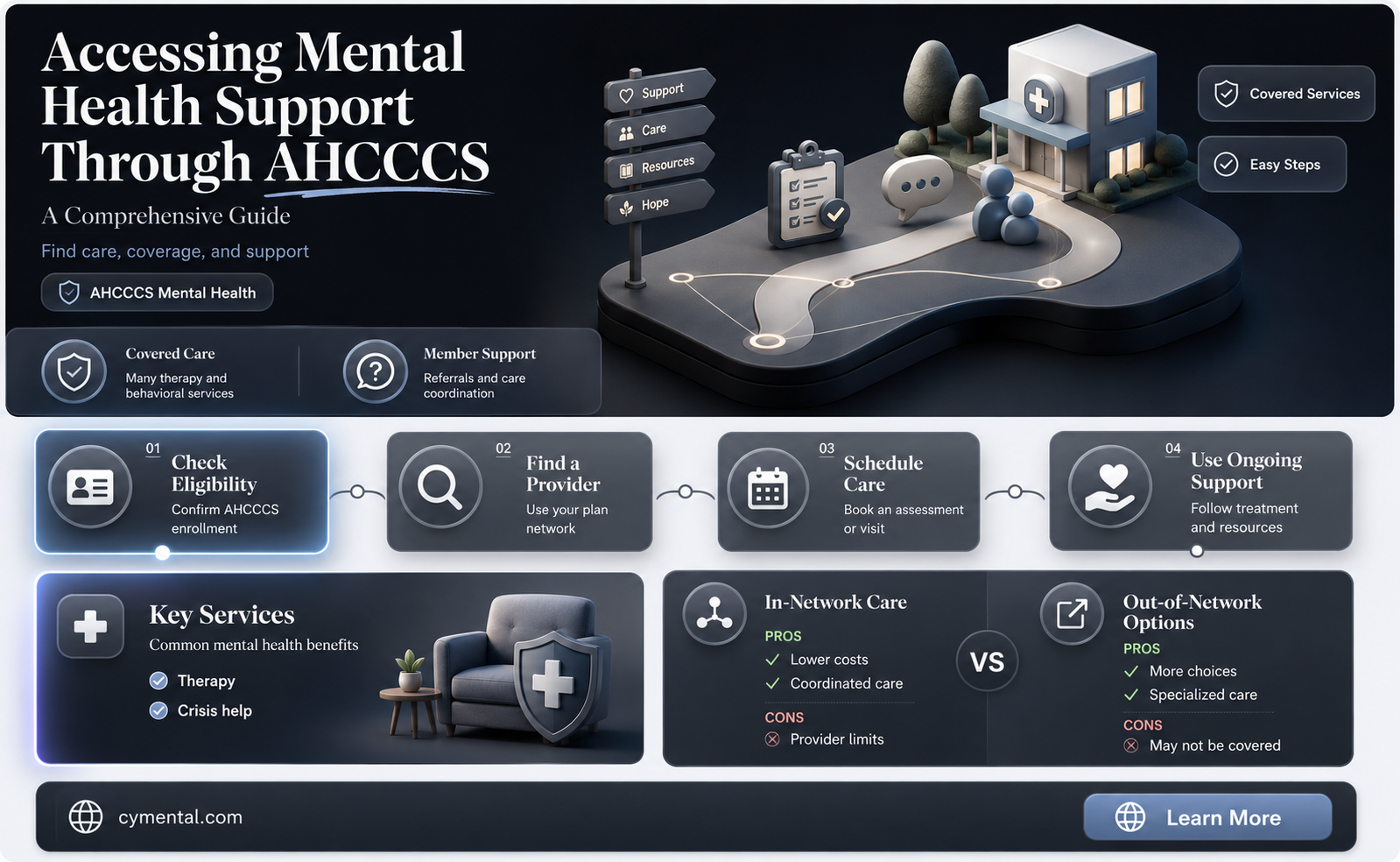
If you're seeking mental health support and are covered by the Arizona Health Care Cost Containment System (AHCCS), you have access to a range of services designed to address your needs. AHCCS provides comprehensive behavioral health benefits, including therapy, counseling, medication management, and crisis intervention, through its network of contracted providers. To get started, you’ll need to enroll in a Regional Behavioral Health Authority (RBHA) in your area, which will coordinate your care and connect you with appropriate resources. Eligibility for AHCCS mental health services typically depends on factors like income, disability status, or enrollment in specific programs. Once enrolled, you can work with your care coordinator to develop a personalized treatment plan tailored to your mental health goals. Reach out to your local RBHA or visit the AHCCS website for more information on how to access these vital services.
| Characteristics | Values |
|---|---|
| Eligibility | Must be enrolled in AHCCCS (Arizona Health Care Cost Containment System). |
| Covered Services | Outpatient therapy, counseling, psychiatric care, crisis intervention. |
| Provider Network | AHCCCS-contracted behavioral health providers (RBHAs/HBHAs). |
| Crisis Services | 24/7 crisis hotlines, mobile crisis units, emergency psychiatric care. |
| Referral Process | Referral may be required from a primary care provider or self-referral. |
| Cost | Typically no cost for eligible members (covered by AHCCCS). |
| Application Process | Apply for AHCCCS through Health-e-Arizona Plus or DES offices. |
| Coverage for Children | Includes children’s mental health services through EPSDT (Early and Periodic Screening, Diagnostic, and Treatment). |
| Substance Use Treatment | Integrated behavioral health services include substance use disorder treatment. |
| Telehealth Options | Telehealth services available for mental health care. |
| Cultural Competency | Providers required to offer culturally competent care. |
| Member Rights | Right to appeal decisions, access to a member handbook, and grievance process. |
| Additional Resources | AHCCCS website, 24/7 crisis lines, community health centers. |
| Renewal Requirements | Annual eligibility renewal required to maintain AHCCCS coverage. |
| Special Programs | Programs for specific populations (e.g., SMI - Seriously Mentally Ill). |
Explore related products


What You'll Learn

Eligibility for AHCCS mental health services
To access mental health services through the Arizona Health Care Cost Containment System (AHCCCS), understanding eligibility criteria is the first critical step. AHCCCS, Arizona’s Medicaid program, provides coverage for a range of mental health services, including therapy, medication management, and crisis intervention. However, not everyone qualifies automatically. Eligibility is primarily determined by income level, household size, and specific categorical requirements. For instance, adults without dependent children must meet income thresholds at or below 138% of the Federal Poverty Level (FPL), while children and pregnant individuals have different criteria. Additionally, certain groups, such as individuals with disabilities or those receiving Supplemental Security Income (SSI), may qualify regardless of income.
Beyond income and categorical requirements, AHCCCS eligibility for mental health services also considers residency and citizenship status. Applicants must be Arizona residents and either U.S. citizens or qualified immigrants. Documentation, such as a Social Security number, proof of income, and identification, is required during the application process. It’s important to note that AHCCCS offers different plans, each with its own network of mental health providers. Once enrolled, beneficiaries can access services like outpatient counseling, inpatient psychiatric care, and substance use disorder treatment. However, some services may require prior authorization, so understanding your plan’s specifics is essential.
For those seeking mental health help through AHCCCS, the application process can seem daunting but is manageable with the right approach. Start by visiting the AHCCCS website or contacting the Health-e-Arizona Plus portal to apply online. Alternatively, local DES offices or community health centers can assist with applications. If you’re unsure about eligibility, use the AHCCCS pre-screening tool to assess your qualifications before applying. Keep in mind that eligibility can change based on life circumstances, such as job loss or pregnancy, so periodic re-evaluation is necessary.
A common misconception is that AHCCCS only covers physical health, but mental health services are a core component of its benefits. These services are provided through Regional Behavioral Health Authorities (RBHAs), which coordinate care for AHCCCS members. For example, if you’re experiencing severe anxiety or depression, your primary care provider can refer you to an RBHA for specialized treatment. Crisis services, such as mobile crisis units or crisis hotlines, are also available 24/7 for immediate support. Understanding this structure ensures you can navigate the system effectively and access the care you need.
Finally, maintaining eligibility for AHCCCS mental health services requires adherence to program rules, such as reporting changes in income or household composition promptly. Failure to do so can result in coverage gaps or termination. Regularly reviewing your benefits and staying informed about policy updates can prevent disruptions in care. For those who qualify, AHCCCS offers a lifeline to essential mental health services, ensuring that financial barriers don’t stand in the way of well-being. By understanding and meeting eligibility criteria, individuals can take the first step toward accessing the support they deserve.
Mental Health Week: Awareness Boost or Superficial Support?
You may want to see also
Explore related products


Finding AHCCS-approved mental health providers
Navigating the Arizona Health Care Cost Containment System (AHCCCS) to find approved mental health providers can feel overwhelming, but understanding the process simplifies the journey. Start by verifying your AHCCCS eligibility, as coverage is contingent on factors like income, age, and disability status. Once confirmed, contact your assigned health plan—AHCCCS operates through managed care organizations (MCOs) like Banner University Health Plans or UnitedHealthcare Community Plan. Each MCO maintains a provider directory, accessible online or via customer service, listing mental health professionals within their network. This directory is your primary tool for identifying therapists, psychiatrists, or counselors who accept AHCCCS.
A critical step in this process is understanding the types of mental health services covered by AHCCCS. These typically include outpatient therapy, medication management, crisis intervention, and substance use treatment. However, coverage specifics may vary by MCO and plan type. For instance, some plans might require prior authorization for certain treatments, such as intensive outpatient programs or specialized therapies. To avoid unexpected costs, always confirm coverage details with your MCO before scheduling appointments. Additionally, if you’re seeking a provider with specific expertise—like trauma-informed care or bilingual services—ask your MCO representative to filter the directory accordingly.
One practical tip for streamlining your search is to leverage community resources. Local mental health organizations, clinics, or AHCCCS-affiliated agencies often have updated lists of approved providers. For example, the Maricopa County Department of Public Health or the Arizona Coalition for Mental Health frequently collaborate with AHCCCS providers and can offer recommendations. Online platforms like Psychology Today also allow you to filter providers by insurance type, though cross-verification with your MCO’s directory is essential to ensure accuracy. Combining these resources can save time and reduce frustration in locating a suitable provider.
Finally, don’t underestimate the importance of persistence and advocacy. AHCCCS networks can fluctuate, and providers may stop accepting new patients or leave the network unexpectedly. If your initial search yields limited options, request assistance from your MCO’s care coordinator or case manager. They can help navigate barriers, such as long waitlists or geographic limitations, by exploring alternatives like telehealth services or out-of-network approvals in certain cases. Remember, accessing mental health care is a right for AHCCCS members, and advocating for your needs is a vital part of the process. With patience and the right tools, finding an AHCCS-approved provider becomes a manageable task.
Vitamins and Mental Health: Exploring Their Role in Managing Illness
You may want to see also
Explore related products




Covered mental health treatments under AHCCS
AHCCCS, Arizona's Medicaid program, provides comprehensive coverage for mental health treatments, ensuring that eligible individuals have access to essential services. Understanding what is covered can help you navigate the system effectively and secure the care you need. Here’s a breakdown of the mental health treatments included under AHCCCS.
Outpatient Therapy and Counseling: AHCCCS covers individual, group, and family therapy sessions with licensed mental health professionals. This includes cognitive-behavioral therapy (CBT), dialectical behavior therapy (DBT), and other evidence-based approaches. Sessions are typically 45–60 minutes and can be scheduled weekly or biweekly, depending on your treatment plan. To access these services, start by contacting your AHCCCS-registered primary care provider (PCP) for a referral to a behavioral health specialist.
Medication Management: Prescription medications for mental health conditions, such as antidepressants, mood stabilizers, and antipsychotics, are covered under AHCCCS. Your psychiatrist or psychiatric nurse practitioner will determine the appropriate medication and dosage, often starting with a low dose and adjusting as needed. For example, selective serotonin reuptake inhibitors (SSRIs) like fluoxetine (Prozac) may begin at 20 mg daily for adults, with increases based on response and tolerance. Always follow your provider’s instructions and report any side effects promptly.
Inpatient and Residential Treatment: For severe or acute mental health crises, AHCCCS covers inpatient hospitalization and residential treatment programs. Inpatient stays are short-term, typically 3–7 days, and focus on stabilization. Residential treatment, on the other hand, offers longer-term care, often lasting 30–90 days, for individuals needing intensive support. Admission requires a thorough assessment by a mental health professional, who will determine the level of care needed based on your condition’s severity.
Substance Use Disorder Treatment: AHCCCS integrates mental health and substance use disorder (SUD) treatment, covering services like detoxification, outpatient counseling, and medication-assisted treatment (MAT). MAT programs often include medications like buprenorphine (Suboxone) for opioid use disorder, with dosages tailored to individual needs. For example, initial buprenorphine doses may range from 4–8 mg, adjusted under medical supervision. To access SUD treatment, contact your regional behavioral health authority (RBHA) for an assessment and enrollment in a specialized program.
Peer Support and Case Management: AHCCCS also supports non-clinical services, such as peer support and case management, to enhance recovery. Peer support specialists, individuals with lived experience in mental health recovery, provide guidance and encouragement. Case managers coordinate care, help navigate resources, and ensure continuity of treatment. These services are particularly valuable for individuals with complex needs or those transitioning from inpatient to outpatient care.
By familiarizing yourself with these covered treatments, you can advocate for your mental health needs and make the most of AHCCCS benefits. Always consult with your healthcare provider to develop a personalized treatment plan that aligns with your goals and circumstances.
Exercise and Mental Health: Unlocking the Mind-Body Connection
You may want to see also
Explore related products


Applying for AHCCS mental health benefits
Once eligibility is confirmed, the application process involves several steps. Start by completing the AHCCS application form, which can be submitted online, by mail, or in person. Be thorough when detailing your mental health needs, as this information helps determine the level of care you qualify for. After submission, AHCCS will review your application, which may take up to 45 days. During this period, you may be contacted for additional information or an interview. If approved, you’ll receive an AHCCS ID card and information about your assigned health plan, which will coordinate your mental health services.
Choosing the right health plan is a critical step in maximizing your AHCCS mental health benefits. AHCCS contracts with several health plans, each offering different provider networks and services. Research the available plans in your area, considering factors like mental health provider availability, specialty services, and patient reviews. Some plans may offer integrated care models that combine physical and mental health services, which can be particularly beneficial for holistic treatment. Once enrolled, contact your health plan to schedule an initial mental health assessment, which will guide your treatment plan.
Navigating AHCCS mental health benefits also requires awareness of potential challenges. Denials or delays can occur if applications are incomplete or if eligibility criteria are not fully met. If your application is denied, you have the right to appeal the decision within 90 days. Additionally, understanding your rights as a member is crucial. AHCCS ensures access to timely and appropriate mental health care, so if you encounter barriers, such as long wait times or limited provider options, contact your health plan’s member services or AHCCS directly for assistance.
Finally, leveraging AHCCS mental health benefits effectively involves proactive engagement with your care team. Attend all scheduled appointments, communicate openly with your providers, and advocate for your needs. If you require specialized services, such as substance abuse treatment or intensive outpatient programs, work with your health plan to ensure these are covered. AHCCS also offers additional resources, such as peer support programs and crisis hotlines, which can complement your treatment plan. By staying informed and actively participating in your care, you can make the most of AHCCS mental health benefits and achieve better outcomes.
Seeking Mental Health Support: My Journey and Why It Matters
You may want to see also
Explore related products


AHCCS crisis intervention and support options
In a crisis, every second counts, and AHCCS (Arizona Health Care Cost Containment System) offers immediate support for individuals facing mental health emergencies. The AHCCS crisis system is designed to provide rapid, accessible care, ensuring that no one is left without assistance during their most vulnerable moments. When you or a loved one is experiencing a mental health crisis, such as severe anxiety, suicidal thoughts, or psychotic episodes, AHCCS crisis intervention services can be a lifeline. These services are available 24/7, ensuring that help is always within reach.
Accessing Crisis Services: A Step-by-Step Guide
- Recognize the Signs: Be aware of crisis indicators, including sudden changes in behavior, expressions of self-harm, or severe emotional distress.
- Contact the Crisis Line: Call the AHCCS crisis hotline at 1-800-631-1314. Trained professionals will assess the situation and guide you to the appropriate resources.
- Mobile Crisis Teams: For immediate on-site support, AHCCS deploys mobile crisis teams that can visit your location, providing assessment, stabilization, and referrals to further care.
- Crisis Stabilization Units: In cases requiring a higher level of care, individuals can be admitted to crisis stabilization units for short-term treatment, typically lasting 24 to 72 hours.
What to Expect During Crisis Intervention
Crisis intervention through AHCCS is tailored to the individual’s needs. For children and adolescents, services may include family-centered approaches, while adults might receive peer support or medication management. The goal is to de-escalate the crisis, ensure safety, and connect individuals to ongoing mental health care. For example, a person experiencing a psychotic episode might receive immediate medication adjustments and therapy referrals to prevent future crises.
Practical Tips for Navigating AHCCS Crisis Support
- Keep Important Numbers Handy: Save the AHCCS crisis line and your regional behavioral health authority’s contact information in your phone.
- Know Your Rights: AHCCS ensures that crisis services are provided regardless of insurance status, but understanding your coverage can streamline the process.
- Follow-Up Care is Key: After a crisis, AHCCS can help connect you to long-term mental health services, such as outpatient therapy or case management, to prevent recurrence.
By leveraging AHCCS crisis intervention and support options, individuals can access timely, effective care during mental health emergencies. This system not only addresses immediate needs but also lays the foundation for sustained recovery and well-being.
Physicians Seeking Mental Health Support: Breaking Stigma, Prioritizing Well-being
You may want to see also
Frequently asked questions
AHCCCS (Arizona Health Care Cost Containment System) is Arizona’s Medicaid program, providing health coverage to eligible individuals, including mental health services. It covers therapy, counseling, medication management, and crisis intervention for those who qualify.
Eligibility is based on income, household size, disability status, or other factors. You can apply online through the Health-e-Arizona Plus portal or contact your local DES office to determine if you qualify.
AHCCCS covers a range of mental health services, including outpatient therapy, inpatient treatment, psychiatric evaluations, substance use disorder treatment, and case management.
You can search for AHCCCS-approved providers using the AHCCCS Provider Directory on their website or contact your assigned health plan for assistance in finding a mental health professional.
Yes, AHCCCS covers emergency mental health services, including crisis hotlines, mobile crisis units, and emergency room visits for immediate mental health needs. Contact your health plan or local crisis resources for assistance.