Madison Cole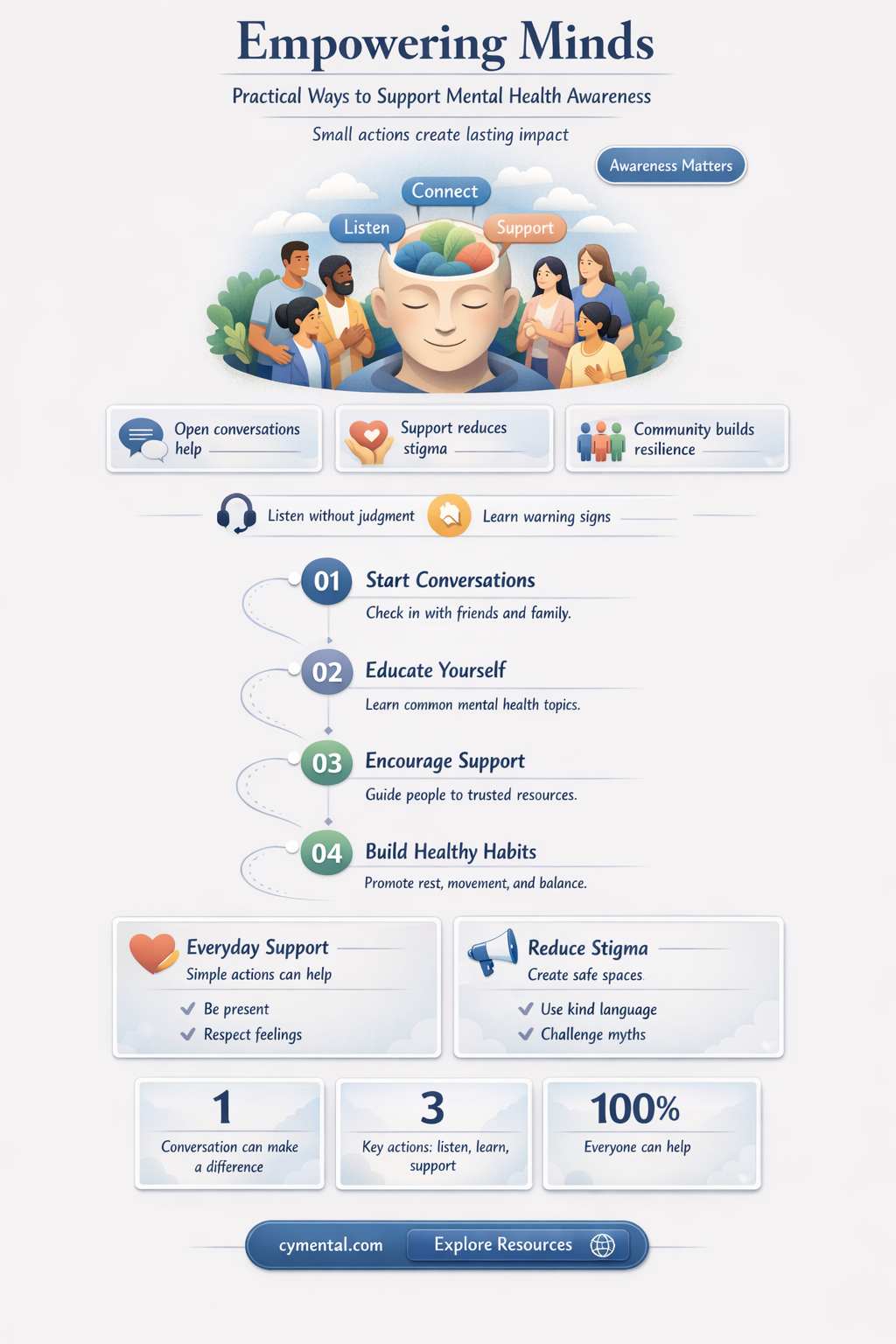
Mental health awareness is a critical issue in today’s society, as millions of people worldwide struggle with conditions like anxiety, depression, and stress, often in silence. By educating ourselves and others about mental health, we can reduce stigma, encourage open conversations, and provide support to those in need. Simple actions such as listening without judgment, sharing reliable resources, and promoting self-care practices can make a significant difference. Additionally, advocating for policies that prioritize mental health services and funding ensures that accessible care is available to everyone. Together, we can create a compassionate and informed community that fosters understanding and healing for all.
Explore related products

$16.98 $30


What You'll Learn
- Educate Yourself and Others: Learn about mental health issues and share accurate information to reduce stigma
- Listen Without Judgment: Offer a safe space for open conversations about feelings and struggles
- Promote Self-Care: Encourage healthy habits like exercise, sleep, and mindfulness for mental well-being
- Support Local Initiatives: Volunteer or donate to organizations focused on mental health awareness and care
- Use Social Media Positively: Share resources, stories, and campaigns to reach a wider audience

Educate Yourself and Others: Learn about mental health issues and share accurate information to reduce stigma
Misinformation about mental health is rampant, perpetuating harmful stereotypes and preventing people from seeking help. Educating yourself is the first step to dismantling these myths. Start by seeking out reputable sources like the National Alliance on Mental Illness (NAMI), the World Health Organization (WHO), or peer-reviewed journals. Focus on understanding common disorders, their symptoms, and the realities of living with them. For instance, depression isn’t just "feeling sad"; it’s a debilitating condition affecting millions globally, with symptoms ranging from persistent fatigue to suicidal thoughts. Armed with accurate knowledge, you can challenge misconceptions when you encounter them.
Sharing what you’ve learned requires strategy. Avoid overwhelming others with statistics or clinical jargon. Instead, use relatable examples and personal anecdotes (with consent) to humanize the issue. For instance, explaining that anxiety disorders can manifest as physical symptoms like panic attacks or chronic insomnia helps people recognize these experiences in themselves or others. Social media platforms are powerful tools for dissemination—share infographics, videos, or articles from trusted organizations. However, be mindful of your audience; tailor your approach to their level of understanding and cultural context. A teenager might engage more with a TikTok video, while a workplace setting may benefit from a structured workshop.
One effective method to reduce stigma is by normalizing conversations about mental health. Incorporate mental health topics into everyday discussions, just as you would physical health. For example, if a colleague mentions feeling overwhelmed, respond with empathy and suggest resources like Employee Assistance Programs (EAPs) or local support groups. Schools can integrate mental health education into curricula, starting as early as age 10, using age-appropriate language to teach emotional regulation and resilience. Parents can model openness by discussing their own mental health experiences, fostering an environment where children feel safe expressing their feelings.
While educating others, be cautious of overstepping boundaries or unintentionally causing harm. Avoid diagnosing or offering unsolicited advice; instead, encourage professional help when needed. For instance, phrases like "Have you considered talking to a therapist?" are more constructive than "You should just think positively." Additionally, be aware of cultural sensitivities—what’s considered stigmatizing in one culture may differ elsewhere. Collaborate with local mental health advocates or organizations to ensure your efforts are culturally relevant and respectful.
Ultimately, education is a powerful tool for change, but it’s just one piece of the puzzle. Pairing knowledge with empathy and action creates a lasting impact. Organize or participate in awareness campaigns, volunteer with mental health organizations, or advocate for policy changes that improve access to care. By consistently educating yourself and others, you contribute to a society where mental health is understood, discussed, and prioritized without shame. Remember, every conversation, every shared fact, and every act of understanding moves us closer to a stigma-free world.
Ensure Plus and Mental Health: Exploring Nutritional Support for Well-Being
You may want to see also
Explore related products




Listen Without Judgment: Offer a safe space for open conversations about feelings and struggles
One of the most powerful ways to support mental health awareness is by creating an environment where individuals feel safe to express their emotions without fear of criticism or dismissal. Listening without judgment is an art that requires practice and a genuine desire to understand another person's perspective. When someone shares their struggles, it's crucial to remember that your role is not to fix their problems but to provide a non-judgmental ear and a supportive presence. This simple act can be transformative, as it allows individuals to feel heard, validated, and less alone in their experiences.
The Power of Active Listening
Engage in active listening by giving your undivided attention. Maintain eye contact, if appropriate, and use non-verbal cues like nodding to encourage the speaker. Avoid interrupting or preparing your response while they are sharing. Instead, focus on understanding their emotions and experiences. Reflect on what they've said by paraphrasing and asking open-ended questions to show you're engaged and to clarify any points. For instance, "It sounds like you've been feeling overwhelmed with these recent changes. Can you tell me more about what's been challenging?" This approach demonstrates empathy and encourages a deeper conversation.
Creating a Safe Space
To foster a safe space, ensure confidentiality and respect. Assure the person that what they share will remain between you, unless there's a concern for their safety or the safety of others. Avoid any form of criticism, advice-giving, or sharing similar stories that might shift the focus away from them. Instead, use empathetic statements like, "I can't begin to understand exactly how you feel, but I'm here to support you." This approach encourages vulnerability and trust, allowing individuals to open up about their mental health struggles.
Practical Tips for Non-Judgmental Listening
- Be Mindful of Your Reactions: Notice your initial reactions and biases, and set them aside. Avoid making assumptions or jumping to conclusions.
- Use Neutral Language: Choose words that are non-judgmental and open-ended. Instead of "Why do you feel that way?" try "Can you help me understand your perspective?"
- Practice Empathy: Try to understand their feelings and experiences from their point of view. Empathy builds connection and trust.
- Offer Reassurance: Let them know it's okay to feel the way they do. Statements like, "It's completely understandable to feel anxious in this situation," can be comforting.
By mastering the skill of listening without judgment, you become a valuable ally in someone's mental health journey. This approach not only helps individuals feel supported but also encourages them to seek help and take steps towards managing their mental well-being. It is a simple yet powerful way to contribute to mental health awareness and foster a culture of empathy and understanding.
Vitamin D and Omega-3: Natural Allies for Mental Health?
You may want to see also
Explore related products

$13.93 $14.95


Promote Self-Care: Encourage healthy habits like exercise, sleep, and mindfulness for mental well-being
Self-care isn’t just a buzzword—it’s a cornerstone of mental health. Research shows that regular physical activity, adequate sleep, and mindfulness practices can reduce symptoms of anxiety and depression by up to 30%. Yet, many overlook these habits in the chaos of daily life. Start by framing self-care not as a luxury, but as a necessity, akin to fueling your body with food or water. Without it, mental resilience crumbles under stress.
To integrate exercise into your routine, aim for at least 150 minutes of moderate aerobic activity weekly, as recommended by the World Health Organization. This doesn’t mean marathon training; even a 10-minute walk can boost mood by increasing endorphins. For those aged 18–64, strength training twice a week complements cardiovascular health, enhancing both physical and mental stamina. Pro tip: Pair exercise with social interaction—join a group class or invite a friend—to double its benefits.
Sleep is non-negotiable. Adults need 7–9 hours nightly, yet 35% report insufficient rest. Poor sleep disrupts emotional regulation, making even minor stressors feel overwhelming. Establish a bedtime routine: dim lights an hour before bed, avoid screens, and keep the room cool (60–67°F). For shift workers or those with insomnia, cognitive behavioral therapy for insomnia (CBT-I) has proven effective, improving sleep quality in 70–80% of cases.
Mindfulness isn’t about emptying your mind—it’s about observing thoughts without judgment. Start with 5 minutes daily; apps like Headspace or Calm offer guided sessions. For children and teens, mindfulness can be woven into play or art, fostering emotional awareness early. Studies show that consistent practice reduces cortisol levels, the stress hormone, by 14% over 8 weeks.
The key to self-care is consistency, not perfection. Missed a workout? Prioritize sleep instead. Feeling restless? Try a 2-minute breathing exercise. These habits compound over time, building a mental health foundation that withstands life’s unpredictability. By modeling and advocating for self-care, you not only improve your own well-being but inspire others to do the same.
Find Free Depression Support: Resources and Helpful Services Available Now
You may want to see also
Explore related products

$7.84 $14.99


Support Local Initiatives: Volunteer or donate to organizations focused on mental health awareness and care
Local organizations are often the backbone of mental health awareness and care, providing critical services that national or international groups may overlook. These initiatives understand the unique challenges of their communities, from cultural barriers to socioeconomic disparities, and tailor their efforts accordingly. By supporting these organizations, you directly contribute to solutions that resonate with and uplift your neighbors. Whether through volunteering your time or donating resources, your involvement can make a tangible difference in fostering a more compassionate and informed community.
Volunteering offers a hands-on way to engage with mental health initiatives, allowing you to see the impact of your efforts firsthand. Many organizations need help with event coordination, peer support programs, or administrative tasks. For instance, you could assist in organizing a mental health awareness workshop for teenagers, where your role might involve setting up the venue, facilitating group discussions, or distributing educational materials. If you have specialized skills, such as graphic design or counseling, these can be particularly valuable. A few hours a week can free up resources for the organization to focus on expanding its reach or improving its services.
Donations, whether monetary or in-kind, provide the lifeblood that keeps local initiatives running. Financial contributions help cover operational costs, fund therapy sessions for low-income individuals, or purchase essential materials like self-help books and stress-relief kits. For example, a donation of $50 could sponsor a mental health first aid training session for a community member, equipping them with the skills to assist someone in crisis. In-kind donations, such as art supplies for therapeutic workshops or snacks for support group meetings, are equally impactful. Before donating, research the organization’s needs to ensure your contribution aligns with their current priorities.
Supporting local initiatives also strengthens the community’s ability to address mental health stigma. By participating in or funding awareness campaigns, you help normalize conversations about mental health and encourage individuals to seek help without fear of judgment. For instance, a local organization might run a social media challenge to share personal stories of resilience, and your involvement could amplify its reach. Over time, these collective efforts create a culture of empathy and understanding, where mental health is treated with the same urgency as physical health.
Finally, supporting local mental health initiatives fosters a sense of belonging and shared responsibility. When you volunteer or donate, you become part of a network dedicated to improving lives. This not only benefits the community but also enriches your own perspective, as you witness the resilience and strength of those around you. Start by identifying organizations in your area—many have websites or social media pages outlining their mission and needs. Whether you commit an hour a month or a larger sum annually, your support ensures that these vital services continue to thrive and evolve.
Nourish Your Mind: The Surprising Link Between Eating and Mental Health
You may want to see also
Explore related products




Use Social Media Positively: Share resources, stories, and campaigns to reach a wider audience
Social media platforms, with their billions of users, are powerful tools for amplifying mental health awareness. By sharing resources, personal stories, and campaigns, you can break down stigma, educate others, and connect individuals to support. A single post has the potential to reach thousands, offering hope to someone silently struggling or providing crucial information to a friend seeking ways to help.
Every day, millions search for mental health information online. Sharing reputable resources like helpline numbers, crisis text lines, or educational articles from organizations like the National Alliance on Mental Illness (NAMI) or the World Health Organization (WHO) ensures accurate, accessible support reaches those in need. For instance, a simple Instagram story highlighting a local therapy directory or a Twitter thread debunking mental health myths can make a tangible difference.
While sharing resources is vital, personal narratives hold immense power. Storytelling humanizes mental health struggles, fostering empathy and understanding. Consider sharing your own experiences (if comfortable) or amplifying the voices of others. A Facebook post about overcoming anxiety, a TikTok video on coping mechanisms, or a blog post detailing a journey with depression can inspire others to seek help and challenge societal misconceptions. Remember, vulnerability is strength, and your story could be the catalyst for someone else's healing.
Every major social media platform hosts dedicated campaigns and challenges aimed at raising mental health awareness. Participating in these initiatives amplifies their reach and demonstrates solidarity. For example, joining the #BellLetsTalk campaign on Twitter or sharing a post for Mental Health Awareness Month in May contributes to a global conversation. These campaigns often partner with mental health organizations, ensuring your engagement directly supports fundraising and advocacy efforts.
To maximize your impact, be strategic. Use relevant hashtags like #MentalHealthAwareness, #EndTheStigma, or #YouAreNotAlone to increase visibility. Engage with other users' posts, fostering a supportive online community. Avoid sensationalism or sharing triggering content without warnings. Remember, the goal is to inform, inspire, and connect, not to exploit or sensationalize. By using social media responsibly and purposefully, you can become a powerful advocate for mental health, one post at a time.
Accessing Mental Health Support: Can the Mentally Ill Find Assistance?
You may want to see also
Frequently asked questions
Begin by choosing a private, comfortable setting and express your concern in a caring, non-judgmental way. Use open-ended questions like, “How have you been feeling lately?” and actively listen without interrupting. Let them know you’re there to support them, and encourage professional help if needed.
Share reliable resources and personal stories on social media, organize or participate in mental health events like walks or workshops, and collaborate with local organizations. Educate yourself and others by hosting discussions or distributing informative materials in public spaces.
Be present, patient, and non-judgmental. Educate yourself about their condition, encourage professional help, and offer practical support like helping with daily tasks. Avoid pressuring them to “get better” and instead validate their feelings and experiences.
Self-care is essential for both personal well-being and advocating for mental health awareness. By prioritizing your own mental health, you model healthy behaviors and reduce stigma. Share your self-care practices to inspire others and emphasize the importance of seeking help when needed.