Harper Lewis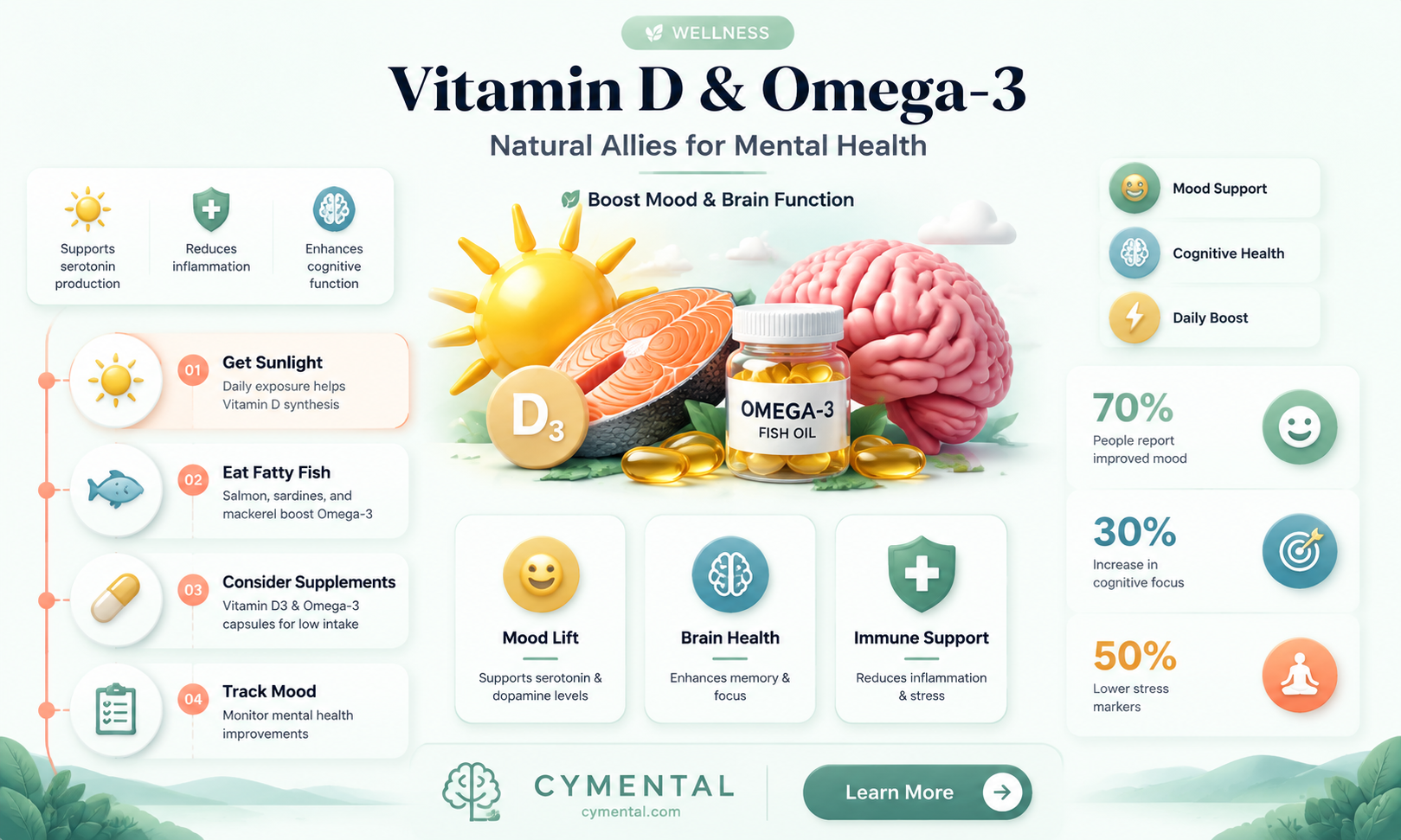
Recent research has sparked interest in the potential role of Vitamin D and Omega-3 fatty acids in supporting mental health and alleviating symptoms of mental illness. Both nutrients are known for their wide-ranging health benefits, but emerging studies suggest they may play a significant role in brain function, mood regulation, and reducing inflammation, which are often implicated in conditions like depression, anxiety, and bipolar disorder. Vitamin D, often referred to as the sunshine vitamin, is believed to influence neurotransmitter synthesis and neuroprotection, while Omega-3s, particularly EPA and DHA, are essential for neuronal structure and function. Although the evidence is still evolving, these findings have led to growing optimism about the use of Vitamin D and Omega-3 supplements as complementary approaches to traditional mental health treatments. Further research is needed to fully understand their mechanisms and effectiveness, but the potential for these natural compounds to improve mental well-being is a promising area of exploration.
| Characteristics | Values |
|---|---|
| Vitamin D and Mental Health | Low levels of vitamin D are associated with increased risk of depression, anxiety, and seasonal affective disorder (SAD). Supplementation may improve mood in deficient individuals. |
| Omega-3 and Mental Health | Omega-3 fatty acids (EPA and DHA) have anti-inflammatory and neuroprotective effects. Studies suggest they may reduce symptoms of depression, bipolar disorder, and schizophrenia. |
| Mechanism of Action (Vitamin D) | Regulates neurotransmitters like serotonin, influences brain development, and reduces inflammation. |
| Mechanism of Action (Omega-3) | Modulates neurotransmitter function, reduces inflammation, and supports neuronal membrane integrity. |
| Evidence Strength | Moderate evidence for both vitamin D and omega-3 in mental health. Effects are more pronounced in individuals with deficiencies or severe symptoms. |
| Recommended Dosage (Vitamin D) | 600–2000 IU/day, depending on deficiency levels and individual needs. |
| Recommended Dosage (Omega-3) | 1000–2000 mg/day of combined EPA and DHA, with higher doses (2000–4000 mg/day) for depression. |
| Safety and Side Effects | Generally safe when taken as recommended. High doses of vitamin D can cause hypercalcemia, while excessive omega-3 may increase bleeding risk. |
| Population Benefits | Most beneficial for individuals with vitamin D deficiency, pregnant women, older adults, and those with inflammatory conditions. |
| Limitations | Not a standalone treatment for mental illness; works best as adjunctive therapy. Individual responses vary. |
| Latest Research (2023) | Ongoing studies explore combination therapy of vitamin D and omega-3 for synergistic effects on mental health. |
| Conclusion | Vitamin D and omega-3 may support mental health, particularly in deficient populations, but should complement traditional treatments like therapy and medication. |
Explore related products


What You'll Learn

Vitamin D's role in reducing depression symptoms
Vitamin D, often dubbed the “sunshine vitamin,” plays a pivotal role in brain health, and its deficiency has been consistently linked to depressive symptoms. Studies show that individuals with depression frequently exhibit lower levels of vitamin D compared to those without the condition. This correlation isn’t merely coincidental; vitamin D receptors are present in brain regions associated with mood regulation, such as the hippocampus and prefrontal cortex. When these receptors are activated, they influence the synthesis of neurotransmitters like serotonin, which is critical for mood stability. For instance, a 2019 meta-analysis published in the *Journal of Affective Disorders* found that vitamin D supplementation significantly reduced depressive symptoms in individuals with diagnosed depression, particularly in those with severe deficiency.
To harness vitamin D’s potential in combating depression, supplementation must be tailored to individual needs. The recommended daily intake for adults ranges from 600 to 800 IU, but those with deficiencies may require higher doses, often between 2,000 and 5,000 IU daily, under medical supervision. It’s crucial to monitor blood levels to avoid toxicity, as excessive vitamin D can lead to hypercalcemia. Practical tips include pairing vitamin D supplements with meals containing healthy fats, as it is fat-soluble, and spending 10–30 minutes outdoors daily to naturally boost levels through sunlight exposure. However, reliance on sunlight alone is insufficient for those in regions with limited sun exposure, making supplementation essential.
A comparative analysis of vitamin D’s role in depression versus other treatments highlights its unique advantages. Unlike antidepressants, which often come with side effects like weight gain or insomnia, vitamin D supplementation is generally well-tolerated and addresses a root cause of depression in deficient individuals. Moreover, it complements other treatments, such as therapy or omega-3 supplementation, creating a holistic approach to mental health. For example, a 2020 study in *Nutrients* demonstrated that combining vitamin D and omega-3 fatty acids enhanced their individual benefits, reducing depressive symptoms more effectively than either alone.
Incorporating vitamin D into a mental health regimen requires a proactive, informed approach. Start by consulting a healthcare provider to assess your vitamin D levels through a blood test. If deficient, begin supplementation with a moderate dose, gradually increasing as needed. Track your mood and energy levels over several weeks to gauge effectiveness. Additionally, consider dietary sources like fatty fish, fortified dairy products, and egg yolks to support supplementation. While vitamin D isn’t a cure-all for depression, its role in reducing symptoms is supported by growing evidence, making it a valuable tool in the fight against mental illness.
Helping Others, Hurting Yourself: The Mental Health Toll of Caregiving
You may want to see also
Explore related products


Omega-3's impact on anxiety and mood disorders
Omega-3 fatty acids, particularly EPA (eicosapentaenoic acid) and DHA (docosahexaenoic acid), play a critical role in brain health, influencing neurotransmitter function and neuroinflammation. Studies suggest that individuals with anxiety and mood disorders often have lower levels of these essential fats, pointing to a potential link between omega-3 deficiency and mental health challenges. For instance, a meta-analysis published in *JAMA Network Open* found that omega-3 supplementation significantly reduced anxiety symptoms, particularly in individuals with clinical diagnoses or elevated baseline anxiety levels. This highlights the importance of omega-3s as a complementary approach to managing mental health.
To harness the benefits of omega-3s for anxiety and mood disorders, consider incorporating both dietary and supplemental sources. Fatty fish like salmon, mackerel, and sardines are rich in EPA and DHA, with a recommended intake of 2–3 servings per week. For those who struggle to meet this through diet alone, supplements are a practical alternative. A typical therapeutic dose ranges from 1,000 to 2,000 mg of combined EPA and DHA daily, though individual needs may vary. It’s crucial to consult a healthcare provider to determine the appropriate dosage, especially for those on medications or with specific health conditions.
While omega-3s show promise, their effectiveness can vary based on factors like age, severity of symptoms, and overall lifestyle. For example, adolescents and young adults, who are at higher risk for developing anxiety and mood disorders, may benefit from early intervention with omega-3 supplementation. Pairing supplementation with stress-reduction techniques, such as mindfulness or exercise, can enhance outcomes. However, omega-3s are not a standalone cure; they work best as part of a holistic approach that includes therapy, medication (if prescribed), and healthy lifestyle choices.
One practical tip for maximizing omega-3 absorption is to take supplements with a meal containing healthy fats, as this improves bioavailability. Additionally, choosing high-quality supplements that are third-party tested for purity and potency can ensure you’re getting the intended benefits. For those hesitant to start supplementation, tracking mood and anxiety symptoms over time can provide a baseline to measure improvements. While results may not be immediate, consistent use over several weeks to months is often necessary to observe noticeable changes.
In conclusion, omega-3s offer a valuable tool in the management of anxiety and mood disorders, supported by research and practical application. By understanding dosage, sources, and complementary strategies, individuals can effectively integrate omega-3s into their mental health regimen. While not a universal solution, their potential to alleviate symptoms and improve overall well-being makes them a worthy consideration for anyone exploring natural approaches to mental health support.
Are Mental Institutions Truly Helpful? Exploring Their Impact and Effectiveness
You may want to see also
Explore related products




Combined effects of Vitamin D and Omega-3 on mental health
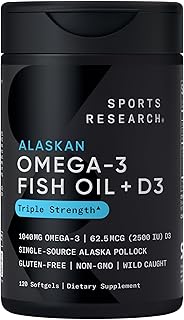
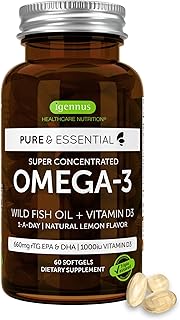
Emerging research suggests that the combination of Vitamin D and Omega-3 fatty acids may offer synergistic benefits for mental health, particularly in addressing conditions like depression, anxiety, and cognitive decline. While each nutrient has been studied individually for its effects on brain function, their combined impact is gaining attention for its potential to enhance therapeutic outcomes.
Analytical Perspective: Studies have shown that Vitamin D, often referred to as the "sunshine vitamin," plays a crucial role in neurotransmitter synthesis and neuroprotection. Omega-3s, specifically EPA (eicosapentaenoic acid) and DHA (docosahexaenoic acid), are essential for neuronal membrane structure and anti-inflammatory processes in the brain. When combined, these nutrients may mitigate inflammation and oxidative stress, two key factors linked to mental illness. For instance, a 2019 study published in *The Journal of Clinical Psychiatry* found that individuals with depression who received both Vitamin D (2,000 IU/day) and Omega-3 (1 gram/day) supplementation showed greater symptom improvement compared to those on a single supplement.
Instructive Approach: To harness these combined benefits, consider the following practical steps. Adults should aim for a daily intake of 2,000–4,000 IU of Vitamin D, particularly in regions with limited sunlight, and 1,000–2,000 mg of Omega-3 (with a balanced EPA-to-DHA ratio). Pairing these supplements with a diet rich in fatty fish, fortified foods, and sunlight exposure can optimize absorption. For older adults or those with diagnosed mental health conditions, consulting a healthcare provider for personalized dosing is essential, as individual needs may vary.
Comparative Insight: While both nutrients are beneficial alone, their combined effect appears to be more than additive. Vitamin D enhances the bioavailability of Omega-3s, while Omega-3s support the anti-inflammatory pathways activated by Vitamin D. This synergy is particularly promising for populations at higher risk of mental health issues, such as adolescents and the elderly. For example, a 2021 meta-analysis in *Nutrients* highlighted that adolescents with low Vitamin D levels experienced greater anxiety reduction when Omega-3 supplementation was added to their regimen.
Persuasive Argument: Incorporating Vitamin D and Omega-3 into mental health strategies is not just a trend but a science-backed approach. Their combined anti-inflammatory and neuroprotective properties address root causes of mental illness, rather than merely alleviating symptoms. For those hesitant to rely solely on medication, this natural combination offers a complementary option with minimal side effects. However, it’s critical to view supplementation as part of a holistic approach, including therapy, lifestyle changes, and professional guidance.
Descriptive Takeaway: Imagine a brain fortified against inflammation, with neurons communicating efficiently and mood-regulating chemicals in balance—this is the potential of combining Vitamin D and Omega-3. While not a cure-all, this duo represents a promising tool in the mental health toolkit, particularly for those with deficiencies or heightened needs. By integrating these nutrients thoughtfully, individuals can take a proactive step toward supporting their mental well-being.
Finding Support: Where to Get Help for Depression and Healing
You may want to see also
Explore related products



Scientific studies linking Vitamin D deficiency to mental illness
Vitamin D, often dubbed the "sunshine vitamin," plays a pivotal role in bone health, but its influence extends far beyond skeletal integrity. Emerging research has spotlighted a compelling link between Vitamin D deficiency and mental health disorders, including depression, anxiety, and even schizophrenia. Studies have shown that individuals with lower levels of Vitamin D are at a higher risk of developing these conditions, prompting scientists to explore whether supplementation could be a viable intervention. For instance, a meta-analysis published in the *British Journal of Psychiatry* found that Vitamin D deficiency was associated with a 31% increased risk of depression. This raises the question: could addressing Vitamin D insufficiency be a key component in managing mental health?
One of the most instructive studies in this domain comes from a randomized controlled trial conducted in 2014, where participants with moderate to severe depression were given Vitamin D supplements. The results revealed that those who received the supplements experienced a significant reduction in depressive symptoms compared to the placebo group. The dosage used in this study was 2,000–4,000 IU daily, a range commonly recommended for adults with insufficient Vitamin D levels. This finding underscores the potential of Vitamin D as an adjunctive therapy for depression, particularly in populations with documented deficiencies. However, it’s crucial to note that supplementation should be guided by blood tests to avoid toxicity, as excessive Vitamin D can lead to hypercalcemia.
The mechanism behind Vitamin D’s impact on mental health is still under investigation, but several theories have gained traction. Vitamin D receptors are present in brain regions associated with depression, such as the hippocampus and prefrontal cortex, suggesting a direct neurological role. Additionally, Vitamin D modulates neurotransmitters like serotonin, which is critical for mood regulation. A comparative analysis of studies across different age groups highlights that older adults, who are more prone to Vitamin D deficiency due to reduced sun exposure and skin synthesis, may benefit most from supplementation. For example, a study in the *Journal of Gerontology* found that elderly individuals with higher Vitamin D levels reported lower rates of depressive symptoms.
Practical implementation of these findings requires a tailored approach. For individuals at risk of deficiency—such as those living in northern latitudes, with darker skin tones, or limited sun exposure—regular screening is essential. A simple blood test measuring 25-hydroxyvitamin D levels can determine deficiency, typically defined as levels below 20 ng/mL. If deficient, a daily supplement of 1,000–4,000 IU, depending on severity, is often recommended. Pairing supplementation with dietary sources like fatty fish, fortified foods, and safe sun exposure can further optimize levels. However, it’s important to avoid self-prescribing high doses without medical advice, as individual needs vary.
While the evidence linking Vitamin D deficiency to mental illness is growing, it’s not a standalone solution. Mental health is multifaceted, influenced by genetics, environment, and lifestyle. Vitamin D supplementation should complement, not replace, conventional treatments like therapy and medication. For instance, a study in *Nutrients* emphasized that while Vitamin D improved symptoms in some patients, its efficacy was most pronounced when combined with antidepressants. This integrative approach highlights the potential of Vitamin D as part of a holistic mental health strategy, particularly for those with documented deficiencies. As research evolves, clinicians and individuals alike can leverage these findings to address mental health more comprehensively.
Art's Healing Power: Boosting Mental Health Through Creativity
You may want to see also
Explore related products


Omega-3 supplementation for cognitive function and mental clarity
Omega-3 fatty acids, particularly EPA (eicosapentaenoic acid) and DHA (docosahexaenoic acid), are foundational for brain health, yet modern diets often fall short of optimal intake. Studies suggest that supplementation can enhance cognitive function, particularly in areas like memory, attention, and processing speed. For adults, a daily dose of 1,000–2,000 mg of combined EPA and DHA is commonly recommended, though individual needs may vary based on age, health status, and dietary habits. For instance, older adults aiming to preserve mental clarity might benefit from higher doses, while younger individuals could start with the lower end of the spectrum. Always consult a healthcare provider to tailor dosage to your specific needs.
Consider the mechanism: omega-3s are integral to neuronal membrane structure, facilitating communication between brain cells. This structural role translates to improved cognitive performance, particularly in tasks requiring sustained focus or problem-solving. A 2019 meta-analysis published in *Neuropsychopharmacology* found that omega-3 supplementation was associated with better executive function in healthy adults, highlighting its role beyond mere deficiency correction. To maximize absorption, pair omega-3 supplements with meals containing healthy fats, such as avocado or nuts, and opt for high-quality, molecularly distilled fish oil to avoid contaminants like mercury.
However, not all omega-3 sources are created equal. Plant-based alternatives like flaxseed or chia seeds provide ALA (alpha-linolenic acid), which the body converts to EPA and DHA inefficiently—typically less than 10%. For those relying on vegetarian sources, algae-based DHA supplements offer a direct, sustainable option. Additionally, while omega-3s are generally safe, high doses (over 3,000 mg daily) may cause mild side effects like fishy aftertaste or gastrointestinal discomfort. Balance is key; combining supplementation with dietary sources like fatty fish (salmon, mackerel) ensures a steady supply of these essential fats.
Practical integration is simpler than it seems. For instance, incorporating omega-3-rich foods into daily meals—such as adding walnuts to breakfast or swapping red meat for sardines twice a week—can complement supplementation. For those with busy lifestyles, single-serve omega-3 packets or gummies provide convenience without sacrificing quality. Tracking cognitive changes over time, such as improved focus during work or quicker recall, can help gauge effectiveness. Remember, consistency is crucial; results often emerge after 8–12 weeks of regular use. By addressing both diet and supplementation, you create a robust foundation for mental clarity and long-term brain health.
Protein Shakes and Mental Health: Unlocking the Mind-Body Connection
You may want to see also
Frequently asked questions
Yes, research suggests that vitamin D and omega-3 fatty acids may help alleviate symptoms of depression. Vitamin D is believed to influence neurotransmitters like serotonin, while omega-3s (EPA and DHA) support brain health and reduce inflammation, both of which are linked to mood regulation.
While more research is needed, some studies indicate that vitamin D and omega-3 supplements may reduce anxiety symptoms. Vitamin D deficiency has been associated with increased anxiety, and omega-3s may help modulate stress responses and improve overall mental well-being.
Current evidence is limited, but some studies suggest that vitamin D and omega-3 supplementation may have adjunctive benefits for schizophrenia and bipolar disorder. Omega-3s, in particular, have shown potential in reducing symptom severity and improving cognitive function in these conditions, though they should not replace standard treatments.