Ava Ramirez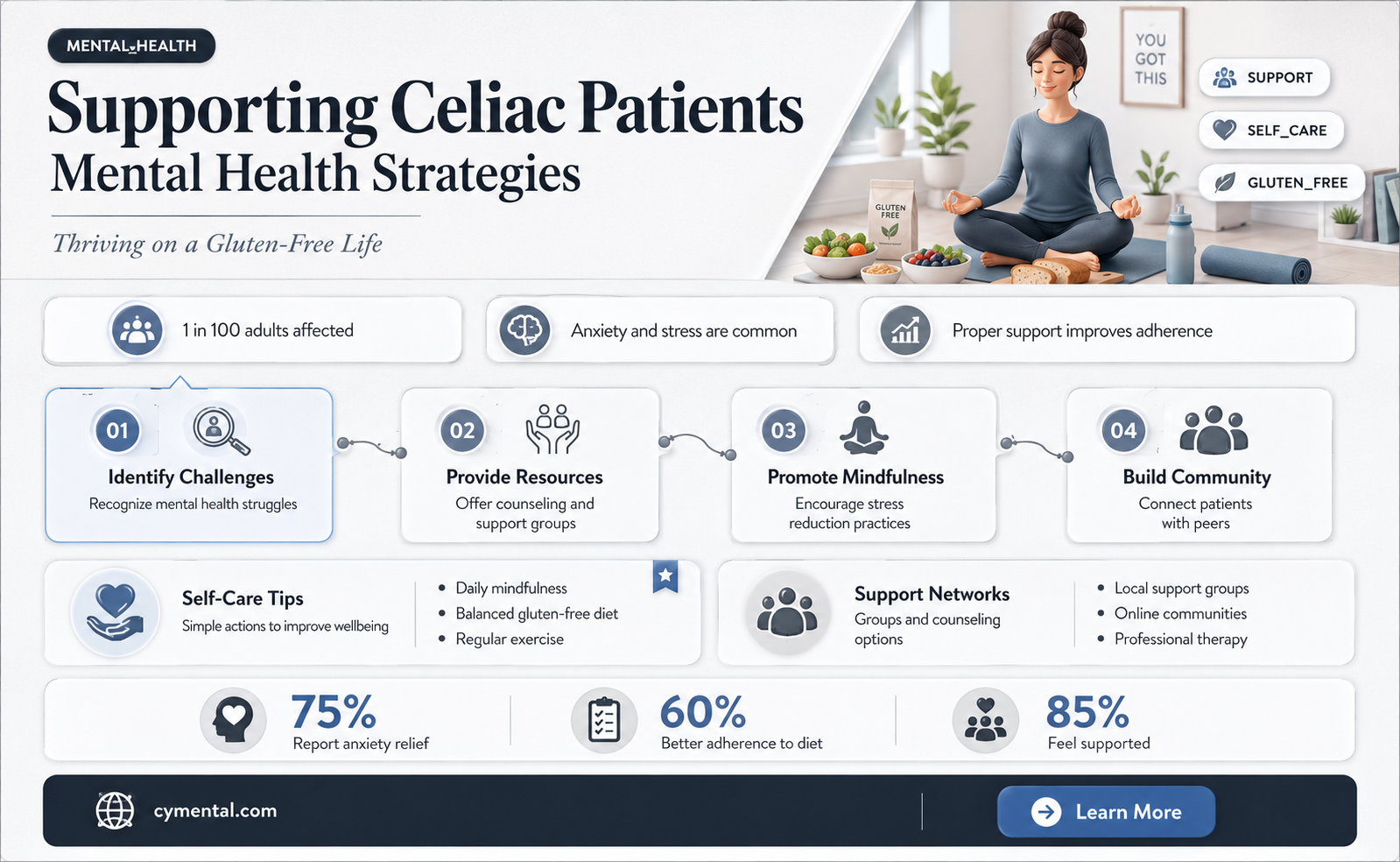
Mental health professionals play a crucial role in supporting individuals with celiac disease, a chronic autoimmune disorder triggered by gluten consumption. Beyond the physical challenges of managing a strict gluten-free diet, celiac patients often face significant emotional and psychological burdens, including anxiety, depression, and stress related to dietary restrictions, social isolation, and fear of accidental gluten exposure. Mental health professionals can provide tailored interventions such as cognitive-behavioral therapy to address these issues, help patients develop coping strategies, and foster resilience. Additionally, they can assist in navigating the emotional impact of diagnosis, improving adherence to dietary requirements, and enhancing overall quality of life by addressing the intersection of physical and mental well-being.
Explore related products


What You'll Learn
- Psychoeducation on Celiac Disease: Educating patients about the disease, its impact, and the importance of adherence to a gluten-free diet
- Emotional Support and Coping: Helping patients manage stress, anxiety, and depression related to living with celiac disease
- Behavioral Interventions: Teaching strategies to overcome challenges in adhering to a strict gluten-free lifestyle
- Social Support and Advocacy: Assisting patients in navigating social situations, relationships, and advocating for their dietary needs
- Mind-Body Connection: Addressing how mental health affects physical symptoms and vice versa in celiac patients

Psychoeducation on Celiac Disease: Educating patients about the disease, its impact, and the importance of adherence to a gluten-free diet
Celiac disease, an autoimmune disorder triggered by gluten consumption, affects not only the physical health but also the mental well-being of patients. Psychoeducation serves as a cornerstone in helping individuals navigate the complexities of this lifelong condition. By providing comprehensive knowledge about celiac disease, mental health professionals empower patients to understand the biological mechanisms behind their symptoms, the long-term consequences of gluten exposure, and the critical role of dietary adherence. This foundational understanding fosters a sense of control and reduces anxiety, making it easier for patients to commit to a gluten-free lifestyle.
One practical approach to psychoeducation involves breaking down the disease into digestible components. Start by explaining the autoimmune response: how gluten ingestion damages the small intestine, leading to malabsorption and systemic symptoms. Use visual aids, such as diagrams or videos, to illustrate the intestinal damage and its reversal with a gluten-free diet. Next, discuss the multifaceted impact of celiac disease, including physical symptoms like fatigue, bloating, and nutrient deficiencies, as well as psychological effects such as depression, anxiety, and social isolation. Highlighting these connections helps patients recognize the broader significance of their diet beyond immediate symptom relief.
Adherence to a gluten-free diet is challenging, and mental health professionals can employ cognitive-behavioral techniques to address barriers. Teach patients to identify high-risk situations for gluten exposure, such as social gatherings or travel, and develop coping strategies like meal planning or carrying gluten-free snacks. Encourage self-monitoring through food journals or apps to track dietary choices and symptoms, fostering accountability and awareness. For younger patients, particularly children and adolescents, involve caregivers in the education process to ensure a supportive environment at home and school. Practical tips, such as reading food labels for hidden gluten or cross-contamination risks, can make adherence less daunting.
A persuasive argument for strict adherence lies in emphasizing the long-term health consequences of gluten exposure. Explain that even small amounts of gluten can cause intestinal damage, increasing the risk of complications like osteoporosis, infertility, and certain cancers. Use real-life examples or case studies to illustrate the benefits of adherence, such as improved quality of life and reduced healthcare utilization. For patients struggling with motivation, frame adherence as an act of self-care rather than a restriction, focusing on the positive outcomes of a healthy gut and overall well-being.
Finally, psychoeducation should incorporate a compassionate, patient-centered approach that acknowledges the emotional toll of living with celiac disease. Validate patients’ frustrations, grief, or feelings of isolation, and provide tools for emotional regulation, such as mindfulness or stress-reduction techniques. Group therapy or support groups can offer a sense of community and shared experience, reducing feelings of isolation. By combining knowledge with empathy, mental health professionals can transform psychoeducation into a powerful tool for resilience, enabling celiac patients to thrive despite their diagnosis.
Iowa City Urgent Care: Mental Health Support and Accessibility Explored
You may want to see also
Explore related products


Emotional Support and Coping: Helping patients manage stress, anxiety, and depression related to living with celiac disease
Living with celiac disease often means navigating a labyrinth of dietary restrictions, social challenges, and constant vigilance, which can take a significant toll on mental health. Stress, anxiety, and depression are common companions for those diagnosed, stemming from the fear of accidental gluten exposure, social isolation, and the overwhelming nature of managing a chronic condition. Mental health professionals play a pivotal role in helping patients build resilience and develop coping strategies tailored to these unique challenges. By addressing the emotional burden, they can empower individuals to reclaim control over their lives and foster a healthier relationship with their condition.
One effective approach is cognitive-behavioral therapy (CBT), which helps patients identify and reframe negative thought patterns related to their diagnosis. For instance, a patient might catastrophize minor dietary slip-ups, believing they’ve caused irreparable harm. CBT teaches them to challenge these thoughts, replacing them with more balanced perspectives. For example, instead of thinking, “One mistake means I’ve ruined my health,” they learn to reframe it as, “Mistakes happen, and I can take steps to feel better.” This shift reduces anxiety and promotes a sense of agency. Mental health professionals can also introduce mindfulness techniques, such as deep breathing exercises or guided imagery, to help patients manage stress in the moment. Practicing mindfulness for just 10 minutes daily has been shown to reduce cortisol levels, the hormone associated with stress.
Another critical aspect is addressing social isolation, a common issue for celiac patients who may feel excluded during meals or gatherings. Group therapy or support groups can provide a sense of community, allowing patients to share experiences and strategies. Mental health professionals can facilitate these sessions, encouraging participants to discuss challenges like explaining their condition to others or navigating social events. For younger patients, role-playing scenarios—such as ordering food at a restaurant or declining a gluten-containing treat—can build confidence. Adults might benefit from assertiveness training to communicate their needs effectively without feeling embarrassed or burdensome.
Finally, mental health professionals should collaborate with dietitians and gastroenterologists to provide holistic care. For example, a patient experiencing depression might struggle to maintain a strict gluten-free diet, leading to physical symptoms that exacerbate their emotional distress. By working as a team, providers can address both the psychological and physiological aspects of the condition. Encouraging patients to keep a food and mood journal can help identify triggers and patterns, offering insights into how diet and mental health are interconnected. This integrated approach ensures that patients receive comprehensive support, fostering both emotional and physical well-being.
Weed and Mental Health: Exploring Potential Benefits and Risks
You may want to see also
Explore related products

$10.87 $19.99

$19.78 $25.95


Behavioral Interventions: Teaching strategies to overcome challenges in adhering to a strict gluten-free lifestyle
Adhering to a strict gluten-free lifestyle is a cornerstone of managing celiac disease, yet it poses significant psychological and behavioral challenges. Mental health professionals play a pivotal role in equipping patients with strategies to navigate these obstacles. Behavioral interventions, rooted in evidence-based practices like Cognitive Behavioral Therapy (CBT), can systematically address the emotional and practical barriers to compliance. For instance, a CBT-based approach might begin by identifying specific triggers for non-adherence—such as social pressure, fear of missing out, or difficulty finding gluten-free options—and then collaboratively developing coping mechanisms tailored to the individual’s lifestyle.
One effective strategy is habit formation through structured routines. Research shows that it takes an average of 66 days for a new habit to become automatic. Mental health professionals can guide patients in breaking down the gluten-free diet into manageable steps, such as meal planning on Sundays, carrying gluten-free snacks, or creating a list of safe restaurants. For children and adolescents, visual aids like charts or reward systems can reinforce adherence, while adults may benefit from digital tools like apps that track gluten-free meals or scan product barcodes for safety. Pairing these routines with positive reinforcement—such as celebrating small victories—can enhance motivation and long-term compliance.
Another critical intervention is cognitive reframing to address emotional barriers. Many celiac patients experience anxiety, frustration, or grief related to dietary restrictions. Therapists can help patients challenge negative thought patterns, such as "I’m missing out" or "It’s too hard," by reframing them into empowering statements like "I’m prioritizing my health" or "I’m discovering new, delicious foods." Mindfulness techniques, such as deep breathing or guided imagery, can also reduce stress during challenging situations, like dining out or attending social events. For example, a patient might practice a 30-second mindfulness exercise before ordering food to stay focused and confident in their choices.
Social support and skill-building are equally vital components of behavioral interventions. Mental health professionals can teach patients communication strategies to assert their dietary needs without feeling embarrassed or burdensome. Role-playing scenarios, such as explaining celiac disease to a server or declining unsafe food at a family gathering, can build confidence. Group therapy or support groups can also provide a sense of community, reducing feelings of isolation. For families, involving caregivers in the process ensures a supportive environment, particularly for younger patients who rely on others to prepare safe meals.
Finally, problem-solving skills are essential for navigating unexpected challenges. Therapists can guide patients in developing a "gluten-free toolkit," which might include emergency snacks, a list of safe brands, or a portable gluten detection device. Teaching patients to anticipate high-risk situations—such as travel or holidays—and plan accordingly can prevent accidental exposure. For example, a patient traveling abroad might research local gluten-free options, pack snacks, and carry translation cards explaining their dietary needs. By fostering resilience and preparedness, mental health professionals empower celiac patients to maintain their health without feeling overwhelmed by their condition.
CBD and Mental Health: Exploring Its Potential Benefits and Effects
You may want to see also
Explore related products


$9.53 $14




Social Support and Advocacy: Assisting patients in navigating social situations, relationships, and advocating for their dietary needs
Celiac disease, an autoimmune disorder triggered by gluten, extends beyond physical symptoms to profoundly impact social and emotional well-being. Mental health professionals play a pivotal role in helping patients navigate the intricate web of social situations and relationships while advocating for their dietary needs. By fostering resilience and providing practical strategies, these professionals empower individuals to thrive in a gluten-filled world.
Consider the anxiety a celiac patient might feel at a dinner party, where every dish could be a potential threat. Mental health professionals can equip patients with assertiveness skills to communicate their dietary restrictions confidently. Role-playing scenarios, such as politely declining a dish or asking about ingredients, can build self-assurance. For instance, a simple script like, "Thank you, but I have celiac disease and need to avoid gluten. Could you tell me what’s in this?" can defuse tension and ensure safety. Additionally, teaching patients to anticipate challenges—like bringing their own gluten-free dish to gatherings—reduces stress and fosters inclusion.
Advocacy extends beyond individual interactions to systemic support. Mental health professionals can guide patients in educating their social circles about celiac disease, dispelling myths, and emphasizing the seriousness of cross-contamination. For example, a patient might share resources like the Celiac Disease Foundation’s website with friends and family, ensuring they understand the condition’s complexities. Professionals can also encourage patients to join support groups, where they can exchange tips and build a sense of community. This collective advocacy not only strengthens relationships but also creates a safer environment for the patient.
In relationships, celiac disease can strain dynamics, particularly if partners or family members struggle to adapt to dietary changes. Mental health professionals can facilitate open dialogue, helping patients express their needs without guilt or frustration. Couples therapy, for instance, can address resentment that may arise when one partner feels burdened by gluten-free cooking. By framing dietary adherence as a shared responsibility, professionals foster empathy and collaboration. Practical advice, such as suggesting joint grocery shopping or cooking classes, can turn accommodation into a bonding activity.
Finally, mental health professionals must address the emotional toll of constant vigilance. Patients often experience isolation, fear, or anger, especially when their needs are dismissed or misunderstood. Cognitive-behavioral techniques can reframe negative thoughts, such as replacing "I’m a burden" with "I’m taking care of my health." Mindfulness practices, like deep breathing during stressful dining situations, can also alleviate anxiety. By validating patients’ experiences and equipping them with coping tools, professionals help them reclaim control over their social lives.
In summary, social support and advocacy are critical components of mental health care for celiac patients. Through skill-building, education, relationship mediation, and emotional support, professionals enable patients to navigate social landscapes with confidence and resilience. This holistic approach not only improves quality of life but also reinforces the message that celiac disease, while challenging, need not define or limit one’s social experiences.
Vitamins and Mental Health: Exploring Their Role in Managing Illness
You may want to see also
Explore related products


Mind-Body Connection: Addressing how mental health affects physical symptoms and vice versa in celiac patients
Celiac disease, an autoimmune disorder triggered by gluten, manifests not only in gastrointestinal distress but also in a complex interplay between physical and mental health. Research indicates that individuals with celiac disease are at a higher risk for anxiety, depression, and other psychological challenges, often stemming from the chronic nature of the condition and the stringent dietary restrictions it imposes. Conversely, stress and poor mental health can exacerbate physical symptoms, creating a vicious cycle. Mental health professionals play a pivotal role in breaking this cycle by addressing the mind-body connection, offering strategies to manage both emotional and physical manifestations of the disease.
Consider the case of a 35-year-old woman diagnosed with celiac disease who experiences heightened anxiety during social gatherings due to fear of accidental gluten exposure. Her stress levels spike, leading to increased gut inflammation and worsened symptoms like bloating and fatigue. A mental health professional might employ cognitive-behavioral therapy (CBT) to reframe her thoughts about social situations, teaching her mindfulness techniques to reduce anxiety. For instance, deep breathing exercises practiced for 5–10 minutes daily can lower cortisol levels, which in turn may reduce gut permeability and inflammation. This example illustrates how mental health interventions can directly alleviate physical symptoms by targeting stress responses.
The bidirectional relationship between mental and physical health in celiac patients necessitates an integrated approach. Mental health professionals can collaborate with dietitians and gastroenterologists to create personalized care plans. For instance, a patient struggling with depression might benefit from a structured routine that includes regular physical activity, such as 30 minutes of moderate exercise three times a week, which has been shown to improve mood and gut motility. Additionally, psychoeducation about the link between stress and symptom flare-ups can empower patients to prioritize mental well-being as part of their disease management.
Practical tools like journaling can also bridge the mind-body gap. Encouraging patients to track their mood, diet, and symptoms daily can reveal patterns, such as how anxiety correlates with accidental gluten ingestion or how improved sleep reduces overall discomfort. For younger patients, aged 12–18, incorporating creative outlets like art therapy can help them express emotions related to their condition, fostering resilience. Mental health professionals should emphasize that managing celiac disease is not just about diet but also about nurturing emotional health to enhance overall quality of life.
In conclusion, addressing the mind-body connection in celiac patients requires a nuanced understanding of how mental health influences physical symptoms and vice versa. By integrating evidence-based psychological interventions, fostering collaboration among healthcare providers, and equipping patients with practical tools, mental health professionals can significantly improve outcomes. This holistic approach not only mitigates the psychological burden of celiac disease but also enhances patients’ ability to manage their physical symptoms effectively.
Seeking Support: Exploring Resources to Help Navigate Life's Challenges
You may want to see also
Frequently asked questions
Mental health professionals can help celiac patients process the emotional challenges of their diagnosis, such as grief, anxiety, or frustration, by providing counseling, coping strategies, and a safe space to express feelings. They can also assist in developing resilience and adapting to lifestyle changes.
Mental health professionals can teach stress management techniques, mindfulness, and cognitive-behavioral strategies to help celiac patients navigate the anxiety associated with cross-contamination, social situations, and dietary restrictions. They can also address fear of accidental gluten exposure and its psychological toll.
Yes, mental health professionals can help patients identify barriers to dietary adherence, such as emotional eating or feelings of deprivation, and develop personalized strategies to overcome them. They can also provide motivation, accountability, and support to maintain long-term commitment to the gluten-free lifestyle.