Harper Lewis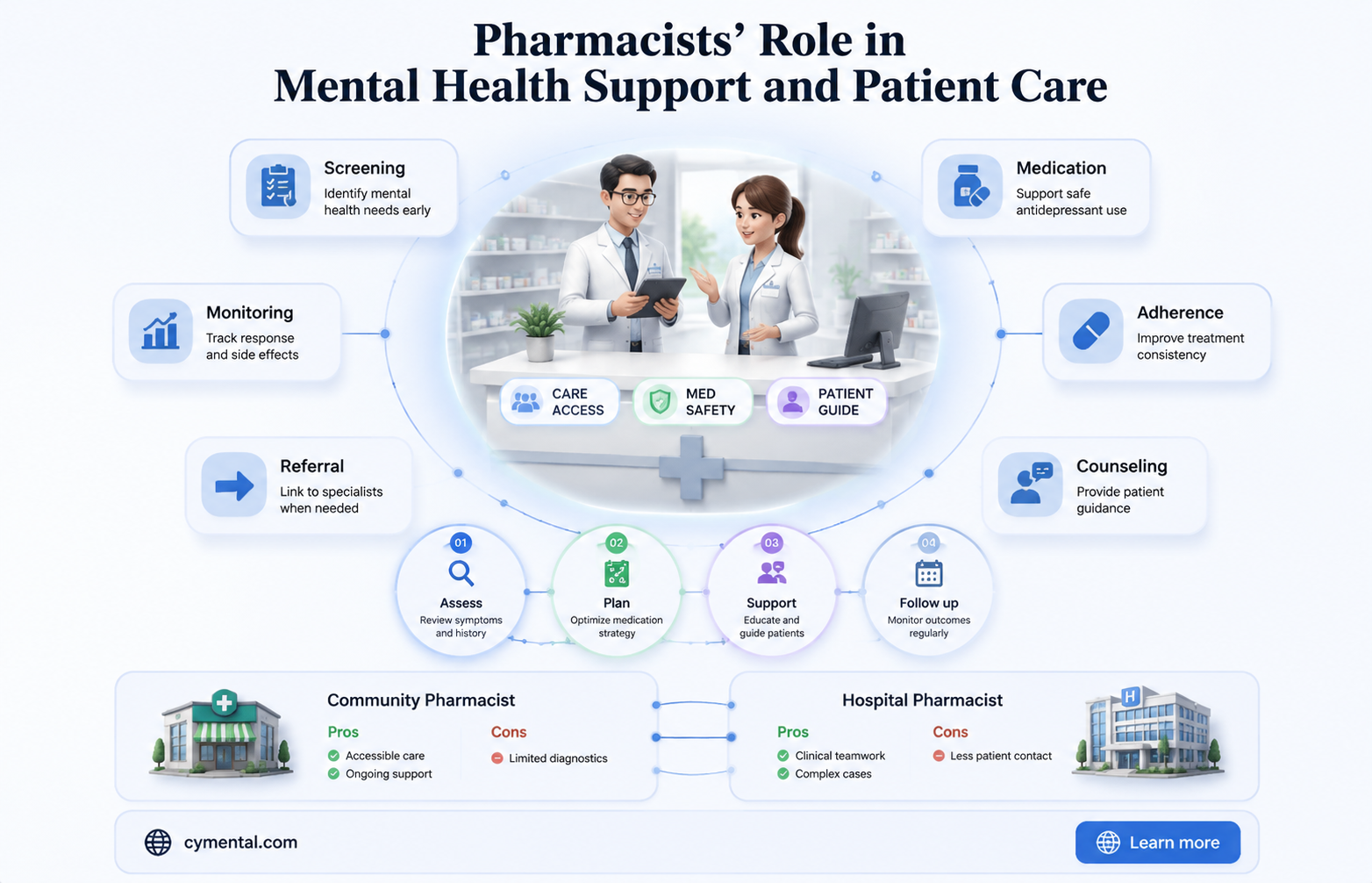
Pharmacists play a crucial role in supporting mental health by providing accessible, evidence-based care and resources to individuals in need. Beyond dispensing medications, they serve as trusted healthcare professionals who can educate patients about psychiatric medications, monitor treatment effectiveness, and identify potential side effects or drug interactions. Pharmacists can also offer guidance on lifestyle modifications, such as sleep hygiene, nutrition, and exercise, which complement mental health treatments. Additionally, they act as a bridge between patients and other healthcare providers, facilitating referrals to therapists, psychiatrists, or community mental health services. Their presence in community settings, such as pharmacies, makes them uniquely positioned to reduce stigma, promote early intervention, and ensure continuity of care for those managing mental health conditions.
| Characteristics | Values |
|---|---|
| Medication Management | Pharmacists can review medications for potential interactions, side effects, and effectiveness in treating mental health conditions. They can also help patients understand their medications, ensure proper dosage, and monitor for adherence. |
| Access to Care | Pharmacists are often more readily accessible than other healthcare professionals, providing a convenient point of contact for individuals seeking mental health support. They can offer initial assessments, referrals, and basic counseling. |
| Screening and Early Intervention | Pharmacists can conduct screenings for common mental health conditions like depression and anxiety, identifying individuals at risk and facilitating early intervention. |
| Patient Education | Pharmacists can provide information about mental health conditions, treatment options, self-care strategies, and community resources. They can empower patients to actively participate in their own care. |
| Collaborative Care | Pharmacists can collaborate with other healthcare professionals, including psychiatrists, psychologists, and primary care physicians, to ensure coordinated and comprehensive care for patients with mental health needs. |
| Stigma Reduction | By providing accessible and non-judgmental care, pharmacists can help reduce the stigma associated with mental health issues, encouraging individuals to seek help without fear of judgment. |
| Substance Use Disorder Support | Pharmacists can play a crucial role in supporting individuals with substance use disorders by providing medication-assisted treatment, counseling, and referrals to specialized treatment programs. |
| Crisis Intervention | Pharmacists can be trained to recognize signs of mental health crises and provide immediate support, de-escalation techniques, and referrals to emergency services if needed. |
| Telepharmacy Services | Pharmacists can utilize telepharmacy platforms to provide mental health services remotely, increasing access to care for individuals in underserved areas or with limited mobility. |
| Advocacy and Policy Development | Pharmacists can advocate for policies that improve access to mental health services, promote mental health awareness, and support the integration of pharmacists into mental healthcare teams. |
Explore related products


What You'll Learn
- Medication Management: Optimizing prescriptions for mental health conditions to ensure safety and efficacy
- Patient Counseling: Providing education and support for medication adherence and side effect management
- Screening & Referral: Identifying mental health issues early and referring patients to appropriate specialists
- Access to Resources: Connecting patients with mental health tools, support groups, and community services
- Stigma Reduction: Promoting awareness and understanding to reduce mental health stigma in communities

Medication Management: Optimizing prescriptions for mental health conditions to ensure safety and efficacy
Pharmacists play a pivotal role in ensuring that medications for mental health conditions are both safe and effective. By meticulously reviewing prescriptions, they can identify potential drug interactions, dosage errors, or contraindications that might otherwise go unnoticed. For instance, a patient taking selective serotonin reuptake inhibitors (SSRIs) alongside monoamine oxidase inhibitors (MAOIs) risks serotonin syndrome, a life-threatening condition. Pharmacists act as the last line of defense, catching such risks before the medication reaches the patient.
Consider the case of a 45-year-old patient prescribed fluoxetine (20 mg/day) for depression while also on a nonsteroidal anti-inflammatory drug (NSAID) for chronic pain. A pharmacist might flag the increased risk of gastrointestinal bleeding and suggest alternatives or additional monitoring. Similarly, for elderly patients, pharmacists often adjust dosages to account for age-related changes in metabolism. For example, reducing the starting dose of citalopram from 20 mg to 10 mg in patients over 60 can minimize the risk of QT prolongation, a dangerous heart rhythm disorder.
Optimizing prescriptions isn’t just about avoiding harm—it’s also about maximizing therapeutic benefit. Pharmacists can recommend titration schedules to gradually increase dosages, allowing patients to adapt while monitoring side effects. For instance, starting bupropion at 150 mg/day and increasing to 300 mg/day after 3–4 days can improve adherence by reducing initial side effects like insomnia. They also educate patients on the importance of consistency, such as taking extended-release formulations like venlafaxine XR at the same time daily to maintain stable blood levels.
Practical tips for patients include using pill organizers to avoid missed doses and keeping a medication diary to track side effects or improvements. Pharmacists can also collaborate with prescribers to switch medications if a patient isn’t responding adequately. For example, if a patient on sertraline (50 mg/day) shows no improvement after 6 weeks, a pharmacist might suggest increasing the dose to 100 mg/day or exploring alternatives like escitalopram. This proactive approach ensures that treatment remains tailored to the individual’s needs.
In conclusion, medication management by pharmacists is a critical component of mental health care. Through vigilant oversight, personalized adjustments, and patient education, they bridge the gap between prescription and optimal outcome. Their expertise not only prevents adverse events but also enhances the efficacy of treatments, ultimately improving quality of life for those managing mental health conditions.
ECT and Mental Clarity: Unlocking Focus and Cognitive Benefits
You may want to see also
Explore related products


Patient Counseling: Providing education and support for medication adherence and side effect management
Pharmacists play a pivotal role in mental health care by ensuring patients understand their medications, fostering adherence, and managing side effects. Through patient counseling, they bridge the gap between prescription and effective treatment, addressing the complexities of mental health medications that often require precise dosing and long-term commitment. For instance, selective serotonin reuptake inhibitors (SSRIs) like fluoxetine or sertraline may take 4–6 weeks to show full effects, and abrupt discontinuation can lead to withdrawal symptoms. Pharmacists can educate patients on these timelines, emphasizing the importance of consistent use and gradual tapering under medical supervision.
Consider the case of a 35-year-old patient prescribed escitalopram 10 mg daily for generalized anxiety disorder. During counseling, the pharmacist explains that the medication should be taken at the same time each day to maintain steady blood levels, preferably in the morning to minimize insomnia. They also address common side effects like nausea or headaches, suggesting strategies such as taking the medication with food or monitoring symptoms for 2–3 weeks, as these often subside. By providing actionable advice, pharmacists empower patients to manage expectations and stay adherent, reducing the risk of treatment failure.
However, patient counseling is not one-size-fits-all. For older adults, pharmacists must consider polypharmacy and age-related changes in metabolism. A 65-year-old patient on venlafaxine 75 mg daily might require lower doses due to reduced renal function, and the pharmacist should caution against potential drug interactions with cardiovascular medications. Similarly, pediatric patients or their caregivers need clear, age-appropriate instructions, such as using liquid formulations for younger children or discussing the importance of adherence without stigmatizing the medication.
To maximize the impact of counseling, pharmacists should employ active listening and open-ended questions. For example, asking, "How do you feel about starting this medication?" can uncover concerns or misconceptions. They can also provide written materials or digital resources, such as medication trackers or apps, to reinforce verbal instructions. By tailoring their approach to individual needs, pharmacists not only improve adherence but also build trust, making patients more likely to seek their guidance in the future.
Ultimately, patient counseling by pharmacists is a critical yet often underutilized tool in mental health care. By combining clinical knowledge with empathetic communication, pharmacists can demystify medications, mitigate side effects, and foster a collaborative approach to treatment. This proactive role not only enhances therapeutic outcomes but also positions pharmacists as integral members of the mental health care team, ensuring patients receive holistic support on their journey to recovery.
Green Tea's Impact on Mental Health: Benefits and Scientific Insights
You may want to see also
Explore related products


Screening & Referral: Identifying mental health issues early and referring patients to appropriate specialists
Pharmacists are often the first point of contact for individuals seeking health advice, making them uniquely positioned to identify early signs of mental health issues. Through routine interactions, pharmacists can observe subtle changes in behavior, such as increased anxiety, withdrawal, or changes in medication adherence, which may signal underlying mental health concerns. By incorporating simple screening tools into their practice, pharmacists can systematically assess patients for symptoms of depression, anxiety, or other conditions, ensuring that potential issues are not overlooked.
One effective method is the use of validated screening tools like the Patient Health Questionnaire-2 (PHQ-2) or Generalized Anxiety Disorder-2 (GAD-2). These brief questionnaires can be administered during medication consultations or while reviewing prescriptions. For example, a patient picking up a refill for insomnia medication might be asked two simple questions: "Over the past two weeks, how often have you been bothered by little interest or pleasure in doing things?" and "How often have you been feeling down, depressed, or hopeless?" A positive response warrants further inquiry and potential referral.
Referral pathways are critical to ensuring patients receive timely and appropriate care. Pharmacists should establish relationships with local mental health providers, including psychologists, psychiatrists, and community mental health clinics. When a patient screens positive for mental health symptoms, the pharmacist can provide a warm handoff, such as a direct call to the specialist or a written referral with relevant patient information. For instance, a pharmacist might note recent medication changes, sleep patterns, or stressors observed during interactions, which can aid the specialist in diagnosis and treatment planning.
However, screening and referral are not without challenges. Pharmacists must navigate privacy concerns, ensuring that discussions about mental health are conducted discreetly and with sensitivity. Additionally, they should be aware of cultural barriers that may prevent patients from acknowledging mental health issues. Training in culturally competent communication and mental health first aid can enhance pharmacists’ ability to engage patients effectively. For older adults, pharmacists might focus on signs of depression masked by physical complaints, while for younger patients, they might look for indicators of anxiety or substance misuse.
In conclusion, pharmacists play a vital role in early detection and intervention for mental health issues. By integrating screening tools into their practice and fostering strong referral networks, they can bridge gaps in care and improve patient outcomes. For example, a pharmacist who identifies mild depression in a patient could refer them to a therapist while monitoring their progress during follow-up visits. This proactive approach not only addresses immediate concerns but also promotes long-term mental well-being, positioning pharmacists as essential contributors to holistic healthcare.
Empowering Mental Health: The Vital Role of Community Health Workers
You may want to see also
Explore related products



Access to Resources: Connecting patients with mental health tools, support groups, and community services
Pharmacists are uniquely positioned to bridge the gap between patients and mental health resources, often serving as the first point of contact for individuals seeking help. With their accessibility and expertise in medication management, they can play a pivotal role in connecting patients to tools, support groups, and community services that complement pharmacological treatments. For instance, a patient prescribed an SSRI for depression might also benefit from a local mindfulness workshop or an online cognitive-behavioral therapy (CBT) app. By proactively offering these suggestions, pharmacists can enhance treatment outcomes and foster a holistic approach to mental health care.
Consider the practical steps pharmacists can take to facilitate this connection. First, maintain an updated directory of local and digital mental health resources, categorized by condition (e.g., anxiety, depression, bipolar disorder). Second, during medication consultations, inquire about patients’ non-pharmacological needs and recommend relevant tools, such as mood-tracking apps like Daylio or Calm for stress management. Third, collaborate with community organizations to host informational sessions in the pharmacy, such as a monthly support group for caregivers of individuals with schizophrenia. These actions not only empower patients but also position the pharmacy as a hub for comprehensive mental health support.
A comparative analysis reveals that while psychiatrists and therapists focus on diagnosis and therapy, pharmacists excel in accessibility and continuity of care. Patients often visit pharmacies more frequently than mental health clinics, creating repeated opportunities for resource referrals. For example, a pharmacist might notice a patient refilling anxiety medication monthly and suggest a local yoga class proven to reduce cortisol levels by 20% in participants aged 18–45. This proactive approach leverages the pharmacist’s role in medication adherence to address broader mental health needs, filling a critical gap in the care continuum.
However, challenges exist. Pharmacists must navigate limited consultation time and potential patient reluctance to discuss mental health. To overcome these barriers, adopt a concise, empathetic communication style. For instance, instead of asking, “Are you interested in joining a support group?” try, “Many patients find support groups helpful alongside medication. Would you like me to share some options?” Additionally, leverage technology by providing QR codes on prescription bags linking to vetted mental health apps or community services. These strategies ensure resource connection becomes a seamless part of the patient experience.
In conclusion, pharmacists can significantly impact mental health care by connecting patients to resources that extend beyond the pill bottle. By integrating practical tools, fostering community partnerships, and adopting strategic communication techniques, they can address both pharmacological and psychosocial needs. This dual focus not only improves individual outcomes but also strengthens the overall mental health infrastructure, making care more accessible and holistic for all.
Voc Rehab Lexington SC: Mental Health Support and Resources Explored
You may want to see also
Explore related products


Stigma Reduction: Promoting awareness and understanding to reduce mental health stigma in communities
Mental health stigma thrives in silence and misunderstanding, perpetuating isolation and delaying treatment. Pharmacists, as trusted healthcare professionals, are uniquely positioned to dismantle this barrier through targeted community engagement. By leveraging their accessibility and expertise, they can foster an environment where mental health is discussed openly, understood empathetically, and treated without judgment.
Consider the pharmacy as a hub for stigma reduction initiatives. Pharmacists can host educational workshops or seminars, inviting mental health professionals to co-lead sessions. Topics could range from recognizing early signs of mental health issues to debunking myths about medications like SSRIs (e.g., clarifying that antidepressants are not addictive and typically require 4–6 weeks to show full effects). Providing age-specific resources—such as teen-friendly guides on anxiety or senior-focused materials on depression—ensures relevance across demographics. Pairing these sessions with free screenings (e.g., PHQ-9 for depression) can normalize assessment and encourage early intervention.
Beyond formal events, pharmacists can integrate stigma reduction into daily practice. When dispensing psychotropic medications, they can use neutral, non-judgmental language, avoiding phrases like “this is for your mood problem.” Instead, framing the conversation around symptom management—“This medication helps balance brain chemicals to reduce anxiety”—positions mental health care as routine, akin to managing diabetes or hypertension. Equally important is addressing side effects proactively; for instance, explaining that initial jitteriness with SSRIs often subsides within 1–2 weeks can prevent premature discontinuation.
Pharmacists can also collaborate with local schools, workplaces, and faith-based organizations to extend their reach. For example, partnering with high schools to deliver workshops on stress management or with employers to implement mental health first-aid training amplifies their impact. Distributing pocket-sized guides with crisis hotline numbers, self-care tips, and medication adherence reminders further empowers communities to take action.
The ultimate goal is to shift societal perception from viewing mental health as a personal failing to recognizing it as a treatable condition. Pharmacists, by combining clinical knowledge with community engagement, can lead this transformation. Their efforts not only reduce stigma but also pave the way for better health outcomes, proving that sometimes, the most powerful prescription is understanding.
Prisons vs. Treatment: Do Jails Help or Harm the Mentally Ill?
You may want to see also
Frequently asked questions
Pharmacists can help by ensuring proper medication management, monitoring for side effects, providing education on medications, and offering support for adherence to treatment plans.
A: Yes, pharmacists can suggest lifestyle changes, such as exercise, diet, and sleep hygiene, as well as recommend over-the-counter supplements or refer patients to mental health professionals for additional support.
A: Pharmacists work closely with doctors, therapists, and other providers to ensure coordinated care, adjust medications as needed, and address potential drug interactions or concerns related to mental health treatment.