Ava Ramirez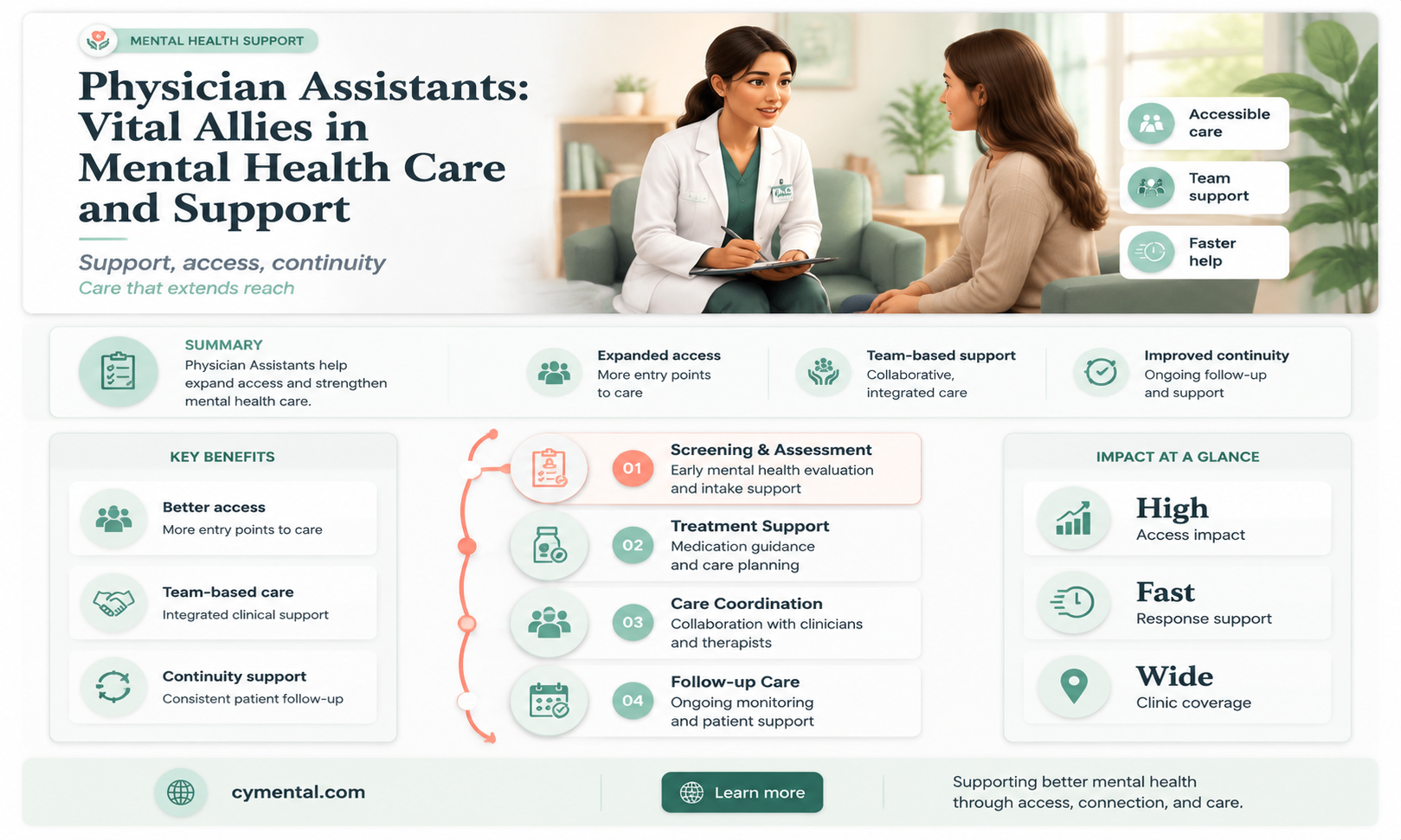
Physician assistants (PAs) play a crucial role in addressing the growing demand for mental health services by providing accessible, high-quality care across diverse settings. With their broad medical training and ability to work collaboratively with psychiatrists, psychologists, and other healthcare professionals, PAs can diagnose and manage common mental health conditions such as depression, anxiety, and ADHD. They are particularly valuable in underserved areas where access to mental health specialists is limited, offering timely interventions, medication management, and patient education. Additionally, PAs can help reduce stigma by integrating mental health care into primary care settings, fostering a holistic approach to patient well-being and improving overall health outcomes. Their versatility and commitment to patient-centered care make them essential contributors to the mental health workforce.
| Characteristics | Values |
|---|---|
| Direct Patient Care | Conduct mental health assessments, diagnose mental illnesses, develop treatment plans, prescribe medications (in some states), provide psychotherapy, and monitor patient progress. |
| Improved Access to Care | Expand mental health services in underserved areas, reduce wait times for appointments, and provide care in various settings (primary care, community health centers, hospitals). |
| Collaborative Care | Work closely with psychiatrists, psychologists, social workers, and other healthcare professionals to provide comprehensive care and ensure continuity of treatment. |
| Patient Education & Support | Educate patients about mental health conditions, treatment options, and self-management strategies. Provide emotional support and guidance to patients and their families. |
| Preventive Care | Screen for mental health issues during routine checkups, identify risk factors, and provide early intervention to prevent more severe problems. |
| Chronic Disease Management | Help manage mental health conditions alongside chronic physical illnesses, ensuring holistic care and improved overall health outcomes. |
| Cost-Effectiveness | Provide high-quality mental health care at a lower cost compared to psychiatrists, making services more accessible and affordable. |
| Flexibility & Adaptability | Adapt to different patient populations and settings, providing personalized care tailored to individual needs. |
| Advocacy & Community Engagement | Advocate for mental health awareness, reduce stigma, and promote access to mental health services within communities. |
| Research & Innovation | Participate in mental health research, contribute to evidence-based practices, and stay updated on the latest advancements in the field. |
Explore related products


$31.72 $44.99


What You'll Learn
- Screening & Early Detection: PAs can conduct initial mental health screenings, identifying risks and referring patients promptly
- Medication Management: PAs assist in prescribing and monitoring psychiatric medications under physician supervision
- Therapy Support: PAs facilitate brief interventions, psychoeducation, and behavioral therapy techniques for patients
- Care Coordination: PAs link patients to mental health specialists, social services, and community resources
- Stigma Reduction: PAs promote mental health awareness, normalize conversations, and reduce barriers to care

Screening & Early Detection: PAs can conduct initial mental health screenings, identifying risks and referring patients promptly
Mental health screenings are often the first line of defense in identifying potential issues, yet many primary care settings lack the resources to conduct them systematically. Physician assistants (PAs) are uniquely positioned to bridge this gap. With their broad medical training and ability to work autonomously under physician supervision, PAs can efficiently integrate mental health screenings into routine patient visits. For instance, during annual physicals or chronic disease management appointments, PAs can administer validated tools like the PHQ-9 for depression or GAD-7 for anxiety, which take less than five minutes to complete. This proactive approach ensures that mental health is not overlooked in the context of physical health.
Consider the practical steps involved in implementing this process. First, PAs should familiarize themselves with screening tools appropriate for different age groups—for example, the CRAFFT questionnaire for adolescents or the Geriatric Depression Scale for older adults. Second, they must establish a protocol for interpreting results and determining next steps. A PHQ-9 score of 10 or higher, for instance, typically warrants further evaluation or referral. Third, PAs should maintain open communication with patients, explaining the purpose of the screening and normalizing discussions about mental health. This reduces stigma and encourages patients to share concerns they might otherwise withhold.
The value of early detection cannot be overstated. Untreated mental health conditions often exacerbate physical ailments, complicate treatment adherence, and diminish quality of life. For example, a patient with uncontrolled diabetes may struggle due to underlying depression affecting their motivation to manage their condition. By identifying such risks early, PAs can facilitate timely referrals to mental health specialists or integrate brief interventions, such as motivational interviewing, into their practice. This dual focus on physical and mental health aligns with the holistic care model that PAs are trained to deliver.
However, screening is not without challenges. PAs must balance the need for thoroughness with time constraints in busy clinical settings. Overlooking false negatives or misinterpreting results can lead to missed opportunities for intervention. To mitigate these risks, PAs should stay updated on best practices, participate in continuing education on mental health, and collaborate closely with supervising physicians and interdisciplinary teams. Additionally, leveraging electronic health records (EHRs) to flag at-risk patients and streamline documentation can enhance efficiency without compromising care quality.
In conclusion, PAs play a critical role in screening and early detection of mental health issues, a function that is both practical and transformative. By incorporating brief, evidence-based tools into routine care, they can identify risks early, reduce stigma, and connect patients to necessary resources. This approach not only improves individual outcomes but also contributes to a more integrated healthcare system where mental health is prioritized alongside physical well-being. With the right training, protocols, and support, PAs can be instrumental in addressing the growing mental health crisis.
Seeking Support: Where to Find Help and Guidance in Life
You may want to see also
Explore related products


Medication Management: PAs assist in prescribing and monitoring psychiatric medications under physician supervision
Physician assistants (PAs) play a critical role in medication management for mental health patients, ensuring that psychiatric medications are prescribed and monitored effectively under physician supervision. This collaboration enhances patient care by addressing the complexities of psychopharmacology, which often requires precise adjustments and vigilant oversight. For instance, PAs can initiate treatment with selective serotonin reuptake inhibitors (SSRIs) like fluoxetine, starting at 20 mg daily for adults, while closely monitoring for side effects such as nausea or insomnia. Their involvement allows physicians to focus on more complex cases, streamlining care delivery in high-demand mental health settings.
Effective medication management by PAs involves a structured approach, beginning with a thorough assessment of the patient’s medical history, current symptoms, and potential drug interactions. For example, when prescribing lithium for bipolar disorder, PAs must ensure regular serum level checks, typically maintaining therapeutic ranges between 0.8–1.2 mEq/L. They also educate patients on adherence, emphasizing the importance of consistent dosing and follow-up appointments. This proactive stance reduces the risk of relapse and hospitalization, particularly in conditions like schizophrenia, where antipsychotics such as olanzapine require careful titration to balance efficacy and metabolic side effects.
One of the most impactful contributions of PAs is their ability to bridge gaps in access to mental health care, especially in underserved areas. By managing routine medication adjustments and refills, they free up physicians to handle acute crises or complex diagnostic challenges. For pediatric patients, PAs often start with lower doses of medications like methylphenidate (e.g., 5–10 mg for ADHD in children aged 6–12) and gradually titrate based on response and tolerability. This tiered approach ensures safety while optimizing outcomes, demonstrating the PA’s role as both clinician and patient advocate.
However, medication management by PAs is not without challenges. Variability in state regulations regarding prescription authority can limit their scope of practice, necessitating clear protocols and communication with supervising physicians. Additionally, PAs must stay updated on evolving guidelines, such as the use of long-acting injectable antipsychotics for treatment-resistant patients, which require specialized training. Despite these hurdles, their role remains indispensable, particularly in multidisciplinary teams where they provide continuity of care and foster trust with patients through consistent follow-up.
In conclusion, PAs are vital to the medication management process in mental health care, offering a blend of clinical expertise and patient-centered support. Their ability to prescribe, monitor, and adjust psychiatric medications under supervision ensures that patients receive timely, evidence-based treatment. By focusing on specifics—from dosage adjustments to patient education—PAs not only improve individual outcomes but also contribute to the broader goal of destigmatizing mental health care and making it more accessible. Their collaborative role exemplifies the future of integrated, efficient healthcare delivery.
Acupuncture and Mental Health: A Natural Path to Wellness?
You may want to see also
Explore related products


Therapy Support: PAs facilitate brief interventions, psychoeducation, and behavioral therapy techniques for patients
Physician assistants (PAs) are increasingly becoming integral to mental health care teams, offering timely and effective therapy support that bridges gaps in patient access and treatment continuity. One of their most impactful roles is facilitating brief interventions, psychoeducation, and behavioral therapy techniques, which are particularly valuable in primary care and underserved settings. These interventions are not meant to replace long-term therapy but serve as critical touchpoints that stabilize patients, equip them with coping skills, and guide them toward more specialized care when needed. For instance, a PA might spend 10–15 minutes teaching a patient with anxiety deep breathing exercises or helping a depressed individual identify cognitive distortions during a routine visit.
Consider the practical application of psychoeducation, where PAs break down complex mental health concepts into digestible information. For a patient newly diagnosed with depression, a PA could explain the neurobiological basis of the condition, normalize their symptoms, and outline treatment options—all within the confines of a brief appointment. This approach demystifies mental health, reduces stigma, and empowers patients to engage in their care. Similarly, PAs can introduce behavioral activation techniques to a patient experiencing low mood by collaboratively creating a daily activity schedule that includes small, achievable tasks like a 10-minute walk or a phone call to a friend.
Brief interventions, often grounded in motivational interviewing, are another powerful tool in the PA’s arsenal. For a patient struggling with substance use, a PA might use open-ended questions to explore ambivalence about change, reflect on the patient’s own motivations, and provide feedback on the risks and benefits of their behavior. This technique, delivered in as little as 5–10 minutes, can spark insight and readiness for change. Research shows that even these short interactions can lead to meaningful improvements, particularly when integrated into routine care.
However, it’s essential to recognize the limitations of these interventions. While PAs can effectively manage mild to moderate mental health concerns, they must be vigilant for red flags that indicate the need for referral to a psychiatrist or psychologist. For example, a patient with suicidal ideation or severe psychotic symptoms requires immediate escalation to specialized care. PAs should also be mindful of their own training boundaries, ensuring they stay within their scope of practice and seek supervision when needed.
In conclusion, PAs play a unique and vital role in therapy support by delivering brief, evidence-based interventions that meet patients where they are. Through psychoeducation, behavioral techniques, and motivational interviewing, they provide immediate relief, build resilience, and connect patients to long-term resources. This approach not only improves individual outcomes but also strengthens the overall mental health care system by addressing needs early and efficiently. With proper training and collaboration, PAs can be transformative agents in the fight against mental health disparities.
Supporting Your Adult Child: Navigating Mental Illness with Compassion and Care
You may want to see also
Explore related products


Care Coordination: PAs link patients to mental health specialists, social services, and community resources
Physician Assistants (PAs) play a pivotal role in care coordination, acting as navigators who connect patients with the mental health resources they need. For instance, a PA might identify a patient exhibiting symptoms of depression during a routine physical exam. Instead of merely prescribing an antidepressant, the PA can refer the patient to a psychiatrist for a comprehensive evaluation, ensuring the patient receives tailored treatment. This proactive approach not only addresses immediate concerns but also prevents potential complications, such as medication interactions or untreated comorbidities.
Effective care coordination involves more than just referrals. PAs assess patients’ social determinants of health—factors like housing instability, food insecurity, or lack of transportation—that can exacerbate mental health issues. For example, a PA might connect a patient experiencing homelessness to local shelters or housing assistance programs, recognizing that stable living conditions are foundational to mental wellness. By addressing these barriers, PAs create a supportive environment where mental health interventions can thrive.
One practical strategy PAs employ is leveraging community resources to supplement clinical care. For a patient struggling with anxiety, a PA might recommend a local support group or mindfulness workshop, providing additional tools beyond therapy or medication. Similarly, for families of patients with mental illness, PAs can link them to caregiver support networks, reducing the emotional and logistical burden of caregiving. These connections foster a holistic approach to mental health, integrating clinical treatment with community-based solutions.
However, care coordination is not without challenges. PAs must navigate fragmented systems, limited resource availability, and patient reluctance to engage with services. To overcome these hurdles, PAs can use care coordination tools like shared care plans, which outline goals and responsibilities for both the patient and the care team. Additionally, fostering relationships with local organizations and maintaining an updated directory of resources can streamline the referral process. By staying informed and adaptable, PAs ensure that patients receive seamless, continuous care.
Ultimately, the role of PAs in care coordination is transformative. They bridge gaps between healthcare systems and community resources, ensuring patients access the full spectrum of mental health support. Through their efforts, PAs not only improve individual outcomes but also contribute to a more integrated, patient-centered approach to mental healthcare. This dual impact underscores the indispensable value of PAs in addressing the complex needs of mental health patients.
Empowering Mental Health: The Vital Role of Community Health Workers
You may want to see also
Explore related products


Stigma Reduction: PAs promote mental health awareness, normalize conversations, and reduce barriers to care
Stigma surrounding mental health remains a formidable barrier to care, often preventing individuals from seeking the help they need. Physician Assistants (PAs) are uniquely positioned to dismantle this stigma through their direct patient interactions and community roles. By integrating mental health screenings into routine visits—whether for a physical ailment or a wellness check—PAs normalize the conversation around mental well-being. For instance, a PA might ask a 45-year-old patient about stress levels during a hypertension follow-up, subtly bridging the physical and mental health divide. This approach not only identifies at-risk individuals but also signals that mental health is a natural part of overall health, reducing the shame associated with seeking help.
Consider the power of language in stigma reduction. PAs can model non-judgmental communication by avoiding stigmatizing terms and instead using person-first language, such as "a person with depression" rather than "a depressed person." This small but impactful shift reinforces the idea that mental health conditions do not define an individual. Additionally, PAs can educate patients on the biological basis of mental health disorders, such as the role of neurotransmitters in depression or anxiety. For example, explaining that serotonin imbalances contribute to depression can help patients view their condition as a treatable medical issue rather than a personal failing.
Community outreach is another avenue where PAs can lead stigma reduction efforts. Hosting mental health workshops in schools, workplaces, or local clinics allows PAs to dispel myths and provide actionable information. For instance, a PA might teach stress management techniques to high school students, emphasizing that anxiety is common and manageable. By engaging with diverse populations, PAs can tailor their messaging to address cultural or age-specific barriers. For older adults, who may view mental health struggles as a sign of weakness, a PA could highlight the prevalence of late-life depression and the effectiveness of therapies like cognitive-behavioral therapy (CBT) or selective serotonin reuptake inhibitors (SSRIs) at low doses, such as 10 mg of escitalopram daily.
Finally, PAs can advocate for systemic changes that reduce stigma and improve access to care. This includes pushing for integrated care models where mental health services are embedded in primary care settings, making it easier for patients to receive holistic treatment. For example, a PA might collaborate with a mental health counselor to provide same-day appointments for patients experiencing acute anxiety. By championing such initiatives, PAs not only address immediate patient needs but also contribute to a cultural shift that prioritizes mental health as a fundamental component of healthcare. Through these multifaceted efforts, PAs can play a pivotal role in breaking down stigma and fostering a society where seeking mental health support is as routine as treating a physical illness.
Drawing for Mental Health: Creative Therapy Benefits and Techniques
You may want to see also
Frequently asked questions
Physician assistants can provide a wide range of mental health services, including diagnosing and treating common conditions like depression, anxiety, and ADHD. They can prescribe medications, conduct therapy sessions, and collaborate with psychiatrists and other mental health professionals to ensure comprehensive patient care.
PAs can help bridge the gap in mental health care by working in underserved areas, offering timely appointments, and providing cost-effective treatment options. Their ability to practice in various settings, such as primary care clinics, hospitals, and community health centers, increases accessibility for patients who might otherwise face barriers to care.
While PAs are generalists by training, they can focus their practice on mental health through additional education, certifications, or experience. Programs like the Psychiatric-Mental Health Physician Assistant Certificate (PMH-PA) allow PAs to specialize in this field, enhancing their expertise in mental health assessment, treatment, and patient management.