Noah Parker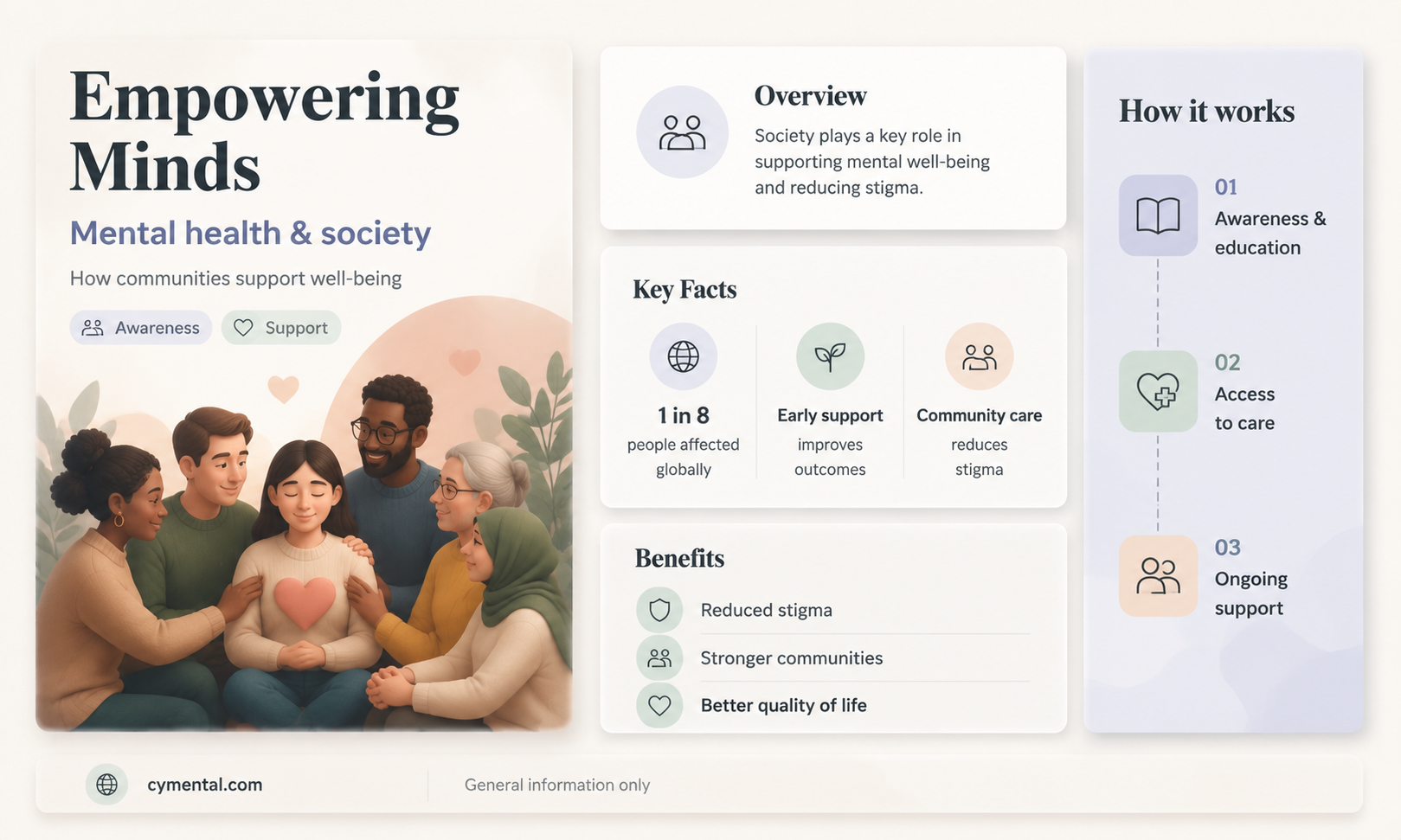
Mental health is an integral part of overall well-being, yet it remains a stigmatized and often neglected aspect of societal health. To effectively support mental health, society must adopt a multifaceted approach that includes raising awareness, reducing stigma, and improving access to resources. Education plays a crucial role in fostering understanding and empathy, while policymakers must prioritize funding for mental health services and research. Communities can contribute by creating safe spaces for open dialogue and providing peer support networks. Additionally, workplaces should implement mental health-friendly policies to reduce stress and promote work-life balance. By collectively addressing these areas, society can create an environment where individuals feel supported, understood, and empowered to seek help when needed, ultimately fostering a healthier and more resilient population.
Explore related products


What You'll Learn
- Increase access to affordable therapy and mental health services for all individuals
- Promote mental health education in schools and workplaces to reduce stigma
- Create supportive communities and safe spaces for open conversations about mental health
- Invest in research to improve mental health treatments and early intervention strategies
- Implement policies for work-life balance and stress reduction in professional environments

Increase access to affordable therapy and mental health services for all individuals
Mental health services remain out of reach for millions due to prohibitive costs, long wait times, and geographic barriers. In the United States, for example, nearly 60% of counties have no practicing psychiatrists, leaving rural residents with limited options. Even in urban areas, the average cost of a therapy session ranges from $100 to $250, pricing many out of consistent care. To address this, society must prioritize systemic changes that dismantle financial and logistical obstacles, ensuring that therapy and mental health services are as accessible as primary care.
One actionable step is to integrate mental health services into primary care settings, a model known as collaborative care. This approach embeds mental health professionals within clinics, allowing patients to receive therapy or psychiatric consultations during routine visits. Studies show that collaborative care reduces wait times by up to 50% and improves treatment adherence, particularly among low-income populations. Policymakers should allocate funding to train primary care providers in basic mental health interventions and subsidize the hiring of specialized staff in underserved areas.
Another strategy is to expand telehealth platforms, which have proven effective in bridging the gap for those in remote or rural locations. During the COVID-19 pandemic, telehealth usage for mental health services increased by 60%, demonstrating its potential. However, barriers like lack of internet access or digital literacy persist. Governments and private organizations should invest in infrastructure improvements and offer training programs to ensure equitable access. Additionally, insurance providers must be mandated to cover telehealth services at parity with in-person visits, removing financial disincentives.
Sliding-scale fee structures and community-based clinics also play a critical role in making therapy affordable. Nonprofit organizations like Open Path Collective offer sessions ranging from $30 to $60, based on income, while federally qualified health centers provide services on a pay-what-you-can basis. Expanding funding for such initiatives and raising public awareness about their availability can significantly increase access. Employers can contribute by including low-cost mental health benefits in insurance plans, targeting working-age adults who often forgo care due to cost.
Finally, addressing the workforce shortage is essential. The World Health Organization estimates a global deficit of 1.3 million mental health professionals. Governments should incentivize students to pursue mental health careers through loan forgiveness programs and scholarships, particularly for those committing to work in underserved areas. Simultaneously, task-sharing models, where non-specialists are trained to deliver evidence-based interventions, can extend care to more individuals. For instance, in Zimbabwe, community health workers trained in problem-solving therapy reduced depression symptoms by 50% among participants.
By combining these strategies—integrating services, expanding telehealth, supporting affordable clinics, and growing the workforce—society can create a mental health care system that is truly accessible to all. The goal is not just to treat illness but to foster a culture where seeking help is as routine and affordable as treating a physical ailment.
Supporting Your Mom: Steps to Access Mental Health Care and Healing
You may want to see also
Explore related products


Promote mental health education in schools and workplaces to reduce stigma
Mental health stigma thrives in environments where ignorance and fear dominate. Schools and workplaces, as primary social institutions, often perpetuate this cycle by treating mental health as a taboo or personal weakness. To break this pattern, integrating mental health education into these settings is essential. In schools, curricula should include age-appropriate lessons on emotional regulation, stress management, and the science of mental health from as early as primary grades. For instance, teaching children mindfulness techniques or how to identify emotions in themselves and others can lay a foundation for lifelong mental resilience. Similarly, workplaces must move beyond token wellness programs to offer structured training on recognizing mental health challenges and fostering supportive environments. This dual approach not only educates but also normalizes conversations around mental health, dismantling stigma at its roots.
Consider the workplace as a microcosm of societal attitudes toward mental health. Employees often hesitate to disclose mental health struggles for fear of judgment or career repercussions. Implementing mandatory mental health literacy training for managers and employees alike can shift this dynamic. Such training should cover practical skills like active listening, identifying signs of distress, and knowing when to refer colleagues to professional help. For example, a 2-hour workshop on mental health first aid could equip staff with actionable steps to support peers in crisis. Pairing this with clear policies that protect employees seeking mental health care would further reinforce a culture of empathy and understanding. Without such measures, workplaces risk becoming breeding grounds for stigma, where silence and suffering prevail.
Schools and workplaces also serve as platforms for challenging stereotypes and promoting empathy through storytelling. Incorporating personal narratives from individuals who have navigated mental health challenges can humanize the issue and foster compassion. In schools, guest speakers or peer-led discussions can illustrate that mental health struggles are common and manageable. Workplaces could adopt similar strategies by hosting panel discussions or sharing anonymized employee stories in newsletters. These approaches not only educate but also encourage individuals to see themselves in others’ experiences, reducing the “us vs. them” mentality that often fuels stigma. By making mental health relatable, these institutions can transform passive awareness into active solidarity.
However, education alone is insufficient if not paired with systemic change. Schools and workplaces must also address structural barriers that exacerbate stigma. For instance, schools should ensure counselors are accessible and trained to handle diverse mental health needs, rather than merely disciplining students for behavioral issues. Workplaces must reevaluate performance metrics and sick leave policies to accommodate mental health days without penalizing employees. Without these supporting structures, even the most comprehensive education programs risk falling flat. The goal is not just to inform but to create environments where mental health is prioritized as much as physical health, making stigma obsolete by design.
Ultimately, promoting mental health education in schools and workplaces is a strategic investment in societal well-being. By starting early in schools and embedding it into workplace culture, we can cultivate generations that approach mental health with knowledge, compassion, and action. This isn’t merely about reducing stigma—it’s about building communities where seeking help is a sign of strength, not shame. The tools and frameworks already exist; what’s needed is the collective will to implement them. Schools and workplaces are not just settings for learning and productivity; they are the frontlines in the battle against mental health stigma, and their role is too critical to ignore.
Effective Strategies and Tools to Help You Overcome Daily Challenges
You may want to see also
Explore related products





Create supportive communities and safe spaces for open conversations about mental health
Observation: One in four people globally will experience a mental health issue at some point in their lives, yet stigma and isolation often prevent them from seeking help. Communities that foster openness and empathy can bridge this gap, turning silent struggles into shared journeys of recovery.
Steps to Create Supportive Communities: Start by identifying local needs through surveys or focus groups, ensuring diverse voices are heard. Establish regular, low-barrier gatherings—think weekly coffee meetups, online forums, or peer-led workshops—where participants can share experiences without fear of judgment. Train facilitators in active listening and mental health first aid to ensure conversations remain constructive and safe. Incorporate creative outlets like art, music, or storytelling to appeal to different communication styles. For example, a youth-focused group might use graffiti art as a medium for expression, while seniors could benefit from intergenerational storytelling sessions.
Cautions: Avoid tokenism by ensuring these spaces are genuinely inclusive, addressing barriers like language, accessibility, and cultural norms. For instance, provide bilingual facilitators or ASL interpreters if needed. Be mindful of power dynamics; a safe space for one group (e.g., women) might feel unsafe for another (e.g., men struggling with vulnerability). Regularly evaluate the group’s dynamics and adjust accordingly, perhaps by creating subgroup sessions tailored to specific demographics or issues.
Comparative Analysis: Contrast the impact of structured programs like Australia’s *Men’s Sheds*, which combine social connection with practical activities, with more informal initiatives like *Time to Change* in the UK, which focuses on stigma reduction through storytelling. Both models succeed by embedding mental health conversations in everyday contexts, but the former thrives on shared activities, while the latter leverages narrative power.
Takeaway: Supportive communities don’t require grand gestures—they start with small, consistent actions. A single safe space can ripple outward, empowering individuals to seek help, support others, and challenge societal stigma. For instance, a high school in Canada saw a 30% increase in counseling appointments after launching a student-led mental health club, proving that when given the right tools, communities become their own healers.
Practical Tip: Use digital platforms like Slack or Discord to extend safe spaces online, offering 24/7 access for those uncomfortable with in-person meetings. Pair virtual chats with monthly in-person events to balance anonymity with human connection. Remember, the goal isn’t to replace professional care but to create a web of support that catches people before they fall through the cracks.
Planned Parenthood's Role in Supporting Mental Health: What You Need to Know
You may want to see also
Explore related products




Invest in research to improve mental health treatments and early intervention strategies
Mental health disorders affect one in four people globally, yet research funding lags far behind that of physical illnesses. For every $1 spent on mental health research, $10 is allocated to cancer research, despite comparable societal impact. This disparity stifles progress in developing effective treatments and early intervention strategies, perpetuating a cycle of inadequate care and rising prevalence.
Consider the potential of targeted research investments. Imagine if we could identify biomarkers for depression with the same precision as we do for diabetes, allowing for personalized treatment plans. Or if we developed digital interventions, like AI-powered chatbots, that could detect early signs of anxiety in adolescents and provide real-time support. These advancements are within reach, but they require sustained funding and collaborative efforts across disciplines.
Investing in research isn’t just about discovering new medications or therapies; it’s about optimizing existing ones. For instance, studies could determine the most effective dosage of cognitive-behavioral therapy (CBT) sessions for different age groups—perhaps 12 sessions for adults versus 8 for teenagers—to maximize outcomes while minimizing costs. Similarly, research could explore how combining pharmacotherapy with mindfulness-based interventions enhances treatment efficacy for conditions like PTSD.
However, research alone isn’t enough. Society must also address ethical considerations and ensure equitable access to innovations. For example, how do we prevent algorithmic biases in mental health apps from disproportionately affecting marginalized communities? How do we make cutting-edge treatments affordable for low-income populations? These questions demand thoughtful policy frameworks alongside scientific breakthroughs.
Ultimately, investing in mental health research is an investment in societal resilience. Every dollar spent on improving treatments and early interventions yields a return in reduced healthcare costs, increased productivity, and improved quality of life. By prioritizing this area, we not only alleviate individual suffering but also build a more compassionate and functional society. The question isn’t whether we can afford to invest—it’s whether we can afford not to.
Unplugging for Peace: How Less Social Media Boosts Mental Health
You may want to see also
Explore related products





Implement policies for work-life balance and stress reduction in professional environments
Professional burnout is a recognized occupational phenomenon, characterized by emotional exhaustion, cynicism, and reduced efficacy, according to the World Health Organization. This condition doesn’t emerge in a vacuum; it’s often the result of chronic workplace stress and an imbalance between professional demands and personal life. To combat this, organizations must implement policies that prioritize work-life balance and stress reduction, not as optional perks but as essential components of employee well-being.
Step 1: Mandate Flexible Work Arrangements
Start by offering flexible scheduling and remote work options. A study by Stanford University found that remote workers are 13% more productive, yet many companies still hesitate to adopt this model. Implement a policy allowing employees to work from home 2–3 days per week, with clear guidelines to prevent overwork. For instance, enforce a "no meeting" block during lunch hours and discourage emails after 7 PM. For parents or caregivers, consider compressed workweeks (e.g., four 10-hour days) to free up additional personal time.
Step 2: Limit Overtime and Enforce Breaks
Chronic overtime is a red flag for burnout. Set a hard cap on weekly hours—for example, no more than 45 hours—and ensure managers model this behavior. Mandate 15-minute breaks every 2 hours and a full hour for lunch, backed by time-tracking software to prevent skipped pauses. In high-stress industries like healthcare, introduce "reset rooms" equipped with calming tools like weighted blankets, noise-canceling headphones, and guided meditation apps for quick mental breaks.
Step 3: Invest in Stress-Reduction Programs
Integrate evidence-based stress-reduction initiatives into the workplace. Offer subsidized access to mindfulness apps like Headspace or Calm, and host weekly yoga or tai chi sessions during work hours. For example, Google’s "Search Inside Yourself" program, rooted in mindfulness and emotional intelligence, has shown to reduce stress levels by 31% among participants. Additionally, provide access to Employee Assistance Programs (EAPs) with free counseling sessions, ensuring confidentiality and ease of use.
Caution: Avoid Tokenism
Beware of superficial measures like "wellness days" or ping-pong tables in the break room. These can feel dismissive if core issues like workload or toxic culture remain unaddressed. A 2020 survey by the American Psychological Association found that 41% of employees view company wellness programs as ineffective when not paired with systemic changes. Policies must be meaningful, measurable, and enforced consistently across all levels of the organization.
Implementing work-life balance and stress-reduction policies isn’t just about compliance—it’s about fostering a culture that values humans over output. Start small, measure impact, and iterate. For instance, a tech firm in Sweden tested a 6-hour workday and saw productivity rise by 20%. Such experiments challenge traditional norms but yield transformative results. By prioritizing mental health in professional environments, society not only improves individual lives but also enhances collective productivity and resilience.
Omega-3 Supplements: A Mental Health Boost or Myth?
You may want to see also
Frequently asked questions
Society can reduce stigma by promoting open conversations about mental health, educating the public to dispel myths, and encouraging empathy and understanding. Media representation, workplace policies, and community initiatives also play a crucial role in normalizing mental health discussions.
Schools can integrate mental health education into curricula, provide access to counselors, and create safe spaces for students to express their feelings. Teachers and staff should be trained to recognize signs of mental distress and offer appropriate support, fostering a culture of care and awareness.
Workplaces can promote mental health by offering flexible work arrangements, providing access to mental health resources (e.g., counseling services), and fostering a supportive, stress-free environment. Encouraging work-life balance and reducing burnout through policies and practices is also essential.