Harper Lewis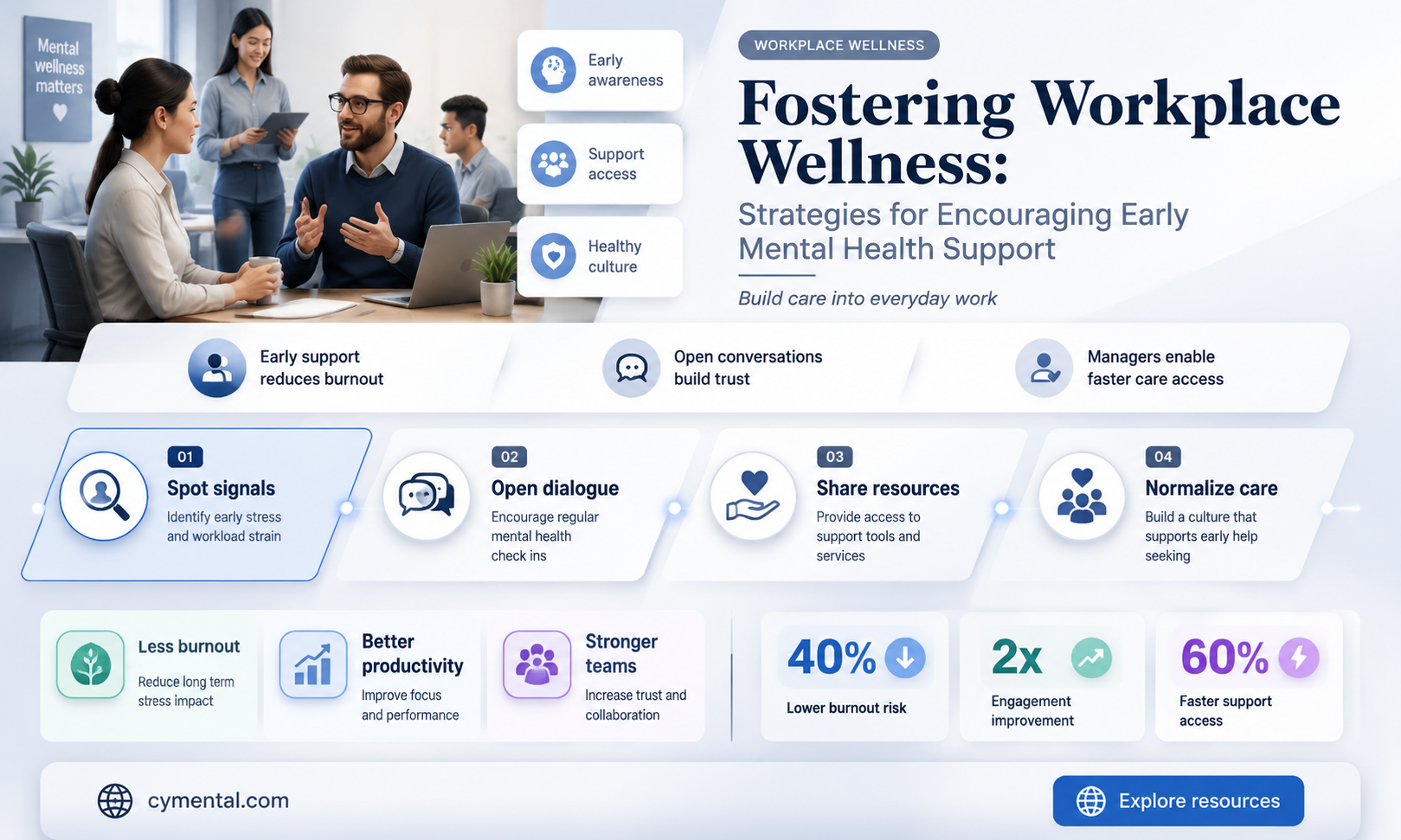
Companies are increasingly recognizing the importance of fostering a culture that encourages early help-seeking for mental health among their staff. By implementing proactive strategies such as destigmatizing mental health discussions, providing accessible resources like Employee Assistance Programs (EAPs), and offering training for managers to identify signs of distress, organizations are creating safe and supportive environments. Additionally, initiatives like mental health awareness campaigns, flexible work arrangements, and regular check-ins help normalize conversations around well-being, ensuring employees feel empowered to seek support before issues escalate. These efforts not only enhance individual resilience but also contribute to improved productivity, engagement, and overall organizational health.
Explore related products

$13.38 $24


$19.99 $19.99


What You'll Learn
- Stigma Reduction Campaigns: Initiatives to normalize mental health conversations and reduce fear of judgment
- Accessible Resources: Providing easy-to-use tools like apps, hotlines, and counseling services for immediate support
- Manager Training: Equipping leaders to recognize signs and encourage employees to seek help early
- Confidentiality Assurance: Guaranteeing privacy to build trust and encourage open discussions about mental health
- Wellness Programs: Integrating mental health into broader wellness initiatives to promote proactive self-care

Stigma Reduction Campaigns: Initiatives to normalize mental health conversations and reduce fear of judgment
Stigma remains a formidable barrier to early help-seeking for mental health, often rooted in fear of judgment, shame, or professional repercussions. Companies addressing this through stigma reduction campaigns must first acknowledge the pervasive silence surrounding mental health in workplace culture. A 2021 study by Mind found that 56% of employees fear discussing mental health with their employer, highlighting the urgent need for normalization. Campaigns that humanize mental health struggles—through storytelling, leadership vulnerability, or peer-led initiatives—begin to dismantle this silence by framing mental health as a universal human experience, not a personal failing.
One effective strategy involves leveraging storytelling to personalize mental health conversations. Companies like Unilever and Deloitte have introduced employee testimonial programs where staff share their experiences with mental health challenges and recovery. These narratives, shared via internal newsletters, videos, or town halls, serve as powerful tools to reduce stigma by demonstrating that seeking help is an act of strength, not weakness. For instance, Deloitte’s "All In" campaign features leaders openly discussing their mental health journeys, signaling to employees that vulnerability is not only accepted but valued. Such initiatives require careful curation to ensure stories are diverse, relatable, and free from sensationalism, focusing on resilience and support rather than suffering.
Another critical component is training managers and leaders to model stigma-free behavior. A survey by the American Psychological Association revealed that 62% of employees would feel more comfortable discussing mental health if their manager initiated the conversation. Companies like Google and Microsoft have implemented "Mental Health First Aid" training for leaders, equipping them with skills to recognize signs of distress and respond empathetically. This training emphasizes language shifts—replacing phrases like "What’s wrong with you?" with "How can I support you?"—to create a non-judgmental environment. Pairing this with policy changes, such as flexible work hours or confidential support hotlines, reinforces the message that mental health is a priority.
Comparatively, some organizations are adopting creative, low-cost initiatives to normalize conversations subtly but effectively. For example, Accenture introduced "Wellbeing Wednesdays," where employees are encouraged to block off time for self-care and openly discuss their mental health without fear of judgment. Similarly, smaller companies have implemented "Tea and Talk" sessions, informal gatherings where staff can share their experiences over tea, fostering a culture of openness. These initiatives succeed by integrating mental health into everyday routines, reducing the pressure of formal disclosures while still encouraging dialogue.
However, stigma reduction campaigns must be sustained and authentic to avoid tokenism. A one-off workshop or poster campaign is insufficient; instead, companies should embed mental health into their core values and practices. Regular pulse surveys, like those used by Salesforce, can gauge employee sentiment and identify areas of persistent stigma, allowing for iterative improvements. Additionally, partnering with mental health organizations, such as Mind or NAMI, lends credibility and provides resources for ongoing education. The ultimate takeaway is clear: stigma reduction is not a campaign but a cultural shift, requiring consistent effort, empathy, and leadership commitment to create an environment where seeking help is the norm, not the exception.
Spirituality's Role in Supporting Your Son's Mental Health Journey
You may want to see also
Explore related products


Accessible Resources: Providing easy-to-use tools like apps, hotlines, and counseling services for immediate support
Companies that prioritize mental health understand the power of accessibility. Offering a range of easily accessible resources empowers employees to seek help early, preventing minor concerns from escalating into major issues. Think of it as providing a toolkit for emotional well-being, readily available whenever needed.
This toolkit should include a variety of options to cater to different preferences and needs. Mobile apps, for instance, offer discreet, on-the-go support. Apps like Calm and Headspace provide guided meditations, sleep stories, and mindfulness exercises, helping employees manage stress and anxiety. Some apps even offer mood tracking and journaling features, allowing individuals to identify patterns and triggers.
Hotlines, another crucial component, provide immediate connection to trained professionals. 24/7 availability ensures support is accessible during moments of crisis or when traditional office hours are inconvenient. Companies can partner with established hotlines like the National Suicide Prevention Lifeline (1-800-273-8255) or explore specialized hotlines catering to specific demographics or concerns.
In-house counseling services, while requiring more investment, offer a personalized and confidential experience. On-site or virtual sessions with licensed therapists provide a safe space for employees to address deeper issues and develop coping strategies. Companies can consider offering a limited number of free sessions per employee annually, removing financial barriers to accessing professional help.
The key to success lies in visibility and communication. Companies should actively promote these resources through multiple channels: intranet platforms, email newsletters, posters in common areas, and even during onboarding sessions. Normalizing help-seeking behavior is crucial. Leaders should openly discuss the availability of these resources and share personal experiences (when comfortable) to encourage utilization.
Social Media's Impact: Boosting or Burdening Your Mental Well-Being?
You may want to see also
Explore related products


$119.95


Manager Training: Equipping leaders to recognize signs and encourage employees to seek help early
Managers are often the first line of defense in identifying mental health struggles among employees, yet many lack the training to recognize subtle signs or initiate conversations effectively. Without this skill set, early intervention opportunities are missed, leading to prolonged suffering and decreased productivity. Companies that invest in manager training on mental health literacy report higher employee engagement, reduced absenteeism, and a more supportive workplace culture.
Consider a scenario: an employee consistently misses deadlines, appears withdrawn, and avoids team interactions. An untrained manager might attribute this to laziness or disinterest, potentially leading to disciplinary action. A manager trained in mental health awareness, however, might recognize these as signs of burnout or depression, prompting a private, empathetic conversation about available support resources. This shift in approach not only helps the employee but also fosters trust and loyalty.
Effective manager training should cover three key areas: sign recognition, communication skills, and resource knowledge. Signs of mental health issues can be behavioral (e.g., increased irritability, decreased performance), physical (e.g., frequent headaches, fatigue), or emotional (e.g., mood swings, apathy). Training should include case studies and role-playing exercises to help managers practice identifying these signs in realistic scenarios. Communication training should emphasize active listening, non-judgmental language, and how to broach the topic without stigmatizing the employee. For instance, instead of asking, "Are you depressed?" a manager might say, "I’ve noticed you seem more stressed lately. How can I support you?"
Equally important is equipping managers with knowledge of available resources, such as Employee Assistance Programs (EAPs), mental health apps, or external counseling services. Managers should know how to confidentially guide employees toward these resources without overstepping boundaries. For example, a manager could say, "Our EAP offers free counseling sessions, and I’d be happy to help you set up an appointment if you’re interested."
However, training alone is not enough. Companies must also create a culture where seeking help is encouraged, not penalized. Managers should model vulnerability by sharing their own experiences with mental health challenges when appropriate, and leadership should publicly endorse the importance of mental well-being. Regular follow-up training sessions and feedback mechanisms ensure managers remain confident and competent in their role as mental health allies.
By prioritizing manager training, companies can transform leaders into proactive advocates for employee mental health. This investment not only mitigates the risks of untreated mental health issues but also cultivates a workplace where employees feel valued, understood, and supported.
Empowering Self-Care Strategies for Mental Health Recovery and Resilience
You may want to see also
Explore related products


Confidentiality Assurance: Guaranteeing privacy to build trust and encourage open discussions about mental health
Confidentiality is the cornerstone of fostering trust in any relationship, and the employer-employee dynamic is no exception, especially when discussing sensitive topics like mental health. Employees must feel assured that their personal struggles and vulnerabilities shared within the workplace will remain private and protected. This assurance of confidentiality is a critical factor in encouraging staff to seek help early, as it mitigates the fear of stigma, judgment, or professional repercussions.
The Impact of Confidentiality on Help-Seeking Behavior
Research indicates that a significant barrier to employees accessing mental health support is the concern over privacy. A study published in the *Journal of Occupational Health Psychology* found that employees were more likely to utilize workplace mental health resources when they perceived a high level of confidentiality. This perception of privacy is not just about legal compliance but also about creating an environment where employees feel safe to disclose their mental health challenges without fear of gossip, discrimination, or negative career implications. For instance, a tech company implemented an anonymous mental health support hotline, resulting in a 35% increase in usage compared to their previous non-anonymous system, demonstrating the power of confidentiality in action.
Implementing Confidentiality Measures: A Practical Guide
To guarantee privacy, companies should adopt a multi-faceted approach:
- Policy Framework: Develop and communicate a comprehensive confidentiality policy specifically for mental health-related matters. This policy should outline the procedures for handling sensitive information, including who has access to it and under what circumstances.
- Training: Educate managers and HR professionals on the importance of confidentiality and provide them with the skills to handle disclosures sensitively. This training should cover active listening, non-judgmental language, and the practical steps to ensure privacy, such as secure record-keeping.
- Anonymous Reporting: Offer multiple channels for employees to seek help anonymously, such as external helplines, online chat services, or feedback boxes. These methods empower employees to take the first step without revealing their identity.
- Secure Technology: Utilize encrypted digital platforms for mental health resources and communications. Ensure that any digital tools or apps provided by the company meet high privacy standards, especially when dealing with personal health data.
Building a Culture of Trust
Confidentiality assurance is not merely a set of policies but a cultural shift. It requires consistent reinforcement through leadership actions and organizational practices. Regularly communicate the company's commitment to privacy, share success stories (anonymously) of employees who have benefited from early help-seeking, and encourage open dialogue about mental health. By doing so, companies can create an environment where seeking support is normalized and trusted, ultimately leading to a healthier, more productive workforce.
In the context of mental health, confidentiality is a powerful tool to dismantle barriers and encourage early intervention. By prioritizing privacy, companies can foster a culture of trust, where employees feel empowered to address their mental well-being proactively, knowing their personal struggles will remain confidential. This approach not only benefits individual employees but also contributes to a more resilient and engaged organizational culture.
Breaking the Silence: Why Men Resist Seeking Mental Health Support
You may want to see also
Explore related products

$18.59 $19.95


Wellness Programs: Integrating mental health into broader wellness initiatives to promote proactive self-care
Workplace wellness programs often silo mental health initiatives, treating them as separate from physical or financial wellness. However, integrating mental health into broader wellness programs normalizes it as a core component of overall well-being, encouraging employees to address concerns proactively. For instance, a company might offer a "Total Wellness Challenge" where participants earn points for activities like meditation sessions, gym visits, or financial planning workshops. Each activity is assigned a point value (e.g., 10 points for a 30-minute mindfulness session, 20 points for a health screening), with mental health activities weighted equally to physical ones. This approach removes the stigma of focusing solely on mental health and positions it as part of a holistic self-care routine.
Designing integrated wellness programs requires careful planning to ensure mental health isn’t overshadowed by more tangible physical health initiatives. Start by auditing existing programs to identify gaps in mental health support. For example, if your company offers yoga classes but lacks stress management workshops, consider adding a biweekly 45-minute session led by a licensed therapist. Pair these with incentives like gift cards or extra vacation days to boost participation. Additionally, use data from employee surveys to tailor programs to specific needs—if younger employees (ages 22–30) report higher anxiety levels, introduce digital tools like mental health apps with guided journaling prompts.
A persuasive argument for integration lies in its ability to foster a culture of proactive self-care. When mental health is woven into wellness initiatives, employees are more likely to view it as a routine practice rather than a last resort. For instance, a company could launch a "Wellness Wednesday" series, alternating between physical activities (e.g., group walks) and mental health sessions (e.g., resilience-building workshops). Pair these with quarterly check-ins where managers discuss self-care strategies with their teams, emphasizing that mental health is a priority. This consistent messaging shifts the narrative from reactive problem-solving to preventive care.
Comparing standalone mental health programs to integrated ones reveals the latter’s superior effectiveness. Standalone programs often struggle with low participation due to perceived stigma or lack of awareness. In contrast, integrated programs leverage the popularity of physical wellness activities to introduce mental health practices subtly. For example, a post-workout mindfulness session after a company-sponsored fitness class normalizes mental health care as part of a balanced routine. Similarly, pairing financial wellness seminars with stress management tips highlights the interconnectedness of mental and financial health, encouraging employees to address both proactively.
To maximize impact, evaluate integrated programs regularly using metrics like participation rates, employee feedback, and changes in productivity or absenteeism. For instance, track how many employees attend both physical and mental health sessions within a program cycle. If participation in mental health activities lags, adjust by offering flexible scheduling or anonymous participation options. Additionally, provide resources like self-assessment tools or access to EAPs (Employee Assistance Programs) for those needing further support. By treating mental health as an integral part of wellness, companies can create a culture where seeking help early becomes second nature, not an afterthought.
Mental Mapping: Boosting Learning, Memory, and Academic Success in School
You may want to see also
Frequently asked questions
Companies can promote early help-seeking by fostering a stigma-free culture, offering accessible mental health resources (e.g., EAPs, counseling services), and providing training for managers to recognize signs of distress and respond appropriately.
Companies can ensure safety by guaranteeing confidentiality, anonymizing access to resources, and clearly communicating that seeking help will not negatively impact job security or career progression.
Leadership plays a critical role by modeling vulnerability, openly discussing mental health, and actively supporting policies and initiatives that prioritize employee well-being, thereby setting a tone that encourages early intervention.