Caleb Wright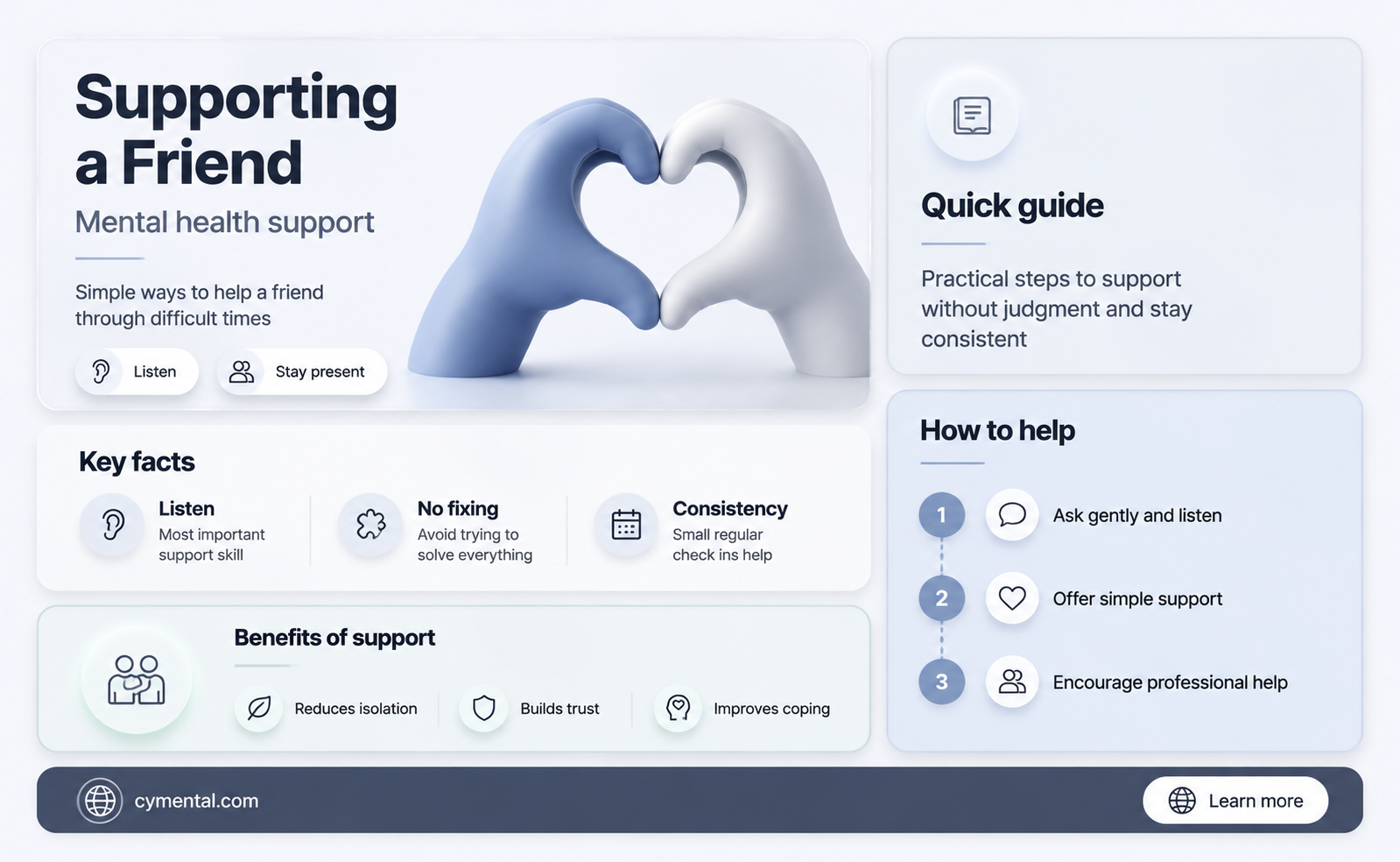
Supporting a friend with mental health issues requires empathy, patience, and understanding. Start by creating a safe, non-judgmental space where they feel comfortable sharing their feelings. Listen actively without trying to fix their problems, and validate their emotions to show you care. Encourage them to seek professional help, such as therapy or counseling, while offering to accompany them if they feel overwhelmed. Be consistent in your support, checking in regularly but respecting their boundaries. Avoid pressuring them or dismissing their struggles, and educate yourself about their condition to better understand their experience. Small gestures, like spending quality time together or simply being present, can make a significant difference in their journey toward healing.
| Characteristics | Values |
|---|---|
| Listen Without Judgment | Create a safe space for your friend to express their feelings without fear of criticism. |
| Educate Yourself | Learn about their specific mental health condition to better understand their struggles. |
| Encourage Professional Help | Gently suggest therapy, counseling, or medical support if they haven’t sought it already. |
| Be Patient | Mental health recovery takes time; avoid pressuring them to "get better" quickly. |
| Show Empathy | Validate their emotions and let them know their feelings are real and important. |
| Offer Practical Support | Help with daily tasks like cooking, cleaning, or running errands if they’re overwhelmed. |
| Stay Connected | Regularly check in, even if they withdraw, to show you care and are there for them. |
| Avoid Minimizing Their Experience | Refrain from saying things like "it could be worse" or "just think positively." |
| Respect Boundaries | Allow them space when needed and avoid pushing them to talk if they’re not ready. |
| Promote Self-Care | Encourage healthy habits like exercise, sleep, and nutrition to support their well-being. |
| Be Reliable | Follow through on promises and be consistent in your support. |
| Avoid Enabling Harmful Behaviors | Support them without enabling self-destructive habits or behaviors. |
| Include Them in Activities | Invite them to social events or activities, even if they decline, to keep them included. |
| Monitor for Crisis | Be aware of signs of worsening mental health or suicidal ideation and act promptly. |
| Take Care of Yourself | Ensure your own mental health is stable to provide effective and sustainable support. |
Explore related products


What You'll Learn
- Listen Actively: Give undivided attention, avoid judgment, and validate their feelings without interrupting or offering quick fixes
- Encourage Professional Help: Gently suggest therapy or counseling, offering to assist in finding resources or scheduling appointments
- Stay Supportive: Be consistently present, check in regularly, and show patience as they navigate their challenges
- Educate Yourself: Learn about their condition to better understand their experience and provide informed, empathetic support
- Promote Self-Care: Encourage healthy habits like exercise, sleep, and hobbies to help them manage stress effectively

Listen Actively: Give undivided attention, avoid judgment, and validate their feelings without interrupting or offering quick fixes
Active listening is a cornerstone of supporting a friend with mental health challenges, yet it’s often misunderstood as mere silence or nodding. True active listening demands intentionality: put away distractions like phones, maintain eye contact, and mirror their tone or pace of speech subtly to signal engagement. Avoid the temptation to multitask—your friend will notice, and it undermines trust. Research shows that feeling "heard" activates the same neural pathways as physical comfort, making this step as vital as any advice you might later offer.
Validation doesn’t mean agreeing with every word; it means acknowledging the *reality* of their experience. For instance, instead of saying, "You shouldn’t feel that way," try, "It makes sense you’d feel overwhelmed given everything you’re handling." Phrases like "That sounds really hard" or "I can see why that’s upsetting" normalize their emotions without dismissing them. Studies in cognitive behavioral therapy highlight that validation reduces defensiveness, allowing your friend to process their feelings more openly.
Judgment often hides in questions or advice disguised as support. Avoid phrases like, "Have you tried just thinking positively?" or "At least it’s not as bad as [X]." Such comments minimize their struggle and can lead to emotional withdrawal. Instead, focus on open-ended questions: "How has this been affecting your day-to-day?" or "What’s been helping you cope so far?" These invite them to lead the conversation while showing you respect their perspective.
Interrupting—even with good intentions—can derail the fragile process of emotional disclosure. If your friend pauses, resist the urge to fill the silence with solutions or anecdotes. Silence is a tool, not an awkward gap. For example, if they mention feeling isolated, instead of immediately suggesting a social outing, say, "Tell me more about what that isolation feels like." This prioritizes their narrative over your agenda, fostering deeper connection.
Finally, active listening isn’t a one-time act but a sustained practice. After the conversation, check in without prying: "I wanted to see how you’re doing since we last talked." This reinforces that your support is consistent, not transactional. Remember, your role isn’t to "fix" their mental health but to hold space for their humanity—and that begins with ears wide open and judgment locked away.
Buddhism and Mental Health: Ancient Wisdom for Modern Well-Being
You may want to see also
Explore related products





Encourage Professional Help: Gently suggest therapy or counseling, offering to assist in finding resources or scheduling appointments
One of the most impactful ways to support a friend struggling with mental health is to encourage them to seek professional help. While your presence and empathy are invaluable, mental health professionals offer specialized tools and strategies that can address underlying issues more effectively. Gently suggesting therapy or counseling shows you care about their long-term well-being, not just their immediate comfort.
Begin by normalizing the conversation around therapy. Share anecdotes about how counseling has benefited others or even yourself, if applicable. Use neutral language like, "Have you ever considered talking to someone about this?" or "Therapy has helped a lot of people in similar situations." Avoid phrases that imply judgment or weakness, such as "You need help" or "You should see someone." The goal is to present professional help as a proactive step, not a last resort.
If your friend expresses openness, offer concrete assistance. Research therapists or counselors in their area, focusing on specialties that align with their struggles (e.g., anxiety, depression, trauma). Provide a list of options, including sliding-scale clinics or online platforms like BetterHelp or Talkspace for affordability and convenience. If they feel overwhelmed, volunteer to help schedule the first appointment or accompany them if they’re nervous. Small actions like these can remove barriers and make the process feel less daunting.
Be mindful of potential resistance. Some friends may fear stigma, doubt the effectiveness of therapy, or feel they can’t afford it. Acknowledge their concerns without dismissing them. For example, say, "I understand it might feel scary, but many people find it really helpful," or "There are low-cost options available—let’s look into them together." Patience is key; avoid pushing too hard, as this could create resentment or defensiveness.
Finally, remember that your role is to support, not to force. Encouraging professional help is a gesture of care, but the decision ultimately rests with your friend. By approaching the topic with sensitivity, offering practical assistance, and respecting their autonomy, you can help them take the first step toward healing.
Brahmi's Impact: Enhancing Mental Wellbeing and Cognitive Health Naturally
You may want to see also
Explore related products


Stay Supportive: Be consistently present, check in regularly, and show patience as they navigate their challenges
Mental health struggles often leave individuals feeling isolated, as if they’re navigating a labyrinth alone. This is where consistent presence becomes a lifeline. Unlike fleeting gestures of support, being reliably available—whether through weekly calls, occasional coffee meetups, or simply responding to texts promptly—signals to your friend that they’re not facing their challenges in isolation. Think of it as the difference between a safety net and a single, fragile thread; the former provides stability, while the latter risks snapping under pressure.
Checking in regularly is an art, not a chore. Avoid generic questions like, “How are you?” which often elicit rote responses. Instead, tailor your inquiries to their specific struggles. For instance, if they’ve mentioned anxiety about work, ask, “How’s the workload been this week? Did you manage to take those breaks we talked about?” This demonstrates active listening and shows you’re invested in their journey. Aim for a balance—checking in 2–3 times a week is often enough to show you care without overwhelming them.
Patience is the unsung hero of support. Mental health recovery isn’t linear; it’s a series of steps forward, sideways, and sometimes backward. Resist the urge to offer quick fixes or express frustration if progress seems slow. Instead, validate their efforts, no matter how small. For example, if they’ve managed to leave the house after days of isolation, acknowledge it: “That took a lot of courage. I’m proud of you.” This reinforces their sense of agency and keeps hope alive.
Finally, consistency doesn’t mean perfection. There will be days when you’re tired, distracted, or unsure of what to say. That’s okay. Authenticity trumps flawless execution. Admitting, “I don’t have all the answers, but I’m here to listen,” can be more comforting than a rehearsed speech. What matters most is your unwavering commitment to being there, even when the path ahead feels uncertain.
In practice, staying supportive is about weaving yourself into the fabric of their life as a steady, reassuring thread. It’s not about solving their problems but about reminding them they’re not alone. Over time, this consistent presence can become a cornerstone of their healing, a quiet but powerful force that helps them weather the storm.
Medication as a Tool: Supporting Mental Health Recovery and Wellness
You may want to see also
Explore related products



Educate Yourself: Learn about their condition to better understand their experience and provide informed, empathetic support
Understanding a friend's mental health condition begins with recognizing that knowledge is a powerful tool for empathy. Mental health disorders, such as depression, anxiety, or bipolar disorder, manifest uniquely in each individual, shaped by their biology, environment, and personal history. By educating yourself about their specific condition, you can decode their behaviors, emotions, and triggers, moving beyond surface-level sympathy to genuine, informed support. For instance, learning that someone with PTSD may experience flashbacks or hypervigilance can help you respond calmly and avoid misunderstandings during an episode.
Start by consulting reputable sources—mental health organizations, peer-reviewed articles, or books written by experts and individuals with lived experience. For example, the National Alliance on Mental Illness (NAMI) offers condition-specific guides that explain symptoms, treatment options, and communication strategies. Avoid relying solely on anecdotal accounts or sensationalized media portrayals, which often perpetuate stigma and misinformation. If your friend is comfortable sharing, ask them for resources they find helpful, such as blogs, podcasts, or support groups, to gain insight into their perspective.
However, education alone is not enough; it must be paired with self-awareness. Reflect on your own biases and assumptions about mental health. For instance, you might believe that someone with depression should "just snap out of it," a misconception that can lead to invalidating their struggle. Challenge these beliefs by actively seeking diverse narratives, such as personal essays or documentaries, that humanize the experience of living with a mental health condition. This dual approach—learning the facts while unlearning stigma—positions you to offer support that is both knowledgeable and compassionate.
Practical application of your knowledge is key. For example, if your friend has generalized anxiety disorder, understanding that their excessive worry is a symptom of their condition, not a personal failing, can help you respond with patience rather than frustration. You might suggest grounding techniques you’ve learned, like the 5-4-3-2-1 method (naming five things you see, four you can touch, etc.), but only if they’re open to it. Remember, your role is to support, not to diagnose or treat. If you notice gaps in your understanding, seek additional resources or encourage professional help without being pushy.
Finally, educating yourself is an ongoing process. Mental health conditions evolve, and so does the research surrounding them. Stay updated by subscribing to newsletters from organizations like the World Health Organization (WHO) or following evidence-based social media accounts. By committing to continuous learning, you not only deepen your ability to support your friend but also contribute to a more informed and compassionate community. This investment in knowledge transforms you from a well-intentioned bystander into an active ally in their journey toward healing.
Gender and Mental Health: Who Seeks More Support, Men or Women?
You may want to see also
Explore related products


Promote Self-Care: Encourage healthy habits like exercise, sleep, and hobbies to help them manage stress effectively
Stress, often a silent saboteur, can exacerbate mental health struggles. One of the most tangible ways to support a friend is by encouraging self-care practices that directly combat its effects. Think of it as building a fortress against stress, brick by brick, with each healthy habit contributing to its strength.
Step 1: Normalize Movement, Not Marathon Training
Exercise doesn’t require a gym membership or a triathlon mindset. Suggest short, accessible activities like a 10-minute walk during lunch breaks, a gentle yoga session via YouTube, or even a dance break to their favorite playlist. Research shows that just 30 minutes of moderate exercise, 3–5 times a week, can reduce anxiety and depression symptoms by up to 30%. For younger friends (teens or early 20s), frame it as a way to boost energy, not just mood—a practical benefit they might relate to more.
Step 2: Prioritize Sleep as a Non-Negotiable
Sleep deprivation amplifies emotional volatility and cognitive fog, making mental health challenges feel insurmountable. Help your friend establish a bedtime routine: limit screen time an hour before bed, encourage a consistent sleep schedule (even on weekends), and suggest calming activities like reading or journaling. For adults over 30, who often juggle work and family, emphasize that 7–9 hours of sleep isn’t selfish—it’s essential for resilience.
Step 3: Reignite Hobbies or Discover New Ones
Hobbies provide a mental escape and a sense of accomplishment. If your friend feels overwhelmed by options, start small: suggest a 15-minute daily doodle, a podcast during their commute, or a beginner’s knitting kit. For teens, tie hobbies to their interests—gaming, photography, or cooking—to make it feel less like a chore. Adults might benefit from revisiting childhood passions, like playing an instrument or gardening, which can evoke nostalgia and joy.
Caution: Avoid Overloading or Judging
While self-care is powerful, it’s not a cure-all. Avoid phrases like “You’ll feel better if you just…” or “Why aren’t you trying harder?” Instead, lead by example—invite them to join you for a walk or share your own struggles with consistency. Remember, small, consistent efforts are more sustainable than grandiose plans that fizzle out.
Promoting self-care isn’t about forcing change; it’s about creating an environment where healthy habits feel attainable and rewarding. Over time, these practices can reduce stress, improve mood, and foster a sense of control—a lifeline for someone navigating mental health challenges. By focusing on exercise, sleep, and hobbies, you’re not just offering advice; you’re helping rebuild their foundation, one habit at a time.
Supporting Mental Health: Practical Ways to Help Loved Ones Heal
You may want to see also
Frequently asked questions
Look for changes in behavior, mood, or habits, such as withdrawal from social activities, persistent sadness, irritability, or difficulty concentrating. Gently express your concern and ask open-ended questions like, "How are you feeling lately?" to encourage them to share.
Be supportive and non-judgmental. Let them know you care and are there to listen without offering unsolicited advice. Phrases like, "I’m here for you," or "How can I help?" can make a big difference. Avoid minimizing their feelings or comparing their struggles to others.
Approach the topic gently and express your concern for their well-being. Suggest resources like therapists, helplines, or support groups, and offer to help them find or schedule an appointment. Emphasize that seeking help is a sign of strength, not weakness.