Madison Cole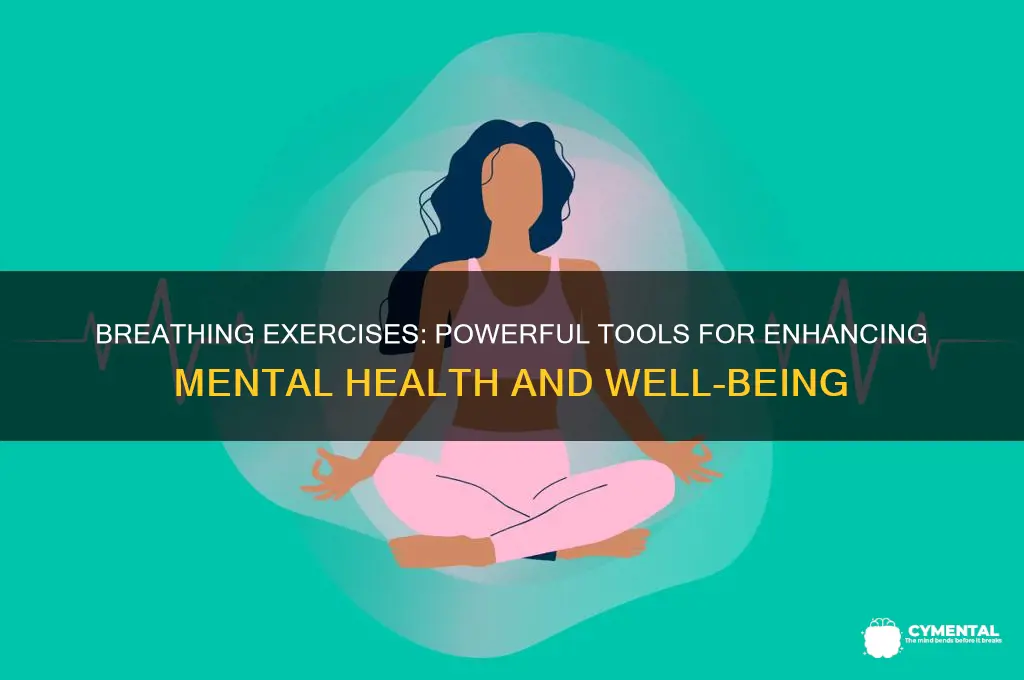
Breathing exercises have emerged as a powerful tool for enhancing mental health by leveraging the innate connection between the breath and the nervous system. Techniques such as deep diaphragmatic breathing, box breathing, and alternate nostril breathing activate the parasympathetic nervous system, promoting relaxation and reducing stress. These practices lower cortisol levels, decrease heart rate, and calm the mind, making them effective in managing anxiety, depression, and panic disorders. Additionally, mindful breathing fosters present-moment awareness, helping individuals break free from negative thought patterns and improve emotional regulation. By incorporating these simple yet profound exercises into daily routines, people can cultivate resilience, enhance focus, and achieve a greater sense of mental clarity and well-being.
| Characteristics | Values |
|---|---|
| Stress Reduction | Activates the parasympathetic nervous system, reducing cortisol levels and promoting relaxation. |
| Anxiety Relief | Slow, deep breathing lowers heart rate and calms the mind, alleviating symptoms of anxiety. |
| Improved Emotional Regulation | Enhances self-awareness and emotional control by grounding individuals in the present moment. |
| Enhanced Focus and Concentration | Increases oxygen flow to the brain, improving cognitive function and mental clarity. |
| Reduction in Symptoms of Depression | Promotes the release of endorphins and reduces inflammation, which can improve mood. |
| Better Sleep Quality | Calms the mind and body, making it easier to fall asleep and maintain restful sleep. |
| Lower Blood Pressure | Reduces physiological arousal, contributing to lower blood pressure and cardiovascular health. |
| Increased Mindfulness | Encourages present-moment awareness, reducing rumination and worry. |
| Boosted Resilience to Stress | Regular practice strengthens the body’s ability to recover from stressful situations. |
| Improved Overall Mental Well-being | Combines physical and psychological benefits to foster a sense of calm and balance. |
Explore related products


What You'll Learn
- Reduces Stress Hormones: Deep breathing lowers cortisol, promoting relaxation and reducing anxiety levels effectively
- Improves Focus: Mindful breathing enhances concentration by calming the mind and stabilizing thoughts
- Boosts Mood: Increased oxygen flow triggers endorphins, elevating mood and reducing depression symptoms
- Manages Panic Attacks: Controlled breathing techniques help regulate heart rate during panic episodes
- Enhances Sleep Quality: Relaxation exercises calm the nervous system, aiding in better sleep patterns

Reduces Stress Hormones: Deep breathing lowers cortisol, promoting relaxation and reducing anxiety levels effectively
Deep breathing isn't just about filling your lungs with air; it's a powerful tool to recalibrate your body's stress response. When you inhale slowly and deeply, you activate the parasympathetic nervous system, often referred to as the "rest and digest" mode. This activation sends a signal to your brain to calm down, which in turn reduces the production of cortisol, the primary stress hormone. Studies show that cortisol levels can drop significantly after just 10 minutes of focused deep breathing exercises, making it an accessible and immediate way to manage stress.
Consider this: cortisol is essential for survival, but chronically elevated levels can lead to anxiety, insomnia, and even weakened immunity. Deep breathing acts as a natural counterbalance. For instance, a 4-7-8 breathing technique—inhale for 4 seconds, hold for 7, exhale for 8—has been shown to lower cortisol levels effectively. This technique is particularly useful for adults aged 18-65, as it requires minimal physical effort and can be practiced anywhere, whether at your desk, in bed, or during a commute.
However, not all deep breathing practices are created equal. Consistency is key. Aim for at least two 10-minute sessions daily, preferably in the morning and evening, to maintain a steady reduction in cortisol levels. Pairing deep breathing with mindfulness or meditation can amplify its effects, as it helps keep your focus on the present moment, further reducing anxiety. Caution: while deep breathing is safe for most, individuals with respiratory conditions like asthma should consult a healthcare provider before starting any new breathing regimen.
The science behind this is clear: deep breathing shifts your body from a state of fight-or-flight to one of relaxation. By lowering cortisol, it not only reduces immediate stress but also prevents long-term mental health issues like chronic anxiety and depression. For parents, teaching children as young as 5 years old simple deep breathing techniques can instill healthy stress management habits early. Practical tip: use a timer or guided breathing apps to ensure you’re practicing for the full duration and maintaining the correct rhythm.
Incorporating deep breathing into your routine doesn’t require a drastic lifestyle change. Start small—take three deep breaths before responding to a stressful email or during a heated conversation. Over time, this habit can rewire your body’s response to stress, making you more resilient. Remember, the goal isn’t to eliminate stress entirely but to equip yourself with tools to manage it effectively. Deep breathing is one such tool, scientifically proven to lower cortisol and promote mental well-being.
Nature's Healing Power: Can Outdoor Therapy Ease Mental Illness?
You may want to see also
Explore related products


![Sparthos High Altitude Mask - Simulate High Altitudes - for Gym, Cardio, Fitness, Running, Endurance and HIIT Training [16 Breathing Levels]](https://m.media-amazon.com/images/I/61f0v++YKdL._AC_UY218_.jpg)
Improves Focus: Mindful breathing enhances concentration by calming the mind and stabilizing thoughts
The human mind is a restless entity, often jumping between thoughts like a monkey swinging from tree to tree. This mental restlessness can fragment our focus, making it difficult to concentrate on tasks or remain present in the moment. Mindful breathing acts as a gentle anchor, grounding the mind and creating a stable foundation for enhanced concentration. By intentionally focusing on the rhythm of the breath, we interrupt the cycle of mental chatter and create a space for clarity.
Studies show that even brief periods of mindful breathing can significantly improve attention span and cognitive performance.
Imagine your mind as a cluttered desk, papers scattered everywhere, making it impossible to find what you need. Mindful breathing is like organizing those papers into neat piles. It doesn’t eliminate the thoughts, but it arranges them in a way that allows you to focus on one thing at a time. Practically, this can be achieved through techniques like box breathing: inhale for a count of four, hold for four, exhale for four, and pause for four. Repeat this cycle for 5–10 minutes daily, especially before tasks requiring deep focus. For children or those new to mindfulness, start with shorter durations and gradually increase the time as comfort grows.
The science behind this is rooted in the activation of the parasympathetic nervous system, which calms the body’s stress response. When we breathe mindfully, we lower cortisol levels and increase oxygen flow to the brain, creating an optimal environment for concentration. This is particularly beneficial for students, professionals, or anyone facing high-pressure situations where focus is critical. For instance, athletes often use breathing exercises pre-competition to stabilize their minds and improve performance.
However, it’s essential to approach mindful breathing with patience. Like any skill, it requires practice. Start small, perhaps with 2–3 minutes a day, and gradually build up. Consistency is key—incorporate it into your daily routine, such as during your morning coffee or before bedtime. Avoid forcing the practice; if your mind wanders, gently guide it back to the breath without judgment. Over time, you’ll notice not only improved focus but also a greater ability to manage distractions and maintain mental clarity throughout the day.
In a world where distractions are constant, mindful breathing offers a simple yet powerful tool to reclaim your attention. It’s not about emptying the mind but training it to stay centered amidst the chaos. By calming the mind and stabilizing thoughts, you create a mental environment conducive to sustained focus, enabling you to tackle tasks with greater efficiency and presence. Whether you’re a student preparing for exams, a professional managing deadlines, or simply seeking to be more present in daily life, mindful breathing is a practice worth embracing.
Refusing Mental Health Support: Empowering Choice or Hidden Risk?
You may want to see also
Explore related products




Boosts Mood: Increased oxygen flow triggers endorphins, elevating mood and reducing depression symptoms
Breathing exercises are a powerful tool for enhancing mental health, and one of their most remarkable benefits is their ability to boost mood. At the core of this effect is the relationship between oxygen flow and endorphin release. When you engage in deep, intentional breathing, you increase the amount of oxygen entering your bloodstream. This heightened oxygenation triggers the release of endorphins, often referred to as "feel-good" hormones, which play a crucial role in elevating mood and reducing symptoms of depression.
To harness this benefit, consider incorporating diaphragmatic breathing, also known as belly breathing, into your routine. Start by sitting or lying comfortably, place one hand on your chest and the other on your abdomen, and inhale deeply through your nose for a count of 4. Allow your abdomen to rise as you fill your lungs completely. Exhale slowly through your mouth for a count of 6, letting your abdomen fall. Repeat this cycle for 5–10 minutes daily. Research suggests that practicing this technique for at least 10 minutes a day can significantly improve mood and reduce stress levels, particularly in adults aged 18–65.
A comparative analysis reveals that breathing exercises are as effective as, if not more accessible than, other mood-boosting interventions. Unlike medication or therapy, which may require time, cost, or professional guidance, breathing exercises are free, require no equipment, and can be done anywhere. For instance, a study published in the *Journal of Alternative and Complementary Medicine* found that participants who practiced deep breathing exercises for 20 minutes daily reported a 25% reduction in depression symptoms after just two weeks, comparable to the effects of mild antidepressants.
However, it’s essential to approach breathing exercises with awareness. While they are generally safe, individuals with respiratory conditions like asthma or chronic obstructive pulmonary disease (COPD) should consult a healthcare provider before starting a new regimen. Additionally, consistency is key—sporadic practice may yield minimal results, while regular engagement amplifies the mood-enhancing effects. Pairing breathing exercises with mindfulness or meditation can further deepen their impact, creating a holistic approach to mental well-being.
Incorporating breathing exercises into your daily routine is a simple yet transformative way to boost your mood. By increasing oxygen flow and triggering endorphin release, these practices offer a natural, accessible solution for managing depression symptoms and fostering emotional resilience. Start small, stay consistent, and let the power of your breath become a cornerstone of your mental health toolkit.
Seeking Mental Health Support: A Guide to Finding the Right Help
You may want to see also
Explore related products


Manages Panic Attacks: Controlled breathing techniques help regulate heart rate during panic episodes
During a panic attack, the body’s fight-or-flight response hijacks control, accelerating heart rate, shallowing breath, and flooding the system with stress hormones. Controlled breathing techniques act as a circuit breaker, interrupting this cycle by signaling the parasympathetic nervous system to restore calm. The 4-7-8 method—inhale for 4 seconds, hold for 7, exhale for 8—is particularly effective, as the extended exhale triggers a reflex that slows heart rate and lowers blood pressure. This physiological shift counters the body’s panic response, providing immediate relief.
The science behind this lies in the vagus nerve, a key player in the parasympathetic nervous system. Deep, slow breathing stimulates this nerve, reducing the production of cortisol and adrenaline. Studies show that practicing diaphragmatic breathing for just 5 minutes can decrease heart rate by 10-15 beats per minute during acute stress. For those prone to panic attacks, incorporating this technique daily—even when calm—trains the body to respond more efficiently, reducing the frequency and intensity of episodes over time.
However, mastering this skill requires practice and patience. Beginners often struggle with consistency or feel self-conscious during an attack. A practical tip is to pair breathing with a grounding technique, such as naming five objects you can see or feel, to refocus the mind. Mobile apps like Calm or Headspace offer guided breathing exercises tailored for panic relief, providing structure for those who find it hard to self-direct. Consistency is key; aim for 10 minutes daily to build resilience.
It’s important to note that while breathing exercises are powerful, they aren’t a standalone cure for panic disorder. They work best as part of a broader strategy, including therapy and, if necessary, medication. For individuals with severe or persistent symptoms, consulting a mental health professional is crucial. Breathing techniques offer a tool for self-empowerment, but they should complement, not replace, professional care.
Incorporating controlled breathing into daily life doesn’t require a drastic lifestyle change. Simple habits, like taking three deep breaths before responding to stress or practicing box breathing (inhale, hold, exhale, hold for 4 counts each) during work breaks, can build resilience over time. For teens and adults alike, this accessible practice provides a sense of agency during moments of overwhelming anxiety, transforming panic from an uncontrollable force into a manageable challenge.
Supporting Through Crisis: Texting Tips for Mental Breakdown Assistance
You may want to see also
Explore related products


Enhances Sleep Quality: Relaxation exercises calm the nervous system, aiding in better sleep patterns
Breathing exercises, particularly those focused on relaxation, have a profound impact on sleep quality by calming the nervous system. When practiced consistently, techniques like diaphragmatic breathing or the 4-7-8 method signal the body to shift from a state of stress (sympathetic mode) to rest (parasympathetic mode). This transition reduces cortisol levels, the hormone associated with anxiety, and increases melatonin, the sleep-regulating hormone. For adults aged 18–65, incorporating just 10–15 minutes of these exercises before bedtime can significantly improve sleep onset and duration, according to studies from the *Journal of Sleep Research*.
To implement this effectively, start by lying flat on your back with one hand on your chest and the other on your abdomen. Inhale deeply through your nose for a count of four, allowing your abdomen to rise, then exhale slowly through your mouth for a count of eight. Repeat this cycle five to ten times. For added benefit, pair this with progressive muscle relaxation, tensing and releasing each muscle group from toes to head. Avoid screens or stimulating activities at least an hour before bed to maximize the exercise’s calming effects.
A comparative analysis reveals that relaxation-focused breathing exercises outperform traditional sleep aids like medication in long-term efficacy and safety. While sleeping pills may provide immediate relief, they often lead to dependency and grogginess. Breathing exercises, on the other hand, are free, accessible, and empower individuals to self-regulate their sleep patterns. A 2020 study published in *Sleep Medicine Reviews* found that participants who practiced nightly breathing exercises reported a 40% improvement in sleep quality within six weeks, compared to 20% in the medication group.
However, it’s crucial to approach these exercises with patience and consistency. Results aren’t instantaneous, and individuals with severe sleep disorders like insomnia or sleep apnea should consult a healthcare professional. For children and adolescents, simplified versions of these techniques, such as counting breaths or visualizing calming scenes, can be equally effective. Parents can guide younger children through these practices, fostering healthy sleep habits early in life.
In conclusion, relaxation-focused breathing exercises are a powerful, natural tool for enhancing sleep quality by calming the nervous system. By dedicating a few minutes each night to these practices, individuals of all ages can achieve deeper, more restorative sleep without relying on external aids. Start small, stay consistent, and let your breath be the bridge to better rest.
Nourish Your Mind: How Healthy Eating Boosts Mental Well-Being
You may want to see also
Frequently asked questions
Breathing exercises activate the parasympathetic nervous system, which calms the body and reduces stress. Deep, intentional breathing lowers cortisol levels, slows the heart rate, and promotes relaxation, helping to alleviate anxiety and improve overall mental well-being.
Yes, breathing exercises like diaphragmatic breathing or box breathing can reduce symptoms of anxiety and depression by regulating the body’s stress response. They increase oxygen flow to the brain, improve focus, and create a sense of control, which can help manage negative emotions.
Consistency is key. Practicing breathing exercises for 5–10 minutes daily can yield noticeable mental health benefits over time. Even short sessions during moments of stress can provide immediate relief and contribute to long-term improvements in mood and resilience.