Madison Cole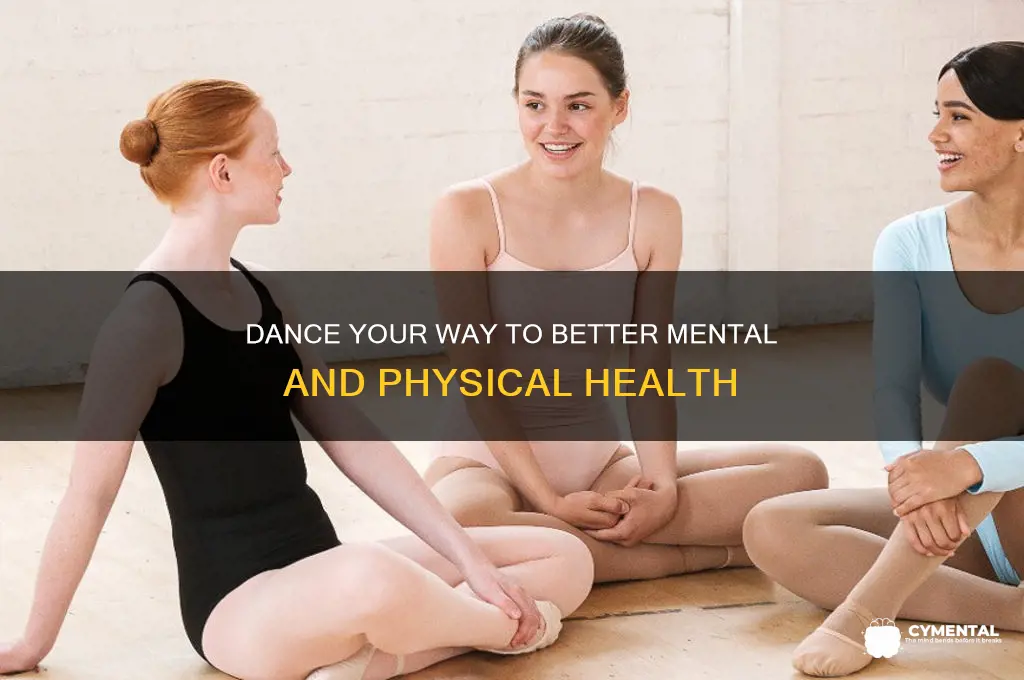
Dance is a powerful and multifaceted activity that offers profound benefits for both mental and physical health. Physically, it enhances cardiovascular fitness, improves flexibility, strength, and coordination, while also aiding in weight management and bone density. Mentally, dance serves as a therapeutic outlet, reducing stress, anxiety, and symptoms of depression by releasing endorphins and promoting mindfulness. The social aspect of dance fosters connections, boosts self-confidence, and provides a sense of belonging. Additionally, the cognitive demands of learning choreography improve memory, focus, and overall brain health. Whether through structured classes or spontaneous movement, dance is a holistic practice that nurtures the body, mind, and spirit, making it an invaluable tool for overall well-being.
Explore related products


What You'll Learn
- Stress Reduction: Dance lowers cortisol levels, promoting relaxation and reducing anxiety through rhythmic movement and focus
- Physical Fitness: Improves cardiovascular health, strength, flexibility, and endurance through dynamic and engaging exercise
- Mood Enhancement: Releases endorphins, boosting happiness and reducing symptoms of depression and mood disorders
- Cognitive Benefits: Enhances memory, focus, and coordination by engaging multiple brain regions simultaneously
- Social Connection: Group dance fosters community, reduces loneliness, and builds supportive relationships through shared activity

Stress Reduction: Dance lowers cortisol levels, promoting relaxation and reducing anxiety through rhythmic movement and focus
Dance, with its rhythmic movements and immersive focus, serves as a powerful tool for stress reduction by directly targeting cortisol, the body’s primary stress hormone. Studies show that engaging in dance for as little as 20–30 minutes a day can significantly lower cortisol levels, promoting a state of relaxation. This physiological response is amplified by the combination of physical activity and mental engagement, making dance uniquely effective compared to static forms of exercise. For instance, a 2019 study published in the *Journal of Applied Gerontology* found that older adults who participated in regular dance sessions experienced a 25% reduction in cortisol levels compared to those who did not.
To harness dance’s stress-reducing benefits, focus on rhythmic movement and mindfulness. Start with simple, repetitive steps that allow you to sync your breath with your motions. For example, salsa or Zumba routines, which blend structured choreography with upbeat music, encourage both physical exertion and mental concentration. Even freestyle dancing, where you move intuitively to music, can be effective—the key is to maintain a steady rhythm that distracts the mind from stressors. Incorporating deep breathing while dancing further enhances relaxation by activating the parasympathetic nervous system, which counteracts the fight-or-flight response.
While dance is accessible to all ages, its stress-reducing effects are particularly pronounced in adolescents and young adults, who often face high-pressure environments. Schools and workplaces are increasingly incorporating dance breaks to combat stress, with some organizations reporting a 30% decrease in employee anxiety levels after implementing weekly 15-minute dance sessions. For older adults, low-impact dance styles like ballroom or line dancing offer similar benefits without the strain of high-intensity movement. Consistency is key—aim for at least three sessions per week to maintain reduced cortisol levels and sustained relaxation.
A cautionary note: while dance is generally safe, overdoing it can lead to physical strain, which may counteract its stress-reducing effects. Avoid pushing yourself to exhaustion, especially if you’re new to dance or have pre-existing health conditions. Start with shorter sessions and gradually increase duration and intensity. Additionally, choose music and styles that resonate with you personally—forced enjoyment defeats the purpose. Finally, combine dance with other stress management techniques, such as meditation or journaling, for a holistic approach to mental well-being.
In conclusion, dance’s ability to lower cortisol levels through rhythmic movement and focused attention makes it a potent stress-reduction tool. By integrating dance into your routine—whether through structured classes or spontaneous sessions at home—you can cultivate a sense of calm and resilience. Remember, the goal isn’t perfection but presence; let the music guide you, and allow your body to respond naturally. With consistent practice, dance becomes more than an activity—it transforms into a sanctuary for both mind and body.
Viome and Mental Health: Can Gut Testing Improve Your Well-Being?
You may want to see also
Explore related products
![Island Girl Dance Fitness Workout for Beginners: Tahitian Hip Hop [DVD]](https://m.media-amazon.com/images/I/51MGFSCM08L._AC_UY218_.jpg)


Physical Fitness: Improves cardiovascular health, strength, flexibility, and endurance through dynamic and engaging exercise
Dance is a powerful tool for enhancing physical fitness, offering a dynamic and engaging way to improve cardiovascular health, strength, flexibility, and endurance. Unlike traditional workouts, dance combines rhythmic movement with creative expression, making it both enjoyable and effective. For instance, a 30-minute session of moderate-intensity dance, such as Zumba or jazz, can burn between 200 to 400 calories, depending on the individual’s weight and effort level. This calorie expenditure rivals that of jogging or cycling, but with the added benefit of being socially interactive and artistically fulfilling.
To maximize cardiovascular benefits, incorporate high-energy dance styles like hip-hop or aerobic dance into your routine. Aim for at least 150 minutes of moderate-intensity dance per week, as recommended by the World Health Organization. For older adults or beginners, low-impact options like ballroom or line dancing provide a gentler yet still effective workout. The key is consistency; regular participation strengthens the heart, improves circulation, and lowers the risk of cardiovascular diseases.
Strength and flexibility are equally enhanced through dance. Movements like pliés in ballet or jumps in breakdancing engage major muscle groups, building lean muscle mass over time. Stretching routines inherent in many dance styles, such as contemporary or yoga-inspired dance, improve flexibility and reduce the risk of injury. For example, holding a deep lunge during a dance sequence can increase hamstring flexibility, while repetitive arm movements in styles like Bollywood strengthen the upper body. Incorporate strength-focused dance classes 2–3 times per week to see noticeable improvements in muscle tone and definition.
Endurance is another critical component of physical fitness that dance enhances. Sustained choreography requires stamina, training the body to perform efficiently over longer periods. For instance, a 60-minute ballet class demands continuous movement, gradually increasing endurance as the dancer adapts. To build endurance, start with shorter sessions and progressively increase duration and intensity. Hydration and proper nutrition, such as consuming complex carbohydrates before a class, support sustained energy levels during prolonged dance activities.
Practical tips can further optimize the physical benefits of dance. Wear supportive footwear to prevent strain, and warm up with dynamic stretches to prepare the body for movement. For those new to dance, begin with beginner-friendly styles like salsa or tap to build confidence and skill. Finally, listen to your body—rest when needed to avoid overexertion. By integrating dance into your fitness routine, you not only improve physical health but also discover a joyful and sustainable way to stay active.
Stuffed Animals: Surprising Mental Health Benefits and Comfort They Offer
You may want to see also
Explore related products


Mood Enhancement: Releases endorphins, boosting happiness and reducing symptoms of depression and mood disorders
Dance, a universal language of movement, holds a powerful key to unlocking improved mental well-being. At its core, the act of dancing triggers the release of endorphins, often referred to as the body's "feel-good" hormones. These chemicals act as natural painkillers and mood elevators, creating a sense of euphoria and contentment. Imagine a runner's high, but achieved through the rhythmic expression of your body.
Studies suggest that even moderate-intensity dance sessions, lasting as little as 30 minutes, can significantly increase endorphin levels, leading to a noticeable boost in mood. This natural high can be particularly beneficial for individuals struggling with depression and mood disorders.
The impact of dance on mood goes beyond mere chemistry. The very act of moving to music engages multiple brain regions, fostering a sense of connection and joy. The social aspect of many dance forms further amplifies this effect, combating feelings of loneliness and isolation, common contributors to depression. Consider the vibrant energy of a salsa class or the synchronized movements of a line dance – these experiences create a sense of belonging and shared joy, powerful antidotes to negative emotions.
While more research is needed to fully understand the long-term effects, incorporating regular dance sessions into your routine, even if it's just grooving to your favorite tunes at home, can be a simple yet effective strategy for managing mood and promoting overall well-being. Remember, the key is consistency and finding a style of dance that brings you joy.
LGBT Support Groups: Fostering Mental Health and Community Resilience
You may want to see also
Explore related products

$14.99 $19.99


$15.99 $19.99


Cognitive Benefits: Enhances memory, focus, and coordination by engaging multiple brain regions simultaneously
Dance is a full-body workout that doesn’t just sculpt muscles—it sharpens the mind. Unlike repetitive exercises like running or cycling, dance requires memorizing sequences, adapting to rhythms, and coordinating movements with music. This complexity engages multiple brain regions simultaneously, including the hippocampus (linked to memory), the prefrontal cortex (responsible for focus), and the cerebellum (critical for coordination). A 2017 study published in *Frontiers in Aging Neuroscience* found that older adults who danced regularly showed increased hippocampal volume, correlating with improved memory performance. The takeaway? Dance isn’t just movement—it’s a cognitive workout.
To harness these benefits, aim for at least 30 minutes of structured dance practice, three times a week. Beginners can start with simpler routines, gradually increasing complexity as coordination improves. For example, learning a new salsa step forces the brain to encode new patterns, strengthening neural connections. Pairing dance with social interaction amplifies its cognitive effects; group classes or partner dances like tango require split-second decision-making, further boosting focus and mental agility. Caution: Avoid overloading yourself with overly complex routines too soon, as frustration can hinder learning and demotivate beginners.
Consider the comparative advantage of dance over other activities. While puzzles or meditation target specific cognitive skills, dance uniquely combines physical activity with mental challenges. A 2018 study in *Science Daily* highlighted that dancers outperform non-dancers in memory tests and multitasking tasks. This is because dance demands split attention—tracking steps, timing, and spatial awareness all at once. For older adults, this can be particularly beneficial in delaying age-related cognitive decline. Even children can benefit; incorporating dance into their routine improves academic performance by enhancing focus and discipline.
Practically, integrating dance into daily life doesn’t require a studio. Turn household chores into a rhythmic activity, or spend 10 minutes freestyle dancing to your favorite playlist. Apps like *Just Dance* offer structured routines for all skill levels, making it accessible for any age or fitness level. For those with limited mobility, chair dancing or modified movements can still engage the brain effectively. The key is consistency—regular engagement ensures sustained cognitive benefits. Dance isn’t just an art form; it’s a science-backed tool for mental sharpness.
Laughter's Power: Boosting Mental Health and Emotional Well-being Naturally
You may want to see also
Explore related products


Social Connection: Group dance fosters community, reduces loneliness, and builds supportive relationships through shared activity
Human beings are inherently social creatures, yet modern life often leaves us isolated. Group dance offers a powerful antidote, weaving together movement and connection to combat loneliness and foster a sense of belonging. Consider the synchronized steps of a salsa class, the shared laughter during a line dance, or the collective energy of a Zumba session. These experiences transcend mere exercise; they become rituals of connection, where individuals find themselves part of something larger than themselves.
Studies show that social connection is as vital to health as diet and exercise, reducing the risk of depression, anxiety, and even physical ailments like heart disease. Group dance, by its very nature, provides a structured yet joyful environment for building these connections.
Imagine a senior citizen hesitant to join a ballroom dance class, fearing their rusty moves or lack of a partner. Within weeks, they find themselves laughing with new friends, learning steps together, and experiencing the joy of shared accomplishment. This scenario isn't just anecdotal; research consistently demonstrates that group dance interventions significantly reduce feelings of loneliness and isolation, particularly among older adults. The combination of physical activity, social interaction, and the cognitive engagement required to learn choreography creates a potent recipe for well-being.
For those seeking to harness the social benefits of dance, consistency is key. Aim for at least two group dance sessions per week, each lasting 45-60 minutes. Choose styles that align with your interests and fitness level, whether it's the energetic rhythms of African dance, the graceful flow of ballet, or the social vibrancy of swing. Remember, the goal isn't perfection but participation. Embrace the awkward steps, celebrate the shared laughter, and allow yourself to be part of the community that dance naturally creates.
The beauty of group dance lies in its accessibility. It transcends age, cultural background, and physical ability. Wheelchair dance, for instance, offers a platform for individuals with disabilities to experience the joy of movement and connection. Community centers, senior centers, and dance studios often offer classes tailored to specific needs and interests. Don't be intimidated by the perceived skill level; most classes welcome beginners with open arms. The focus is on the shared experience, not individual prowess.
By stepping into a group dance class, you're not just signing up for exercise; you're investing in your social well-being. You're choosing to connect, to move, and to be part of something bigger than yourself. So, put on your dancing shoes, find your rhythm, and let the music guide you towards a healthier, happier, and more connected you.
Can School Counselors Seek Mental Health Support? Exploring Eligibility and Resources
You may want to see also
Frequently asked questions
Dance has been shown to reduce stress, anxiety, and symptoms of depression by releasing endorphins, the body's natural "feel-good" chemicals. It also promotes mindfulness, as dancers focus on movement and rhythm, which can help calm the mind and reduce negative thoughts.
Yes, dance is a full-body workout that improves cardiovascular health, increases strength, flexibility, and balance. Regular dancing can also help with weight management, bone density, and overall physical fitness.
Absolutely. Group dancing fosters social connections, reduces feelings of loneliness, and boosts self-confidence. It provides a sense of community and belonging, which are essential for mental health and emotional resilience.