Harper Lewis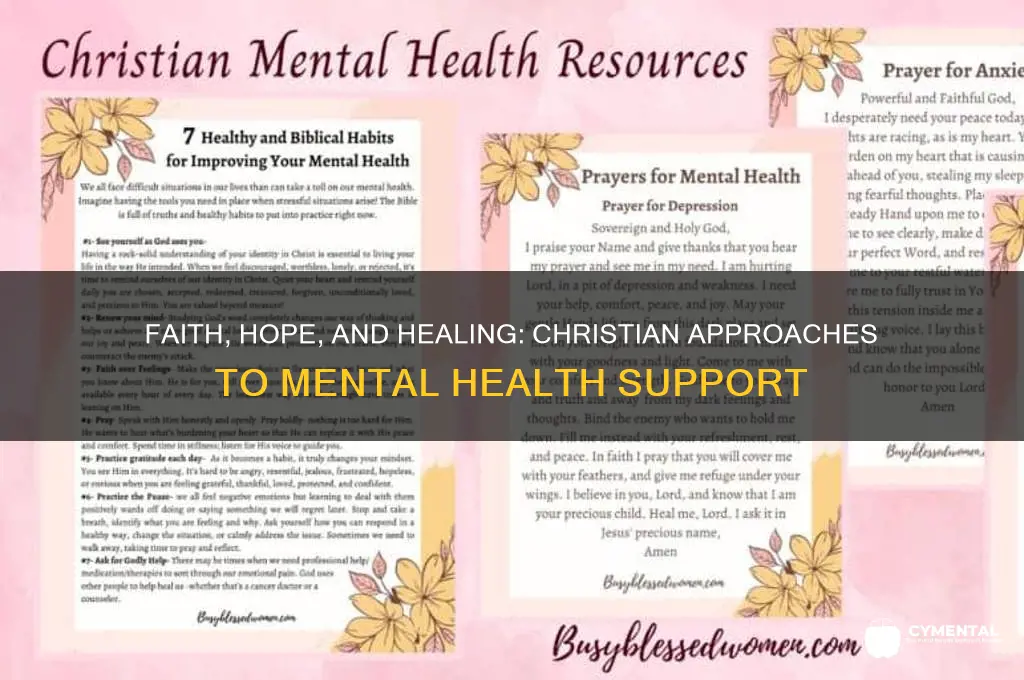
Christians often approach mental health through a combination of faith, community support, and practical care, rooted in the belief that holistic healing involves tending to both the soul and the mind. Many Christian communities emphasize the importance of prayer, counseling, and spiritual guidance as tools to address mental disorders, viewing them as opportunities for God’s grace and healing to manifest. Churches frequently offer support groups, pastoral counseling, and resources to help individuals navigate challenges like depression, anxiety, or trauma, while also encouraging professional treatment such as therapy and medication. Additionally, Christians often emphasize the power of hope, forgiveness, and a sense of purpose found in their faith, which can provide emotional resilience and coping mechanisms for those struggling with mental health issues. By fostering a compassionate and non-judgmental environment, Christians aim to reduce stigma and promote understanding, reflecting their commitment to caring for the whole person—body, mind, and spirit.
| Characteristics | Values |
|---|---|
| Prayer and Spiritual Support | Christians often pray for individuals with mental disorders, believing in the healing power of God. Prayer groups and spiritual counseling are common practices. |
| Community and Belonging | Churches provide a supportive community, reducing isolation and fostering a sense of belonging, which is crucial for mental well-being. |
| Biblical Guidance | Scripture is used to offer hope, comfort, and coping strategies. Verses about peace, strength, and God's love are frequently shared. |
| Pastoral Counseling | Many churches offer counseling services by trained pastors or chaplains who integrate faith with mental health principles. |
| Faith-Based Programs | Programs like Celebrate Recovery address addiction and mental health issues through a Christian lens, combining spiritual principles with practical steps for recovery. |
| Encouragement and Hope | Christians emphasize God's unconditional love and the promise of eternal hope, which can provide motivation and resilience for those struggling with mental disorders. |
| Practical Assistance | Churches often provide tangible support, such as meals, transportation, or financial aid, to alleviate stressors that exacerbate mental health issues. |
| Education and Awareness | Many Christian organizations promote mental health awareness, reducing stigma and encouraging individuals to seek professional help alongside spiritual support. |
| Forgiveness and Grace | The Christian message of forgiveness and grace helps individuals cope with guilt, shame, or self-condemnation, which are common in mental health struggles. |
| Holistic Approach | Christians often view mental health as interconnected with spiritual, emotional, and physical well-being, advocating for a balanced approach to healing. |
| Support Groups | Faith-based support groups, such as those for depression or anxiety, provide a safe space for sharing experiences and receiving encouragement rooted in Christian beliefs. |
| Professional Referrals | While emphasizing spiritual support, many Christian leaders also encourage individuals to seek professional mental health treatment, recognizing the importance of medical and therapeutic interventions. |
Explore related products


What You'll Learn
- Prayer and Support Groups: Communities offering spiritual comfort, shared experiences, and emotional healing through collective prayer
- Biblical Counseling: Using Scripture to provide guidance, hope, and coping strategies for mental health challenges
- Church-Based Programs: Initiatives like support groups, workshops, and resources to address mental health needs
- Compassionate Outreach: Encouraging empathy, reducing stigma, and fostering safe spaces for open conversations
- Faith-Based Coping: Integrating faith practices (e.g., meditation, worship) to manage stress and anxiety

Prayer and Support Groups: Communities offering spiritual comfort, shared experiences, and emotional healing through collective prayer
Prayer and support groups within Christian communities serve as vital sanctuaries for individuals grappling with mental disorders, blending spiritual solace with practical emotional support. These groups often operate on the principle that collective prayer amplifies healing, fostering a sense of unity and shared purpose. For instance, a study published in the *Journal of Religion and Health* found that participants in faith-based support groups reported significant reductions in anxiety and depression symptoms, attributing their progress to the combination of prayer and communal encouragement. This approach leverages the power of shared faith, allowing members to draw strength from both divine presence and human connection.
To participate effectively in such groups, individuals should seek out communities that align with their spiritual beliefs and personal needs. Typically, these groups meet weekly for 60–90 minutes, starting with a brief scripture reading or devotional, followed by guided prayer sessions, and concluding with open sharing. Practical tips include arriving early to build rapport, being consistent in attendance to foster trust, and actively engaging in both prayer and listening. For those new to such settings, it’s advisable to start as a quiet observer, gradually contributing as comfort grows. Age-specific groups are often available, catering to youth, adults, or seniors, ensuring relevance and relatability.
A key strength of these groups lies in their ability to address mental health holistically, recognizing the interplay between spiritual, emotional, and psychological well-being. For example, a support group for individuals with anxiety might incorporate prayers focused on peace and trust, paired with testimonies of overcoming fear. This dual approach not only provides immediate comfort but also equips members with spiritual tools to manage their conditions long-term. However, it’s crucial to emphasize that these groups should complement, not replace, professional mental health treatment. Leaders should be trained to identify severe cases and encourage members to seek therapy or medication when necessary.
Comparatively, secular support groups often focus on cognitive-behavioral strategies or peer advice, while Christian prayer groups integrate faith as a central healing mechanism. This distinction can be particularly appealing to those who find spiritual practices grounding. For instance, a 2019 survey by *Barna Group* revealed that 72% of Christians believe prayer is “very effective” in coping with mental health challenges. Yet, the effectiveness of these groups hinges on creating a non-judgmental environment where vulnerability is welcomed. Leaders must model empathy, avoid spiritual platitudes, and ensure discussions remain confidential.
In conclusion, prayer and support groups within Christian communities offer a unique blend of spiritual comfort and emotional healing, rooted in collective prayer and shared experiences. By fostering a sense of belonging and providing practical spiritual tools, these groups can significantly aid individuals in managing mental disorders. However, their success depends on thoughtful facilitation, inclusivity, and integration with professional care. For those seeking a faith-based approach to mental health, these groups can be a transformative resource, bridging the gap between divine grace and human resilience.
Supporting Your Girlfriend’s Mental Health: Practical Ways to Show You Care
You may want to see also
Explore related products



Biblical Counseling: Using Scripture to provide guidance, hope, and coping strategies for mental health challenges
Mental health challenges often leave individuals feeling isolated, but biblical counseling offers a unique approach by integrating spiritual guidance with practical support. Rooted in Scripture, this method emphasizes the transformative power of God’s Word to address emotional, psychological, and spiritual struggles. Unlike secular therapies that focus solely on behavioral patterns, biblical counseling seeks to align the heart and mind with biblical truths, fostering healing through a relationship with Christ. For instance, verses like Philippians 4:6-7 encourage prayer and gratitude as tools to combat anxiety, providing both a spiritual framework and actionable steps for managing stress.
One of the strengths of biblical counseling lies in its holistic approach, addressing the root causes of mental health issues rather than merely treating symptoms. Counselors often use Scripture to help individuals identify sinful patterns, unbiblical thought processes, or spiritual disconnects that contribute to their struggles. For example, a person battling depression might be guided to examine their identity in Christ (Ephesians 1:3-14) to counter feelings of worthlessness. This process involves not just reading Scripture but applying it through prayer, journaling, and accountability, creating a personalized roadmap for healing.
Practical strategies derived from Scripture can be particularly effective in daily life. For instance, the practice of "taking every thought captive" (2 Corinthians 10:5) encourages individuals to challenge negative or harmful thought patterns with biblical truths. A counselor might instruct someone struggling with obsessive worries to replace anxious thoughts with verses like Isaiah 41:10, which promises God’s presence and strength. Similarly, the discipline of memorizing Scripture can provide a mental arsenal to combat despair or fear, offering hope in moments of crisis.
However, biblical counseling is not a one-size-fits-all solution and requires sensitivity to individual needs. While Scripture provides timeless truths, its application must be tailored to the unique circumstances of each person. Counselors must also recognize when professional mental health services, such as medication or specialized therapy, are necessary, viewing them as complementary rather than contradictory to spiritual care. The goal is not to oversimplify complex issues but to integrate faith-based wisdom with practical support, creating a balanced approach to healing.
Ultimately, biblical counseling offers more than temporary relief—it provides a foundation for lasting change by anchoring individuals in God’s unchanging Word. By combining spiritual insight with practical strategies, it equips people to navigate mental health challenges with hope and resilience. Whether through prayer, Scripture memorization, or accountability, this approach reminds individuals that they are not alone in their struggles and that God’s grace is sufficient for every trial (2 Corinthians 12:9). For those seeking a faith-based path to healing, biblical counseling stands as a powerful resource, bridging the gap between spiritual truth and everyday life.
Supporting Your Mom: Steps to Access Mental Health Care and Healing
You may want to see also
Explore related products



Church-Based Programs: Initiatives like support groups, workshops, and resources to address mental health needs
Churches are increasingly becoming safe havens for individuals grappling with mental health challenges, offering a unique blend of spiritual and practical support. One of the most effective ways they achieve this is through church-based programs designed to address mental health needs directly. These initiatives often include support groups, workshops, and resources tailored to foster healing and resilience within a faith-based context. For instance, many churches host weekly support groups led by trained facilitators, providing a space for individuals to share their struggles, pray together, and receive encouragement from peers who understand their spiritual and emotional journey.
Support groups within churches often follow structured curricula, such as the "Fresh Hope" program, which combines biblical teachings with evidence-based mental health strategies. These groups typically meet for 90-minute sessions, once a week for 12 weeks, and are open to adults of all ages. Participants learn coping mechanisms, stress management techniques, and how to integrate their faith into their mental health recovery. For example, a group might explore how passages like Philippians 4:6-7 can guide anxiety management, pairing scripture with mindfulness exercises. Practical tips, such as journaling prayers or creating a gratitude list, are often shared to help members apply these lessons daily.
Workshops are another cornerstone of church-based mental health initiatives, offering focused, short-term interventions on specific topics. These might include "Understanding Depression from a Christian Perspective," "Biblical Approaches to Anxiety," or "Supporting Loved Ones with Mental Illness." Workshops typically last 2-3 hours and are led by mental health professionals or clergy trained in counseling. For instance, a workshop on anxiety might teach participants the "3-3-3 rule" (naming three things you see, hear, and feel to ground yourself) alongside prayers for peace. Such events often provide take-home resources, like booklets or apps, to extend the learning beyond the session.
Resource centers within churches are also becoming more common, offering materials such as books, DVDs, and online tools specifically curated for mental health and faith integration. These resources might include titles like *“Unstuck: A Nine-Step Journey to Change That Lasts”* by Dr. Tim R. Clinton or *“Anxious for Nothing”* by Max Lucado. Some churches partner with local mental health organizations to provide free or low-cost counseling services, ensuring members have access to professional help when needed. Practical tips, such as how to find a faith-friendly therapist or how to initiate a conversation about mental health with a pastor, are often included in these resource hubs.
While church-based programs offer immense value, it’s crucial to balance spiritual support with professional care. Churches should clearly communicate that their initiatives complement, rather than replace, clinical treatment. For example, a support group leader might encourage members to continue medication or therapy while participating in the group. Additionally, churches must ensure leaders are adequately trained to handle sensitive topics and know when to refer individuals to mental health professionals. By combining compassion, community, and practical tools, church-based programs can play a transformative role in addressing mental health needs within a faith-centered framework.
School Nurses: Prepared to Address Student Mental Health Challenges?
You may want to see also
Explore related products


![Star Wars: A New Hope [4K UHD]](https://m.media-amazon.com/images/I/81uVxO4a+rL._AC_UY218_.jpg)


Compassionate Outreach: Encouraging empathy, reducing stigma, and fostering safe spaces for open conversations
Mental health struggles often thrive in silence, exacerbated by stigma and isolation. Christians, guided by their faith’s call to love and serve, are uniquely positioned to disrupt this cycle through compassionate outreach. This involves more than kind words; it requires intentional actions that foster empathy, dismantle shame, and create environments where vulnerability is met with understanding, not judgment.
Consider the power of active listening. Instead of offering quick fixes or platitudes, Christians can practice reflective listening, paraphrasing concerns, and asking open-ended questions. For instance, rather than saying, "Just pray about it," one might ask, "How has this been affecting your daily life?" or "What brings you a sense of peace during difficult times?" Such an approach validates experiences and communicates genuine care. Pairing this with education—sharing resources like the American Association of Christian Counselors or local support groups—empowers individuals to seek professional help while feeling spiritually supported.
Reducing stigma demands bold, countercultural narratives. Churches can lead by example, inviting mental health professionals to speak during services or hosting workshops on topics like anxiety, depression, and trauma. Testimonies from congregants who’ve navigated mental health challenges can humanize these issues, showing they are not signs of weakness or spiritual failure. For youth, incorporating age-appropriate discussions into Sunday school curricula—such as teaching emotional regulation through biblical stories—normalizes conversations about mental well-being from an early age.
Fostering safe spaces requires intentional design. Small groups or prayer circles can adopt ground rules like confidentiality, no advice unless requested, and an emphasis on shared presence over problem-solving. Churches might also designate trained "mental health advocates" within their congregations—individuals equipped to offer peer support and connect people to appropriate resources. Practical steps include providing quiet rooms during events for those feeling overwhelmed or offering sensory-friendly worship services for neurodivergent attendees.
Ultimately, compassionate outreach is not a one-time gesture but a sustained commitment. By weaving empathy into their interactions, challenging stigmatizing beliefs, and structuring communities that prioritize emotional safety, Christians can become beacons of hope for those grappling with mental health disorders. This work aligns with the Gospel’s call to bear one another’s burdens, transforming churches into sanctuaries not just for spiritual healing, but for holistic well-being.
Propranolol for Anxiety: Efficacy, Benefits, and Mental Health Impact
You may want to see also
Explore related products
![Sound of Hope: The Story of Possum Trot [DVD + Blu-ray Combo] 2024](https://m.media-amazon.com/images/I/71PNnjr3+pL._AC_UY218_.jpg)

Faith-Based Coping: Integrating faith practices (e.g., meditation, worship) to manage stress and anxiety
For Christians grappling with stress and anxiety, faith-based coping offers a unique and deeply personal approach to mental health management. Unlike secular strategies, this method integrates spiritual practices into daily life, leveraging the power of belief to foster resilience and peace. By intertwining rituals like prayer, meditation, and worship with psychological techniques, individuals can create a holistic framework for emotional well-being. This approach not only addresses symptoms but also aligns with one’s spiritual identity, making it particularly effective for those who find meaning in their faith.
One practical example of faith-based coping is the use of scriptural meditation, where individuals focus on Bible verses that offer comfort or guidance. For instance, spending 10–15 minutes daily reflecting on Philippians 4:6–7 (“Do not be anxious about anything, but in every situation, by prayer and petition, with thanksgiving, present your requests to God”) can help reframe anxious thoughts. Pairing this practice with deep breathing exercises—inhaling for 4 seconds, holding for 4, exhaling for 6—amplifies its calming effect. Studies suggest that such mindfulness-based spiritual practices reduce cortisol levels, the body’s primary stress hormone, making it a scientifically grounded method.
Worship, another cornerstone of faith-based coping, serves as both an emotional release and a reminder of divine presence. Engaging in corporate worship or personal praise sessions—whether through singing hymns, journaling prayers, or listening to Christian music—can shift focus from anxiety to gratitude. For those overwhelmed by stress, setting aside 20 minutes daily for worship can act as a mental reset. Research indicates that music, particularly when tied to spiritual themes, activates brain regions associated with reward and emotional regulation, offering immediate relief.
However, integrating faith practices into mental health management requires caution. Over-reliance on spiritual coping alone can sometimes delay seeking professional help, especially in severe cases. Christians should view faith-based strategies as complementary to, not replacements for, evidence-based therapies like cognitive-behavioral therapy (CBT). For instance, combining prayer with journaling can enhance CBT’s effectiveness by providing a spiritual lens to reframe negative thought patterns. It’s also essential to tailor practices to individual needs; what works for one person—like extended periods of silence in prayer—may not suit another.
In conclusion, faith-based coping provides Christians with a meaningful toolkit to manage stress and anxiety. By blending spiritual disciplines like meditation, worship, and prayer with psychological techniques, individuals can cultivate inner peace while staying true to their beliefs. Practical steps, such as scriptural meditation paired with breathing exercises or daily worship sessions, offer accessible ways to integrate faith into mental health routines. Yet, balance is key—faith practices should enhance, not replace, professional care. For those seeking a holistic approach, this method bridges the sacred and the scientific, offering both comfort and clarity in times of distress.
Supporting Men's Mental Health: Strategies for Awareness, Action, and Healing
You may want to see also
Frequently asked questions
Christians often approach mental health by combining spiritual support with practical care, encouraging prayer, counseling, and connection to professional resources while emphasizing compassion and understanding.
Prayer is seen as a way to seek God’s guidance, comfort, and healing, offering spiritual strength and peace to individuals struggling with mental health challenges.
While some Christians believe faith can play a role in healing, most acknowledge the importance of professional treatment, medication, and therapy alongside spiritual practices.
Churches often offer support groups, pastoral counseling, mental health awareness programs, and partnerships with mental health professionals to provide holistic care.
The Bible emphasizes compassion, love, and caring for the vulnerable (e.g., Matthew 25:35-40), encouraging Christians to support and uplift those struggling with mental health issues.