Noah Parker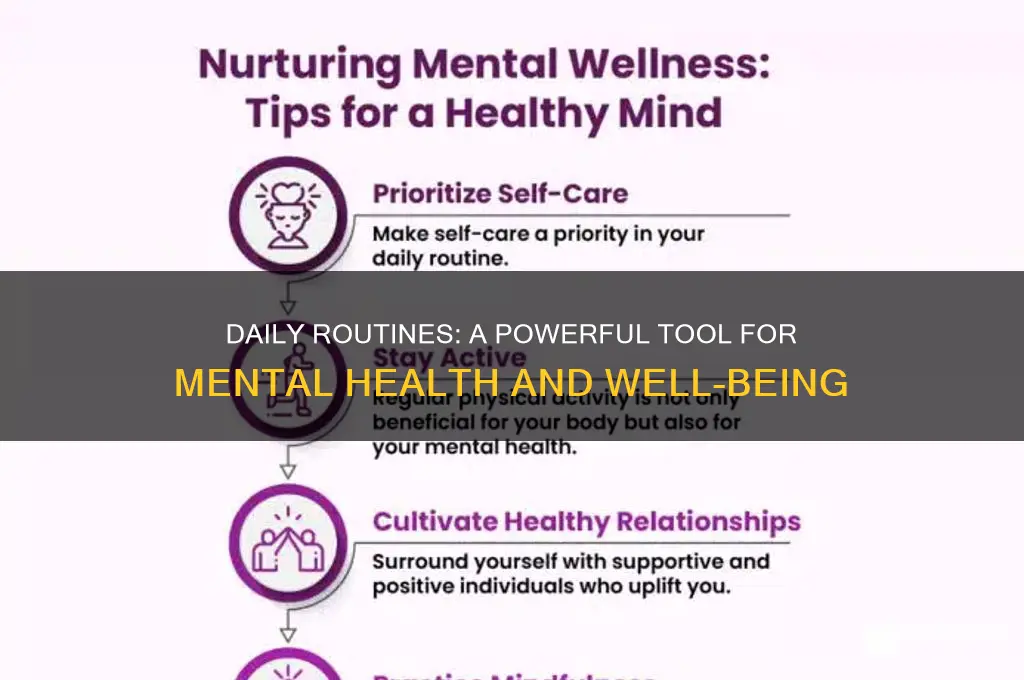
Daily routines play a crucial role in supporting mental health by providing structure, predictability, and a sense of control over one’s life. Engaging in consistent habits, such as regular sleep patterns, balanced meals, and dedicated time for physical activity, helps regulate the body’s internal clock and reduces stress. Routines also foster discipline and productivity, which can boost self-esteem and reduce feelings of overwhelm. Additionally, incorporating mindfulness practices, like meditation or journaling, into daily schedules can enhance emotional awareness and resilience. By creating a framework for healthy habits, routines minimize decision fatigue, allowing individuals to focus on self-care and mental well-being, ultimately promoting stability and long-term mental health.
Explore related products


What You'll Learn
- Consistent Sleep Patterns: Regular sleep schedules stabilize mood, reduce anxiety, and improve overall mental clarity
- Physical Activity: Daily exercise releases endorphins, reduces stress, and boosts self-esteem effectively
- Mindfulness Practices: Incorporating meditation or deep breathing calms the mind and enhances focus
- Healthy Eating Habits: Nutritious meals balance brain chemistry, improve energy, and support emotional well-being
- Social Connections: Routine interactions with others combat loneliness and foster a sense of belonging

Consistent Sleep Patterns: Regular sleep schedules stabilize mood, reduce anxiety, and improve overall mental clarity
Sleep is the cornerstone of mental health, yet it’s often the first sacrifice in our overbooked lives. A consistent sleep schedule—going to bed and waking up at the same time daily—acts as a reset button for the brain. Research shows that adults who maintain a regular sleep pattern experience a 25% reduction in anxiety symptoms compared to those with erratic sleep times. This isn’t about sleeping more; it’s about sleeping smarter. For instance, a 2021 study published in *Sleep Health* found that individuals with a sleep variability of less than 30 minutes per day reported higher emotional resilience and lower stress levels. The takeaway? Stability in sleep isn’t a luxury—it’s a necessity for emotional equilibrium.
Consider the circadian rhythm, the body’s internal clock, as a finely tuned orchestra conductor. When sleep times fluctuate, this conductor loses tempo, leading to mood swings, irritability, and cognitive fog. For example, a teenager who stays up until 2 a.m. on weekends and wakes at 6 a.m. for school disrupts their circadian rhythm, increasing their risk of depression by 40%, according to a *Journal of Adolescent Health* study. To realign this rhythm, start by setting a bedtime alarm 30 minutes before your desired sleep time. Gradually adjust your wake-up time in 15-minute increments until you hit your target. Consistency is key—even on weekends. Think of it as training your brain to recognize when it’s time to wind down and power up.
Practicality is paramount when establishing a sleep routine. Begin by calculating your ideal sleep duration—most adults need 7-9 hours. If you need to wake at 7 a.m., count backward to determine your bedtime (e.g., 11 p.m. for 8 hours). Create a pre-sleep ritual: dim lights, avoid screens 60 minutes before bed, and incorporate relaxation techniques like deep breathing or progressive muscle relaxation. For shift workers or those with irregular schedules, aim for a "non-negotiable" sleep window—even if it’s shorter—to minimize circadian disruption. Apps like Sleep Cycle or Calm can help track progress and reinforce habits. Remember, the goal isn’t perfection but progress toward consistency.
Compare the effects of consistent sleep to a well-maintained machine. Just as a car runs smoother with regular oil changes, the brain functions optimally with predictable rest. A study in *Nature* revealed that participants with stable sleep patterns demonstrated a 30% improvement in problem-solving skills and a 20% increase in memory retention. Conversely, those with irregular sleep showed heightened cortisol levels, the stress hormone, which impairs decision-making and exacerbates anxiety. The contrast is clear: consistent sleep isn’t just about feeling rested—it’s about enhancing cognitive performance and emotional stability. Make sleep your priority, and watch as clarity and calm follow suit.
The Power of Friendship: Boosting Mental Health and Well-being
You may want to see also
Explore related products


Physical Activity: Daily exercise releases endorphins, reduces stress, and boosts self-esteem effectively
Daily exercise is a powerful tool for mental well-being, and its impact goes beyond physical fitness. When you engage in physical activity, your brain releases endorphins, often referred to as 'feel-good' hormones, which act as natural painkillers and mood elevators. This biochemical process is a key reason why a simple workout can turn a stressful day around. For instance, a 30-minute brisk walk or a gentle yoga session can significantly reduce cortisol, the stress hormone, leaving you feeling calmer and more relaxed.
The benefits of exercise on mental health are particularly notable in stress reduction. Stress, a common modern-day ailment, can be effectively managed through consistent physical activity. Research suggests that regular exercise can decrease overall stress levels and improve one's ability to cope with existing mental tension. This is especially relevant for adults in high-pressure work environments, where incorporating a daily exercise routine can be a game-changer for stress management. A study published in the *Journal of Occupational Health Psychology* found that employees who engaged in regular physical activity reported lower stress levels and higher job satisfaction.
Now, let's talk about the self-esteem boost. Exercise provides a sense of accomplishment and control, which are essential for building and maintaining self-esteem. When you set and achieve fitness goals, whether it's running your first 5K or mastering a new yoga pose, your confidence grows. This is particularly beneficial for teenagers and young adults, who often face self-esteem challenges. A study focusing on adolescents revealed that regular participation in sports and physical activities was associated with higher self-esteem and a more positive body image.
Incorporating daily exercise into your routine doesn't have to be daunting. Start small and gradually increase the intensity and duration. For beginners, the World Health Organization recommends at least 150 minutes of moderate-intensity aerobic physical activity per week, which can be as simple as a 30-minute walk five times a week. You can also break this down into shorter, more frequent sessions, like three 10-minute walks per day. The key is consistency. Over time, you can explore different forms of exercise to find what suits your preferences and fitness level, be it swimming, cycling, dancing, or strength training.
It's worth noting that the mental health benefits of exercise are not limited to any specific age group or fitness level. From children to older adults, everyone can reap the rewards. For instance, in older adults, regular physical activity can improve cognitive function and reduce the risk of age-related cognitive decline. Additionally, group exercises or team sports can provide social benefits, combating feelings of loneliness and isolation, which are common contributors to mental health issues.
In conclusion, daily physical activity is a simple yet powerful strategy to enhance mental well-being. By understanding the science behind it and implementing practical steps, individuals can effectively manage stress, boost self-esteem, and improve overall mental health. This natural approach to mental wellness is accessible to all and can be a valuable addition to anyone's daily routine.
Healthy Habits, Happy Mind: Boosting Mental Health Through Lifestyle Choices
You may want to see also
Explore related products


Mindfulness Practices: Incorporating meditation or deep breathing calms the mind and enhances focus
The human mind is a restless entity, often wandering through a maze of thoughts, worries, and distractions. In this chaos, mindfulness practices like meditation and deep breathing emerge as anchors, grounding us in the present moment. These techniques are not mere trends but scientifically backed methods to calm the mind and enhance focus, offering a sanctuary in the storm of daily life.
Consider the simplicity of deep breathing. By inhaling slowly through the nose for a count of four, holding for four, and exhaling through the mouth for six, you activate the parasympathetic nervous system, which promotes relaxation. This technique, known as the 4-4-6 method, can be practiced anywhere—whether at your desk, in a park, or before bed. It’s a tool accessible to all ages, from teenagers grappling with exam stress to seniors managing anxiety. The key is consistency; integrating this practice into your daily routine, even for just five minutes, can yield noticeable improvements in mental clarity and emotional stability.
Meditation, on the other hand, is a broader practice that encompasses various forms, such as mindfulness meditation, loving-kindness meditation, and body scan meditation. For beginners, starting with guided sessions of 10 minutes daily can be transformative. Apps like Headspace or Calm offer structured programs tailored to different needs, whether it’s reducing stress, improving sleep, or enhancing concentration. Research shows that regular meditation can increase gray matter density in areas of the brain associated with memory, empathy, and stress regulation, making it a powerful ally for mental health.
However, mindfulness practices are not without their challenges. For some, sitting still and focusing on the breath can feel uncomfortable or even futile. It’s important to approach these practices with patience and self-compassion. If traditional meditation feels daunting, start with mindful activities like walking, eating, or even brushing your teeth, paying full attention to the sensations and movements involved. The goal is not to eliminate thoughts but to observe them without judgment, gradually training the mind to stay present.
Incorporating mindfulness into daily routines doesn’t require a complete lifestyle overhaul. Small, intentional steps can lead to significant changes. For instance, pairing deep breathing with morning coffee or meditating during a lunch break can seamlessly integrate these practices into your day. Over time, these moments of mindfulness accumulate, fostering a sense of calm and focus that extends beyond the practice itself. The takeaway is clear: mindfulness is not a luxury but a necessity, a daily ritual that nurtures mental health in an increasingly chaotic world.
Accessing Free Mental Health Support: Options and Resources Available
You may want to see also
Explore related products


Healthy Eating Habits: Nutritious meals balance brain chemistry, improve energy, and support emotional well-being
The food we consume directly influences our brain's functionality, acting as a powerful tool to enhance or hinder our mental health. A well-balanced diet, rich in essential nutrients, can be a game-changer for individuals seeking to improve their overall well-being. For instance, omega-3 fatty acids, found in fatty fish like salmon and walnuts, are renowned for their role in brain health. Studies suggest that a daily intake of 250–500 mg of EPA and DHA (types of omega-3s) can significantly reduce symptoms of depression and anxiety, promoting a more stable emotional state.
Incorporating a variety of colorful fruits and vegetables into your diet is not just aesthetically pleasing but also mentally beneficial. These foods are packed with antioxidants, which combat oxidative stress, a key contributor to mental health disorders. For example, the flavonoids in blueberries have been linked to improved memory and cognitive function, while the folate in spinach supports serotonin production, a neurotransmitter crucial for mood regulation. A simple yet effective strategy is to aim for at least five servings of fruits and vegetables daily, ensuring a diverse range to maximize nutrient intake.
Meal Timing and Mental Energy:
The concept of 'you are what you eat' extends to when you eat. Regular meal timing is essential for maintaining stable blood sugar levels, which directly impact energy and mood. Skipping meals, especially breakfast, can lead to irritability and fatigue. A balanced breakfast, combining complex carbohydrates, lean protein, and healthy fats, provides a steady release of energy throughout the morning. For instance, oatmeal topped with nuts and berries offers a slow-release energy source, keeping you focused and energized until lunch.
Practical Tips for Implementation:
- Plan and Prepare: Dedicate time each week to plan and prepare meals. This ensures a consistent supply of nutritious food and reduces the temptation to opt for less healthy convenience options.
- Hydration: Stay well-hydrated throughout the day. Dehydration can impair cognitive function and mood. Aim for 2-3 liters of water daily, adjusting for activity levels and climate.
- Mindful Eating: Practice mindful eating by paying attention to hunger cues and savoring each bite. This approach improves digestion and allows for better recognition of fullness, preventing overeating.
- Supplement Wisely: While whole foods should be the primary source of nutrients, supplements can fill gaps. Consult a healthcare professional for personalized advice, especially regarding specific mental health concerns.
By adopting these healthy eating habits, individuals can take control of their mental well-being, using food as a powerful ally in their daily routine. The impact of nutrition on mental health is a fascinating and increasingly recognized field, offering a natural and accessible approach to support and improve overall brain function and emotional resilience.
Finding Support: Where to Seek Help for Depression and Healing
You may want to see also
Explore related products





Social Connections: Routine interactions with others combat loneliness and foster a sense of belonging
Human beings are inherently social creatures, and our mental health thrives on connection. Routine interactions with others, whether a daily chat with a neighbor, a weekly coffee date with a friend, or a monthly book club meeting, act as a powerful antidote to loneliness. These seemingly small, consistent social engagements weave a safety net of belonging, reminding us we are part of a larger community.
Studies show that social isolation can have detrimental effects on mental health, increasing the risk of depression, anxiety, and even cognitive decline. Conversely, regular social interaction boosts oxytocin levels, often referred to as the "love hormone," which promotes feelings of trust, empathy, and bonding.
Think of it like this: just as we need daily physical exercise to maintain our bodies, we need regular social "workouts" to keep our mental health in shape. A 2019 study published in the *Journal of Aging and Health* found that older adults who engaged in daily social activities experienced significantly lower levels of loneliness and depression compared to those with less frequent interactions. This highlights the importance of incorporating social connections into our daily routines, regardless of age.
Simply put, making time for others isn't a luxury, it's a necessity for our well-being.
So, how can we build social connections into our daily routines? Start small and be consistent. Commit to a daily 10-minute phone call with a loved one, join a local walking group, or volunteer at a community center. Even brief, meaningful interactions can make a difference. Remember, quality trumps quantity. Focus on building genuine connections, not just accumulating acquaintances.
Finally, don't underestimate the power of shared routines. Cooking a meal with a friend, attending a weekly yoga class, or even walking your dog in the park at the same time each day can create a sense of predictability and belonging. These shared rituals provide structure and foster a feeling of being part of something larger than ourselves, ultimately contributing to a healthier, happier mind.
Abacus Training: Unlocking Mental Math Skills and Cognitive Benefits
You may want to see also
Frequently asked questions
Establishing a daily routine provides structure and predictability, reducing stress and anxiety by creating a sense of control over your day. It also helps prioritize self-care activities like exercise, sleep, and mindfulness, which are essential for mental well-being.
Yes, a consistent daily routine, especially one that includes a regular sleep schedule, can improve sleep quality. Better sleep is directly linked to improved mood, reduced anxiety, and enhanced cognitive function, all of which benefit mental health.
Incorporating exercise into your daily routine releases endorphins, which are natural mood lifters. Regular physical activity also reduces symptoms of depression and anxiety, improves focus, and boosts overall mental resilience.
A daily routine breaks tasks into manageable chunks, preventing feelings of overwhelm. It also ensures time for relaxation and stress-reducing activities, such as meditation or hobbies, which help maintain emotional balance.
Yes, completing tasks in a daily routine provides a sense of accomplishment, which boosts self-esteem and confidence. Consistency in achieving goals, no matter how small, reinforces a positive self-image and mental outlook.