Harper Lewis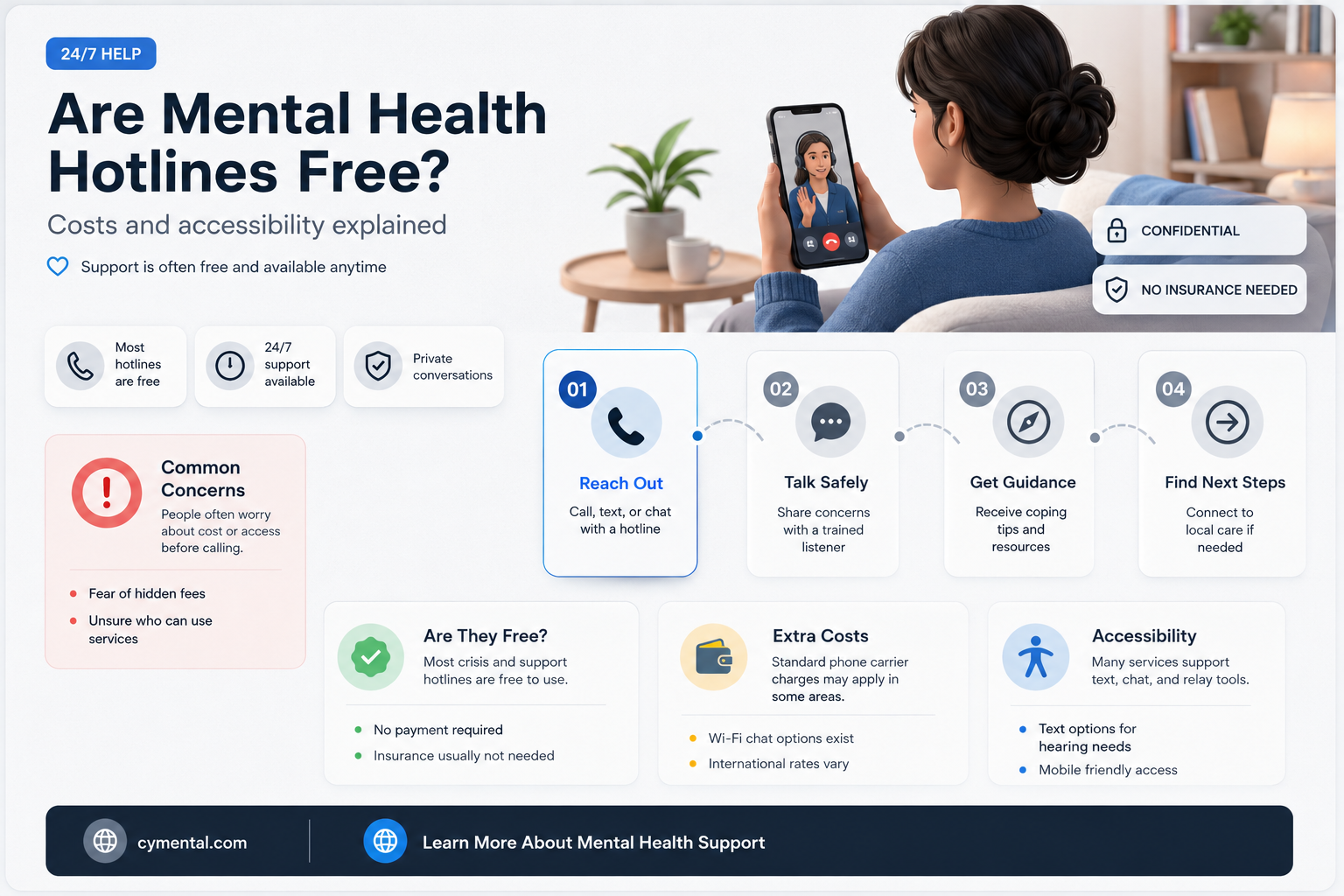
Mental health hotlines are a vital resource for individuals seeking immediate support and guidance during times of emotional distress or crisis. A common concern for many is whether these services come with a financial cost, as this can be a significant barrier for those already facing challenges. Fortunately, the majority of mental health hotlines are free and confidential, funded by governments, non-profit organizations, or charitable donations, ensuring that anyone in need can access help without worrying about expenses. However, it’s important to verify the specific details of a hotline, as some may have limitations or operate on a sliding scale based on income. Overall, the primary goal of these hotlines is to provide accessible, immediate support to those in need, regardless of their financial situation.
| Characteristics | Values |
|---|---|
| Cost of Calls | Most mental health hotlines are free of charge for the caller. However, some may incur standard call charges depending on the caller's phone plan and location. |
| Funding Sources | Hotlines are typically funded by government grants, donations, and partnerships with mental health organizations. |
| International Variations | In some countries, mental health hotlines may be toll-free, while in others, local call charges may apply. |
| Text and Online Services | Many hotlines offer free text and online chat services as alternatives to phone calls. |
| Insurance Coverage | Hotline services are generally not billed to insurance, as they are considered free public resources. |
| Donation Requests | Some hotlines may ask for optional donations to support their services but do not require payment for assistance. |
| 24/7 Availability | Most hotlines operate 24/7 without any cost to the user, ensuring accessibility at all times. |
| Confidentiality | Services are confidential and do not require personal or financial information to access help. |
| Specialized Hotlines | Certain specialized hotlines (e.g., crisis or suicide prevention) are universally free to encourage use in emergencies. |
| Mobile Network Charges | While the hotline itself is free, mobile network providers may charge for airtime or data usage depending on the plan. |
Explore related products


What You'll Learn

Are Hotlines Free to Call?
Mental health hotlines are often the first point of contact for individuals in crisis, but a common concern is whether these services come with a financial burden. The good news is that many hotlines are indeed free to call, ensuring accessibility for those who need immediate support. For instance, the National Suicide Prevention Lifeline in the United States (now known as the 988 Suicide & Crisis Lifeline) is a toll-free service available 24/7. Similarly, international hotlines like the UK’s Samaritans or Australia’s Lifeline offer free calls, removing financial barriers to seeking help. These services are typically funded by governments, nonprofits, or donations, making them widely available without charge.
However, not all hotlines are free, and understanding the differences is crucial. Some specialized or regional services may incur costs, particularly if they operate outside national networks. For example, certain crisis lines in rural areas or those offering extended counseling sessions might charge fees or rely on insurance coverage. Additionally, calling from a mobile phone or landline can sometimes result in standard airtime charges, depending on your service provider and plan. Always check the hotline’s website or contact your carrier to confirm if any fees apply, especially if you’re calling from outside the country where the service is based.
For those concerned about costs, there are practical steps to ensure you’re accessing free support. First, prioritize well-known national hotlines, as these are more likely to be toll-free. Second, explore online chat or text-based services, which are often free and can bypass phone charges altogether. Third, if you’re unsure about a hotline’s fees, reach out to local mental health organizations or your healthcare provider for recommendations. Being informed can alleviate financial worries and encourage timely access to help.
In conclusion, while many mental health hotlines are free, it’s essential to verify this information to avoid unexpected costs. Free services like the 988 Lifeline or Samaritans are invaluable resources, but regional or specialized lines may differ. By staying informed and utilizing available tools, individuals can access the support they need without financial stress. Remember, seeking help is a sign of strength, and cost should never be a barrier to mental health care.
Supporting Loved Ones: Strategies to Assist Those Denying Mental Health Struggles
You may want to see also
Explore related products




Hidden Fees or Charges?
Mental health hotlines often advertise as free, but hidden fees can lurk in the fine print. For instance, while the initial call might be toll-free, some services charge for extended sessions or specialized support. International callers may face unexpected international calling fees, even if the hotline itself doesn’t impose charges. Always verify if your phone plan includes toll-free numbers or if additional costs apply, especially when using mobile networks.
Another hidden cost arises from data usage. Some hotlines offer text-based or app-based support, which can consume data if you’re not on Wi-Fi. For example, sending 100 text messages via a crisis app might use up to 50MB of data, depending on your carrier. If you’re on a limited data plan, this could lead to overage charges. To avoid this, switch to Wi-Fi or check your data balance before engaging in prolonged conversations.
Even "free" hotlines may indirectly cost you through follow-up services. Some organizations provide initial support but recommend paid therapy or counseling afterward. While these suggestions are often well-intentioned, they can create financial strain for individuals already struggling. Always ask if the recommended services are covered by insurance or if sliding-scale fees are available to manage potential expenses.
Lastly, beware of premium rate numbers disguised as mental health resources. Some for-profit services use numbers starting with prefixes like 1-900 in the U.S. or 0900 in the UK, which charge per minute. These rates can range from $1.50 to $9.99 per minute, depending on the provider. Double-check the number’s prefix and research the organization before calling to ensure you’re not signing up for a costly surprise.
To navigate these hidden fees, take proactive steps: confirm the hotline’s funding model, check your phone plan for toll-free and international call coverage, use Wi-Fi for text-based services, and ask about follow-up service costs upfront. By staying informed, you can access mental health support without unintended financial burdens.
Metabolic Screening: A New Tool for Mental Health Diagnosis?
You may want to see also
Explore related products


Insurance Coverage for Hotlines
In the United States, many mental health hotlines are free to access, but the question of insurance coverage arises when these services extend beyond immediate crisis intervention. For instance, some hotlines offer follow-up counseling or referrals to ongoing therapy, which may incur costs. Insurance coverage for these extended services varies widely depending on the provider and the specific plan. Most major insurance companies, including Blue Cross Blue Shield and Aetna, cover telehealth services, which can include hotline-referred counseling sessions. However, policyholders should verify whether the hotline itself is considered a covered service or if only subsequent treatments are eligible for reimbursement.
To navigate insurance coverage for hotline-related services, start by reviewing your policy’s mental health benefits. Look for terms like "telehealth," "crisis intervention," or "outpatient counseling" in the coverage details. If unclear, contact your insurance provider directly to ask about coverage for hotline referrals or follow-up care. For example, some plans may cover up to 80% of the cost of virtual therapy sessions initiated through a hotline referral, but only if the provider is in-network. Keep detailed records of all communications and services received, as these may be required for reimbursement claims.
A comparative analysis reveals that Medicaid and Medicare often provide more comprehensive coverage for mental health hotlines and related services than private insurance plans. Medicaid, in particular, is mandated to cover crisis intervention services in most states, making it a reliable option for low-income individuals. Medicare Part B covers outpatient mental health services, including those initiated through hotlines, but beneficiaries may still face copayments or deductibles. Private insurance plans, while variable, are increasingly including telehealth services due to legislative pushes like the 21st Century Cures Act, which encourages broader mental health coverage.
For practical implementation, consider these steps: First, confirm if the hotline you’re using partners with insurance providers or offers sliding-scale fees for uninsured individuals. Second, if referred to a therapist or counselor, ask if they accept your insurance before scheduling an appointment. Third, if out-of-pocket costs are unavoidable, inquire about payment plans or financial assistance programs. For example, some hotlines collaborate with community health organizations to subsidize costs for uninsured callers. Finally, advocate for clearer insurance policies by reporting gaps in coverage to state health departments or consumer protection agencies.
The takeaway is that while initial hotline calls are typically free, insurance coverage for subsequent services is not guaranteed. Proactive research and communication with both the hotline and your insurance provider can mitigate unexpected costs. For instance, knowing that Cigna covers up to 20 virtual therapy sessions per year can guide your decision to pursue follow-up care. By understanding your policy’s nuances and leveraging available resources, you can maximize access to affordable mental health support.
Gypsy Rose's Mental Health Journey: Therapy and Recovery Explored
You may want to see also
Explore related products


International Call Costs
International mental health hotlines often advertise as free or toll-free, but this status typically applies only to domestic calls within the country of operation. For individuals calling from abroad, international call charges can apply, and these costs vary widely depending on the caller’s location, carrier, and the hotline’s country of origin. For example, a call to a U.S.-based hotline from Europe may incur per-minute fees ranging from $0.50 to $2.00, depending on the telecom provider. Always check with your carrier for international rates before dialing, as these charges can accumulate quickly, especially during extended conversations.
To mitigate costs, some hotlines offer alternative contact methods such as online chat, email, or WhatsApp, which bypass international calling fees entirely. For instance, the International Association for Suicide Prevention (IASP) provides a directory of global crisis centers, many of which include web-based support options. If calling is unavoidable, consider using VoIP services like Skype or Google Voice, which offer significantly reduced international rates—often as low as $0.02 per minute for calls to the U.S. or Europe. These platforms require a stable internet connection but can save substantial amounts compared to traditional carriers.
Another strategy is to seek region-specific hotlines that cater to international callers without additional charges. For example, the UK’s Shout crisis text line (85258) is free for UK residents and accessible via text from abroad without international fees, though data charges may apply. Similarly, Australia’s Lifeline offers a free call-back service for international users, where the organization initiates the call to avoid charging the caller. Researching such services tailored to your location can eliminate unexpected expenses.
It’s crucial to weigh the urgency of the situation against the potential cost. If immediate support is needed and cost is a barrier, prioritize free alternatives like local crisis centers or online platforms. However, if a specific international hotline is preferred, inquire whether they offer financial assistance or waivers for callers in need. Some organizations, like the Crisis Text Line, operate on a global scale and rely on donations to keep services free for all users, regardless of location.
In summary, while many mental health hotlines are free domestically, international callers must navigate a complex landscape of potential charges. By exploring alternative communication methods, researching region-specific options, and leveraging cost-saving technologies, individuals can access vital support without incurring prohibitive fees. Always plan ahead by understanding your carrier’s international rates and exploring free or low-cost alternatives to ensure timely and affordable assistance.
Helping Others, Hurting Yourself: The Mental Health Toll of Caregiving
You may want to see also
Explore related products


Free Alternatives to Hotlines
Mental health hotlines can be a lifeline, but concerns about cost often deter those in need. Fortunately, a wealth of free alternatives exists, offering support through various mediums and tailored to diverse preferences. These options ensure that financial barriers don’t stand between someone and the help they deserve.
Online Therapy Platforms and Apps: Several platforms provide free access to therapeutic tools and resources. Apps like Moodpath and Sanvello offer mood tracking, guided meditations, and cognitive-behavioral therapy exercises at no cost. While not a substitute for professional therapy, these tools can provide immediate relief and help manage symptoms until more comprehensive support is available. For example, Sanvello’s free version includes daily check-ins and coping techniques, while Moodpath offers a two-week mental health assessment to identify potential issues.
Peer Support Communities: Online forums and social media groups create spaces for individuals to connect with others facing similar challenges. Platforms like Reddit’s r/mentalhealth or 7 Cups foster peer-to-peer support, allowing users to share experiences and advice. While not moderated by professionals, these communities can provide a sense of belonging and understanding. For instance, 7 Cups offers free anonymous chat rooms where users can discuss their struggles with trained volunteer listeners, though it’s essential to verify the credibility of advice received.
Local Community Resources: Many cities and towns offer free mental health programs through community centers, libraries, or religious institutions. Workshops, group therapy sessions, and wellness classes are often available at no cost. For example, the National Alliance on Mental Illness (NAMI) hosts free support groups and educational programs nationwide. Checking local event calendars or contacting community organizations can uncover these hidden gems, providing face-to-face interaction that some may prefer over digital alternatives.
Self-Help Strategies and Educational Content: Free resources like podcasts, YouTube channels, and books can empower individuals to take charge of their mental health. Channels like The Mental Health Coach or podcasts such as *The Hilarious World of Depression* offer insights and coping strategies. Libraries and websites like Project Gutenberg provide access to self-help books without cost. For instance, practicing mindfulness through free guided meditations on Insight Timer or journaling prompts from Tiny Buddha can be effective daily habits. While not a replacement for professional care, these tools can complement other forms of support.
Crisis Text Lines and Chat Services: For those uncomfortable with phone calls, free text-based services like Crisis Text Line (text HOME to 741741) or IMAlive offer real-time support. These platforms connect users with trained volunteers who provide immediate assistance during moments of distress. Unlike hotlines, they cater to those who prefer typing over speaking, making them accessible to a broader audience. For example, Crisis Text Line’s data-driven approach ensures conversations are tailored to the user’s needs, providing a personalized experience at no cost.
By exploring these free alternatives, individuals can find the support that best fits their needs, ensuring financial constraints don’t hinder their journey toward mental wellness. Each option offers unique benefits, from anonymity to community connection, proving that help is always within reach.
AI's Role in Mental Health: Support, Challenges, and Future Possibilities
You may want to see also
Frequently asked questions
Most mental health hotlines are free to use, as they are funded by government programs, nonprofits, or donations. However, some specialized services or international calls may incur charges, so it’s best to check the specific hotline’s details.
Generally, there are no hidden costs for calling a mental health hotline. However, standard phone charges (e.g., airtime or long-distance fees) may apply depending on your phone plan and location.
No, insurance is not required to use a mental health hotline. These services are typically available to anyone in need, regardless of insurance status or financial situation.