Caleb Wright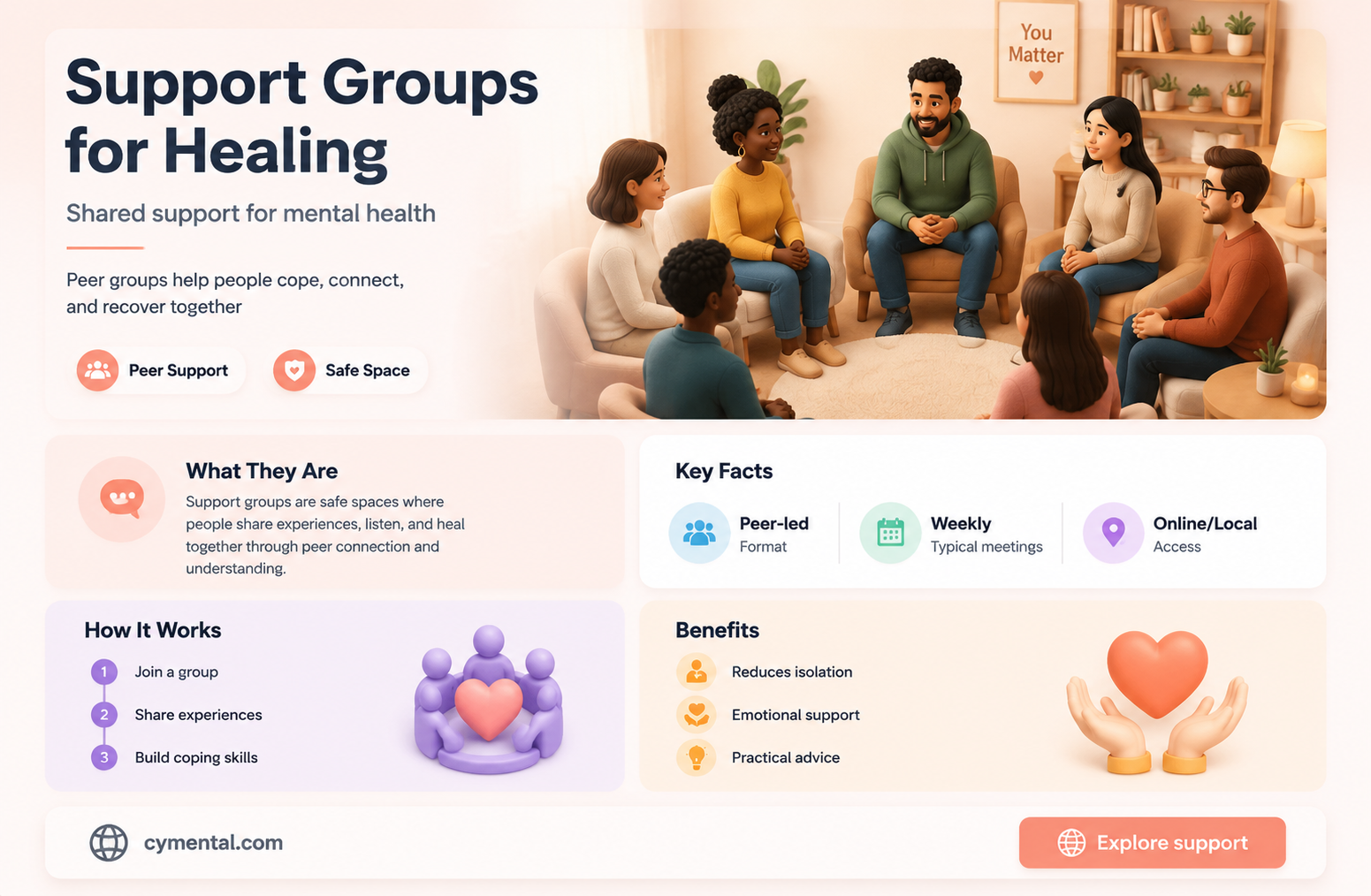
Support groups play a crucial role in enhancing mental health by providing individuals with a safe, non-judgmental space to share their experiences, emotions, and challenges. These groups foster a sense of community and belonging, reducing feelings of isolation and stigma often associated with mental health struggles. Through peer support, members gain valuable insights, coping strategies, and encouragement from others who understand their journey. Additionally, support groups often incorporate structured activities, such as guided discussions or mindfulness exercises, which can promote emotional healing and personal growth. By offering emotional validation, practical advice, and a network of understanding peers, support groups empower individuals to navigate their mental health challenges more effectively and build resilience over time.
Explore related products


What You'll Learn
- Shared Experiences: Members relate to others facing similar struggles, reducing feelings of isolation and stigma
- Emotional Support: Provides a safe space to express feelings and receive empathy without judgment
- Practical Advice: Members share coping strategies, resources, and tools to manage mental health challenges
- Accountability: Group settings encourage consistency in self-care and treatment plans for better outcomes
- Hope and Inspiration: Seeing others’ progress fosters motivation and belief in recovery possibilities

Shared Experiences: Members relate to others facing similar struggles, reducing feelings of isolation and stigma
One of the most profound benefits of support groups is their ability to foster a sense of belonging through shared experiences. When individuals struggling with mental health issues come together, they often find that their unique challenges are not as isolating as they once believed. For example, a person battling anxiety might hear another member describe their own panic attacks in such vivid detail that it feels like looking into a mirror. This recognition can be a turning point, transforming self-perception from "I am broken" to "I am not alone." Such moments are not just emotionally comforting; they are therapeutic, as they challenge the internalized stigma that often accompanies mental health struggles.
Consider the mechanics of this process. In a support group, members are encouraged to share their stories openly, without fear of judgment. This environment of acceptance allows individuals to articulate their experiences in ways they might not with friends or family, who may unintentionally minimize their struggles. For instance, a teenager dealing with depression might feel dismissed when a well-meaning parent suggests, "Just think positively." In contrast, a support group member who has faced similar challenges can offer empathy rooted in understanding, saying, "I’ve been there, and it’s okay to feel this way." This validation is crucial, as it normalizes emotions and reduces the shame that often prevents people from seeking help.
However, the power of shared experiences extends beyond emotional validation. It also provides practical insights. When members discuss coping strategies, they often uncover techniques that have worked for others in similar situations. For example, someone with OCD might learn about exposure therapy from a group member who has successfully managed their compulsions. This exchange of knowledge is informal yet highly effective, as it comes from peers who have firsthand experience with the challenges being discussed. It’s one thing to read about a strategy in a book; it’s another to hear how it was applied in real life, complete with setbacks and triumphs.
To maximize the benefits of shared experiences in a support group, participants should approach sessions with an open mind and a willingness to engage. Active listening is key—pay attention not just to the words being spoken, but to the emotions behind them. If you’re new to the group, start by sharing small aspects of your story before diving into deeper struggles. This gradual approach builds trust and allows others to relate to your experiences more easily. Additionally, take notes during meetings to reflect on later; jotting down phrases like "I felt seen when someone mentioned…" can help reinforce the sense of connection.
Ultimately, the shared experiences within support groups serve as a reminder that mental health struggles, while deeply personal, are also universally human. By relating to others who face similar challenges, individuals can dismantle the walls of isolation and stigma that often exacerbate their suffering. This collective understanding not only provides emotional relief but also empowers members to take proactive steps toward healing. In a world where mental health is often shrouded in silence, support groups offer a space where voices are heard, experiences are validated, and hope is shared.
Multivitamins and Mental Health: Unlocking the Potential Benefits
You may want to see also
Explore related products




Emotional Support: Provides a safe space to express feelings and receive empathy without judgment
One of the most profound barriers to mental health recovery is the isolation that often accompanies emotional pain. Support groups dismantle this barrier by fostering a sense of belonging and understanding. Members are surrounded by individuals who share similar struggles, creating an environment where vulnerability is not met with stigma but with empathy. This collective empathy acts as a powerful antidote to the shame and self-doubt that often exacerbate mental health issues. For instance, a person battling anxiety might find solace in hearing others describe their own experiences with panic attacks, realizing they are not alone in their fears.
To maximize the benefits of emotional support in a group setting, it’s essential to actively participate rather than passively observe. Start by sharing small, manageable aspects of your feelings before delving into deeper concerns. This gradual approach builds trust and allows others to respond in a way that feels supportive. For example, instead of immediately disclosing a traumatic event, you might begin by expressing how overwhelmed you feel on a daily basis. Over time, as the group dynamic strengthens, more intimate revelations become safer and more impactful.
A cautionary note: while emotional support is invaluable, it’s not a substitute for professional therapy. Support groups excel at providing peer-to-peer understanding, but they lack the structured interventions that trained therapists can offer. For individuals with severe mental health conditions, such as major depression or PTSD, combining group support with individual therapy can yield the best outcomes. Think of support groups as a complementary tool—a place to practice emotional expression and receive encouragement between therapy sessions.
The takeaway is clear: emotional support in group settings offers a unique and powerful avenue for healing. By providing a safe space to express feelings and receive empathy without judgment, these groups help individuals break free from the isolating grip of mental health struggles. Whether you’re dealing with anxiety, grief, or any other emotional challenge, the collective understanding of a support group can be a transformative resource. Start by finding a group that aligns with your needs, commit to regular attendance, and embrace the vulnerability that leads to growth.
Empowering Care: How Advanced Practice Nurses Support Homeless Mental Health
You may want to see also
Explore related products


Practical Advice: Members share coping strategies, resources, and tools to manage mental health challenges
One of the most tangible benefits of support groups is the exchange of practical advice among members. When individuals facing similar mental health challenges come together, they often share coping strategies that have worked for them. For instance, a member might recommend a specific mindfulness app like Headspace or Calm, noting that 10 minutes of daily meditation significantly reduces their anxiety. Another might suggest journaling prompts, such as listing three things they’re grateful for each morning, to shift focus away from negative thoughts. These shared tools are not abstract theories but actionable steps that others can immediately implement.
Consider the power of resource-sharing in these groups. Members frequently exchange information about therapists, psychiatrists, or affordable mental health clinics in their area. For example, someone might mention a sliding-scale therapy practice that offers sessions for as low as $25, making professional help accessible to those on tight budgets. Others might recommend online platforms like BetterHelp or 7 Cups, which provide counseling services at various price points. This practical advice removes barriers to care, ensuring that financial constraints don’t prevent individuals from seeking help.
Beyond apps and resources, support groups often become hubs for unconventional yet effective coping tools. A member struggling with depression might share how they use a “feelings wheel” to identify and articulate their emotions more precisely. Another might describe their routine of taking a 15-minute walk during lunch breaks to combat work-related stress. These strategies, though simple, are grounded in personal experience and often resonate deeply with others in the group. The specificity of such advice—like the exact duration of a walk or the type of journal to use—makes it easier for others to adopt.
However, it’s crucial to approach shared advice with discernment. What works for one person may not work for another, and some strategies might even be counterproductive. For example, a member might suggest avoiding caffeine to reduce anxiety, but for someone with ADHD, caffeine might be a necessary tool for focus. Support groups thrive when members share their experiences openly but also encourage others to experiment and adapt strategies to their unique needs. This balance ensures that practical advice remains helpful without becoming prescriptive.
In conclusion, the exchange of coping strategies, resources, and tools within support groups is a cornerstone of their effectiveness. By sharing specific apps, affordable therapy options, and personalized routines, members empower one another to take concrete steps toward managing their mental health. While not every piece of advice will apply universally, the collective wisdom of the group provides a rich toolkit from which individuals can draw. This practical, peer-driven approach fosters a sense of agency and hope, reminding participants that they are not alone in their struggles.
Post-Pandemic Mental Health: Are Younger Generations Seeking More Support?
You may want to see also
Explore related products


Accountability: Group settings encourage consistency in self-care and treatment plans for better outcomes
One of the most powerful yet overlooked benefits of support groups is their ability to foster accountability, a critical factor in maintaining mental health. When individuals commit to self-care routines or treatment plans, the presence of a group can transform vague intentions into actionable habits. For instance, a person struggling with depression might find it easier to stick to a daily meditation practice when they know their support group will ask about their progress each week. This external expectation creates a psychological contract that motivates consistency, often more effectively than self-imposed goals.
Consider the mechanics of accountability in group settings. In a well-structured support group, members are encouraged to share their goals and challenges openly. This transparency not only normalizes struggles but also creates a system of checks and balances. For example, a group focused on anxiety management might use a "buddy system," where pairs check in with each other daily to ensure they’ve practiced their coping techniques. Research shows that such peer-driven accountability can increase adherence to treatment plans by up to 40%, particularly in age groups like young adults (18–30) who often benefit from social reinforcement.
However, accountability in groups isn’t without its pitfalls. Over-reliance on external validation can sometimes lead to burnout or guilt if individuals feel they’re letting the group down. To mitigate this, facilitators should emphasize progress over perfection and encourage members to set realistic, measurable goals. For instance, instead of vowing to “exercise more,” a member might commit to “15 minutes of yoga three times a week.” This specificity makes it easier to track progress and adjust plans without fostering self-criticism.
The comparative advantage of group accountability lies in its ability to combine structure with empathy. Unlike solitary efforts, group settings provide immediate feedback and encouragement, which can be particularly beneficial for those with conditions like ADHD or bipolar disorder, where motivation fluctuates. A study published in the *Journal of Clinical Psychology* found that individuals in group therapy were 2.5 times more likely to complete their prescribed medication regimens compared to those in individual therapy alone. This highlights the unique role of collective responsibility in sustaining long-term mental health strategies.
In practice, integrating accountability into support groups requires intentional design. Facilitators can employ tools like goal-tracking sheets, weekly progress reports, or even digital platforms where members log their activities. For example, a smartphone app linked to the group could send reminders and allow members to share their achievements in real-time. Such innovations not only enhance accountability but also cater to the tech-savvy preferences of younger demographics. Ultimately, by leveraging the power of collective commitment, support groups can turn the abstract concept of self-care into a tangible, shared journey toward better mental health.
Marijuana's Potential Role in Alleviating Mental Health Challenges
You may want to see also
Explore related products


$22.99 $22.99


Hope and Inspiration: Seeing others’ progress fosters motivation and belief in recovery possibilities
Witnessing the progress of others in a support group can be a powerful catalyst for hope and inspiration, igniting a spark within individuals struggling with mental health challenges. This phenomenon is rooted in the psychological concept of social proof, where people are influenced by the actions and achievements of those around them. In the context of mental health, seeing peers overcome obstacles, develop coping strategies, and reclaim their lives serves as tangible evidence that recovery is attainable. For instance, a person battling depression might feel a renewed sense of possibility after hearing a group member share how they gradually returned to hobbies or rebuilt relationships. This shared vulnerability creates a unique environment where progress is not just celebrated but also demystified, breaking down the illusion that recovery is an unachievable ideal.
Consider the structure of a typical support group session: members take turns sharing their experiences, challenges, and victories. This format allows individuals to observe the incremental steps others have taken toward recovery, such as consistently attending therapy, adopting mindfulness practices, or setting small, achievable goals. For someone feeling stuck, these examples provide a roadmap, illustrating that progress often involves patience, persistence, and self-compassion. Research supports this idea, showing that exposure to recovery narratives can enhance motivation and reduce feelings of isolation. A study published in the *Journal of Clinical Psychology* found that participants who engaged with peer recovery stories reported higher levels of hope and self-efficacy compared to those who did not.
However, it’s essential to approach this dynamic with nuance. While witnessing others’ progress can be inspiring, it can also inadvertently trigger comparison or feelings of inadequacy if not framed thoughtfully. Facilitators and group members alike should emphasize that recovery is not a linear process and that everyone’s journey is unique. Practical tips for maximizing the inspirational aspect of support groups include focusing on shared themes rather than specific achievements, celebrating small wins, and encouraging members to reflect on how others’ stories resonate with their own experiences. For example, instead of fixating on how quickly someone else improved, a group member might identify a coping strategy they’d like to try or a mindset shift they’d like to adopt.
To harness the power of hope and inspiration in support groups, individuals can take proactive steps. First, actively listen during sessions, seeking out actionable insights rather than passively observing. Second, engage in open dialogue about what resonates with you and why, fostering a culture of mutual learning. Third, document your own progress, no matter how minor, to contribute to the collective narrative of recovery. For facilitators, incorporating structured exercises, such as recovery timeline activities or peer feedback sessions, can amplify the inspirational impact. By creating a space where progress is visible, relatable, and achievable, support groups can transform hope from an abstract concept into a guiding force for healing.
Dogs as Healers: Boosting Mental Health Through Canine Companionship
You may want to see also
Frequently asked questions
Support groups provide a safe space for individuals to share experiences, reduce feelings of isolation, and gain emotional validation. They foster a sense of community, offer coping strategies, and encourage accountability, which can significantly improve mental well-being.
Support groups can assist with a wide range of mental health issues, including anxiety, depression, grief, addiction, PTSD, and chronic illnesses. They are tailored to specific needs, ensuring participants receive relevant support and understanding.
No, support groups are not a replacement for professional therapy but can complement it. They provide peer support, shared experiences, and practical advice, while therapy offers individualized treatment and clinical expertise. Both can work together to enhance mental health outcomes.