Ava Ramirez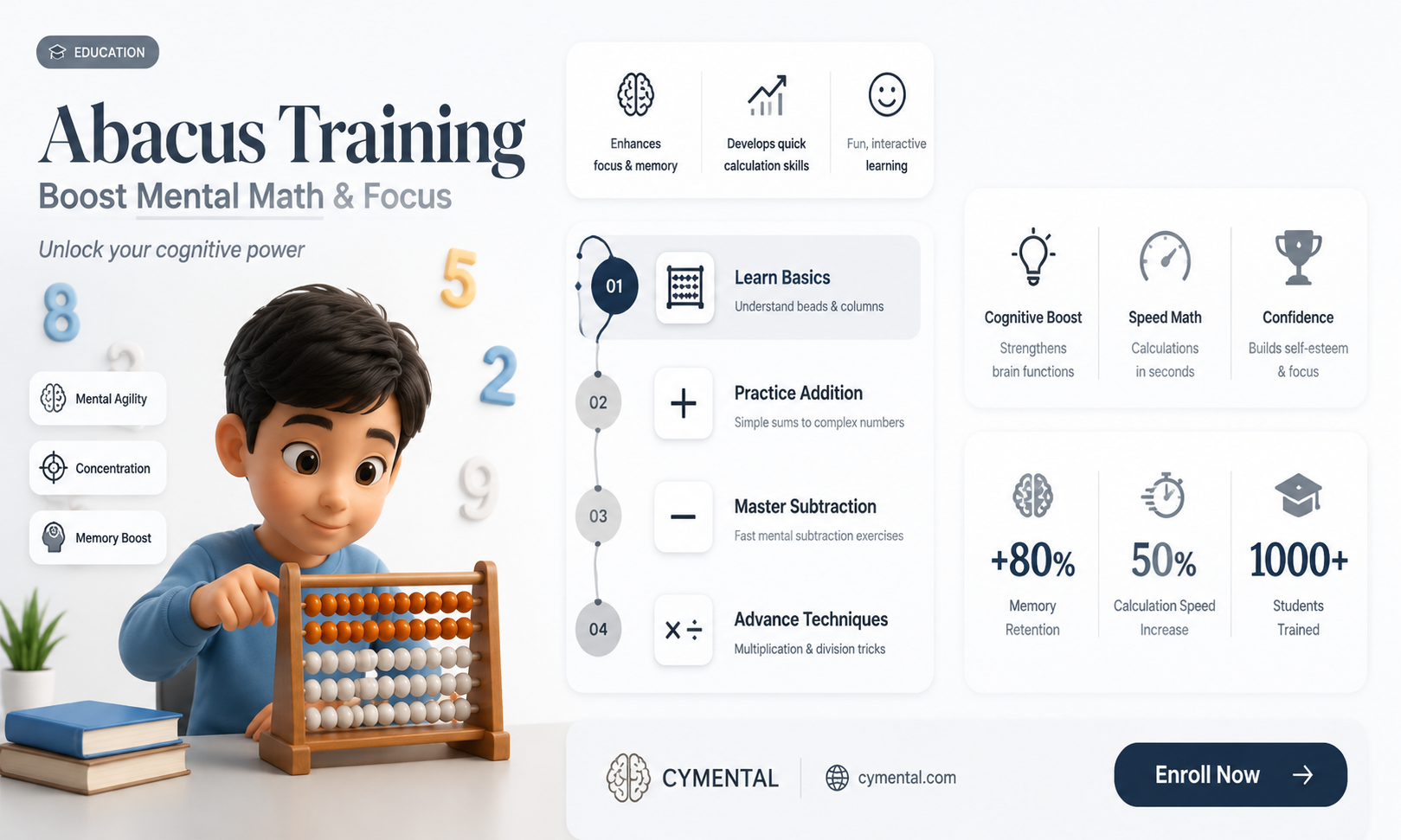
The abacus, an ancient calculating tool, has long been associated with enhancing mental math skills. Its use involves manipulating beads or counters to perform arithmetic operations, which requires users to visualize numbers and calculations mentally. Proponents argue that regular abacus practice improves concentration, memory, and speed in solving mathematical problems, thereby strengthening overall mental math abilities. However, skeptics question whether these benefits transfer to real-world math scenarios without the physical tool. Research suggests that while the abacus can indeed boost mental calculation skills, its effectiveness depends on consistent practice and the learner's engagement with the method. Ultimately, the abacus serves as a valuable tool for developing foundational numerical skills, but its impact on mental math may vary based on individual learning styles and application.
| Characteristics | Values |
|---|---|
| Enhances Mental Math Skills | Yes, regular abacus training improves mental calculation abilities by strengthening neural pathways involved in arithmetic. |
| Brain Development | Stimulates both hemispheres of the brain, enhancing cognitive functions like memory, concentration, and spatial reasoning. |
| Speed and Accuracy | Increases speed and accuracy in mental calculations, particularly in addition, subtraction, multiplication, and division. |
| Visualization Skills | Develops the ability to visualize numbers and perform calculations mentally without physical tools. |
| Focus and Discipline | Improves attention span and discipline through structured practice and repetitive exercises. |
| Reduces Math Anxiety | Builds confidence in math, reducing anxiety and fear associated with numerical problems. |
| Transferable Skills | Skills learned through abacus training can be applied to other areas of math and problem-solving. |
| Age-Appropriate Benefits | Most effective for children aged 4-12, as their brains are more adaptable to developing these skills. |
| Long-Term Cognitive Benefits | Studies suggest long-term improvements in mental math abilities and overall cognitive function. |
| Cultural and Historical Significance | The abacus has been used for centuries across cultures as a tool for calculation and mental development. |
Explore related products




What You'll Learn

Abacus Training Enhances Number Sense
Abacus training, often associated with ancient mathematical practices, has resurfaced as a powerful tool for enhancing number sense in learners of all ages. Unlike modern calculators, the abacus requires users to visualize and manipulate numbers physically, fostering a deeper understanding of numerical relationships. Studies show that consistent abacus practice, particularly in children aged 5 to 12, improves mental math skills by engaging both hemispheres of the brain. This bilateral brain activity not only accelerates calculation speed but also strengthens spatial reasoning and memory retention. For instance, a 2019 study published in *Frontiers in Psychology* found that children who underwent abacus training for 6 months demonstrated a 30% improvement in mental arithmetic compared to their peers.
To maximize the benefits of abacus training, instructors recommend structured practice sessions of 15–20 minutes daily. Beginners should start with basic operations like addition and subtraction, gradually progressing to multiplication and division. The key lies in mastering the abacus’s bead movements while simultaneously visualizing the numbers mentally. This dual process reinforces the connection between physical manipulation and abstract numerical concepts. Parents and educators can support learners by incorporating real-life scenarios, such as calculating grocery bills or measuring ingredients, to make the practice more engaging and practical.
One of the most compelling aspects of abacus training is its ability to enhance number sense without reliance on rote memorization. Traditional math education often focuses on memorizing formulas and procedures, which can lead to superficial understanding. In contrast, the abacus encourages learners to "feel" numbers, developing an intuitive grasp of quantities and their relationships. For example, repeated practice with the abacus helps learners internalize patterns like the distributive property (e.g., 7 × 8 = (5 + 2) × 8 = 40 + 16 = 56) without explicitly teaching the rule. This intuitive understanding lays a robust foundation for advanced mathematical concepts later in life.
Critics may argue that the abacus is outdated in an era of digital technology, but its value lies in its ability to bridge the gap between concrete and abstract thinking. While calculators provide instant answers, they do little to cultivate the cognitive skills needed for problem-solving. Abacus training, on the other hand, demands active engagement, fostering concentration, patience, and logical thinking. For adults, revisiting the abacus can reignite a passion for math, offering a refreshing alternative to conventional learning methods. Whether for a child building foundational skills or an adult seeking mental agility, the abacus remains a timeless tool for sharpening number sense.
Homeopathy and Mental Health: Exploring Natural Remedies for Emotional Well-being
You may want to see also
Explore related products


Speed Calculation Improvement with Abacus
The abacus, an ancient calculating tool, has been shown to enhance mental math skills, particularly in the realm of speed calculation. Research indicates that regular abacus training can significantly improve the brain's ability to process numbers rapidly. A study published in the *Journal of Cognitive Enhancement* found that children who practiced abacus-based mental math for 30 minutes daily over six months demonstrated a 30% increase in calculation speed compared to their peers. This improvement is attributed to the abacus’s ability to engage both hemispheres of the brain, fostering a unique synergy between visual and spatial reasoning.
To harness the speed-enhancing benefits of the abacus, start with foundational techniques. Begin by mastering the basic bead movements for addition and subtraction, ensuring each finger motion is deliberate and precise. Gradually introduce multiplication and division, focusing on breaking down complex problems into smaller, manageable steps. For instance, multiplying 12 × 15 can be visualized as (10 + 2) × (10 + 5), simplifying the mental workload. Consistency is key—practice for 15–20 minutes daily, gradually increasing complexity as proficiency grows.
One of the most compelling aspects of abacus training is its adaptability to different age groups. For children aged 5–12, the abacus serves as a tactile tool that bridges the gap between concrete and abstract thinking, making math more intuitive. Adults, on the other hand, can use the abacus to sharpen their mental agility, particularly in high-pressure environments like finance or engineering. A practical tip for adults is to incorporate abacus-based mental math into daily routines, such as calculating discounts while shopping or estimating expenses during budgeting.
Comparing abacus training to traditional math education reveals a distinct advantage in speed calculation. While conventional methods rely heavily on memorization and sequential processing, the abacus encourages parallel processing, allowing multiple calculations to occur simultaneously in the mind. This shift in cognitive approach not only accelerates problem-solving but also reduces the likelihood of errors. For example, a student trained in abacus mental math can often solve multi-digit multiplication problems in under 10 seconds, a feat rarely achieved through rote learning alone.
In conclusion, the abacus is not merely a relic of the past but a powerful tool for modern speed calculation improvement. By engaging both brain hemispheres, fostering tactile learning, and promoting parallel processing, it offers a unique pathway to enhancing mental math skills. Whether for a child building foundational math skills or an adult seeking cognitive sharpening, the abacus provides a structured yet adaptable method for achieving rapid calculation proficiency. With consistent practice and strategic application, the benefits of abacus training extend far beyond the beads, transforming the way we approach numbers in everyday life.
Creatine's Surprising Role in Boosting Mental Health and Well-Being
You may want to see also
Explore related products



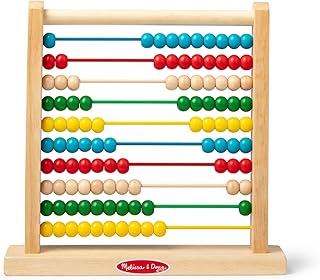

Mental Visualization Boosted by Abacus
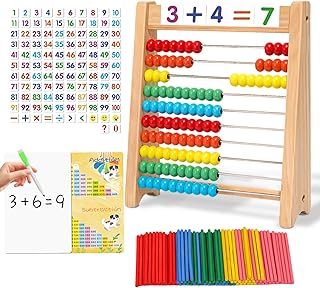
The abacus, an ancient calculating tool, has long been associated with mathematical prowess, but its impact on mental visualization is a fascinating aspect often overlooked. When learners manipulate abacus beads, they engage in a unique form of visual-spatial training, strengthening the brain's ability to form and manipulate mental images. This process is not merely about counting; it's a cognitive workout that enhances the mind's eye.
Visualizing Numbers as Patterns: Abacus training encourages users to see numbers as patterns and structures. Each bead movement represents a numerical change, teaching the brain to associate visual shifts with mathematical operations. For instance, when adding 7 to a number, an abacus user might visualize sliding seven beads, fostering a mental image of the calculation. This visual representation of numbers and operations is a powerful tool for mental math, allowing for quicker and more accurate computations.
Mental Abacus Technique: A remarkable phenomenon emerges from prolonged abacus training—the ability to perform calculations using a mental image of the abacus. This technique, known as the 'Mental Abacus,' involves visualizing the abacus and manipulating its beads in the mind's eye. Studies have shown that skilled abacus users can maintain this mental image with remarkable precision, enabling them to perform complex calculations at impressive speeds. For example, a 2012 study revealed that abacus experts could solve addition problems faster and with higher accuracy than control groups, even when the abacus was not physically present.
Brain Plasticity and Training: The effectiveness of the abacus in boosting mental visualization lies in its ability to harness brain plasticity. Regular practice rewires the brain, strengthening neural connections associated with visual-spatial processing and mental imagery. This is particularly beneficial for children, as their brains are more adaptable, but adults can also experience significant improvements. A study published in *Nature* suggested that abacus training could lead to long-term changes in brain structure, specifically in areas related to visual memory and spatial reasoning.
To maximize the benefits of abacus training for mental visualization:
- Start Early: Introduce the abacus to children as young as 5 years old. Their developing brains can more easily adapt to this visual-spatial training.
- Consistent Practice: Regularity is key. Aim for short, daily practice sessions rather than longer, less frequent ones.
- Gradual Progression: Begin with basic operations and gradually increase complexity. This ensures a solid foundation and prevents cognitive overload.
- Combine Physical and Mental Practice: Initially, use a physical abacus, then gradually transition to visualizing it. This two-pronged approach reinforces the connection between physical manipulation and mental imagery.
Incorporating abacus training into educational curricula or personal development routines can significantly enhance mental visualization skills, offering a unique and powerful approach to improving mathematical abilities. This ancient tool's impact on modern cognitive enhancement is a testament to its enduring value.
Seeking Support: What to Do When You Need Help
You may want to see also
Explore related products


Abacus and Brain Development Link
The abacus, an ancient calculating tool, has been linked to significant brain development, particularly in areas associated with mathematics and cognitive function. Studies using neuroimaging techniques like fMRI have shown that regular abacus training activates the prefrontal cortex, parietal lobe, and hippocampus—regions critical for memory, attention, and spatial reasoning. Children aged 5 to 12 who practice abacus-based mental math for 30 minutes daily over 6 months exhibit measurable increases in gray matter density in these areas, suggesting structural brain changes. This neurological adaptation underscores the abacus’s role not just as a tool for calculation but as a catalyst for cognitive enhancement.
To harness the brain development benefits of the abacus, structured training is key. Begin with 15-minute sessions, gradually increasing to 45 minutes as proficiency improves. Focus on mastering basic operations like addition and subtraction before advancing to multiplication and division. Incorporate visualization exercises, such as mentally moving abacus beads, to strengthen the link between tactile manipulation and mental computation. For optimal results, combine abacus practice with real-world math problems, like calculating discounts or measuring ingredients, to reinforce practical application. Consistency is critical; daily practice yields more significant cognitive gains than sporadic sessions.
Critics argue that the abacus’s benefits are limited to rote memorization rather than deep mathematical understanding. However, research shows that abacus training fosters a unique mental representation of numbers, enabling users to perform complex calculations without relying on traditional algorithms. For instance, skilled abacus users can decompose numbers into smaller, manageable parts, a skill transferable to problem-solving in algebra and geometry. This mental flexibility, coupled with enhanced working memory, challenges the notion that abacus training lacks intellectual depth. Instead, it appears to cultivate a hybrid approach—blending procedural fluency with conceptual insight.
A notable case study from Japan highlights the long-term impact of abacus training on brain development. A group of children who trained with the abacus for 3 years scored significantly higher on standardized math tests and exhibited superior performance in non-math cognitive tasks, such as pattern recognition and logical reasoning. Follow-up studies revealed that these advantages persisted into adulthood, with former abacus users demonstrating greater efficiency in decision-making and multitasking. This longitudinal evidence suggests that the brain changes induced by abacus training are not only immediate but also enduring, offering a compelling argument for its inclusion in early education curricula.
Practical implementation of abacus training requires careful consideration of age and developmental stage. For children under 7, focus on tactile exploration and basic number recognition rather than complex calculations. Introduce competitive elements, like timed challenges, for older children to boost motivation and sharpen mental agility. Parents and educators should monitor progress, ensuring that the training remains engaging and age-appropriate. While the abacus is a powerful tool for brain development, it should complement, not replace, a well-rounded math education. By integrating abacus practice thoughtfully, we can unlock its potential to enhance both mathematical proficiency and overall cognitive function.
Boosting Brain Power: Do Mental Games Really Enhance Cognitive Skills?
You may want to see also
Explore related products


Long-Term Math Skills from Abacus Practice
Abacus practice, often associated with ancient arithmetic, has a profound and lasting impact on the development of long-term math skills. Research suggests that regular abacus training, especially among children aged 5 to 12, enhances numerical fluency, mental calculation speed, and problem-solving abilities. A study published in the *Journal of Cognitive Enhancement* found that children who practiced abacus-based mental math for 30 minutes daily over six months showed significant improvements in arithmetic accuracy and working memory compared to control groups. This structured practice rewires the brain, strengthening neural pathways associated with mathematical reasoning.
The key to unlocking these long-term benefits lies in consistent, deliberate practice. Experts recommend starting with 15–20 minutes of abacus training daily for beginners, gradually increasing to 30–45 minutes as proficiency grows. Incorporating gamified exercises, such as timed challenges or competitive drills, can sustain motivation. For instance, using an abacus to solve multi-digit addition or subtraction problems mentally fosters a deeper understanding of number relationships, which translates to quicker mental math skills in real-world scenarios. Parents and educators should emphasize the process over speed initially, ensuring learners grasp the logic behind each operation.
One of the most compelling aspects of abacus practice is its ability to cultivate a "number sense"—an intuitive feel for quantities and their manipulations. Unlike rote memorization, abacus training encourages visualization and spatial reasoning. For example, learners mentally manipulate beads to represent numbers, which activates both hemispheres of the brain. This dual activation not only accelerates mental calculations but also builds a foundation for advanced math concepts like algebra and calculus. A longitudinal study in Japan tracked abacus-trained students into adulthood, revealing they consistently outperformed peers in mathematical problem-solving and logical reasoning tasks.
However, integrating abacus practice into modern education requires careful consideration. While its benefits are clear, overemphasis on speed or competition can lead to burnout, particularly in younger learners. Educators should balance structured drills with creative applications, such as using the abacus to explore patterns or solve puzzles. Additionally, combining abacus training with technology, like digital abacus apps, can make learning more accessible and engaging. For optimal results, pair abacus practice with hands-on math activities, such as measuring ingredients in cooking or calculating discounts while shopping, to reinforce practical application.
In conclusion, abacus practice is not just a relic of the past but a powerful tool for building long-term math skills. By fostering numerical fluency, enhancing brain function, and developing a robust number sense, it equips learners with the cognitive tools needed for mathematical success. With consistent practice, age-appropriate techniques, and a focus on understanding over speed, abacus training can transform the way individuals approach math, making it both intuitive and enjoyable. Whether in a classroom or at home, this ancient method offers timeless benefits for modern learners.
Probation Officers: Supporting Mental Health During Probationary Periods
You may want to see also
Frequently asked questions
Yes, using an abacus helps improve mental math skills by enhancing visualization, concentration, and number sense, allowing users to perform calculations mentally after mastering the tool.
For children, an abacus provides a tactile and visual way to understand numbers and operations, which strengthens their mental math abilities as they internalize the processes.
Absolutely, adults can improve their mental math skills with an abacus by practicing regularly, as it sharpens memory, speed, and accuracy in calculations.
No, an abacus is not necessary, but it is a highly effective tool for building a strong foundation in mental math by making abstract concepts more concrete and easier to grasp.