Noah Parker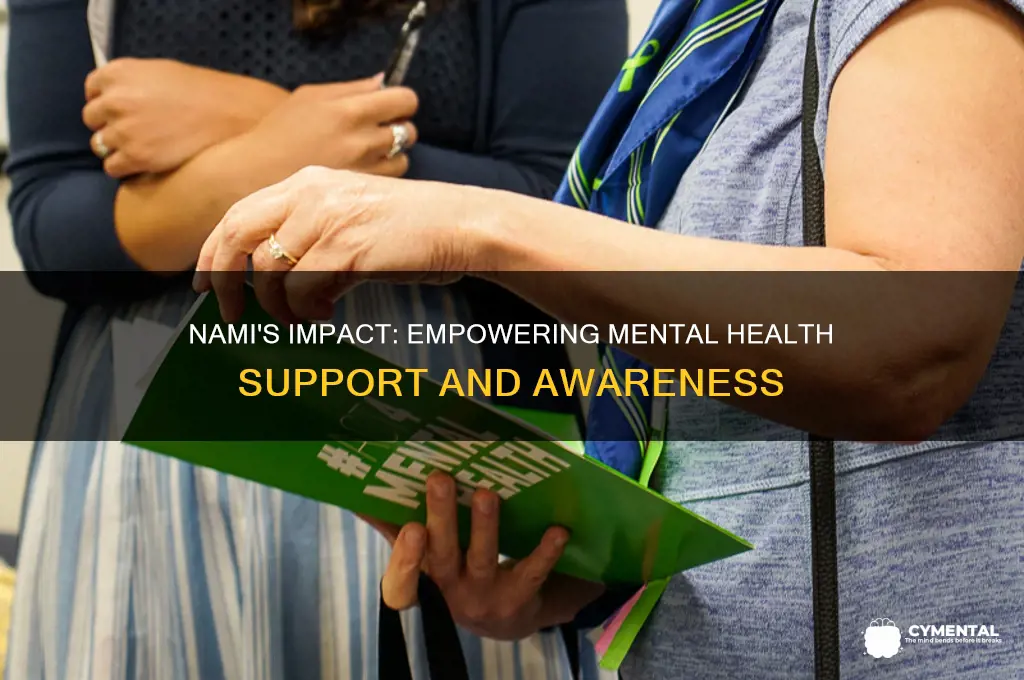
Nami, the National Alliance on Mental Illness, is a grassroots organization dedicated to improving the lives of individuals and families affected by mental illness. Through education, advocacy, and support, Nami provides invaluable resources to raise awareness, reduce stigma, and promote mental health recovery. Their programs, such as family support groups, peer-led education classes, and helplines, offer a lifeline to those navigating the challenges of mental health conditions. By fostering understanding and empowering individuals to seek help, Nami plays a crucial role in building a more compassionate and informed society, ultimately enhancing the well-being of millions.
| Characteristics | Values |
|---|---|
| Education & Awareness | Provides free educational programs and resources to individuals, families, and communities about mental illness, symptoms, treatment options, and recovery. |
| Support Groups | Offers over 600 local support groups nationwide for individuals living with mental illness and their loved ones, providing peer support, understanding, and coping strategies. |
| Advocacy | Lobbies for policies and legislation that improve access to mental health care, increase funding for research, and protect the rights of individuals with mental illness. |
| Helpline | Operates a national helpline (1-800-950-NAMI) offering free, confidential support, information, and referrals to individuals and families affected by mental illness. |
| Crisis Intervention | Provides resources and guidance for individuals experiencing a mental health crisis, including information on crisis hotlines and local emergency services. |
| Peer-to-Peer Programs | Offers peer-led programs where individuals with lived experience of mental illness share their stories, offer support, and empower others in their recovery journey. |
| Family-to-Family Program | Provides a free, 8-session educational program for family members and caregivers of individuals with mental illness, offering information, skills, and support. |
| Research & Innovation | Supports research initiatives to advance understanding of mental illness, develop new treatments, and improve outcomes for individuals living with mental health conditions. |
| Stigma Reduction | Works to combat stigma and discrimination associated with mental illness through public awareness campaigns, education, and advocacy efforts. |
| Community Building | Fosters a sense of community and belonging for individuals affected by mental illness through local chapters, events, and online platforms. |
Explore related products


What You'll Learn
- Education & Awareness: Nami provides resources to educate the public about mental health conditions and reduce stigma
- Support Groups: Offers peer-led support groups for individuals and families affected by mental illness
- Advocacy Efforts: Advocates for policies and legislation that improve mental health care access and services
- Crisis Assistance: Provides helplines and guidance for individuals experiencing mental health crises
- Skill-Building Programs: Teaches coping skills, resilience, and recovery strategies through structured programs and workshops

Education & Awareness: Nami provides resources to educate the public about mental health conditions and reduce stigma
Stigma thrives on ignorance. NAMI combats this by equipping individuals with accurate, accessible information about mental health conditions. Their website, nami.org, serves as a digital library, offering fact sheets, personal stories, and educational toolkits on a wide range of diagnoses, from anxiety disorders to schizophrenia. This readily available knowledge empowers people to recognize symptoms in themselves or others, fostering earlier intervention and better outcomes.
Imagine a community where whispers about "crazy" behavior are replaced by informed conversations about depression or bipolar disorder. NAMI's educational resources, like their "Ending the Silence" program, target schools, workplaces, and faith communities, dismantling stereotypes and promoting empathy. By humanizing mental illness through personal narratives and factual data, NAMI challenges the fear and misunderstanding that fuel stigma.
Think of stigma as a wall built from misconceptions. NAMI's awareness campaigns act as sledgehammers, chipping away at this barrier brick by brick. Their "Mental Illness Awareness Week" and "NAMIWalks" events bring communities together, fostering open dialogue and challenging the silence surrounding mental health. These initiatives don't just raise funds; they raise voices, encouraging individuals to share their experiences and advocate for change.
Education isn't a one-time event; it's a continuous process. NAMI understands this, offering ongoing support through their helpline, online forums, and local affiliate chapters. These resources provide a safe space for individuals to ask questions, seek guidance, and connect with others who understand their struggles. By fostering a sense of community and shared understanding, NAMI empowers individuals to become advocates for themselves and others, creating a ripple effect of awareness and acceptance.
Faith and Healing: Exploring Religion's Role in Mental Health Support
You may want to see also
Explore related products


Support Groups: Offers peer-led support groups for individuals and families affected by mental illness
Peer-led support groups are a cornerstone of NAMI’s mission, offering a safe, nonjudgmental space for individuals and families navigating mental illness. Unlike clinical therapy, these groups are facilitated by trained volunteers who share lived experience—either as individuals with mental health conditions or as family members. This shared perspective fosters a unique sense of understanding and empathy, breaking down the isolation often felt by those affected. For example, a parent caring for a child with schizophrenia can connect with others facing similar challenges, exchanging practical advice on medication management, coping strategies, and navigating healthcare systems.
The structure of these groups is intentionally flexible, allowing participants to share as much or as little as they feel comfortable with. Meetings typically follow a drop-in format, meaning no long-term commitment is required—a critical feature for those managing fluctuating symptoms or caregiving responsibilities. Groups are often categorized by specific demographics (e.g., young adults, LGBTQ+ individuals, veterans) or diagnoses (e.g., bipolar disorder, anxiety disorders), ensuring relevance and relatability. For instance, a NAMI Connection group for adults living with mental illness might focus on skill-building exercises like mindfulness techniques, while a NAMI Family Support Group could delve into boundary-setting strategies for caregivers.
One of the most powerful aspects of these groups is their ability to complement professional treatment. While therapists and psychiatrists provide clinical expertise, peer support groups offer something equally vital: hope. Hearing firsthand accounts of recovery or resilience can inspire participants to persist in their own journeys. A study published in *Psychiatric Services* found that individuals who attended NAMI support groups reported reduced symptoms of depression and increased feelings of empowerment. This dual benefit—emotional support and practical guidance—makes these groups a valuable adjunct to traditional care.
However, it’s important to note that support groups are not a substitute for professional treatment. Facilitators are trained to recognize when a participant may be in crisis and will encourage them to seek additional resources, such as crisis hotlines or emergency services. For families, this boundary ensures the group remains a supportive, not therapeutic, environment. Practical tips for maximizing the benefits of these groups include attending regularly (even if only virtually), setting personal goals for participation, and engaging in follow-up conversations with trusted individuals outside the group.
In conclusion, NAMI’s peer-led support groups serve as a vital lifeline for those affected by mental illness, blending emotional solace with actionable insights. By leveraging the power of shared experience, these groups empower participants to navigate their challenges with greater confidence and resilience. Whether you’re seeking a sense of community or practical strategies, NAMI’s support groups offer a unique and invaluable resource in the mental health landscape.
Empowering Mental Wellness: Innovative Apps Transforming Mental Health Support
You may want to see also
Explore related products



Advocacy Efforts: Advocates for policies and legislation that improve mental health care access and services
NAMI, the National Alliance on Mental Illness, plays a pivotal role in shaping mental health care through targeted advocacy efforts. By championing policies and legislation, NAMI works to dismantle barriers that prevent individuals from accessing essential mental health services. Their advocacy is not just about raising awareness; it’s about driving systemic change to ensure that mental health care is treated with the same urgency and priority as physical health care. This includes pushing for increased funding, improved insurance coverage, and the integration of mental health services into primary care settings.
One of NAMI’s key strategies is grassroots mobilization. They empower local advocates to engage with policymakers at every level—from city councils to Congress. For instance, NAMI’s annual Hill Day brings together hundreds of advocates to meet with legislators, share personal stories, and urge support for mental health bills. This approach humanizes the issue, making it harder for lawmakers to ignore. Practical tips for individuals looking to get involved include attending local NAMI meetings, signing up for advocacy alerts, and using NAMI’s template letters to contact representatives about specific legislation.
NAMI also focuses on evidence-based policy solutions, such as the Mental Health Parity and Addiction Equity Act, which requires insurers to cover mental health services on par with physical health services. However, enforcement of this act remains a challenge. NAMI addresses this by providing resources to help individuals understand their rights and file complaints if parity is not upheld. For example, their Parity Implementation Coalition offers tools like a Parity Toolkit, which includes step-by-step guides for navigating insurance denials and appealing decisions.
Comparatively, NAMI’s advocacy stands out because it combines national influence with local action. While larger organizations may focus solely on federal policy, NAMI ensures that state and local laws also reflect the needs of individuals with mental illness. For instance, they advocate for the expansion of Medicaid in states where it hasn’t been adopted, as Medicaid is a critical lifeline for low-income individuals needing mental health care. This dual approach maximizes impact, addressing both broad systemic issues and localized challenges.
In conclusion, NAMI’s advocacy efforts are a cornerstone of their mission to improve mental health care access and services. By blending grassroots activism, evidence-based policy solutions, and practical resources, they create a pathway for meaningful change. Whether you’re a seasoned advocate or just starting, NAMI provides the tools and opportunities to make a difference. Their work reminds us that policy change is not just possible—it’s essential for building a future where mental health care is accessible to all.
Philosophy's Role in Healing: Enhancing Mental Health and Well-being
You may want to see also
Explore related products





Crisis Assistance: Provides helplines and guidance for individuals experiencing mental health crises
In moments of acute mental distress, immediate access to support can be the difference between despair and hope. NAMI (National Alliance on Mental Illness) recognizes this critical need by offering crisis assistance through dedicated helplines and guidance, ensuring individuals are not left to navigate their darkest hours alone. These resources are designed to provide a lifeline, offering both emotional support and practical steps to de-escalate crises.
Consider the scenario of a young adult experiencing a panic attack late at night, overwhelmed by feelings of isolation and fear. NAMI’s helplines, such as the NAMI HelpLine (1-800-950-NAMI), are staffed by trained professionals who can offer calming reassurance, breathing techniques, and strategies to ground the individual in the present moment. For instance, a helpline operator might instruct the caller to focus on five things they can see, four they can touch, three they can hear, two they can smell, and one they can taste—a grounding technique known as the "5-4-3-2-1 method." This immediate, actionable guidance can help stabilize the caller until the crisis subsides.
Beyond immediate support, NAMI’s crisis assistance includes long-term strategies to prevent future episodes. For example, after an initial call, individuals may receive follow-up resources such as local support group information, mental health education materials, or referrals to therapists specializing in their specific needs. This dual approach—addressing the immediate crisis while fostering resilience—sets NAMI apart as a comprehensive mental health ally.
However, it’s essential to note that while helplines are invaluable, they are not a substitute for emergency services in life-threatening situations. If someone is at immediate risk of self-harm or harm to others, calling 911 or a local emergency number is imperative. NAMI’s role is to complement, not replace, these critical services by providing mental health-specific support and de-escalation techniques.
In practice, NAMI’s crisis assistance is a testament to the power of accessibility and empathy. By offering 24/7 helplines, online chat services, and multilingual support, NAMI ensures that no one is turned away due to time constraints, language barriers, or lack of local resources. This inclusivity is particularly vital for marginalized communities, who may face additional barriers to mental health care. For instance, Spanish-speaking individuals can access the same level of support as English speakers, ensuring equitable care across diverse populations.
Ultimately, NAMI’s crisis assistance is more than a service—it’s a promise that no one has to face mental health crises alone. By combining immediate support with long-term strategies, NAMI empowers individuals to navigate their challenges with dignity and hope, fostering a society where mental health crises are met with compassion and actionable solutions.
Pets and Mental Health: How Furry Friends Boost Well-Being
You may want to see also
Explore related products


Skill-Building Programs: Teaches coping skills, resilience, and recovery strategies through structured programs and workshops
NAMI's skill-building programs are designed to empower individuals with mental health conditions by providing them with tangible tools and strategies to manage their symptoms and improve their overall well-being. These programs, often facilitated by trained peers or mental health professionals, offer a structured and supportive environment for participants to learn and practice coping skills, build resilience, and develop personalized recovery plans.
Examples of Skill-Building Programs
One notable example is NAMI's "Peer-to-Peer" program, an 8-week course that meets for 2 hours per week, designed for adults (18+) with mental health conditions. This program covers a range of topics, including stress management, problem-solving, and communication skills. Participants receive a comprehensive workbook and are encouraged to set personal goals, track their progress, and engage in group discussions. Another program, "NAMI Basics," is tailored for parents and caregivers of children and adolescents (ages 0-22) with mental health conditions, offering a 6-session course that focuses on understanding mental illness, navigating the healthcare system, and developing self-care strategies.
Key Components and Techniques
Skill-building programs typically incorporate evidence-based techniques, such as cognitive-behavioral therapy (CBT) and mindfulness practices. For instance, participants may learn deep breathing exercises (e.g., 4-7-8 breathing: inhale for 4 seconds, hold for 7 seconds, exhale for 8 seconds) to reduce anxiety, or progressive muscle relaxation (tensings and releasing muscle groups in a systematic manner) to alleviate physical tension. Programs may also include role-playing scenarios to practice assertiveness, problem-solving, and boundary-setting skills. A typical workshop might dedicate 30 minutes to mindfulness exercises, followed by 45 minutes of group discussion and skill practice, and 15 minutes for Q&A and goal-setting.
Practical Tips for Maximizing Benefits
To get the most out of skill-building programs, participants should aim to attend all sessions, actively engage in discussions, and practice skills between sessions. It's essential to set realistic goals, such as committing to 10-15 minutes of daily mindfulness practice or identifying 2-3 specific situations where they can apply newly learned coping strategies. Caregivers and family members can support participants by offering encouragement, helping to identify triggers, and participating in joint problem-solving exercises. For adolescents (ages 13-17), programs like "Ending the Silence" provide age-appropriate content and interactive activities, making mental health education more engaging and relatable.
Long-Term Impact and Recovery
By participating in skill-building programs, individuals can develop a sense of mastery over their mental health conditions, reducing feelings of helplessness and increasing self-efficacy. These programs not only teach practical skills but also foster social connections, as participants share experiences and learn from one another. A study on NAMI's "Peer-to-Peer" program found that participants reported significant improvements in their ability to manage symptoms, with 85% stating they felt more confident in their recovery journey after completing the course. As individuals continue to apply and refine their skills, they can build resilience, reduce the risk of relapse, and work towards achieving their personal recovery goals, ultimately enhancing their overall quality of life.
Supporting Teens: Practical Strategies for Navigating Mental Health Challenges
You may want to see also
Frequently asked questions
NAMI (National Alliance on Mental Illness) offers a range of programs, including support groups, education classes, and advocacy resources, to help individuals and families affected by mental illness.
NAMI provides free educational programs like Family-to-Family, Peer-to-Peer, and Basics, which teach coping strategies, communication skills, and information about mental health conditions.
NAMI advocates for better mental health policies by engaging with lawmakers, raising awareness, and mobilizing grassroots efforts to improve access to care and reduce stigma.
Yes, NAMI provides resources such as support groups, educational materials, and guidance to help caregivers navigate the challenges of supporting a loved one with mental health issues.


![TAMASHII NATIONS - One Piece - [Extra Battle] Nami -Lighting Blast-, Bandai Spirits FiguartsZERO Collectible Figure](https://m.media-amazon.com/images/I/61bSndqogcL._AC_UL320_.jpg)