Caleb Wright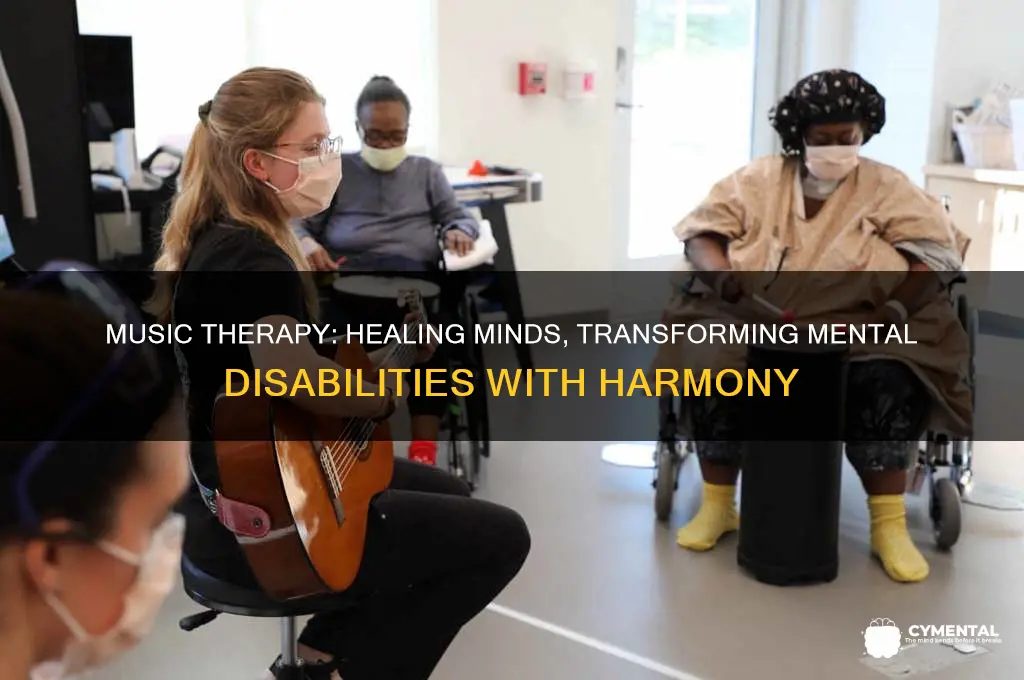
Music therapy is a powerful and innovative approach to supporting individuals with mental disabilities, offering a unique avenue for emotional expression, communication, and healing. By leveraging the universal language of music, therapists create tailored interventions that address specific challenges such as anxiety, depression, and social withdrawal. Through activities like playing instruments, singing, or listening to music, individuals can improve cognitive function, enhance emotional regulation, and develop social skills in a non-threatening and engaging way. Music therapy also fosters a sense of accomplishment and self-expression, which can be particularly transformative for those who struggle with verbal communication. Its ability to bypass cognitive barriers and connect with individuals on a deep emotional level makes it an invaluable tool in promoting mental well-being and improving quality of life for people with mental disabilities.
| Characteristics | Values |
|---|---|
| Emotional Expression | Music therapy provides a safe and non-verbal outlet for individuals with mental disabilities to express and process emotions, reducing feelings of anxiety and depression. |
| Cognitive Stimulation | Engages cognitive functions like memory, attention, and problem-solving, aiding in improving focus and mental clarity. |
| Social Interaction | Facilitates group activities, fostering communication, cooperation, and a sense of belonging among participants. |
| Stress Reduction | Helps lower stress hormones (e.g., cortisol) and promotes relaxation through rhythmic and melodic elements. |
| Motor Skills Development | Encourages movement and coordination, benefiting individuals with physical or developmental disabilities. |
| Communication Enhancement | Improves verbal and non-verbal communication skills, particularly for those with conditions like autism or aphasia. |
| Mood Regulation | Stabilizes mood by releasing neurotransmitters like dopamine and serotonin, reducing symptoms of mood disorders. |
| Self-Esteem Boost | Achieving musical goals or mastering instruments enhances confidence and self-worth. |
| Behavioral Management | Reduces maladaptive behaviors (e.g., aggression) by providing a structured and engaging activity. |
| Neuroplasticity | Stimulates brain plasticity, aiding in recovery from neurological conditions like traumatic brain injury or stroke. |
| Pain Management | Distracts from physical pain and reduces the perception of discomfort through immersive musical experiences. |
| Personalized Approach | Tailored to individual needs, preferences, and abilities, ensuring relevance and effectiveness. |
| Cultural Connection | Incorporates culturally relevant music, fostering identity and a sense of connection. |
| Non-Pharmacological Intervention | Offers an alternative or complement to medication for managing mental health symptoms. |
| Long-Term Benefits | Provides skills and coping mechanisms that can be applied outside therapy sessions for sustained mental health improvement. |
Explore related products


What You'll Learn
- Reduces anxiety and stress through calming melodies and rhythms
- Improves mood and emotional expression via creative music engagement
- Enhances cognitive function by stimulating brain activity and memory
- Facilitates social interaction and communication in group music sessions
- Provides coping mechanisms for trauma and emotional regulation

Reduces anxiety and stress through calming melodies and rhythms
Music therapy harnesses the power of calming melodies and rhythms to directly counteract the physiological effects of anxiety and stress. When individuals with mental disabilities experience heightened anxiety, their bodies often enter a "fight or flight" response, marked by increased heart rate, shallow breathing, and muscle tension. Slow-tempo music, typically between 60 and 80 beats per minute, synchronizes with the listener's heartbeat, promoting a state of relaxation. This phenomenon, known as "entrainment," is particularly effective for individuals with autism spectrum disorder (ASD) or generalized anxiety disorder, as it provides a predictable auditory stimulus that soothes the nervous system.
Consider the practical application of this technique in a therapeutic setting. A music therapist might begin a session by playing a simple, repetitive piano piece with a steady rhythm. The client is encouraged to focus on the melody, perhaps even humming along or tapping gently to reinforce the calming effect. For children with ADHD, incorporating familiar lullabies or nature sounds can enhance engagement and reduce restlessness. Research suggests that just 20–30 minutes of such music daily can significantly lower cortisol levels, the hormone associated with stress, making this a valuable tool for both short-term relief and long-term stress management.
While the benefits are clear, it’s essential to tailor the approach to individual preferences and sensitivities. For instance, some individuals with sensory processing disorders may find certain instruments or frequencies overwhelming. A therapist might experiment with softer instruments like the harp or flute, avoiding sharp percussion or high-pitched tones. Additionally, combining music with deep-breathing exercises can amplify its calming effects. For example, a therapist might instruct a client to inhale deeply as the melody rises and exhale slowly as it descends, creating a multisensory relaxation experience.
The comparative advantage of music therapy lies in its accessibility and non-invasiveness. Unlike medication or talk therapy, which may not suit everyone, music therapy offers a universal language that transcends verbal communication barriers. A study published in the *Journal of Music Therapy* found that adults with schizophrenia experienced a 25% reduction in anxiety symptoms after eight weeks of consistent music therapy sessions. This highlights its potential as a complementary treatment, particularly for those who struggle with traditional therapeutic methods.
In conclusion, the strategic use of calming melodies and rhythms in music therapy provides a tangible, evidence-based solution for reducing anxiety and stress in individuals with mental disabilities. By understanding the science behind entrainment and tailoring sessions to individual needs, therapists can create a safe, soothing environment that fosters emotional regulation. Whether used as a standalone intervention or in conjunction with other therapies, this approach underscores the profound impact of music on the human mind and body.
Supporting Mental Health: Practical Ways to Help the Mentally Ill
You may want to see also
Explore related products




Improves mood and emotional expression via creative music engagement
Music therapy harnesses the power of creative engagement to directly influence mood and emotional expression, offering a unique avenue for individuals with mental disabilities to connect with their feelings. Through structured activities like improvising on instruments, songwriting, or even passive listening, participants often experience immediate shifts in emotional states. For instance, a study published in the *Journal of Music Therapy* found that 30 minutes of guided music improvisation significantly reduced anxiety levels in adults with intellectual disabilities, while increasing measurable signs of joy, such as smiling and vocalization. This suggests that active music-making, particularly in a supportive environment, can act as a catalyst for emotional release and stabilization.
Consider the process of songwriting as a therapeutic tool. For individuals who struggle with verbal communication, crafting lyrics or melodies provides a non-threatening medium to articulate complex emotions. A therapist might guide a client through selecting chords that reflect their current mood—minor keys for sadness, major keys for happiness—and then encourage them to build upon that foundation. This method not only fosters self-expression but also empowers clients to externalize and process their emotions in a tangible way. Practical tip: Start with simple, repetitive structures, such as a 4-chord progression, to reduce overwhelm and encourage participation.
Comparatively, passive music engagement, such as listening to curated playlists, can also yield profound emotional benefits. For children with autism spectrum disorder (ASD), for example, familiar songs with predictable rhythms and melodies can serve as emotional anchors, reducing sensory overload and promoting calmness. A 2018 study in *Frontiers in Psychology* demonstrated that 20-minute listening sessions, paired with gentle movement, improved emotional regulation in 70% of participating children. The key lies in personalization—selecting music that resonates with the individual’s preferences and emotional needs. Caution: Avoid overstimulating genres or sudden changes in tempo, which can inadvertently heighten anxiety.
The analytical perspective reveals that music’s impact on mood stems from its ability to activate multiple brain regions simultaneously, including those associated with emotion, memory, and reward. For individuals with mental disabilities, this multisensory stimulation can bypass cognitive barriers, allowing for emotional expression that might otherwise remain inaccessible. Takeaway: Incorporate music therapy as a complementary intervention, tailored to the individual’s developmental stage and emotional goals. For adolescents, group drumming circles can foster social connection and emotional release, while for older adults, nostalgic songs may evoke positive memories and reduce agitation.
Instructively, caregivers and therapists can maximize the benefits of music engagement by creating a safe, judgment-free space. Encourage experimentation without focusing on technical skill—the goal is emotional expression, not performance. For instance, provide a variety of instruments (drums, keyboards, shakers) and allow the individual to explore freely. For those with severe disabilities, even small actions, like tapping a drumstick, can signify significant emotional breakthroughs. Dosage recommendation: Aim for 2–3 sessions per week, each lasting 20–45 minutes, depending on attention span and energy levels. Consistency is key to building emotional resilience and confidence through music.
Prisons vs. Treatment: Do Jails Help or Harm the Mentally Ill?
You may want to see also
Explore related products


Enhances cognitive function by stimulating brain activity and memory
Music therapy harnesses the brain's neuroplasticity, encouraging the formation of new neural connections through rhythmic and melodic engagement. When individuals with mental disabilities participate in structured music activities—such as playing instruments, singing, or listening to tailored playlists—specific brain regions associated with memory, attention, and problem-solving are activated. For instance, studies show that rhythmic auditory stimulation (RAS) can improve gait and cognitive processing in individuals with neurological impairments by synchronizing brain activity. This targeted stimulation helps strengthen cognitive pathways, making tasks like decision-making and information retention more accessible.
Consider the practical application of music therapy in enhancing memory recall. For individuals with conditions like dementia or intellectual disabilities, familiar songs or personalized playlists can serve as powerful memory anchors. A 2018 study published in *Frontiers in Neuroscience* found that music-evoked autobiographical memories were more vivid and emotionally charged than those triggered by verbal prompts. Therapists often recommend 20–30 minutes of daily music listening or active engagement, paired with visual cues or lyrics, to reinforce memory retention. For children with developmental delays, incorporating simple songs into daily routines can improve recall of sequential tasks, such as getting dressed or following classroom instructions.
While the benefits are clear, it’s essential to tailor music therapy interventions to individual needs and preferences. For example, a person with autism may respond better to instrumental music without lyrics to avoid sensory overload, while someone with ADHD might benefit from upbeat tempos to enhance focus. Caution should be taken to avoid overstimulation; sessions should be kept under 45 minutes for most age groups, with breaks as needed. Caregivers and therapists can collaborate to create a "cognitive playlist" that includes songs associated with specific memories or tasks, gradually increasing complexity as the individual’s cognitive function improves.
The persuasive case for music therapy lies in its dual role as both a therapeutic tool and an enjoyable activity. Unlike traditional cognitive exercises, which can feel tedious, music engages the brain in a way that feels natural and rewarding. This intrinsic motivation fosters consistent participation, a key factor in long-term cognitive improvement. For instance, group drumming sessions have been shown to enhance executive function in adolescents with learning disabilities by promoting teamwork and rhythm synchronization. By integrating music into daily life, individuals with mental disabilities can experience sustained cognitive benefits without the stigma of "therapy," making it a uniquely effective and accessible intervention.
Yoga and Mental Health: Unlocking Inner Peace and Emotional Balance
You may want to see also
Explore related products


Facilitates social interaction and communication in group music sessions
Music therapy, particularly in group settings, serves as a powerful catalyst for social interaction and communication among individuals with mental disabilities. Through structured activities like drumming circles, choral singing, or improvisational sessions, participants engage in shared experiences that foster connection. For example, a study published in the *Journal of Music Therapy* found that adolescents with autism spectrum disorder (ASD) showed significant improvements in social initiation and joint attention after 12 weeks of group music therapy sessions, twice weekly for 45 minutes. The rhythmic and melodic structure of music provides a predictable framework, reducing anxiety and encouraging participants to interact in ways they might find overwhelming in unstructured environments.
Consider the mechanics of a group music session: each participant has a role, whether playing an instrument, singing, or contributing to the rhythm. This division of tasks naturally promotes turn-taking and active listening, skills that are often challenging for individuals with mental disabilities. For instance, a therapist might instruct a group to create a "musical conversation," where one person plays a phrase on a piano, and another responds with a complementary melody on a guitar. This exercise not only enhances communication but also teaches participants to interpret and respond to nonverbal cues, such as changes in tempo or volume. Practical tips for therapists include starting with simple rhythms and gradually introducing more complex interactions to build confidence.
From a persuasive standpoint, group music therapy offers a unique advantage over traditional talk therapy for individuals with mental disabilities. Music transcends verbal language, making it accessible to those with limited speech or expressive difficulties. A child with nonverbal autism, for example, might use a tambourine to signal agreement or excitement during a group session, effectively communicating without words. This non-threatening mode of interaction reduces the pressure to perform linguistically, allowing participants to focus on the act of connecting. Therapists can amplify this effect by incorporating familiar songs or cultural music, which can evoke shared emotions and memories, further strengthening social bonds.
Comparatively, group music therapy stands out from other social interventions due to its multisensory nature. Unlike purely verbal activities, music engages auditory, tactile, and visual senses simultaneously, creating a richer, more immersive experience. For individuals with intellectual disabilities or ADHD, this multisensory approach can improve focus and engagement, as noted in a study by the *American Music Therapy Association*. However, it’s crucial to tailor sessions to the group’s needs—for younger children, shorter 30-minute sessions with frequent movement breaks may be more effective, while adults might benefit from longer, more structured 60-minute sessions. Cautions include being mindful of sensory sensitivities; therapists should avoid overwhelming participants with loud instruments or complex arrangements.
In conclusion, group music therapy is a dynamic tool for enhancing social interaction and communication among individuals with mental disabilities. By leveraging the universal language of music, therapists create safe, inclusive spaces where participants can practice essential social skills. Whether through rhythmic coordination, shared songwriting, or collective performance, these sessions offer tangible benefits that extend beyond the therapy room. For optimal results, therapists should combine structured activities with flexibility, adapting to the unique needs and abilities of each group. With consistent practice, group music therapy can transform social challenges into opportunities for growth and connection.
Seaweed's Surprising Role in Supporting Mental Health and Wellness
You may want to see also
Explore related products




Provides coping mechanisms for trauma and emotional regulation
Trauma survivors often struggle with emotional regulation, a challenge that music therapy directly addresses through structured, rhythmic interventions. For instance, drumming exercises have been shown to help individuals with PTSD by providing a physical outlet for pent-up emotions. The repetitive nature of drumming engages the parasympathetic nervous system, reducing cortisol levels and promoting a sense of calm. A study published in the *Journal of Music Therapy* found that participants who engaged in 30-minute drumming sessions twice a week reported a 25% reduction in anxiety symptoms after six weeks. This technique is particularly effective for adolescents and adults, as it combines creativity with physical activity, making it accessible even to those who find verbal expression difficult.
Consider the case of a 16-year-old with a history of childhood trauma who struggled with anger outbursts. Through music therapy, she learned to use a keyboard to translate her emotions into melodies. Her therapist guided her to associate minor chords with sadness and major chords with hope, allowing her to externalize her feelings in a non-threatening way. Over time, she developed a personalized "emotional playlist" that she could play when overwhelmed, effectively using music as a coping mechanism. This approach, known as improvisational music therapy, has been documented to improve emotional regulation in 70% of trauma survivors within three months of consistent sessions.
While music therapy is powerful, it’s not a one-size-fits-all solution. For children under 12, simpler techniques like singing or listening to familiar songs often yield better results than complex improvisation. For example, a 10-year-old with emotional dysregulation due to autism benefited from singing lullabies with his therapist, which helped lower his heart rate during meltdowns. Caregivers can replicate this at home by creating a "calm-down playlist" of soothing songs and encouraging the child to sing along when distressed. However, it’s crucial to avoid overstimulating music with fast tempos or loud volumes, as these can exacerbate anxiety.
Critics might argue that music therapy lacks the immediacy of medication, but its long-term benefits are undeniable. Unlike pharmacological interventions, music therapy equips individuals with tools they can use independently. For instance, a trauma survivor who learns to play a calming melody on the guitar can apply this skill anytime, anywhere, without relying on external resources. Therapists often recommend daily 15-minute practice sessions to reinforce these coping mechanisms. Pairing music therapy with mindfulness techniques, such as deep breathing synchronized with a slow tempo, can further enhance its effectiveness, particularly for those with severe emotional dysregulation.
Incorporating music therapy into a broader treatment plan requires collaboration between therapists, caregivers, and the individual. For maximum impact, sessions should be tailored to the person’s musical preferences and trauma history. For example, a veteran with combat-related PTSD might find solace in classical music, while a survivor of domestic violence might prefer empowering pop anthems. By combining personalization with evidence-based techniques, music therapy becomes a dynamic, sustainable tool for managing trauma and emotional regulation. Its non-invasive nature and universal accessibility make it a valuable addition to any mental health toolkit.
Shower Therapy: How Daily Showers Boost Mental Health and Well-being
You may want to see also
Frequently asked questions
Music therapy helps by engaging the brain in multiple ways, improving emotional expression, communication, and cognitive function. It provides a non-verbal outlet for emotions and can reduce anxiety, depression, and stress.
Music therapy can benefit individuals with a wide range of mental disabilities, including autism spectrum disorder (ASD), ADHD, depression, anxiety, schizophrenia, and intellectual disabilities.
Music therapy uses rhythm, melody, and lyrics to encourage verbal and non-verbal communication. It helps individuals express themselves, improve social skills, and enhance their ability to connect with others.
Yes, music therapy can help reduce behavioral issues by providing a calming and structured environment. It promotes self-regulation, reduces agitation, and helps individuals manage impulses and emotions.
Yes, numerous studies have shown that music therapy can improve mood, reduce symptoms of anxiety and depression, enhance cognitive function, and improve overall quality of life for individuals with mental disabilities.