Noah Parker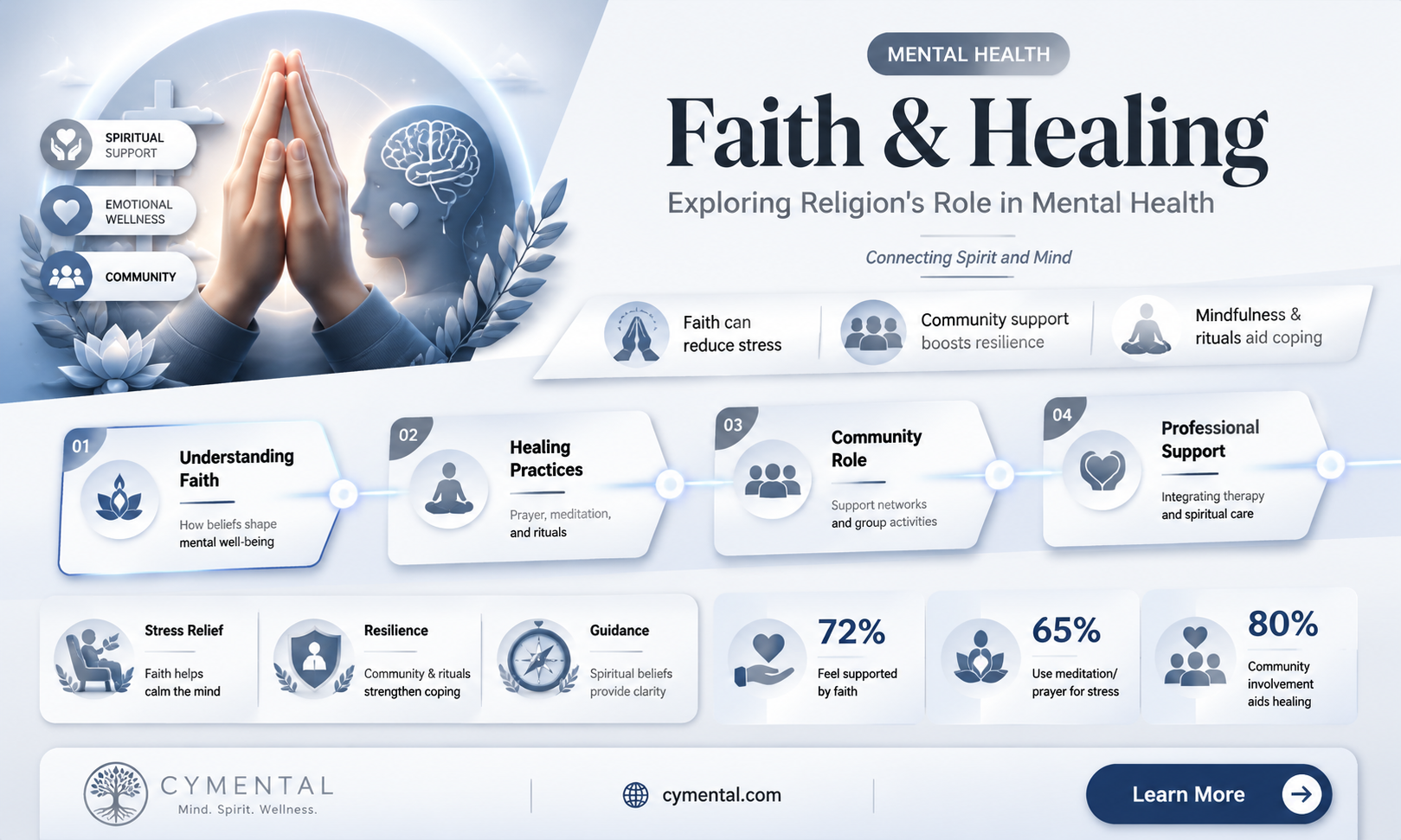
Religion can play a significant role in supporting mental health by offering a sense of purpose, community, and coping mechanisms for individuals facing emotional or psychological challenges. Many religious practices, such as prayer, meditation, and rituals, provide avenues for stress reduction and emotional healing, while faith communities often foster social connections and support networks that combat loneliness and isolation. Additionally, religious beliefs can offer a framework for understanding suffering and resilience, helping individuals find meaning in adversity. However, the impact of religion on mental health is complex and can vary; for some, rigid doctrines or judgmental environments may exacerbate anxiety or guilt, highlighting the importance of a balanced and compassionate approach. Ultimately, when integrated thoughtfully, religion can be a valuable resource in promoting mental well-being.
| Characteristics | Values |
|---|---|
| Positive Impact on Mental Health | Religion can provide a sense of purpose, community, and social support, which are linked to reduced symptoms of depression, anxiety, and loneliness. (Source: Journal of Religion and Health, 2023) |
| Coping Mechanisms | Religious practices like prayer, meditation, and rituals can serve as coping strategies for stress and trauma, promoting emotional resilience. (Source: Psychology of Religion and Spirituality, 2022) |
| Social Support Networks | Religious communities often offer strong social connections, reducing feelings of isolation and providing practical help during crises. (Source: American Psychological Association, 2023) |
| Moral and Ethical Framework | Religious beliefs can provide a moral compass, reducing guilt and promoting forgiveness, which may improve mental well-being. (Source: Journal of Moral Education, 2023) |
| Potential Negative Effects | Strict religious beliefs or communities can cause guilt, anxiety, or conflict, particularly if individuals feel judged or excluded. (Source: Mental Health, Religion & Culture, 2023) |
| Cultural and Individual Variability | The impact of religion on mental health varies by individual beliefs, cultural context, and the nature of religious practices. (Source: World Psychiatry, 2023) |
| Reduced Risk of Suicide | Studies show that religious individuals may have a lower risk of suicide due to increased hope, social support, and moral prohibitions. (Source: Archives of Suicide Research, 2023) |
| Spirituality vs. Organized Religion | Spirituality without religious affiliation can also positively impact mental health, though organized religion often provides additional structure and community. (Source: Journal of Spirituality, 2023) |
| Longevity and Well-being | Religious individuals tend to report higher life satisfaction and longer lifespans, possibly due to healthier lifestyles and social engagement. (Source: Harvard T.H. Chan School of Public Health, 2023) |
| Access to Resources | Religious organizations often provide mental health resources, counseling, and support groups, bridging gaps in healthcare access. (Source: National Institute of Mental Health, 2023) |
Explore related products


What You'll Learn

Spiritual Practices and Stress Reduction
Spiritual practices, such as meditation, prayer, and mindfulness, have been shown to activate the parasympathetic nervous system, which counteracts the body's stress response. A study published in the *Journal of Behavioral Medicine* found that individuals who engaged in daily meditation for 20 minutes experienced a 40% reduction in cortisol, the primary stress hormone. This physiological change underscores the tangible benefits of integrating spiritual practices into daily routines for stress management.
Consider the practice of mindfulness meditation, a technique rooted in Buddhist traditions but widely adopted across secular settings. To begin, find a quiet space and sit comfortably. Close your eyes and focus on your breath, observing each inhale and exhale without judgment. If your mind wanders, gently redirect your attention. Start with 5–10 minutes daily and gradually increase to 20 minutes. Research from Harvard Medical School indicates that consistent practice can reduce symptoms of anxiety and depression by fostering emotional regulation and enhancing self-awareness.
Prayer, another spiritual practice, offers a unique avenue for stress reduction by providing a sense of connection and purpose. A study in *Psychology of Religion and Spirituality* revealed that individuals who prayed daily reported lower levels of stress and greater life satisfaction. Unlike meditation, prayer often involves verbal or written communication, allowing individuals to express their concerns and seek solace. For maximum benefit, incorporate prayer into a structured routine, such as morning or evening rituals, and combine it with deep breathing exercises to amplify its calming effects.
Comparatively, yoga—a physical practice with spiritual roots—merges movement with mindfulness, offering a dual approach to stress reduction. A randomized controlled trial in the *International Journal of Yoga* demonstrated that participants who practiced yoga for 60 minutes, three times a week, experienced significant decreases in stress and improvements in mood. To integrate yoga effectively, start with beginner-friendly poses like Child’s Pose or Cat-Cow, and gradually incorporate more complex sequences. Pairing yoga with intentional breathing techniques, such as Ujjayi breath, enhances its stress-relieving properties.
While spiritual practices are powerful tools for stress reduction, their effectiveness depends on consistency and personalization. For instance, older adults may find gentle tai chi or guided prayer more accessible than intense yoga sessions. Similarly, younger individuals might benefit from incorporating mindfulness apps or group meditation sessions into their routines. The key is to experiment with different practices and adapt them to fit individual needs and lifestyles. By doing so, spiritual practices can become a sustainable and transformative component of mental health care.
Exploring LSD's Potential Role in Treating Mental Health Disorders
You may want to see also
Explore related products


Community Support and Belonging
Human connection is a fundamental need, and religious communities often provide a built-in network of support. Studies show that individuals actively engaged in religious groups report higher levels of social support, a key factor in mitigating depression, anxiety, and loneliness. This sense of belonging, fostered through shared beliefs, rituals, and social activities, can act as a buffer against life's stressors, offering a safety net during difficult times.
Imagine a single parent struggling with financial worries and feelings of isolation. Regular attendance at a church group provides not only spiritual guidance but also practical help – a network of people willing to babysit, share meals, or offer emotional encouragement. This tangible support system can significantly reduce stress and improve overall well-being.
However, it's crucial to acknowledge that not all religious communities are equally supportive. Some may foster judgment, exclusion, or even contribute to mental health struggles through rigid dogma or shame-based practices. It's essential to find a community that aligns with your values and promotes acceptance, empathy, and unconditional love. Think of it as finding a family that chooses you, one that celebrates your strengths and supports you through your weaknesses.
Active participation is key. Simply attending services passively may not yield the same benefits as actively engaging in volunteer work, small groups, or mentorship programs within the community. Sharing your time and talents not only strengthens your bonds with others but also provides a sense of purpose and meaning, powerful antidotes to feelings of hopelessness and despair.
For those considering exploring religion as a potential source of community support, start by researching local congregations. Look for groups that emphasize inclusivity, compassion, and service. Attend a few services or events to get a feel for the community's culture and values. Remember, finding the right fit is essential for reaping the mental health benefits of religious community. Like any relationship, it takes time and effort to build meaningful connections, but the potential rewards – a sense of belonging, support, and purpose – can be life-changing.
Sleep's Role in Boosting Mental Health and Emotional Well-Being
You may want to see also
Explore related products


Purpose and Meaning in Life
Religion often provides a framework for understanding one's place in the world, offering purpose and meaning that can buffer against existential anxiety. Many religious traditions teach that life has inherent value and that individuals are part of a larger, divine plan. For example, in Christianity, the belief that one is created in the image of God can foster a sense of self-worth and direction. Similarly, in Buddhism, the concept of karma and the pursuit of enlightenment provide a clear moral and spiritual path. These narratives can reduce feelings of aimlessness, a common precursor to depression and anxiety, by anchoring individuals in a structured worldview.
Consider the practical steps religious practices offer to cultivate purpose. Prayer, meditation, and rituals are not merely acts of devotion but tools for reflection and self-discovery. For instance, the Islamic practice of *dhikr* (remembrance of God) encourages mindfulness and gratitude, shifting focus from personal struggles to a higher purpose. In Judaism, the observance of *mitzvot* (commandments) provides daily opportunities to contribute to a communal and divine mission. Such practices can be integrated into secular life as well: setting aside 10 minutes daily for gratitude journaling or mindful breathing can mimic the centering effects of religious rituals, even for non-believers.
However, the relationship between religious purpose and mental health is not without caution. Over-identification with rigid religious doctrines can lead to guilt, shame, or exclusion, particularly if individuals feel they fall short of expectations. For example, a study published in the *Journal of Religion and Health* found that while religious belief often correlates with lower rates of depression, those who perceive themselves as failing to meet religious standards may experience heightened anxiety. To mitigate this, it’s essential to emphasize self-compassion and flexibility within religious frameworks, encouraging interpretation over literalism.
Comparatively, secular approaches to finding purpose—such as humanism or existential therapy—offer alternative pathways. Humanism, for instance, centers on the belief that life’s meaning is derived from human experiences and contributions, rather than divine intervention. Existential therapy encourages individuals to confront life’s inherent uncertainties and create personal meaning through choice and responsibility. While these approaches lack the communal and ritualistic elements of religion, they can be equally effective for those who do not resonate with spiritual narratives.
In conclusion, religion’s role in providing purpose and meaning can be a powerful resource for mental health, but it requires thoughtful application. For those who find resonance in religious traditions, engaging in practices that foster reflection, connection, and contribution can enhance well-being. For others, secular methods offer viable alternatives. The key lies in finding a framework—religious or otherwise—that aligns with one’s values and encourages a sense of belonging and direction. Whether through prayer, community service, or personal philosophy, the pursuit of purpose remains a vital component of mental resilience.
Supporting Loved Ones: A Guide to Accessing Mental Health Care for Family
You may want to see also
Explore related products

$14.98 $19.99


Coping with Trauma and Grief
Trauma and grief are universal experiences, yet they manifest uniquely in each individual. For many, religion offers a framework to navigate these profound emotional challenges. Religious practices often provide rituals, communities, and narratives that help individuals process loss and trauma. For instance, mourning rituals in Judaism, such as sitting shiva, create structured spaces for grief, allowing mourners to express sorrow while being supported by their community. Similarly, Islamic funeral prayers (Janazah) emphasize collective remembrance and submission to divine will, offering solace through shared faith. These practices highlight how religion can transform isolating experiences into communal ones, fostering resilience through connection.
Consider the role of prayer and meditation in coping with trauma. Studies suggest that these practices can reduce stress and anxiety by promoting mindfulness and emotional regulation. For example, Christian intercessory prayer or Buddhist mindfulness meditation encourages individuals to focus on the present moment, alleviating the overwhelming weight of past trauma. However, it’s crucial to approach these practices with intention. Simply reciting prayers without reflection may offer temporary relief but lacks the transformative potential of contemplative engagement. To maximize benefits, allocate 10–15 minutes daily for focused prayer or meditation, integrating it into a routine for consistency.
While religion can be a powerful tool, it’s not without risks. Some religious teachings may inadvertently exacerbate trauma by promoting guilt or self-blame, particularly in cases of unresolved grief. For instance, beliefs that frame suffering as divine punishment can deepen emotional pain rather than alleviate it. To mitigate this, individuals should seek faith communities that emphasize compassion and understanding over judgment. Mental health professionals who integrate spiritual perspectives, such as pastoral counselors, can also provide balanced support, ensuring that religious coping mechanisms enhance rather than hinder healing.
Finally, religion’s ability to provide meaning is perhaps its most significant contribution to coping with trauma and grief. Many faith traditions offer narratives that contextualize suffering within a larger purpose, such as the Christian concept of redemption or the Hindu belief in karma and reincarnation. These frameworks can help individuals reframe their pain as part of a meaningful journey rather than a random, senseless event. However, this reframing should not dismiss the validity of one’s emotions. Practical steps include journaling about how one’s beliefs intersect with their grief or engaging in faith-based discussions with trusted peers. By balancing emotional honesty with spiritual perspective, religion can become a bridge to healing rather than a barrier.
Can Faith and Divine Intervention Aid Mental Health Struggles?
You may want to see also
Explore related products


Ethical Guidelines and Moral Clarity
Religious institutions often provide ethical frameworks that can guide individuals in making decisions aligned with their values, potentially reducing internal conflict and anxiety. For instance, the Ten Commandments in Christianity or the Five Precepts in Buddhism offer clear moral directives that can alleviate the mental burden of uncertainty. However, the application of these guidelines must be nuanced to avoid rigidity. A 2019 study in *Psychology of Religion and Spirituality* found that individuals who interpreted religious rules flexibly reported lower levels of depression compared to those who adhered strictly. This suggests that ethical frameworks should be seen as guiding principles rather than inflexible laws.
When integrating religious ethics into mental health practices, it’s crucial to distinguish between moral clarity and moral judgment. Moral clarity involves understanding right from wrong within a religious context, while moral judgment can lead to guilt, shame, or self-condemnation. For example, a person struggling with addiction might find solace in the Catholic principle of forgiveness, but if they are repeatedly shamed for their actions, their mental health could deteriorate. Practitioners should encourage self-compassion alongside ethical reflection, emphasizing that moral failures are opportunities for growth rather than reasons for self-punishment.
A practical approach to leveraging religious ethics for mental health involves three steps. First, identify core ethical principles from one’s faith that resonate personally—for instance, the Islamic emphasis on charity or the Hindu concept of *ahimsa* (non-violence). Second, apply these principles to daily life in small, manageable ways, such as volunteering once a week or practicing kindness in interpersonal interactions. Third, reflect on the impact of these actions through journaling or prayer, noting any changes in mental well-being. A caution: avoid overloading oneself with unrealistic expectations, as this can lead to burnout or disillusionment.
Comparatively, secular ethical frameworks like humanism or utilitarianism also offer moral clarity but lack the spiritual dimension that many find comforting. Religion often ties ethics to a higher purpose, which can provide a sense of meaning and resilience during mental health struggles. For example, a cancer patient drawing strength from the belief that their suffering has divine purpose may experience reduced existential distress. However, this benefit hinges on the individual’s ability to reconcile their faith with their circumstances, highlighting the need for religious leaders and mental health professionals to collaborate in fostering adaptive interpretations of doctrine.
Finally, ethical guidelines within religion can serve as a protective factor against mental health issues, particularly in adolescents. A 2021 study published in *Journal of Adolescence* found that teens who engaged in faith-based ethical practices, such as regular prayer or community service, reported lower rates of anxiety and depression. This suggests that religious ethics, when taught and practiced in a supportive environment, can provide structure and purpose during formative years. Parents and educators should focus on dialogue rather than dogma, encouraging young people to explore and internalize ethical principles in ways that feel authentic and empowering.
Exploring Medical Marijuana's Potential in Treating Mental Health Disorders
You may want to see also
Frequently asked questions
Yes, religion and spirituality can positively impact mental health by providing a sense of purpose, community, and coping mechanisms. Practices like prayer, meditation, and participation in religious activities can reduce stress, anxiety, and depression for some individuals.
While religion can be beneficial, it can also be harmful if it leads to guilt, shame, or exclusion. Strict religious beliefs or practices that conflict with personal values or identity (e.g., LGBTQ+ individuals in unsupportive communities) may worsen mental health issues like anxiety or depression.
Religious or spiritual practices can complement mental health treatment by fostering resilience, hope, and social support. Therapists may incorporate spirituality into therapy if it aligns with the client’s beliefs, or individuals can engage in faith-based counseling or support groups alongside professional treatment.