Madison Cole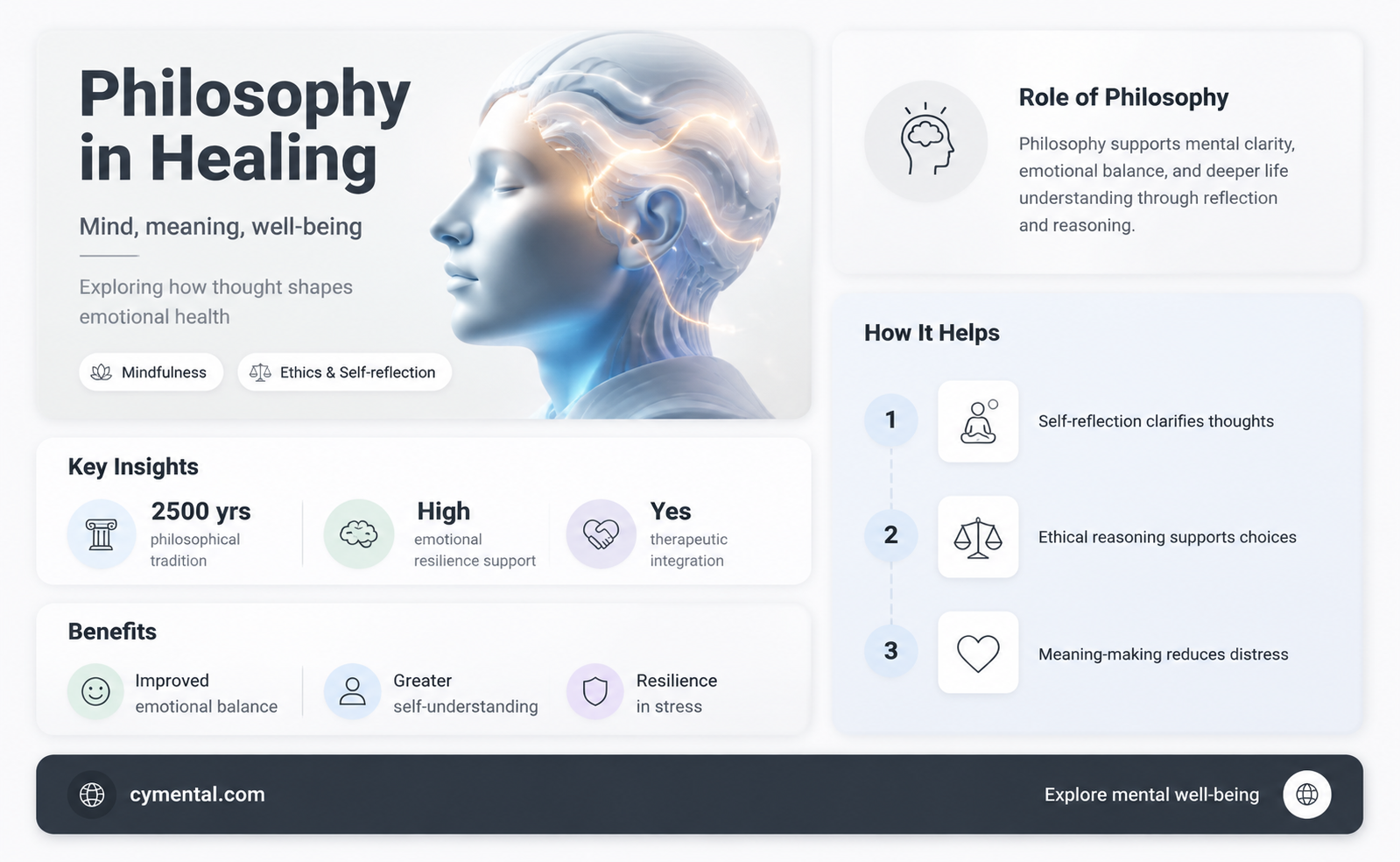
Philosophy can play a significant role in addressing mental health issues by offering profound insights into the nature of human existence, emotions, and thought processes. By examining fundamental questions about identity, purpose, and the meaning of life, philosophical inquiry encourages individuals to develop a deeper understanding of themselves and their struggles. This self-awareness can foster resilience, as it helps individuals reframe negative thoughts, challenge irrational beliefs, and cultivate a more balanced perspective on their experiences. Moreover, philosophical concepts such as stoicism, existentialism, and mindfulness provide practical tools for managing stress, anxiety, and depression, empowering individuals to navigate life’s challenges with greater clarity and emotional stability. By integrating philosophical wisdom into therapeutic practices, mental health professionals can offer holistic approaches that address both the cognitive and existential dimensions of psychological well-being.
| Characteristics | Values |
|---|---|
| Critical Thinking | Encourages individuals to question and analyze their thoughts, beliefs, and emotions, reducing cognitive distortions and promoting clarity. |
| Self-Reflection | Provides tools for introspection, helping individuals understand their values, desires, and motivations, which can lead to greater self-awareness and personal growth. |
| Meaning-Making | Assists in finding purpose and meaning in life, which can alleviate feelings of existential anxiety and depression. |
| Emotional Regulation | Philosophical practices like Stoicism teach techniques to manage emotions, fostering resilience and reducing reactivity to stressors. |
| Perspective-Taking | Helps individuals see situations from different angles, reducing feelings of isolation and promoting empathy. |
| Ethical Frameworks | Provides moral guidance, reducing guilt and conflict by aligning actions with personal values. |
| Mindfulness and Presence | Philosophical traditions like Taoism and Buddhism emphasize living in the present, reducing anxiety about the past or future. |
| Problem-Solving Skills | Enhances logical reasoning and decision-making, helping individuals navigate complex mental health challenges. |
| Acceptance and Letting Go | Teaches acceptance of uncontrollable aspects of life, reducing resistance and suffering. |
| Community and Dialogue | Engaging in philosophical discussions fosters social connections, reducing loneliness and providing support. |
| Resilience Building | Philosophical teachings often focus on enduring hardship, fostering mental toughness and adaptability. |
| Challenging Stigma | Encourages a deeper understanding of mental health, promoting compassion and reducing societal stigma. |
| Holistic Approach | Addresses mental health as part of a broader existential and ethical context, rather than in isolation. |
| Empowerment | Helps individuals take ownership of their mental health by understanding and shaping their own narratives. |
| Long-Term Coping Strategies | Provides enduring tools and frameworks for managing mental health, beyond temporary solutions. |
Explore related products


What You'll Learn
- Stoicism for Resilience: Teach acceptance, focus on control, reduce anxiety, and build emotional strength
- Existential Therapy: Explore meaning, purpose, and freedom to address existential angst and depression
- Mindfulness & Philosophy: Combine contemplation with awareness to manage stress and improve focus
- Ethics & Self-Compassion: Apply moral reasoning to foster self-kindness and reduce self-criticism
- Epictetus’s Dichotomy: Distinguish between controllable and uncontrollable to reduce worry and enhance clarity

Stoicism for Resilience: Teach acceptance, focus on control, reduce anxiety, and build emotional strength
Stoicism, an ancient philosophy, offers a toolkit for modern mental health challenges by emphasizing what we can control and accepting what we cannot. At its core, Stoicism teaches that external events do not cause distress; rather, it’s our reactions to them that do. By internalizing this principle, individuals can reduce anxiety and build emotional resilience. For instance, instead of fixating on a job rejection, a Stoic approach would focus on refining skills or exploring new opportunities—actions within one’s control. This shift in perspective transforms helplessness into agency, a critical step in managing stress and anxiety.
To apply Stoicism practically, start with the practice of *negative visualization*. Spend 5–10 minutes daily imagining the loss of something you value—a relationship, a job, or even your health. This exercise, counterintuitive as it sounds, fosters gratitude and prepares the mind for adversity. Pair this with the *dichotomy of control*, a technique that divides life into two categories: what you can control (your actions, thoughts, and reactions) and what you cannot (external events, others’ opinions). Write these down daily to reinforce focus on actionable areas, reducing mental clutter and anxiety.
A cautionary note: Stoicism is not about suppressing emotions but understanding them. Misinterpreted, it can lead to emotional detachment or avoidance. For example, feeling sadness after a loss is natural; Stoicism encourages acknowledging the emotion while choosing not to be consumed by it. For younger individuals (teens and early adults), this balance can be particularly challenging, as emotional expression is a critical part of development. Pair Stoic practices with mindfulness or journaling to ensure emotional processing remains healthy.
Comparatively, while Cognitive Behavioral Therapy (CBT) focuses on reframing negative thoughts, Stoicism goes deeper by restructuring the relationship with those thoughts. CBT might help someone challenge the belief, “I’m a failure,” but Stoicism would prompt the question, “Does this belief serve me? Can I control its impact?” This philosophical approach complements therapeutic methods, offering a sustainable framework for long-term resilience. For those in high-stress environments, such as healthcare workers or students, integrating Stoic principles can provide a mental buffer against burnout.
In practice, consider a three-step routine: *morning intention-setting*, *evening reflection*, and *situational pause*. In the morning, identify one controllable goal (e.g., “I will respond calmly to challenges”). At night, reflect on how you handled uncontrollable events. During stressful moments, pause and ask, “Is this within my control?” These habits, practiced consistently, rewire thought patterns over time. Research suggests that such structured practices can reduce cortisol levels by up to 14% in 8 weeks, highlighting the physiological benefits of Stoic resilience. By embracing Stoicism’s wisdom, individuals not only manage mental health but also cultivate a mindset of enduring strength.
Kicking Stigma: Football's Impact on Mental Health and Well-Being
You may want to see also
Explore related products


Existential Therapy: Explore meaning, purpose, and freedom to address existential angst and depression
Existential therapy posits that psychological distress often stems from a confrontation with existential gaping voids: death, isolation, meaninglessness, and freedom. Unlike cognitive-behavioral approaches that target symptoms, existential therapy delves into the root of anguish by encouraging individuals to embrace these inherent human conditions. For instance, a 35-year-old professional experiencing depression might not merely reframe negative thoughts but instead explore the fear of mortality driving their despair. This process, though uncomfortable, fosters authenticity and resilience by aligning actions with deeply held values.
To engage in existential therapy, one begins by identifying areas of life where existential dread manifests. A practical exercise involves journaling about fears related to mortality, relationships, or personal agency. For example, writing, "I fear my life lacks purpose because I’ve prioritized career success over meaningful connections," can illuminate underlying conflicts. Therapists then guide clients to experiment with choices that reflect their values, such as volunteering or pursuing creative passions. Studies suggest that such value-driven actions correlate with reduced symptoms of depression and anxiety, particularly in adults aged 25–50.
A critical caution in existential therapy is the risk of overwhelming clients with abstract concepts. Therapists must balance philosophical exploration with concrete, actionable steps. For instance, instead of merely discussing freedom, a therapist might encourage a client to make a small, autonomous decision daily—like choosing a new route to work—to gradually build a sense of agency. This methodical approach prevents existential paralysis, where individuals become so consumed by life’s vastness that they feel immobilized.
Comparatively, existential therapy differs from mindfulness-based interventions, which focus on present-moment awareness. While mindfulness reduces reactivity to distressing thoughts, existential therapy seeks to transform the relationship with those thoughts by integrating them into a broader life narrative. For example, a client might not only observe their fear of failure but also reframe it as a catalyst for growth, aligning it with their desire for self-improvement. This dual approach—acceptance and reinterpretation—distinguishes existential therapy as both a reflective and proactive modality.
Ultimately, existential therapy is not a quick fix but a lifelong practice of confronting and reconciling with life’s inherent uncertainties. It empowers individuals to craft meaning from chaos, turning existential angst into a source of vitality. For those grappling with depression, this approach offers not just symptom relief but a profound reorientation toward life, where freedom is not a burden but a canvas for authentic expression. As philosopher Jean-Paul Sartre famously remarked, “Existence precedes essence,” and in this truth lies the therapeutic potential of embracing one’s existential reality.
Exploring Medical Marijuana's Potential in Treating Mental Health Disorders
You may want to see also
Explore related products


Mindfulness & Philosophy: Combine contemplation with awareness to manage stress and improve focus
Stress, a ubiquitous companion in modern life, often stems from the mind’s tendency to dwell on the past or anxiously project into the future. Mindfulness, rooted in ancient philosophical traditions like Buddhism and Stoicism, offers a remedy by anchoring awareness in the present moment. Unlike passive relaxation, mindfulness is an active practice of observing thoughts and sensations without judgment. This deliberate focus disrupts the cycle of rumination, a key driver of anxiety and depression. Studies show that even 10 minutes of daily mindfulness meditation can reduce cortisol levels, the body’s primary stress hormone, by up to 14%.
Philosophy enhances mindfulness by providing a framework for understanding its purpose and deeper implications. For instance, Stoic philosophers like Marcus Aurelius advocated for *amor fati*—loving one’s fate—and distinguishing between what can and cannot be controlled. Applied to mindfulness, this means accepting the present moment as it is, rather than resisting it. Such philosophical contemplation transforms mindfulness from a mere technique into a way of being, fostering resilience and equanimity. For example, when practicing mindful breathing, one might reflect on the Stoic principle of focusing on the breath as a reminder of the present, the only thing truly within one’s control.
To integrate mindfulness and philosophy into daily life, start with a structured routine. Begin each morning with 5–10 minutes of seated meditation, focusing on the breath and observing thoughts without attachment. Pair this with a brief philosophical reflection, such as journaling on a Stoic maxim like, “The obstacle is the way.” Throughout the day, practice micro-mindfulness—pausing to notice sensations, sounds, or emotions during routine activities like washing dishes or walking. For those new to mindfulness, guided apps or classes can provide structure, but the philosophical component requires personal engagement with texts or reflective questions.
Caution must be exercised, as mindfulness alone is not a panacea for severe mental health issues. Individuals with trauma or acute anxiety may find unstructured mindfulness overwhelming; in such cases, professional guidance is essential. Additionally, philosophical contemplation can lead to existential discomfort if not balanced with practical coping strategies. For instance, dwelling on the impermanence of life without grounding in actionable principles may exacerbate anxiety rather than alleviate it.
In conclusion, combining mindfulness with philosophical inquiry creates a synergistic approach to mental well-being. Mindfulness provides the tools to manage stress and improve focus, while philosophy offers the wisdom to understand and integrate these practices into a meaningful life. Together, they empower individuals to navigate life’s challenges with clarity, acceptance, and purpose. Whether through a morning meditation paired with a Stoic reflection or mindful pauses infused with philosophical insight, this combination is accessible to anyone seeking greater mental resilience.
Gym Benefits Beyond Physique: Boosting Mental Health and Well-Being
You may want to see also
Explore related products


$19.31 $22.95


Ethics & Self-Compassion: Apply moral reasoning to foster self-kindness and reduce self-criticism
Self-criticism is a pervasive habit that often masquerades as motivation or self-improvement. Yet, research shows it’s a significant contributor to anxiety, depression, and low self-esteem. Ethical philosophy offers a counterintuitive solution: treat yourself as you would a morally worthy other. This isn’t about indulgence but about applying principles of fairness, empathy, and dignity to your inner dialogue. For instance, if a friend confessed to a mistake, you’d likely respond with understanding, not condemnation. Why hold yourself to a harsher standard? This moral reasoning shifts self-compassion from a "nice-to-have" to an ethical obligation.
Consider the principle of impartiality, a cornerstone of many ethical theories. If you were an impartial observer judging your own actions, would you condemn yourself as harshly as you do? Likely not. Impartiality demands consistency—treating similar cases alike. If you’d offer kindness to a stranger in your situation, ethical coherence requires extending the same to yourself. This isn’t self-indulgence; it’s moral integrity. Practically, try this: when self-criticism arises, ask, “Would I say this to someone I respect?” If not, reframe the thought as you would for that person.
Another ethical framework to explore is virtue ethics, which focuses on character traits rather than rules. Self-compassion can be cultivated as a virtue, much like courage or honesty. Aristotle argued that virtues are habits formed through practice. Start small: allocate 5 minutes daily to acknowledge your struggles without judgment. For example, instead of berating yourself for a mistake, say, “I’m human, and humans make mistakes. How can I learn from this?” Over time, this practice reshapes your moral identity, making self-kindness a reflex rather than an effort.
However, applying ethics to self-compassion isn’t without pitfalls. One common mistake is confusing self-compassion with self-pity or complacency. Ethical self-kindness isn’t about avoiding responsibility but about balancing accountability with empathy. Another caution: don’t use ethical reasoning as a mental loophole to excuse harmful behavior. The goal is to reduce unwarranted self-criticism, not to justify stagnation. To avoid this, pair self-compassion with actionable steps for improvement, ensuring ethical reasoning serves growth, not avoidance.
In conclusion, ethical philosophy provides a robust framework for fostering self-compassion. By applying principles like impartiality and virtue ethics, you can transform self-kindness from a vague ideal into a moral imperative. Start with small, consistent practices, and be mindful of potential missteps. Over time, this approach not only reduces self-criticism but also aligns your inner dialogue with the ethical standards you’d apply to others—a true mark of moral integrity.
Fishing for Calm: How Angling Boosts Mental Health and Wellness
You may want to see also
Explore related products

$14.51 $16.99


Epictetus’s Dichotomy: Distinguish between controllable and uncontrollable to reduce worry and enhance clarity
The ancient Stoic philosopher Epictetus proposed a powerful tool for mental clarity: the dichotomy of control. This principle encourages us to distinguish between what we can control and what we cannot, a practice that can significantly reduce anxiety and enhance focus. By applying this philosophy, individuals can navigate the complexities of mental health challenges with greater resilience and peace of mind.
Identifying the Controllable and Uncontrollable
Begin by categorizing your concerns into two columns: controllable and uncontrollable. For instance, your reaction to a stressful situation is within your control, while the actions of others are not. This exercise, rooted in Epictetus’s teachings, shifts your attention from external uncertainties to internal responses. Practical application involves daily reflection—perhaps in a journal—to reinforce this mindset. For example, a person struggling with social anxiety might recognize that while they cannot control others’ perceptions, they can control their preparation and self-talk before social interactions.
Reducing Worry Through Acceptance
Once you’ve identified what lies outside your control, the next step is acceptance. Epictetus argued that distress arises not from events themselves but from our resistance to them. By accepting the uncontrollable, you free yourself from unnecessary worry. This doesn’t mean passivity; rather, it’s an active decision to focus energy where it can be effective. For someone dealing with chronic illness, accepting the condition while concentrating on managing symptoms and maintaining mental well-being can be transformative.
Enhancing Clarity and Action
Clarity emerges when you direct your efforts toward the controllable. This focus fosters a sense of agency, even in overwhelming situations. For instance, a student overwhelmed by exam stress can concentrate on creating a study schedule and practicing relaxation techniques, rather than fixating on potential outcomes. Epictetus’s dichotomy encourages actionable steps, turning abstract worries into concrete tasks. This approach aligns with cognitive-behavioral therapy (CBT) techniques, which emphasize changing thought patterns to influence behavior.
Practical Tips for Implementation
To integrate this philosophy into daily life, start small. Allocate 5–10 minutes each morning to list your concerns and categorize them. Use prompts like, “What can I do today to improve this situation?” for controllable items, and “How can I let go of this?” for uncontrollable ones. Pair this practice with mindfulness techniques, such as deep breathing, to reinforce the distinction. For younger individuals or those new to philosophy, apps like *Stoic Meditations* can provide guided exercises. Over time, this habit can rewire your thought patterns, reducing anxiety and increasing mental clarity.
Epictetus’s dichotomy is not a cure-all but a practical tool for managing mental health. By focusing on what you can control and accepting what you cannot, you cultivate resilience and clarity, essential for navigating life’s challenges.
Vitamins and Mental Health: Exploring Their Role in Managing Illness
You may want to see also
Frequently asked questions
Philosophy offers tools to analyze and reframe anxious thoughts by encouraging critical thinking and questioning underlying assumptions. For example, Stoic philosophy teaches acceptance of what cannot be controlled, while existentialism emphasizes finding meaning in personal choices, both of which can reduce stress and promote resilience.
Yes, philosophical practices like self-reflection, ethical inquiry, and exploring personal values can enhance self-awareness and foster a deeper understanding of one's identity. By examining beliefs and behaviors, individuals can build a more authentic sense of self, leading to improved self-esteem and confidence.
Philosophy provides frameworks to explore the nature of existence and purpose, offering perspectives that can alleviate despair. Existentialist thinkers like Camus and Sartre encourage embracing life’s absurdity and creating personal meaning, while Buddhist philosophy promotes mindfulness and acceptance, helping individuals navigate existential challenges.