Caleb Wright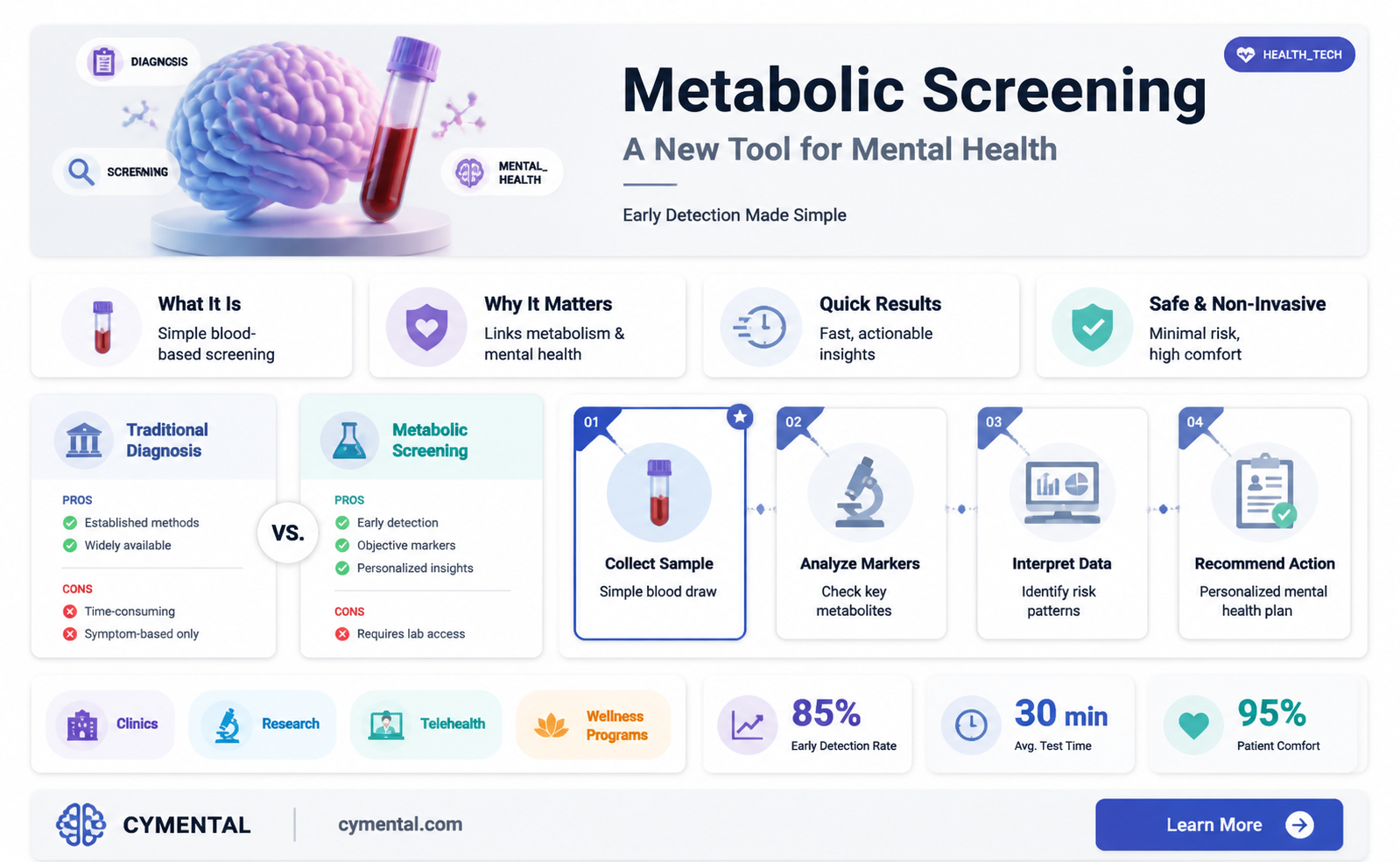
Metabolic screening, traditionally used to assess biochemical processes and identify metabolic disorders, is increasingly being explored as a potential tool to aid in mental health diagnosis. Emerging research suggests that metabolic abnormalities, such as imbalances in neurotransmitter pathways, mitochondrial dysfunction, or inflammation, may contribute to or correlate with mental health conditions like depression, anxiety, and schizophrenia. By evaluating biomarkers related to energy metabolism, oxidative stress, and nutrient deficiencies, metabolic screening could provide valuable insights into the underlying physiological mechanisms of mental health disorders. This approach may help personalize treatment strategies, differentiate between subtypes of mental illnesses, and improve diagnostic accuracy, particularly in cases where symptoms overlap or are difficult to classify. However, further studies are needed to validate the clinical utility of metabolic screening in mental health and to establish its role alongside traditional diagnostic methods.
| Characteristics | Values |
|---|---|
| Definition | Metabolic screening involves assessing biomarkers related to metabolism, such as glucose, lipids, and inflammation, to identify potential imbalances that may contribute to mental health conditions. |
| Relevance to Mental Health | Emerging research suggests metabolic dysfunction (e.g., insulin resistance, mitochondrial dysfunction) is linked to depression, anxiety, bipolar disorder, and schizophrenia. |
| Biomarkers Assessed | Glucose levels, insulin sensitivity, lipid profiles, inflammatory markers (e.g., CRP, cytokines), oxidative stress markers, and mitochondrial function indicators. |
| Potential Benefits | Early detection of metabolic abnormalities, personalized treatment approaches (e.g., dietary interventions, supplements), improved treatment outcomes, and reduced reliance on trial-and-error medication. |
| Limitations | Not yet a standard diagnostic tool for mental health, limited longitudinal studies, and variability in individual metabolic profiles. |
| Current Research Findings | Studies show associations between metabolic dysregulation and mental health disorders, but causality is still under investigation. |
| Clinical Applications | Used in integrative psychiatry to complement traditional mental health assessments, particularly in treatment-resistant cases. |
| Future Directions | Development of metabolic biomarkers as predictive tools, integration into routine mental health care, and exploration of metabolic interventions as adjunct therapies. |
| Examples of Metabolic Interventions | Ketogenic diet, omega-3 fatty acids, antioxidants, and exercise to address metabolic imbalances linked to mental health. |
| Cost and Accessibility | Metabolic screenings can be costly and may not be covered by insurance, limiting accessibility for some patients. |
| Patient Populations | Particularly relevant for individuals with treatment-resistant mental health conditions, comorbid metabolic disorders (e.g., obesity, diabetes), or a family history of metabolic issues. |
Explore related products


What You'll Learn

Metabolic markers linked to mental health disorders
Emerging research reveals a surprising connection between our body's metabolic processes and mental health disorders. Studies have identified specific metabolic markers that are often dysregulated in individuals with conditions like depression, anxiety, and schizophrenia. For example, elevated levels of inflammatory markers such as C-reactive protein (CRP) and cytokines are frequently observed in depressed patients, suggesting a link between chronic inflammation and mood disorders. Similarly, abnormalities in glucose metabolism, insulin resistance, and mitochondrial function have been implicated in the pathophysiology of various mental health conditions.
Consider the following scenario: a 35-year-old patient presents with symptoms of persistent sadness, fatigue, and difficulty concentrating. Traditional diagnostic approaches might focus solely on psychological assessments and symptom checklists. However, incorporating a metabolic screening could reveal elevated fasting blood glucose levels (above 100 mg/dL) and increased CRP levels (above 3 mg/L), indicating insulin resistance and systemic inflammation. These findings could prompt a more targeted treatment plan, potentially including dietary modifications, anti-inflammatory medications, or supplements like omega-3 fatty acids, alongside conventional psychotherapy or pharmacotherapy.
To effectively utilize metabolic markers in mental health diagnosis, clinicians should follow a structured approach. First, identify key markers such as CRP, insulin, cortisol, and homocysteine, which have been consistently linked to mental health disorders. Second, establish baseline levels through comprehensive blood tests, ideally during the initial psychiatric evaluation. Third, monitor these markers periodically, especially when adjusting treatment regimens, to assess therapeutic efficacy and predict relapse risks. For instance, a 20-30% reduction in CRP levels over 12 weeks could signify a positive response to anti-inflammatory interventions in depressed patients.
However, caution is warranted when interpreting metabolic markers. While they offer valuable insights, they are not definitive diagnostic tools for mental health disorders. Factors like age, sex, lifestyle, and comorbid physical conditions can influence metabolic profiles, necessitating a holistic interpretation. For example, elevated cortisol levels in a young adult might stem from stress, poor sleep, or even over-exercising, rather than indicating a mood disorder. Clinicians should integrate metabolic data with clinical judgment, patient history, and psychological assessments to avoid misdiagnosis or over-reliance on biomarkers.
In conclusion, metabolic markers represent a promising avenue for enhancing mental health diagnosis and personalized treatment. By identifying and addressing underlying metabolic dysfunctions, clinicians can develop more comprehensive and effective care plans. For instance, a patient with treatment-resistant depression and elevated homocysteine levels (above 15 μmol/L) might benefit from B-vitamin supplementation, which has shown to improve depressive symptoms in such cases. As research progresses, metabolic screening could become a standard component of psychiatric practice, bridging the gap between physical and mental health care.
Are Mental Health Diagnoses Helpful? Exploring Benefits and Limitations
You may want to see also
Explore related products


Role of inflammation in mental health conditions
Inflammation, typically associated with physical ailments like arthritis or infections, is increasingly recognized as a critical player in mental health conditions. Research shows that elevated inflammatory markers, such as C-reactive protein (CRP) and cytokines like interleukin-6 (IL-6), are consistently found in individuals with depression, anxiety, and schizophrenia. For instance, a 2019 meta-analysis in *JAMA Psychiatry* revealed that people with major depressive disorder had CRP levels 30% higher than healthy controls. This biological link suggests that metabolic screenings, which often include inflammatory markers, could serve as a valuable tool in identifying underlying contributors to mental health issues.
Consider the case of a 35-year-old patient presenting with persistent fatigue, low mood, and cognitive fog. Traditional mental health assessments might focus solely on psychological symptoms, but a metabolic screening could uncover elevated inflammatory markers, pointing to a potential immune-related component of their condition. This insight could guide treatment beyond standard antidepressants to include anti-inflammatory interventions, such as omega-3 fatty acids (2–3 grams daily) or lifestyle modifications like regular exercise, which has been shown to reduce IL-6 levels by up to 20%.
However, interpreting inflammatory markers in mental health is not straightforward. Inflammation can be both a cause and consequence of mental health conditions, creating a complex feedback loop. For example, chronic stress activates the hypothalamic-pituitary-adrenal (HPA) axis, increasing pro-inflammatory cytokines, which in turn exacerbate symptoms of anxiety and depression. This bidirectional relationship underscores the need for a nuanced approach when using metabolic screenings. Clinicians must consider the patient’s overall health, including diet, sleep, and comorbid conditions like obesity or autoimmune disorders, which can independently elevate inflammatory markers.
Practical integration of metabolic screenings into mental health care requires collaboration between psychiatrists, primary care providers, and nutritionists. For instance, a patient with schizophrenia and elevated CRP levels might benefit from a diet rich in anti-inflammatory foods (e.g., berries, leafy greens, and turmeric) alongside antipsychotic medication. Similarly, monitoring inflammatory markers over time can help assess treatment efficacy—a reduction in CRP levels could indicate that an anti-inflammatory approach is working, even if psychological symptoms improve slowly.
In conclusion, while metabolic screenings are not a standalone diagnostic tool for mental health conditions, they offer a unique lens into the role of inflammation, a often-overlooked factor. By incorporating these screenings into clinical practice, healthcare providers can adopt a more holistic approach, addressing both the mind and body in the pursuit of mental wellness. This shift could pave the way for personalized treatments that target the root causes of mental health conditions, rather than merely managing symptoms.
Unlocking Hope: Effective Mental Health Care in Prisons Explored
You may want to see also
Explore related products


Gut microbiome influence on brain function
The gut microbiome, a complex ecosystem of trillions of microorganisms residing in our digestive tract, has emerged as a pivotal player in brain function and mental health. Recent research highlights the gut-brain axis, a bidirectional communication network linking the central nervous system with the enteric nervous system. This connection suggests that imbalances in gut microbiota—often detectable through metabolic screenings—may contribute to conditions like depression, anxiety, and even neurodegenerative disorders. For instance, studies show that individuals with depression often exhibit reduced microbial diversity, particularly in strains like *Bifidobacterium* and *Lactobacillus*. Metabolic screenings can identify these imbalances, offering a potential biomarker for mental health diagnosis and personalized interventions.
Analyzing the gut microbiome’s role in mental health requires understanding its metabolic outputs, such as short-chain fatty acids (SCFAs) like butyrate, propionate, and acetate. These compounds, produced by fermenting dietary fiber, cross the blood-brain barrier and modulate neurotransmitter production, inflammation, and neuronal health. A metabolic screening can measure SCFA levels, providing insights into their impact on mood and cognition. For example, low butyrate levels have been linked to increased anxiety-like behaviors in animal models, while supplementation with 5–10 grams of butyrate daily has shown promise in improving depressive symptoms in humans. Such screenings could guide targeted dietary or probiotic interventions to restore gut-brain balance.
To harness the gut microbiome’s potential in mental health diagnosis, consider these practical steps: First, incorporate prebiotic-rich foods like garlic, onions, and bananas to nourish beneficial microbes. Second, limit processed foods and artificial sweeteners, which disrupt microbial diversity. Third, consult a healthcare provider to interpret metabolic screening results and tailor interventions, such as probiotic strains like *Lactobacillus rhamnosus GG* or *Bifidobacterium longum*, which have demonstrated anxiolytic and antidepressant effects in clinical trials. Finally, monitor progress through follow-up screenings to assess microbial shifts and their correlation with mental health improvements.
A comparative perspective reveals the gut microbiome’s unique advantage in mental health diagnosis: unlike traditional methods reliant on self-reported symptoms, metabolic screenings offer objective, quantifiable data. For instance, while blood tests for serotonin or cortisol provide snapshots of stress or mood, microbiome analysis uncovers root causes tied to metabolic dysfunction. This approach aligns with the growing field of psychobiotics—microbial-based treatments for mental health—where strains like *Bifidobacterium breve* have shown efficacy in reducing stress-induced cortisol levels in adults aged 18–65. By integrating metabolic screenings, clinicians can move beyond symptom management to address underlying biological mechanisms.
In conclusion, the gut microbiome’s influence on brain function underscores the potential of metabolic screenings as a diagnostic tool for mental health. From identifying microbial imbalances to measuring SCFA levels, these screenings provide actionable insights for personalized treatment. While research is ongoing, early evidence suggests that modulating the gut microbiome through diet, probiotics, or targeted interventions could revolutionize mental health care. As this field evolves, metabolic screenings may become a cornerstone in bridging the gap between gut health and brain function, offering hope for more precise and effective mental health diagnoses.
Finding Support: Where to Get Help for Schizophrenia Treatment
You may want to see also
Explore related products


Nutrient deficiencies and psychiatric symptoms correlation
Nutrient deficiencies can subtly yet profoundly influence psychiatric symptoms, often masquerading as primary mental health disorders. For instance, a deficiency in vitamin B12, common in vegans or the elderly, has been linked to depression, anxiety, and even psychosis. Similarly, low levels of omega-3 fatty acids, prevalent in those with poor dietary intake of fatty fish, are associated with increased risk of mood disorders. Recognizing these correlations is the first step in understanding how metabolic screening can serve as a diagnostic tool in mental health.
Consider the role of magnesium, a mineral involved in over 300 biochemical reactions in the body, including neurotransmitter regulation. Studies show that magnesium deficiency correlates with symptoms of depression and anxiety, particularly in younger adults under 30. Supplementation with 200–400 mg of elemental magnesium daily has been shown to alleviate these symptoms in some cases. However, self-diagnosis and supplementation without testing can lead to imbalances, underscoring the need for metabolic screening to identify specific deficiencies.
Iron deficiency anemia, often overlooked in mental health assessments, is another critical example. It is particularly prevalent in women of reproductive age and can manifest as cognitive fog, irritability, and fatigue—symptoms easily mistaken for generalized anxiety or depression. A simple serum ferritin test can reveal suboptimal iron levels, and targeted supplementation (e.g., 65 mg of iron bis-glycinate daily) can significantly improve both physical and psychiatric symptoms. This highlights the importance of addressing metabolic health as part of a comprehensive mental health evaluation.
The interplay between nutrient deficiencies and psychiatric symptoms is not one-size-fits-all. For example, while vitamin D deficiency is linked to depression across all age groups, older adults are at higher risk due to reduced sun exposure and skin synthesis. A metabolic screening can pinpoint such deficiencies, allowing for personalized interventions like 2000–4000 IU of vitamin D3 daily, tailored to individual needs. This targeted approach contrasts with the trial-and-error often seen in psychiatric medication management.
Incorporating metabolic screening into mental health diagnosis requires collaboration between healthcare providers. Psychiatrists, primary care physicians, and dietitians must work together to interpret results and design interventions. For instance, a patient with elevated homocysteine levels (indicative of B vitamin deficiencies) might benefit from a combination of B6, B12, and folate supplementation, alongside dietary adjustments. This multidisciplinary approach not only addresses root causes but also empowers patients with actionable insights into their mental health.
Effective Strategies and Tools to Help You Overcome Daily Challenges
You may want to see also
Explore related products






Metabolic screening tools for personalized mental health treatment
Metabolic screening tools are emerging as a pivotal component in the quest for personalized mental health treatment. By analyzing biomarkers such as glucose levels, lipid profiles, and mitochondrial function, these tools provide insights into the biological underpinnings of mental health disorders. For instance, research has shown that individuals with depression often exhibit insulin resistance, while those with schizophrenia may have altered lipid metabolism. These metabolic markers can serve as objective indicators, complementing traditional symptom-based diagnoses and enabling more tailored interventions.
Consider the practical application of metabolic screening in a clinical setting. A 35-year-old patient presenting with anxiety and fatigue might undergo a comprehensive metabolic panel, including measurements of fasting glucose, hemoglobin A1c, and omega-3 fatty acid levels. If results reveal hypoglycemia or omega-3 deficiency, treatment could extend beyond psychotherapy to include dietary adjustments, such as increasing complex carbohydrates or supplementing with 2,000–3,000 mg of EPA/DHA daily. This dual approach addresses both the psychological and physiological aspects of the patient’s condition, potentially enhancing treatment efficacy.
However, integrating metabolic screening into mental health care is not without challenges. Clinicians must navigate the complexity of interpreting metabolic data, ensuring it aligns with the patient’s clinical presentation. For example, while elevated homocysteine levels may suggest a need for B-vitamin supplementation, this intervention should be considered alongside other factors like medication interactions and genetic predispositions. Additionally, the cost and accessibility of advanced metabolic tests may limit their widespread adoption, particularly in underresourced settings.
Despite these hurdles, the potential benefits of metabolic screening in mental health are compelling. A comparative analysis of treatment outcomes reveals that patients whose care plans incorporate metabolic insights often experience faster symptom relief and improved long-term stability. For instance, a study published in *Psychiatry Research* found that depressed patients with identified metabolic abnormalities responded better to a combination of antidepressants and lifestyle modifications than to medication alone. This underscores the importance of viewing mental health through a holistic, biologically informed lens.
To maximize the utility of metabolic screening, clinicians should adopt a systematic approach. Begin with a baseline metabolic assessment for patients with treatment-resistant or complex mental health conditions. Follow up with targeted interventions, such as nutrient supplementation, dietary changes, or exercise regimens, based on the findings. Regularly monitor metabolic markers to track progress and adjust the treatment plan as needed. By doing so, practitioners can move beyond one-size-fits-all solutions, offering personalized care that addresses the root causes of mental health challenges.
Supporting Mentally Ill Homeless Relatives: Compassionate Strategies for Family Care
You may want to see also
Frequently asked questions
No, metabolic screenings cannot directly diagnose mental health conditions, but they can identify underlying metabolic imbalances that may contribute to symptoms.
Metabolic screenings can reveal nutrient deficiencies, hormonal imbalances, or other metabolic issues that may exacerbate or mimic mental health symptoms, providing additional context for diagnosis and treatment.
Tests may include levels of vitamins (e.g., B12, D), minerals (e.g., magnesium, zinc), amino acids, thyroid function, blood sugar, and inflammatory markers, all of which can impact mental health.
Not necessarily, but it can be beneficial for individuals with treatment-resistant symptoms, unexplained mood changes, or suspected nutrient deficiencies to explore underlying metabolic contributors.
Correcting metabolic imbalances through dietary changes, supplements, or lifestyle adjustments can reduce symptoms, enhance treatment effectiveness, and improve overall mental well-being.

![[URINIFY Strength] Urine Test Strips and Mobile App for Keto Strips Urine Test, Hydration Test, Metabolism Test, Electrolytes, pH, Vitamin C, urinalysis Test Strips, 6 Strips (12 Count (Pack of 2))](https://m.media-amazon.com/images/I/81OT8AjTulL._AC_UL320_.jpg)