Caleb Wright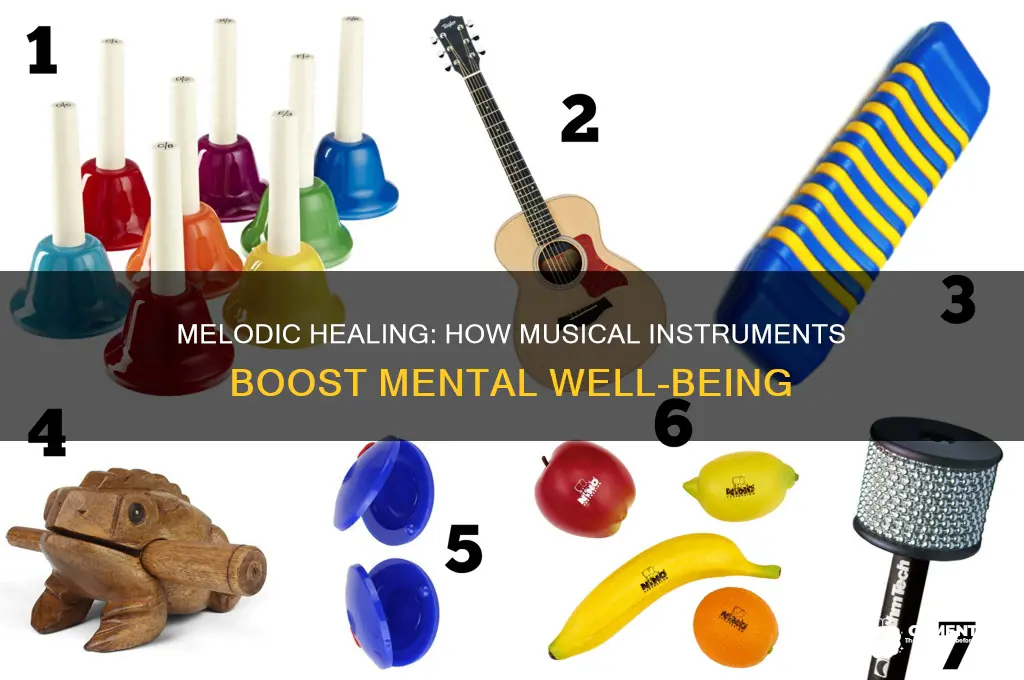
Music instruments can play a significant role in promoting mental health and well-being by providing an outlet for self-expression, stress relief, and emotional regulation. Engaging with instruments, whether through playing, composing, or listening, has been shown to reduce symptoms of anxiety, depression, and PTSD, while also boosting mood, focus, and overall cognitive function. The rhythmic and melodic qualities of music can induce a meditative state, helping individuals to relax and unwind, while the sense of accomplishment and creativity that comes with mastering an instrument can foster a positive self-image and increased self-esteem. Furthermore, music therapy, which often incorporates instruments, has been widely recognized as an effective complementary treatment for various mental health conditions, highlighting the profound impact that musical engagement can have on our emotional and psychological well-being.
| Characteristics | Values |
|---|---|
| Stress Reduction | Playing instruments lowers cortisol levels, reduces anxiety, and promotes relaxation. |
| Emotional Expression | Music provides a safe outlet for expressing emotions, aiding in processing complex feelings. |
| Cognitive Stimulation | Learning and playing instruments enhances memory, attention, and problem-solving skills. |
| Mindfulness & Focus | Engaging with music fosters mindfulness, improving concentration and reducing mind-wandering. |
| Social Connection | Group music activities combat loneliness, build community, and enhance social skills. |
| Mood Enhancement | Music triggers dopamine release, boosting mood and reducing symptoms of depression. |
| Self-Esteem & Achievement | Mastering an instrument builds confidence and a sense of accomplishment. |
| Therapeutic Outlet | Music therapy is clinically proven to support mental health treatment for conditions like PTSD, anxiety, and depression. |
| Neuroplasticity | Playing instruments strengthens neural connections, supporting brain health and resilience. |
| Coping Mechanism | Music serves as a healthy distraction and coping tool during stressful situations. |
Explore related products


What You'll Learn
- Music Therapy Benefits: Reduces stress, anxiety, and depression through structured musical interventions
- Drumming for Mindfulness: Rhythmic drumming enhances focus, reduces tension, and promotes relaxation
- Playing Piano: Improves mood, cognitive function, and emotional expression through creative engagement
- Guitar as Therapy: Strumming reduces cortisol, fosters calmness, and boosts self-esteem
- Singing for Wellness: Releases endorphins, lowers stress, and strengthens emotional resilience

Music Therapy Benefits: Reduces stress, anxiety, and depression through structured musical interventions
Music therapy, a clinical intervention rooted in neuroscience and psychology, leverages structured musical activities to address mental health challenges. Unlike casual listening, it involves active engagement—playing instruments, improvising, or composing—guided by a trained therapist. Research shows that such interventions can lower cortisol levels, the body’s primary stress hormone, by up to 25% after just 20 minutes of structured music-making. This physiological response underscores why music therapy is increasingly prescribed for stress reduction, particularly in high-pressure environments like hospitals and corporate settings.
Consider the case of rhythmic entrainment, a technique where patients synchronize their breathing or heartbeat with a steady musical pulse. This practice, often facilitated by percussion instruments like drums or handpans, activates the parasympathetic nervous system, promoting relaxation. For individuals with anxiety disorders, therapists might recommend 30-minute sessions, three times a week, to establish a routine that counteracts hyperarousal. The key lies in consistency: irregular practice yields minimal results, while structured engagement fosters measurable improvements in emotional regulation.
Depression, marked by anhedonia (inability to feel pleasure), often responds to music therapy’s focus on creative expression. Playing instruments like the piano or guitar allows individuals to externalize emotions, bypassing the need for verbal communication. A study published in *The Arts in Psychotherapy* found that participants who engaged in improvisational music sessions reported a 34% reduction in depressive symptoms after eight weeks. For adolescents, group sessions incorporating peer collaboration can be particularly effective, as they combine social interaction with artistic expression.
However, success hinges on tailoring interventions to individual needs. For instance, someone with performance anxiety might benefit from private sessions focused on self-expression, while a person with social withdrawal could thrive in group settings. Therapists often start with assessment sessions to determine the right instruments and activities—whether strumming a ukulele, singing, or even experimenting with electronic music production. The goal is not mastery but emotional release and connection.
Practical implementation requires accessibility. Community centers and schools increasingly offer music therapy programs, often at low cost or sliding-scale fees. For at-home practice, apps like *Thync* or *Calm* provide guided rhythmic exercises, though they cannot replace professional therapy. Ultimately, music therapy’s power lies in its ability to transform passive listeners into active creators, turning sound into a tool for healing.
Do Therapists Truly Help? Exploring Mental Health Therapy's Impact and Benefits
You may want to see also
Explore related products




Drumming for Mindfulness: Rhythmic drumming enhances focus, reduces tension, and promotes relaxation
The steady beat of a drum has been a part of human culture for millennia, used in rituals, celebrations, and communication. But beyond its role in music, drumming has a profound impact on our mental well-being. Rhythmic drumming, in particular, offers a unique pathway to mindfulness, a state of active, open attention on the present.
Imagine your mind as a cluttered desk, papers scattered everywhere, thoughts vying for attention. Drumming acts as a metaphorical filing system, organizing the chaos. The repetitive rhythm provides a focal point, anchoring your attention to the present moment, silencing the mental chatter that often leads to stress and anxiety.
This isn't just poetic metaphor; it's backed by science. Studies have shown that drumming can synchronize brainwaves, promoting a state of relaxed focus similar to meditation. The physical act of striking the drum engages both hemispheres of the brain, fostering a sense of balance and coordination. Furthermore, the deep, resonant sound vibrations can stimulate the release of endorphins, our body's natural "feel-good" chemicals, leading to a sense of calm and well-being.
For those seeking a practical way to incorporate drumming into their mindfulness practice, here's a simple guide:
Getting Started:
- Choose Your Drum: Hand drums like djembes or frame drums are excellent choices for beginners due to their portability and ease of use.
- Find Your Rhythm: Start with a simple, steady beat, focusing on the sensation of the drumstick hitting the drumhead. Don't worry about complexity; the goal is consistency.
- Breathe and Focus: As you drum, synchronize your breathing with the rhythm. Inhale deeply as you raise the drumstick, exhale fully as you strike the drum.
- Let Go: Allow yourself to get lost in the rhythm. Don't judge your performance, simply observe the sensations and the flow of the music.
Dosage: Even short drumming sessions of 10-15 minutes can be beneficial. Aim for consistency, incorporating drumming into your daily routine for optimal results.
Cautions: While generally safe, drumming can be physically demanding. Start slowly and listen to your body. If you experience any discomfort, adjust your technique or take a break.
Fasting's Surprising Impact: Boosting Mental Clarity and Emotional Well-being
You may want to see also
Explore related products


Playing Piano: Improves mood, cognitive function, and emotional expression through creative engagement
The simple act of sitting down at a piano and playing a few notes can have a profound impact on your mental well-being. Research suggests that playing the piano regularly, even for just 30 minutes a day, can significantly improve mood and reduce symptoms of anxiety and depression. This is partly due to the release of endorphins, the body's natural "feel-good" chemicals, which are triggered by the rhythmic and melodic nature of piano playing. For those struggling with stress, the structured yet creative process of learning and playing music provides a healthy outlet, allowing the mind to focus on something positive and engaging.
From a cognitive perspective, playing the piano is akin to a full-brain workout. It enhances hand-eye coordination, fine motor skills, and spatial-temporal abilities. Studies have shown that pianists often exhibit improved memory, attention span, and problem-solving skills. For children, early piano training can foster better academic performance, particularly in math and language arts. Adults, too, can benefit from the cognitive boost, as playing the piano helps maintain neural plasticity and can even delay age-related cognitive decline. Incorporating piano practice into your routine, even if it’s just 15–20 minutes daily, can yield noticeable cognitive benefits over time.
Emotionally, the piano serves as a powerful tool for self-expression. Unlike verbal communication, music allows individuals to convey complex emotions without words. Whether you’re playing a joyful sonata or a melancholic ballad, the piano becomes a medium for processing and releasing feelings. This emotional outlet is particularly beneficial for individuals who find it difficult to articulate their emotions verbally. For instance, a teenager dealing with peer pressure might find solace in improvising on the keys, while an adult coping with grief could use music as a therapeutic release. The key is to encourage spontaneous, unjudged expression, allowing the music to flow freely.
To maximize the mental health benefits of playing the piano, consider these practical tips: start with simple pieces that match your skill level to avoid frustration, set a consistent practice schedule to build discipline, and don’t be afraid to experiment with improvisation. For beginners, apps like Simply Piano or Flowkey can provide structured lessons, while more advanced players might explore classical repertoires or modern compositions. Group lessons or joining a local piano club can also add a social element, combating feelings of isolation. Remember, the goal isn’t perfection but engagement—let the music be your guide to a healthier mind.
Supporting Student Mental Health: Strategies for Schools to Foster Well-being
You may want to see also
Explore related products


Guitar as Therapy: Strumming reduces cortisol, fosters calmness, and boosts self-esteem
The simple act of strumming a guitar can be a powerful tool for managing stress and improving mental well-being. Research suggests that playing music, particularly the guitar, can significantly reduce cortisol levels, the hormone associated with stress. A study published in the *Journal of Music Therapy* found that participants who engaged in guitar playing experienced a notable decrease in cortisol, with levels dropping by an average of 25% after just 30 minutes of playing. This physiological response highlights the immediate calming effect that guitar therapy can offer.
Imagine holding a guitar, fingers gently pressing the strings, and creating a melody. This sensory experience is not just artistically fulfilling but also therapeutic. The repetitive motion of strumming can induce a meditative state, allowing the mind to focus and quieten racing thoughts. For beginners, starting with simple chords and strumming patterns can be particularly effective. A 15-minute daily practice, focusing on slow, deliberate strumming, can serve as a form of mindfulness, fostering a sense of calm and presence. This practice is especially beneficial for individuals dealing with anxiety or those seeking a natural way to unwind after a stressful day.
One of the most compelling aspects of guitar therapy is its ability to boost self-esteem. Learning to play a new song or mastering a challenging chord progression provides a sense of accomplishment. This is particularly impactful for adolescents and young adults, who often face self-esteem challenges. A study conducted with teenagers showed that those who participated in guitar lessons over a 12-week period reported higher levels of self-confidence and a more positive self-image compared to a control group. The guitar becomes a tool for self-expression, allowing individuals to communicate emotions and experiences through music, which can be especially beneficial for those who find verbal expression difficult.
Incorporating guitar therapy into a mental health routine is accessible and adaptable. For optimal benefits, consider the following: start with short, consistent practice sessions, gradually increasing duration as skill improves. Focus on enjoying the process rather than perfection. For those with physical limitations, modified guitars or adaptive techniques can make playing accessible. Additionally, combining guitar playing with other therapeutic practices, such as deep breathing exercises, can enhance the overall calming effect. Whether used as a standalone activity or as part of a comprehensive therapy program, the guitar offers a unique and engaging way to support mental health.
Equine Therapy: How Horses Heal and Improve Mental Health
You may want to see also
Explore related products


Singing for Wellness: Releases endorphins, lowers stress, and strengthens emotional resilience
The human voice is an instrument of profound healing, capable of transforming emotional states through the simple act of singing. When you sing, your brain releases endorphins, often referred to as "feel-good" hormones, which act as natural painkillers and mood elevators. This biochemical response is not just anecdotal; studies show that group singing, in particular, can increase oxytocin levels, fostering a sense of connection and reducing feelings of loneliness. Whether you’re belting out a tune in the shower or joining a choir, the act of singing engages both mind and body, creating a holistic wellness experience.
To harness these benefits, consider incorporating singing into your daily routine. Start with just 10–15 minutes a day, focusing on songs that resonate emotionally or bring joy. For beginners, apps like *SingTrue* or *Vanido* offer vocal exercises and pitch training to build confidence. If you’re hesitant about your skill level, remember that the therapeutic effects of singing aren’t tied to perfection—they stem from the act itself. For added impact, combine singing with deep breathing techniques, as the diaphragmatic engagement required for sustained notes can further reduce stress and promote relaxation.
A comparative analysis of singing versus other stress-relief methods reveals its unique advantages. While activities like meditation or exercise are effective, singing combines cognitive, emotional, and physical engagement in a single practice. For instance, a 2017 study published in *Music and Medicine* found that choir members reported lower levels of cortisol (the stress hormone) after rehearsals compared to non-singing groups. Additionally, singing’s social aspect—whether in a choir, karaoke setting, or even a family sing-along—amplifies its emotional resilience-building properties by fostering a sense of belonging.
For those seeking a structured approach, consider the *Bonny Method of Guided Imagery and Music*, a therapeutic technique that pairs singing with visualization to address emotional trauma. Alternatively, explore *chanting* practices from traditions like Gregorian chants or Kirtan, which use repetitive melodies to induce a meditative state. These methods are particularly effective for individuals dealing with anxiety or grief, as they provide a safe outlet for emotional expression. Regardless of the style, consistency is key; aim for at least three singing sessions per week to experience lasting mental health benefits.
Incorporating singing into your wellness toolkit is accessible, cost-effective, and deeply rewarding. Whether you’re a seasoned vocalist or a shower superstar, the act of raising your voice in song can be a powerful antidote to stress, a catalyst for emotional release, and a pathway to greater resilience. Start small, stay consistent, and let the music within you become a source of healing.
Supporting Mental Health: Practical Ways to Aid Recovery and Resilience
You may want to see also
Frequently asked questions
Playing musical instruments can reduce stress, anxiety, and depression by releasing endorphins, promoting relaxation, and providing a creative outlet for emotional expression.
Learning an instrument enhances cognitive functions like memory, focus, and problem-solving, which can boost self-esteem and reduce symptoms of mental health conditions like ADHD or dementia.
Yes, listening to music can lower cortisol levels, improve mood, and evoke positive emotions, offering therapeutic effects for mental health.
While any instrument can be beneficial, rhythmic instruments like drums or calming ones like the piano or flute are often recommended for stress relief and emotional regulation.
Group playing fosters social connection, reduces feelings of isolation, and provides a sense of belonging, which are crucial for mental well-being.