Caleb Wright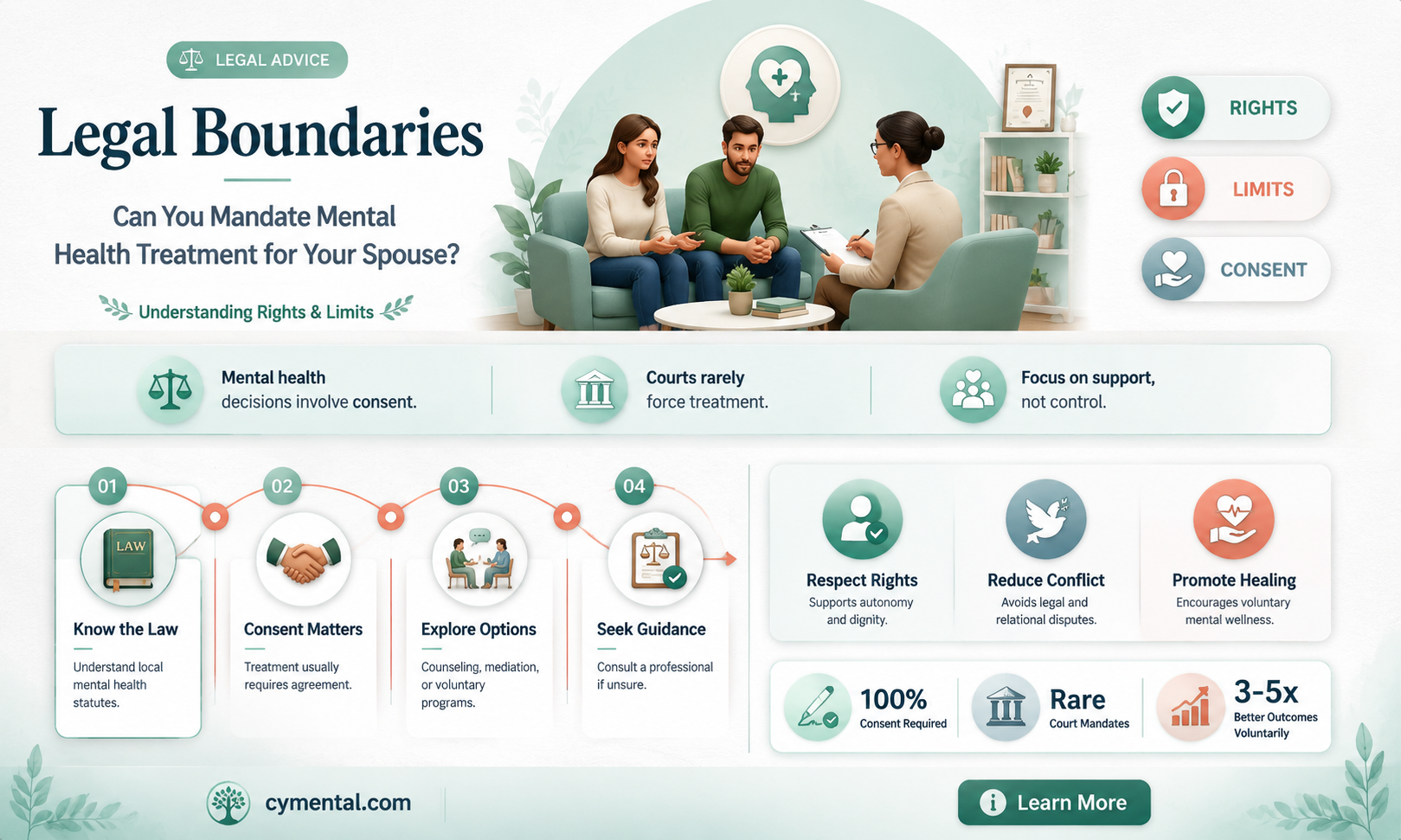
The question of whether you can legally compel your wife to seek mental health treatment is complex and varies significantly depending on jurisdiction. Generally, adults have the right to make their own healthcare decisions, including whether to pursue mental health care, unless they are deemed legally incompetent or pose an immediate danger to themselves or others. In some cases, concerned family members may petition the court for involuntary commitment or treatment, but this process is highly regulated and requires substantial evidence of risk. It’s crucial to approach such situations with empathy, prioritizing open communication and voluntary support while respecting legal and ethical boundaries. Consulting with legal and mental health professionals is essential to navigate this sensitive issue appropriately.
| Characteristics | Values |
|---|---|
| Legal Authority | In most jurisdictions, you cannot legally force your wife to seek mental health treatment against her will. Mental health treatment is generally voluntary, and individuals have the right to make decisions about their own care. |
| Involuntary Commitment | Involuntary commitment (also known as civil commitment) is a legal process where a person is court-ordered into treatment if they pose a danger to themselves or others due to a mental health condition. This requires evidence and a court order, not a spouse's request. |
| Emergency Situations | In emergencies where there is an immediate risk of harm, you can contact emergency services (e.g., 911 in the U.S.) for assistance. Professionals will assess the situation and determine if involuntary intervention is necessary. |
| Consent and Autonomy | Mental health treatment is based on the principle of informed consent. Your wife has the right to refuse treatment unless she is deemed legally incompetent or a danger to herself or others. |
| Supportive Role | As a spouse, your role is to offer support, encouragement, and resources for seeking help. You can suggest therapy, provide information about mental health services, and accompany her to appointments if she agrees. |
| Legal Guardianship | In rare cases, if your wife is deemed legally incompetent, a court may appoint a guardian to make decisions on her behalf. This is a complex legal process and not solely based on a spouse's request. |
| Cultural and Regional Variations | Laws and practices regarding mental health treatment vary by country and region. Always consult local laws and professionals for accurate information. |
| Ethical Considerations | Forcing someone into treatment can damage trust and relationships. Ethical approaches focus on empathy, communication, and voluntary engagement in care. |
| Professional Intervention | If you are concerned about your wife's mental health, consult a mental health professional or counselor who can provide guidance on how to approach the situation effectively. |
| Self-Care | Supporting a spouse with mental health issues can be challenging. Ensure you also seek support and care for yourself. |
Explore related products


What You'll Learn

Legal Rights and Consent
In most jurisdictions, the legal framework surrounding mental health treatment is designed to balance individual autonomy with public safety. This means that, generally, you cannot legally force your wife to seek mental health help without her consent, unless specific legal criteria are met. The principle of informed consent is paramount in healthcare, including mental health, and it requires that individuals have the capacity to understand the nature of their treatment and voluntarily agree to it. If your wife is an adult and capable of making her own decisions, she retains the right to refuse treatment, even if you believe it is in her best interest.
However, there are exceptions to this rule, typically involving situations where an individual poses a significant risk to themselves or others. For instance, in many countries, involuntary commitment or treatment can be legally enforced through a court order if a mental health professional assesses that the person is a danger to themselves or others due to their mental state. This process varies widely by region but often requires substantial evidence and is overseen by legal authorities to protect the individual’s rights. For example, in the United States, states like California have laws (e.g., the Lanterman-Petris-Short Act) that outline specific criteria for involuntary treatment, including the requirement of a grave disability or imminent danger.
If you are concerned about your wife’s mental health but she is unwilling to seek help, there are steps you can take within legal and ethical boundaries. First, encourage open communication and express your concerns in a supportive, non-confrontational manner. Offer to accompany her to an initial appointment with a mental health professional, as the presence of a trusted person can reduce anxiety. Additionally, familiarize yourself with local resources, such as crisis hotlines or community mental health services, which can provide guidance on how to approach the situation effectively. Remember, coercion can damage trust and worsen the relationship, so focus on fostering a collaborative environment.
It’s also crucial to understand the limits of your role. While you can advocate for your wife’s well-being, you cannot take the place of a trained professional in diagnosing or treating mental health conditions. If you suspect a crisis, such as suicidal ideation or severe self-harm, contact emergency services immediately. In such cases, temporary involuntary holds (e.g., 72-hour psychiatric evaluations) may be implemented to ensure safety, but these are strictly regulated and time-limited measures. Always prioritize de-escalation and empathy, as these approaches are more likely to encourage voluntary engagement with treatment.
Ultimately, the intersection of legal rights and consent in mental health care underscores the importance of respecting individual autonomy while addressing urgent needs. While you cannot legally force your wife to seek help, you can play a vital role in creating a supportive environment that encourages her to take steps toward recovery. Understanding the legal framework, leveraging available resources, and approaching the situation with compassion can make a significant difference in navigating this challenging issue.
Deleting Social Media: A Path to Improved Mental Well-being?
You may want to see also
Explore related products


Involuntary Commitment Laws
To initiate involuntary commitment, most jurisdictions require evidence of a severe mental health condition that impairs judgment or behavior, coupled with a demonstrable risk of harm. This often involves filing a petition with a court or alerting mental health authorities, who then assess the individual’s condition. For example, in New York, a family member can petition for an emergency psychiatric evaluation if they believe their loved one meets the criteria. However, the process is not swift; it typically involves multiple steps, including a hearing where a judge evaluates the evidence. Practical tip: Document specific incidents of concerning behavior, as this will strengthen your case during the legal process.
One of the most contentious aspects of involuntary commitment laws is the potential for misuse or overreach. Critics argue that these laws can infringe on personal freedoms, particularly when the criteria for commitment are vague or subjective. For instance, what constitutes a "danger to self or others" can vary significantly between cases, leaving room for interpretation. In contrast, proponents emphasize the necessity of such laws in preventing tragedies, such as self-harm or harm to others, when voluntary treatment is refused. A comparative analysis reveals that countries like Sweden and Norway have stricter safeguards, requiring multiple professional assessments before commitment, which may serve as a model for balancing rights and safety.
If you’re navigating this process, it’s essential to approach it with empathy and patience. Involuntary commitment should be a last resort, pursued only after exhausting voluntary treatment options. Engage with mental health professionals early to explore alternatives, such as outpatient therapy or medication management. Additionally, familiarize yourself with local resources, such as crisis hotlines or advocacy groups, which can provide guidance and support. Remember, the goal is not to control your wife but to ensure she receives the care she needs while respecting her dignity and rights.
Finally, the emotional toll of pursuing involuntary commitment cannot be overstated. It’s a decision that often involves conflicting feelings of love, fear, and frustration. Seek support for yourself through counseling or support groups, as this process can strain even the strongest relationships. While involuntary commitment laws exist to protect individuals and communities, their application requires careful consideration and a commitment to prioritizing the well-being of all involved. Practical takeaway: Approach this process as a collaborative effort with mental health professionals, not as an adversarial action against your wife.
Can Psychologists Accurately Diagnose Mental Illness? Expert Insights
You may want to see also
Explore related products





Spousal Influence Limits
In most jurisdictions, the legal authority to mandate mental health treatment for an adult, including a spouse, is highly restricted. The principle of autonomy in healthcare decision-making is paramount, meaning individuals generally have the right to accept or refuse treatment, even if it seems in their best interest. This legal framework is designed to protect personal freedoms and prevent coercion, but it can create complex challenges for concerned spouses. Understanding these boundaries is crucial for anyone seeking to support a partner struggling with mental health issues.
Consider the case of involuntary commitment, a legal process where a person is compelled to receive treatment against their will. This is typically reserved for situations where an individual poses an imminent danger to themselves or others, and even then, it requires substantial evidence and judicial approval. For spouses, this means that merely being concerned about a partner’s mental health is insufficient grounds to force treatment. Instead, the focus should shift to encouraging voluntary engagement through empathy, open communication, and collaboration with mental health professionals.
One practical strategy is to leverage the role of a supportive partner in facilitating access to care. For instance, spouses can research therapists, accompany their partner to appointments, or help manage logistical barriers like transportation or insurance. However, this assistance must be offered without pressure or manipulation. A persuasive approach might involve framing mental health care as a shared goal for the relationship’s well-being, emphasizing mutual support rather than unilateral control. For example, suggesting couples therapy can address relationship dynamics while also providing a safe space for individual concerns to surface.
It’s also essential to recognize the emotional toll of navigating these limits. Spouses may feel helpless or frustrated when their efforts to help are met with resistance. In such cases, seeking support for oneself—through individual therapy or support groups—can provide coping strategies and perspective. Additionally, understanding the legal and ethical boundaries reinforces the importance of respecting a partner’s autonomy, even when it feels counterintuitive. This balance between concern and respect is critical for maintaining trust and fostering a healthy relationship.
Finally, while legal intervention is rarely an option, there are exceptions in extreme cases. For example, if a spouse is actively suicidal or poses a clear threat, emergency services can be contacted to initiate a psychiatric evaluation. However, this should be a last resort, as it can strain the relationship and may not lead to long-term engagement with treatment. The takeaway is clear: spousal influence is most effective when it operates within the bounds of encouragement, support, and collaboration, rather than coercion. Navigating these limits requires patience, empathy, and a commitment to prioritizing both partners’ well-being.
Microdosing Acid: A Potential Ally in Mental Health Treatment?
You may want to see also
Explore related products




Mental Health Advocacy
In the United States, the legal framework surrounding mental health treatment is complex, particularly when it involves involuntary care. While it’s understandable to want to help a spouse struggling with mental health, the law prioritizes individual autonomy. In most cases, you cannot legally force your wife to seek mental health treatment unless she poses an imminent danger to herself or others, as determined by a qualified professional. This is governed by state-specific involuntary commitment laws, which require clear evidence of risk and a court order. Advocacy in this context means understanding these legal boundaries while exploring ethical, supportive alternatives.
Advocating for a loved one’s mental health begins with education. Familiarize yourself with the signs of severe mental health crises, such as suicidal ideation, self-harm, or psychotic episodes. If these occur, contact a crisis hotline (e.g., 988 in the U.S.) or local emergency services. They can assess the situation and, if necessary, initiate an involuntary psychiatric hold under the Baker Act (Florida) or similar laws in other states. However, this is a last resort and requires professional intervention, not unilateral action. Your role as an advocate is to facilitate access to resources, not to enforce treatment.
Persuasive communication is a cornerstone of mental health advocacy. Frame conversations about treatment in a non-confrontational, empathetic manner. Use "I" statements to express concern without assigning blame, such as, "I’m worried about you, and I’d like to help find support that works for you." Offer to accompany her to appointments or research therapists together. For milder cases, suggest starting with low-barrier options like teletherapy platforms (e.g., BetterHelp, Talkspace) or support groups (NAMI Family-to-Family). These approaches respect her agency while demonstrating your commitment to her well-being.
Comparing involuntary treatment to voluntary engagement highlights the importance of trust-building. Involuntary commitment often leads to strained relationships and long-term resistance to care. Conversely, voluntary treatment fosters collaboration and empowers the individual to take ownership of their recovery. As an advocate, focus on creating a safe, nonjudgmental environment where she feels heard. Share stories of others who’ve benefited from therapy or medication, but avoid ultimatums. The goal is to shift the narrative from coercion to partnership, emphasizing that seeking help is a sign of strength, not weakness.
Descriptive tools can aid in mental health advocacy, such as creating a "wellness plan" together. This document outlines early warning signs, coping strategies, and emergency contacts. Include practical steps like scheduling a therapy consultation or joining a local peer support group. For example, if she’s open to medication, research side effects and dosages (e.g., starting SSRIs at 10mg/day and titrating up under a psychiatrist’s guidance). Pair this with lifestyle adjustments like regular exercise, which studies show can reduce depression symptoms by 26% in adults aged 18–45. By presenting a holistic, actionable plan, you position yourself as an ally, not an enforcer.
Comic Books and Cartoons: Unlocking Mental Health Benefits Through Art
You may want to see also
Explore related products

$19.75 $21.95


$23.99


Ethical Considerations in Intervention
In the realm of mental health intervention, the line between support and coercion is perilously thin. While the desire to help a spouse struggling with mental health issues is understandable, legally compelling them to seek treatment raises profound ethical questions. The concept of autonomy—the right to make decisions about one’s own body and mind—clashes with the perceived duty to protect someone from harm. In most jurisdictions, adults cannot be forced into mental health treatment unless they pose an imminent danger to themselves or others, a standard known as the "danger to self or others" criterion. This legal framework underscores the ethical imperative to respect individual agency, even when it conflicts with a caregiver’s intentions.
Consider the case of involuntary commitment, a legal process that allows for forced treatment under specific conditions. While it may seem like a solution in extreme cases, it carries significant ethical risks. For instance, misjudging the severity of a situation or acting on incomplete information can lead to violations of trust and long-term relational damage. Moreover, involuntary treatment often fails to address the root causes of mental health issues, relying instead on temporary measures like medication or short-term hospitalization. A 2019 study published in *The Lancet Psychiatry* found that coerced treatment can exacerbate feelings of resentment and reduce the likelihood of long-term engagement with voluntary care. This highlights the importance of prioritizing ethical approaches that foster trust and collaboration over control.
A more ethical and effective strategy involves leveraging supportive interventions that encourage voluntary participation. For example, couples therapy can provide a neutral space for both partners to address concerns and explore solutions together. Additionally, educating oneself about mental health conditions and treatment options empowers caregivers to offer informed, non-judgmental support. Practical steps include identifying local mental health resources, such as crisis hotlines or community support groups, and framing conversations around shared goals rather than ultimatums. For instance, instead of demanding therapy, one might say, "I’ve found a counselor who specializes in anxiety—would you be open to meeting with them once to see if it feels helpful?"
However, even well-intentioned interventions can backfire if not executed thoughtfully. For example, using guilt or fear as motivators can deepen emotional distress and erode trust. It’s crucial to approach these conversations with empathy, acknowledging the spouse’s feelings and perspectives. A useful framework is the "LEAP" method: Listen actively, Express concern without judgment, Ask open-ended questions, and Propose collaborative solutions. This approach respects autonomy while demonstrating genuine care, increasing the likelihood of a positive outcome.
Ultimately, ethical intervention in mental health requires balancing compassion with respect for individual rights. While the legal system provides boundaries to prevent coercion, the ethical responsibility lies in fostering an environment where seeking help is a choice, not an obligation. By focusing on empathy, education, and collaboration, caregivers can navigate this complex terrain in a way that honors both their intentions and their spouse’s autonomy. The goal is not to control, but to empower—a distinction that makes all the difference in supporting mental health ethically and effectively.
Strategies to Foster Mental Resilience and Prevent Psychological Disorders
You may want to see also
Frequently asked questions
No, you cannot legally force your wife to seek mental health treatment unless she poses an immediate danger to herself or others, in which case involuntary commitment may be considered under specific legal procedures.
You can encourage her to seek help, offer support, and involve a trusted friend, family member, or mental health professional to intervene. However, ultimately, the decision to seek treatment is hers unless there is a legal basis for intervention.
Legal options for mandating treatment are extremely limited and typically require evidence of severe risk to self or others. Consult a lawyer or mental health professional to understand the specific laws in your jurisdiction.
If there is an immediate risk of harm, you can contact emergency services or local authorities. Otherwise, focus on supportive measures and professional intervention rather than legal enforcement.