Noah Parker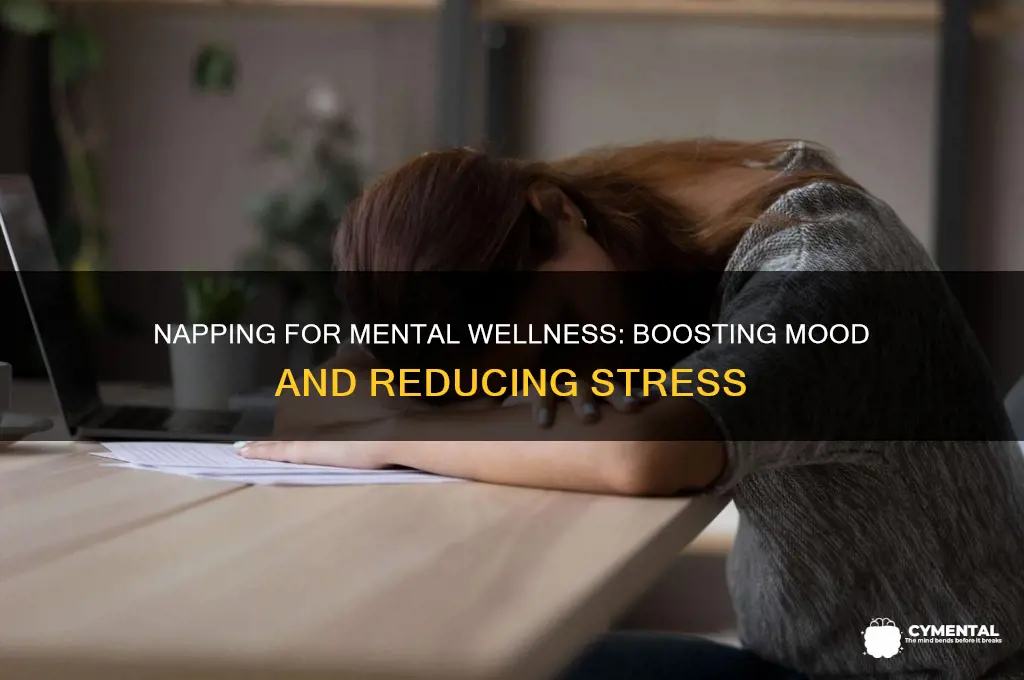
Napping, often dismissed as a luxury or sign of laziness, plays a significant role in supporting mental health by offering a quick and effective way to recharge both the mind and body. Short periods of rest, typically ranging from 10 to 30 minutes, have been shown to reduce stress, improve mood, and enhance cognitive functions such as memory and focus. By allowing the brain to consolidate information and clear out waste products, naps can alleviate symptoms of anxiety and depression, promoting emotional resilience. Additionally, they help regulate the body’s stress response by lowering cortisol levels, fostering a sense of calm and well-being. Incorporating strategic napping into daily routines can thus serve as a simple yet powerful tool for maintaining and improving mental health in our fast-paced world.
| Characteristics | Values |
|---|---|
| Stress Reduction | Naps lower cortisol levels, reducing stress and anxiety. |
| Improved Mood | Short naps (20–30 minutes) boost serotonin, enhancing mood and happiness. |
| Enhanced Memory Consolidation | Naps aid in transferring information from short-term to long-term memory. |
| Increased Alertness | Power naps (10–20 minutes) improve focus, attention, and cognitive function. |
| Emotional Regulation | Naps help regulate emotions by restoring amygdala function. |
| Reduced Symptoms of Depression | Regular napping can alleviate symptoms of mild depression. |
| Better Problem-Solving Skills | Naps enhance creativity and cognitive flexibility for problem-solving. |
| Lower Risk of Mental Fatigue | Naps prevent mental exhaustion and burnout by restoring brain energy. |
| Improved Sleep Quality | Short naps complement nighttime sleep, reducing sleep deprivation effects. |
| Boosted Resilience | Naps improve mental resilience by reducing the impact of daily stressors. |
Explore related products


What You'll Learn
- Reduced Stress: Naps lower cortisol levels, promoting relaxation and reducing anxiety symptoms effectively
- Improved Mood: Short naps boost serotonin, enhancing mood and emotional resilience quickly
- Enhanced Focus: Restorative naps sharpen concentration and cognitive clarity for better mental performance
- Memory Boost: Napping strengthens memory consolidation, aiding learning and information retention
- Emotional Regulation: Adequate rest from naps helps stabilize emotions and reduce irritability

Reduced Stress: Naps lower cortisol levels, promoting relaxation and reducing anxiety symptoms effectively
Cortisol, often dubbed the "stress hormone," spikes in response to pressure, whether from a looming deadline or a heated argument. Chronically elevated cortisol levels contribute to anxiety, insomnia, and even weakened immunity. Naps, however, act as a natural antidote. Research shows that a 20- to 30-minute midday nap can significantly reduce cortisol levels, effectively interrupting the body’s stress response cycle. This brief period of rest allows the adrenal glands to recover, fostering a sense of calm that extends beyond the nap itself.
To harness this benefit, timing is key. Aim for a nap between 1 p.m. and 3 p.m., when natural energy levels dip. Keep the duration under 30 minutes to avoid entering deep sleep, which can lead to grogginess. Create a conducive environment: dim the lights, use earplugs or white noise, and ensure your space is cool. For those with busy schedules, even a 10-minute "power nap" can lower cortisol and provide a mental reset. Consistency matters—incorporate naps into your routine 3–4 times a week for optimal stress reduction.
Comparing napping to other stress-relief methods highlights its efficiency. While meditation or exercise require dedicated time and effort, a nap integrates seamlessly into a workday or afternoon lull. Unlike caffeine, which can exacerbate anxiety by increasing cortisol, napping offers a sustainable solution. For individuals prone to stress-induced insomnia, a short nap earlier in the day can improve nighttime sleep quality without disrupting the circadian rhythm.
A cautionary note: napping isn’t a one-size-fits-all remedy. People with sleep disorders like insomnia or sleep apnea may find naps counterproductive, as they can interfere with nighttime rest. Additionally, napping too late in the day or for too long can disrupt evening sleep, negating its stress-reducing benefits. Monitor how your body responds, and adjust the duration and timing accordingly. For older adults, shorter naps (15–20 minutes) are often more effective, as sleep patterns change with age.
In conclusion, naps are a powerful tool for managing stress by lowering cortisol levels and promoting relaxation. By understanding the science behind this practice and tailoring it to individual needs, anyone can incorporate napping into their routine to combat anxiety effectively. Start small, stay consistent, and let the restorative power of a short rest transform your mental health.
Faith and Wellness: Exploring Religion's Role in Mental Health Support
You may want to see also
Explore related products


Improved Mood: Short naps boost serotonin, enhancing mood and emotional resilience quickly
A 10- to 20-minute nap can act as a natural mood enhancer, rivaling the effects of some quick-fix strategies like sugary snacks or caffeine. This isn’t mere folklore—research shows that short naps stimulate serotonin production, a neurotransmitter critical for mood regulation and emotional stability. Unlike longer sleep sessions, which can dip into deeper sleep stages, these brief rests stay in the lighter stages, optimizing serotonin release without leaving you groggy. Think of it as a mental reset button, one that’s backed by biology.
To harness this benefit, timing is key. Aim for a nap between 1:00 PM and 3:00 PM, aligning with your body’s natural circadian dip. Set an alarm to ensure you don’t exceed 20 minutes, as longer naps can disrupt nighttime sleep and negate the mood-boosting effects. Create a restful environment—dim the lights, use earplugs, and keep the room cool. If you’re new to napping, start with 10 minutes and gradually increase until you find your sweet spot. Consistency matters; incorporating this practice 3–4 times a week can yield noticeable improvements in mood and emotional resilience.
Compare this to other mood-enhancing strategies: while exercise takes time and meditation requires focus, napping is accessible and immediate. It’s particularly beneficial for individuals aged 18–65, whose serotonin levels naturally fluctuate throughout the day. For shift workers or those with irregular schedules, a short nap can counteract the emotional toll of sleep disruption. However, caution is warranted for those with insomnia or anxiety, as napping too late in the day can exacerbate these conditions.
The science is clear: short naps aren’t just for toddlers or the elderly. They’re a practical tool for anyone seeking to stabilize their mood and build emotional resilience. By understanding the serotonin boost they provide, you can strategically incorporate them into your routine. Start small, stay consistent, and let the biology work in your favor. Your mood—and those around you—will thank you.
Chiropractic Care and Mental Health: Exploring the Mind-Body Connection
You may want to see also
Explore related products




Enhanced Focus: Restorative naps sharpen concentration and cognitive clarity for better mental performance
Naps aren’t just for toddlers or the sleep-deprived; they’re a strategic tool for sharpening focus and mental clarity. Research shows that a 20-minute restorative nap—often called a "power nap"—can significantly improve attention span and cognitive performance. This brief period of sleep allows the brain to clear out accumulated adenosine, a chemical that builds up during wakefulness and contributes to mental fatigue. By resetting this chemical balance, naps act as a mental refresh button, enhancing your ability to concentrate on tasks without feeling mentally drained.
Consider the practical application: if you’re facing a demanding project or study session, a short nap can be more effective than chugging another cup of coffee. Studies, including those from the *Journal of Sleep Research*, demonstrate that participants who napped for 15–20 minutes performed better on cognitive tests than those who stayed awake. The key is timing—napping too long (over 30 minutes) can lead to sleep inertia, a groggy state that temporarily impairs focus. For optimal results, set an alarm and create a quiet, comfortable environment to ensure the nap is restorative, not disruptive.
Comparing naps to other focus-enhancing methods reveals their unique advantage. While caffeine provides a temporary energy spike, it often leads to jitters and crashes. Meditation, though beneficial, requires practice and time. Naps, however, offer immediate cognitive benefits with minimal effort. They’re particularly useful for adults aged 18–65, whose circadian rhythms naturally dip in the afternoon—a prime time for a quick recharge. Incorporating a daily or as-needed nap into your routine can become a sustainable habit for maintaining mental sharpness.
To maximize the focus-boosting effects of naps, follow these steps: first, identify your optimal nap duration (10–20 minutes for most people). Second, nap early in the afternoon to avoid interfering with nighttime sleep. Third, create a conducive environment—dim the lights, use earplugs, and lie down if possible. Finally, use naps strategically, such as before a meeting, exam, or creative task, to ensure you’re operating at peak mental capacity. By treating naps as a deliberate practice, you can harness their power to enhance focus and cognitive clarity in your daily life.
Unlocking Mental Wellness: The Transformative Power of Psychedelics
You may want to see also
Explore related products



Memory Boost: Napping strengthens memory consolidation, aiding learning and information retention
Napping isn’t just a midday luxury—it’s a scientifically backed tool for enhancing memory. Research shows that a 60- to 90-minute nap can significantly improve memory consolidation, the process by which short-term memories are transformed into long-term ones. This is particularly beneficial for students, professionals, or anyone looking to retain information more effectively. During deep sleep stages, the brain reactivates and strengthens neural connections, making it easier to recall details later. For optimal results, aim for a nap between 1 and 4 PM, when your body’s natural circadian rhythm dips, to avoid disrupting nighttime sleep.
Consider this scenario: You’ve spent hours studying for an exam or preparing a presentation. Instead of pushing through fatigue, take a strategic nap. Studies, such as those conducted at the University of California, Berkeley, demonstrate that nappers outperform non-nappers in memory recall tasks by up to 20%. The key lies in the hippocampus, a brain region critical for memory, which transfers information to the prefrontal cortex during sleep. Without this transfer, the hippocampus can become overwhelmed, leading to forgetfulness. A well-timed nap acts as a reset button, ensuring your brain processes and stores information efficiently.
To maximize the memory-boosting benefits of napping, follow these practical steps. First, create a conducive environment: dim the lights, use earplugs, and keep the room cool (around 65°F). Second, limit your nap to 90 minutes to avoid entering a full sleep cycle, which can leave you groggy. Third, pair napping with active learning. For instance, review material before your nap to prime your brain for consolidation. Finally, be consistent. Regular napping trains your brain to optimize memory processes, much like how exercise strengthens muscles.
While napping is powerful, it’s not a one-size-fits-all solution. Children and older adults, for example, naturally require more sleep and may benefit from longer naps. However, younger adults should stick to 20–30 minutes for a quick energy boost without interfering with nighttime sleep. Caution: Avoid napping too late in the day, as it can disrupt your circadian rhythm and lead to insomnia. If you struggle with falling asleep, try relaxation techniques like deep breathing or meditation before your nap.
Incorporating naps into your routine is a simple yet effective way to enhance memory and overall cognitive function. Think of it as a mental tune-up—a brief investment of time that yields long-term gains. Whether you’re preparing for a big test, mastering a new skill, or simply aiming to stay sharp, napping can be your secret weapon. Start small, experiment with timing, and observe how this natural practice transforms your ability to learn and retain information. Your brain will thank you.
Running for Mental Health: How Lacing Up Boosts Your Mind
You may want to see also
Explore related products



Emotional Regulation: Adequate rest from naps helps stabilize emotions and reduce irritability
Emotional volatility often stems from sleep deprivation, which disrupts the brain’s ability to regulate stress responses. Even a 20-minute nap can restore the prefrontal cortex’s function, the region responsible for impulse control and emotional stability. Studies show that individuals who nap regularly exhibit lower levels of cortisol, the stress hormone, compared to those who skip midday rest. This biological reset helps prevent overreactions to minor stressors, making naps a practical tool for maintaining emotional equilibrium.
To harness naps for emotional regulation, consider timing and duration. A 10- to 30-minute power nap is ideal for most adults, as it improves mood without causing grogginess. Avoid napping after 3 p.m. to prevent nighttime sleep disruption. For shift workers or those with irregular schedules, a 90-minute nap, which includes a full sleep cycle, can provide deeper emotional and cognitive restoration. Pair napping with a consistent routine—dim lighting, white noise, or a comfortable temperature—to maximize benefits.
Compare the emotional states of two groups: one that incorporates naps into their routine and another that relies solely on nighttime sleep. The napping group consistently reports lower irritability and higher resilience to emotional triggers. For instance, a study of college students found that those who napped during exam periods experienced 30% less anxiety and frustration compared to their non-napping peers. This contrast highlights how naps act as a buffer against emotional exhaustion, particularly in high-stress environments.
For parents of young children, naps can be a lifeline for managing emotional strain. Toddlers and preschoolers benefit from 1-2 hours of daytime sleep, which improves their mood and behavior. Parents who sync their rest with their child’s nap schedule—even for 15 minutes—report feeling more patient and less overwhelmed. This shared downtime fosters a calmer household dynamic, proving that naps are a tool for emotional regulation across age groups.
Incorporating naps into your routine requires intentionality. Start by identifying your emotional triggers—do you feel irritable mid-afternoon? Schedule a nap during that window. Use alarms to avoid oversleeping, and prioritize consistency over duration. If you struggle to nap, begin with guided relaxation techniques or a short meditation to signal rest to your brain. Over time, this practice will train your body to use naps as a reset button for emotional stability.
Omega-3 Oil: A Potential Ally for Mental Health Disorders?
You may want to see also
Frequently asked questions
Naps help regulate stress hormones like cortisol, promoting relaxation and reducing anxiety. They also boost serotonin levels, which enhances mood and emotional well-being.
Yes, short naps (20–30 minutes) improve alertness, memory, and problem-solving skills by clearing mental fatigue and restoring brain function.
Naps support the amygdala, the brain’s emotional center, by reducing overactivity caused by sleep deprivation, leading to better emotional control and resilience.
Regular, short naps can alleviate symptoms of depression and anxiety by improving sleep quality, stabilizing mood, and reducing the mental strain caused by chronic sleep deficits.


![PureLife Supplements - Eden Daily Sleep [New GABA Free Formula] – Fall Asleep Faster, Relax Your Body, Promote Deep and Restful Sleep (30 Vegan Capsules)](https://m.media-amazon.com/images/I/61UNKA1Po6L._AC_UL320_.jpg)