Noah Parker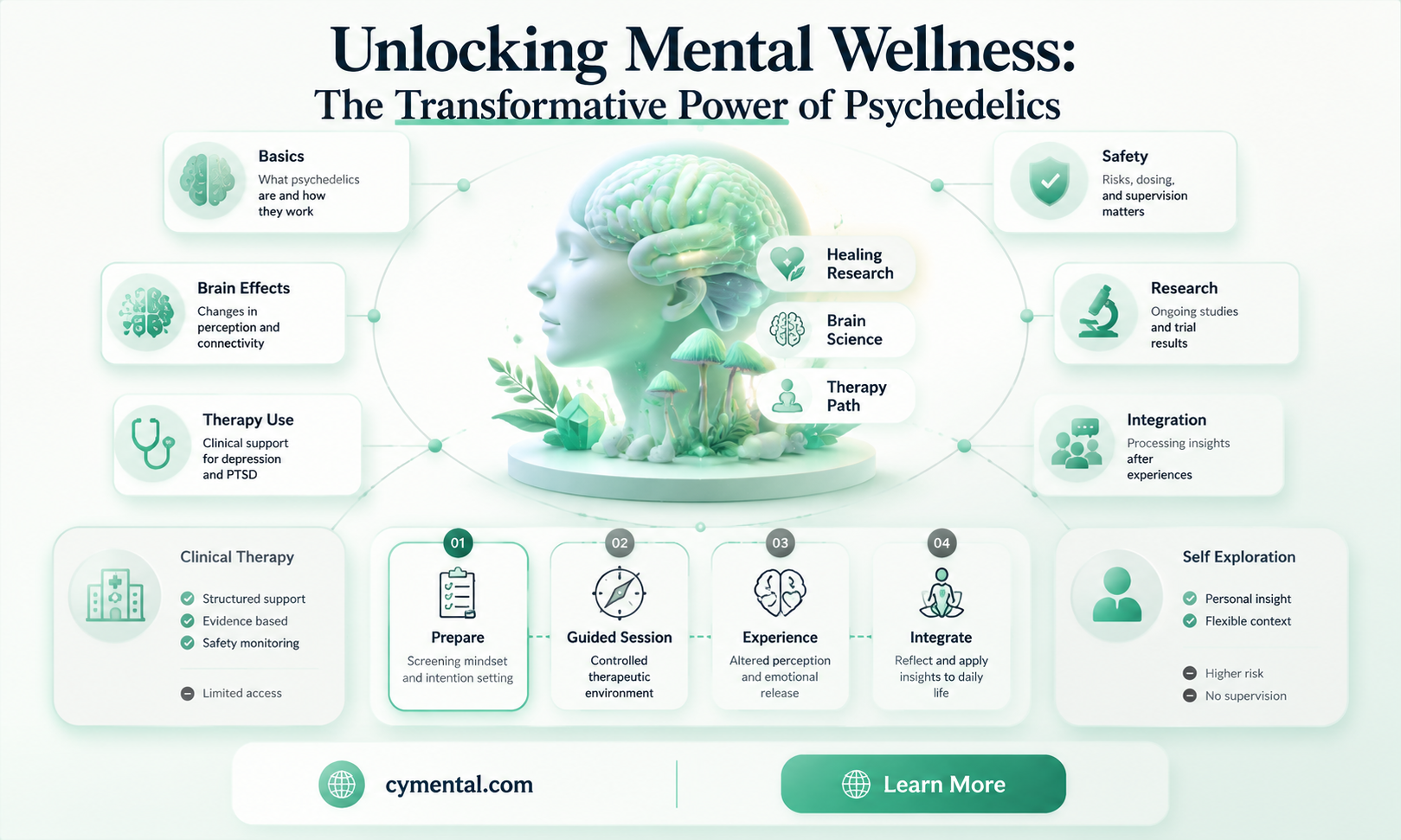
Psychedelics, once stigmatized and relegated to the fringes of society, are now emerging as a promising frontier in mental health treatment. Research has shown that substances like psilocybin, MDMA, and LSD can catalyze profound therapeutic breakthroughs, particularly for conditions such as depression, PTSD, anxiety, and addiction, where traditional treatments often fall short. By altering brain connectivity and fostering heightened emotional insight, psychedelics can help individuals confront and process deeply rooted traumas, break free from negative thought patterns, and experience a renewed sense of purpose and connection. When administered in controlled, therapeutic settings, these substances have demonstrated remarkable efficacy, offering hope for those who have struggled with treatment-resistant mental health issues. As scientific understanding grows and societal attitudes shift, psychedelics are poised to revolutionize the way we approach mental health care.
| Characteristics | Values |
|---|---|
| Treatment-Resistant Depression | Psychedelics like psilocybin and ketamine have shown rapid and sustained antidepressant effects in clinical trials, even in patients resistant to traditional antidepressants. |
| Anxiety and PTSD | MDMA-assisted therapy has demonstrated significant reductions in anxiety and PTSD symptoms, with long-lasting effects, particularly in trauma survivors. |
| Neuroplasticity | Psychedelics promote neuroplasticity, enhancing the brain's ability to form new neural connections, which may underlie their therapeutic effects on mental health disorders. |
| Mystical Experiences | Psychedelic experiences often induce mystical or transcendent states, which are correlated with long-term improvements in mental well-being, life satisfaction, and reduced anxiety and depression. |
| Addiction Treatment | Substances like psilocybin and ibogaine have shown promise in treating substance use disorders, including alcohol, tobacco, and opioid addiction, by disrupting addictive behaviors and cravings. |
| Enhanced Emotional Processing | Psychedelics facilitate deeper emotional processing, allowing individuals to confront and resolve traumatic memories or emotional blockages in a therapeutic setting. |
| Reduced Default Mode Network (DMN) Activity | Psychedelics decrease activity in the DMN, a brain network associated with self-referential thinking and rumination, which may alleviate symptoms of depression and anxiety. |
| Increased Mindfulness and Openness | Users often report increased mindfulness, openness, and a sense of interconnectedness, which can lead to improved mental health outcomes and better coping mechanisms. |
| Short-Duration, Long-Lasting Effects | Many psychedelic therapies involve a single or few doses, yet the therapeutic benefits can persist for months or even years, making them a potentially cost-effective treatment option. |
| Safety and Controlled Settings | When administered in controlled, therapeutic settings with proper preparation and integration, psychedelics have a favorable safety profile, with minimal risk of physical harm or dependence. |
| Regulatory and Clinical Advances | Recent regulatory changes (e.g., FDA breakthrough therapy designations for psilocybin and MDMA) and ongoing clinical trials are paving the way for psychedelics to become approved treatments for mental health disorders. |
Explore related products


What You'll Learn
- PTSD Treatment: Psychedelics may reduce trauma symptoms by enhancing emotional processing and memory reconsolidation
- Depression Relief: Studies show psychedelics can rapidly alleviate treatment-resistant depression by promoting neuroplasticity
- Anxiety Reduction: Psilocybin and MDMA have shown promise in reducing anxiety, especially in end-of-life patients
- Addiction Therapy: Psychedelics can disrupt addictive patterns by fostering introspection and behavioral change
- Mood Disorders: LSD and psilocybin may improve mood regulation by resetting brain circuits linked to emotions

PTSD Treatment: Psychedelics may reduce trauma symptoms by enhancing emotional processing and memory reconsolidation
Trauma lingers in the mind, often manifesting as PTSD, a condition characterized by intrusive memories, hyperarousal, and emotional numbness. Traditional treatments like therapy and medication offer relief for some, but many continue to struggle. Here, psychedelics emerge as a promising alternative, not as a panacea, but as a catalyst for profound change. Research suggests that substances like MDMA, psilocybin, and ketamine can facilitate emotional processing and memory reconsolidation, two critical mechanisms in reducing trauma symptoms.
Consider MDMA-assisted therapy, currently in Phase 3 clinical trials for PTSD. Under controlled conditions, a single dose of 75–125 mg, administered alongside psychotherapy, enables patients to revisit traumatic memories with reduced fear and heightened emotional clarity. This "window of tolerance" allows for the reprocessing of traumatic experiences, rewriting the emotional narrative attached to them. Studies show that 67% of participants no longer meet PTSD criteria after three sessions, a remarkable improvement over conventional treatments.
Memory reconsolidation is another key process. When a memory is recalled, it becomes labile, open to modification before re-storing. Psychedelics, by altering neuroplasticity and enhancing connectivity in brain regions like the amygdala and prefrontal cortex, facilitate this rewriting. For instance, ketamine, at subanesthetic doses (0.5 mg/kg intravenously), has been shown to rapidly reduce PTSD symptoms by promoting synaptic growth and disrupting rigid trauma-related neural pathways. However, its effects are often short-lived, necessitating repeated doses or integration with therapy for lasting change.
Practical implementation requires caution. Psychedelics are not standalone solutions; their efficacy hinges on set (mindset), setting (environment), and skilled therapeutic guidance. Patients must be screened for contraindications, such as personal or family history of psychosis, and prepared for the intensity of the experience. Integration sessions post-treatment are crucial to process insights and translate them into behavioral changes. For example, journaling, mindfulness practices, and support groups can help solidify gains.
While the potential of psychedelics in PTSD treatment is undeniable, challenges remain. Legal barriers, stigma, and the need for rigorous training for therapists limit accessibility. Yet, as evidence mounts, the paradigm is shifting. Psychedelics offer not just symptom management, but the possibility of profound healing by addressing the root of trauma. For those who have found little relief elsewhere, this could be a transformative lifeline.
Struggling to Afford Mental Health Care? You're Not Alone
You may want to see also
Explore related products




Depression Relief: Studies show psychedelics can rapidly alleviate treatment-resistant depression by promoting neuroplasticity
Treatment-resistant depression (TRD) affects millions, leaving many trapped in a cycle of despair despite conventional therapies. Recent studies reveal a groundbreaking possibility: psychedelics, when administered in controlled settings, can rapidly alleviate TRD symptoms by promoting neuroplasticity—the brain’s ability to reorganize itself. A single dose of psilocybin, the active compound in magic mushrooms, has shown profound effects, with some patients experiencing remission within weeks. This isn’t a fringe claim; it’s backed by rigorous clinical trials, including a 2021 study published in *JAMA Psychiatry* where 70% of participants showed significant improvement after two psilocybin sessions.
Neuroplasticity is the key mechanism at play. Psychedelics like psilocybin and ketamine appear to reset neural pathways, breaking the rigid thought patterns associated with depression. Ketamine, for instance, acts on glutamate receptors, fostering rapid synaptic growth, often within hours. Psilocybin, on the other hand, enhances connectivity in brain regions like the default mode network (DMN), which is overactive in depressed individuals. This "rewiring" effect isn’t just theoretical; brain scans show tangible changes post-treatment. For those who’ve exhausted SSRIs, therapy, and even electroconvulsive therapy, this represents a lifeline.
However, this isn’t a DIY solution. Dosage and setting are critical. Clinical trials typically use 20–30 mg of psilocybin in a controlled environment with psychological support. Ketamine infusions for depression are administered at sub-anesthetic doses (0.5 mg/kg) under medical supervision. Self-medication risks unpredictable outcomes, including psychological distress. Age matters too; most studies focus on adults 25–65, as younger brains are still developing, and older individuals may have comorbidities. Practical tips include preparing mentally through therapy beforehand and integrating the experience afterward with a trained guide.
The comparative speed of relief is staggering. Traditional antidepressants take weeks to months, while psychedelics often work within days. Yet, this isn’t a one-size-fits-all cure. Some patients relapse, and long-term efficacy is still under study. Critics argue the psychedelic experience itself, not neuroplasticity, drives change, but emerging research suggests both are intertwined. For now, this approach offers hope where little existed before, challenging the status quo of mental health treatment.
In conclusion, psychedelics represent a paradigm shift in treating TRD, harnessing neuroplasticity to offer rapid, profound relief. While not without risks, their potential is undeniable. As research progresses, these substances could redefine how we approach depression, moving from symptom management to transformative healing. For those suffering, this isn’t just science—it’s a chance at reclaiming life.
Sleep's Healing Power: Repairing Emotional and Mental Health Naturally
You may want to see also
Explore related products

$12.99 $12.99


Anxiety Reduction: Psilocybin and MDMA have shown promise in reducing anxiety, especially in end-of-life patients
Psilocybin and MDMA are emerging as powerful tools in the fight against anxiety, particularly for those facing the unique psychological challenges of end-of-life care. Clinical trials have demonstrated that a single, carefully administered dose of psilocybin, the active compound in magic mushrooms, can significantly reduce anxiety and depression in patients with life-threatening illnesses. For instance, a 2016 study published in *JAMA Psychiatry* found that 80% of participants experienced immediate and sustained relief from anxiety and depression after receiving 0.3 mg/kg of psilocybin in a controlled, therapeutic setting. Similarly, MDMA, often associated with recreational use, has shown remarkable efficacy when used in conjunction with psychotherapy. In Phase 3 trials, 67% of participants with severe PTSD, a condition often accompanied by profound anxiety, no longer qualified for a PTSD diagnosis after three sessions with MDMA-assisted therapy.
The mechanism behind these effects lies in how these substances interact with the brain. Psilocybin acts on serotonin receptors, promoting neuroplasticity and allowing patients to confront and process existential fears in a supportive environment. MDMA, on the other hand, increases the release of neurotransmitters like serotonin, dopamine, and oxytocin, fostering feelings of trust and emotional openness. This biochemical shift enables patients to engage more deeply with therapeutic conversations, often uncovering and resolving long-standing sources of anxiety. For end-of-life patients, this can mean finding peace with mortality, mending relationships, and reducing the existential dread that often accompanies terminal diagnoses.
Implementing these treatments requires strict protocols to ensure safety and efficacy. Psilocybin sessions typically last 6–8 hours, with patients guided by trained therapists in a calm, comfortable setting. Dosage is critical: too little may be ineffective, while too much can lead to overwhelming experiences. MDMA-assisted therapy involves three 8-hour sessions, spaced 3–5 weeks apart, with preparatory and integrative therapy sessions before and after each. Patients are screened for contraindications, such as cardiovascular issues or a history of psychosis, and are closely monitored throughout the process. These therapies are not standalone cures but tools within a broader therapeutic framework, emphasizing the importance of psychological support before, during, and after treatment.
Critics often raise concerns about the potential risks of psychedelics, but when administered in controlled settings, adverse effects are rare and manageable. Common side effects include transient headaches, nausea, or emotional intensity, which typically resolve within hours. The real challenge lies in accessibility and regulation. Currently, these treatments are only available in clinical trials or in countries with progressive drug policies, leaving many patients without access. Advocacy groups and researchers are pushing for regulatory changes, such as the FDA’s Breakthrough Therapy designation for MDMA, which could expedite approval for widespread use. For end-of-life patients, time is of the essence, making these advancements not just medical breakthroughs but moral imperatives.
The transformative potential of psilocybin and MDMA for anxiety reduction is undeniable, offering a beacon of hope for those facing the emotional turmoil of terminal illness. While these treatments are not yet mainstream, their success in clinical trials underscores the need for continued research and policy reform. For patients and their families, the promise of finding peace in the face of mortality is priceless, making this a field worth watching—and advocating for—in the years to come.
Early Intervention: Key to Better Outcomes for Mental Health?
You may want to see also
Explore related products






Addiction Therapy: Psychedelics can disrupt addictive patterns by fostering introspection and behavioral change
Addiction often feels like an inescapable cycle, but emerging research suggests psychedelics might hold the key to breaking free. Substances like psilocybin (found in magic mushrooms) and LSD, when administered in controlled, therapeutic settings, have shown remarkable potential in disrupting addictive behaviors. A single high-dose session, typically ranging from 20 to 30 milligrams of psilocybin, can catalyze profound introspection, allowing individuals to confront the root causes of their addiction. This isn’t about recreational use; it’s a structured, guided process that leverages the brain’s heightened plasticity under the influence of these compounds to foster lasting change.
Consider the case of smoking cessation studies. In a 2014 trial, 80% of participants who received psilocybin-assisted therapy remained smoke-free six months later, compared to just 35% in the nicotine patch group. The mechanism? Psychedelics appear to reset default mode network activity in the brain, dissolving rigid thought patterns and enabling individuals to see their addiction from a new perspective. This isn’t a quick fix—it requires preparation, a safe environment, and integration therapy afterward to process the experience. For adults over 25, this approach may offer a transformative alternative to traditional methods, though it’s not suitable for those with a history of psychosis or severe mental health disorders.
Critics argue that psychedelics are risky, pointing to potential adverse reactions like anxiety or paranoia. However, these risks are minimized in clinical settings with trained therapists who ensure proper dosing (e.g., 10-20 micrograms of LSD for milder effects) and emotional support. The real caution lies in self-medication, which can lead to unpredictable outcomes. For those considering this path, start by researching reputable clinics or trials, such as those conducted by the Multidisciplinary Association for Psychedelic Studies (MAPS). Preparation is key: set clear intentions, cultivate trust with your therapist, and commit to post-session integration work to solidify behavioral changes.
The takeaway? Psychedelics aren’t a magic bullet, but they offer a unique tool for addiction therapy by unlocking the mind’s capacity for self-reflection and change. For individuals trapped in cycles of substance abuse, this approach could provide a rare opportunity to rewrite their narrative. As research expands, it’s crucial to balance optimism with rigor, ensuring these powerful substances are used ethically and effectively to heal rather than harm.
Mental Health Awareness: Empowering Lives, Breaking Stigma, and Fostering Well-being
You may want to see also
Explore related products


$12.97 $14.97


Mood Disorders: LSD and psilocybin may improve mood regulation by resetting brain circuits linked to emotions
Mood disorders, such as depression and anxiety, often stem from dysregulated brain circuits that control emotions. Emerging research suggests that psychedelics like LSD and psilocybin may act as a "reset button" for these circuits, offering a novel approach to treatment. Studies have shown that a single, carefully controlled dose of psilocybin (typically 20–30 mg/70 kg body weight) can lead to significant and lasting improvements in mood for individuals with treatment-resistant depression. Similarly, microdosing LSD (10–20 micrograms every few days) has been anecdotally reported to enhance emotional stability and reduce symptoms of anxiety, though clinical trials are still ongoing to validate these claims.
The mechanism behind this effect lies in the way psychedelics interact with the brain’s serotonin receptors, particularly the 5-HT2A receptor. This interaction promotes neuroplasticity, allowing the brain to rewire dysfunctional emotional pathways. Functional MRI studies have demonstrated that psilocybin reduces activity in the default mode network (DMN), a brain network overactive in depression, while increasing connectivity between previously isolated regions. This "reset" effect can lead to a more balanced emotional state, often described by patients as a profound shift in perspective and emotional resilience.
However, integrating psychedelics into mental health treatment is not without challenges. Dosage precision is critical; too little may yield no effect, while too much can lead to overwhelming experiences or anxiety. Patients must be carefully screened, as those with a history of psychosis or severe anxiety may be at risk of adverse reactions. Additionally, the therapeutic setting is paramount—sessions should be conducted in a controlled environment with trained professionals to ensure safety and maximize therapeutic benefit.
For those considering this approach, practical tips include maintaining a stable mindset before the session, setting clear intentions, and engaging in integration therapy afterward to process the experience. While psychedelics are not a panacea, their potential to recalibrate emotional circuits offers hope for individuals who have not found relief through traditional treatments. As research progresses, these substances may become a cornerstone of personalized mental health care, particularly for mood disorders resistant to conventional therapies.
Morning Walks: Boosting Mental Health and Daily Well-Being Naturally
You may want to see also
Frequently asked questions
Psychedelics, such as psilocybin, LSD, and MDMA, have shown potential in treating mental health conditions like depression, anxiety, PTSD, and addiction by promoting neuroplasticity, enhancing emotional processing, and fostering profound therapeutic insights when used in controlled, clinical settings.
When administered in a supervised, therapeutic environment by trained professionals, psychedelics have been shown to be relatively safe. However, they are not suitable for everyone, particularly those with certain mental health conditions like schizophrenia or severe bipolar disorder, and should never be used recreationally without medical oversight.
Psychedelics interact with serotonin receptors in the brain, altering neural pathways and promoting connectivity between brain regions. This can lead to reduced activity in the default mode network (DMN), which is often overactive in conditions like depression, and can facilitate emotional breakthroughs and new perspectives.
Research suggests psychedelics may be effective in treating treatment-resistant depression, PTSD, anxiety (especially in end-of-life patients), addiction (e.g., alcoholism, smoking), and OCD. Clinical trials are ongoing to explore their efficacy for these and other conditions.
Therapy is a critical component of psychedelic-assisted treatment. Sessions typically include preparation, the psychedelic experience itself, and integration afterward. The therapeutic environment helps patients process insights, address trauma, and apply newfound perspectives to their daily lives for lasting change.


![First Honey Wound Healing Ointment [ 1oz - 28.4g ] | 100% Active Leptospermum | Fast Relief & Skin Repair | Manuka Honey from New Zealand | Antibiotic Free Burn Care, Scar Gel, Dressing Aid](https://m.media-amazon.com/images/I/71UM74F73hL._AC_UL320_.jpg)