Lucas Bennett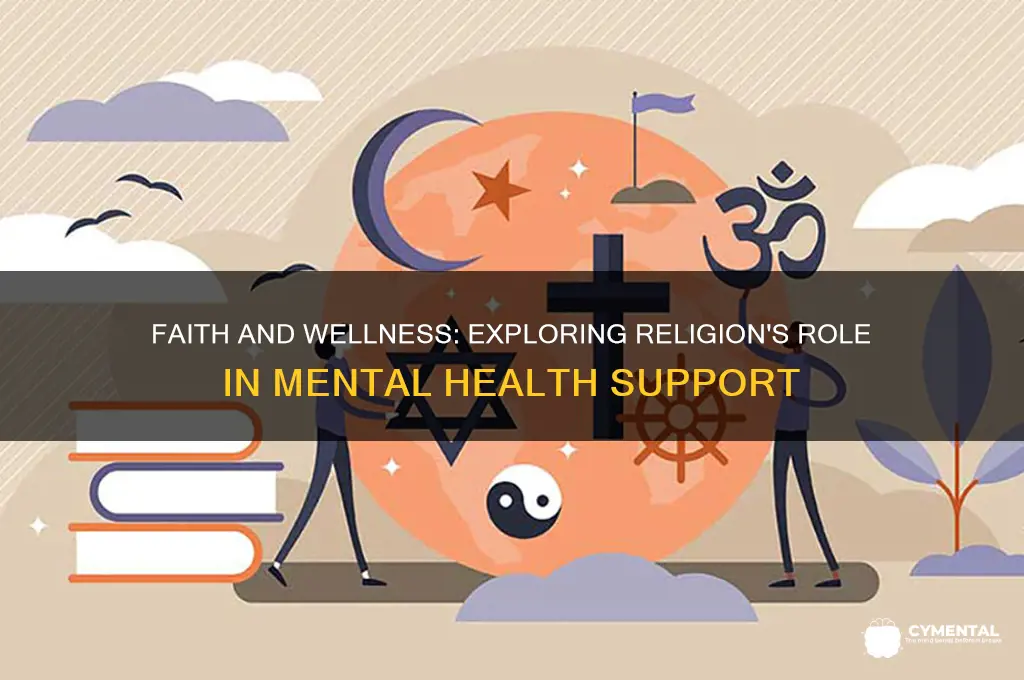
Religion can play a significant role in supporting mental health by providing individuals with a sense of purpose, community, and coping mechanisms. Many religious practices, such as prayer, meditation, and rituals, offer opportunities for reflection and stress reduction, which can alleviate symptoms of anxiety and depression. Additionally, faith communities often foster social connections and emotional support, reducing feelings of isolation. The belief in a higher power or divine plan can also provide comfort and resilience during challenging times, helping individuals navigate life’s uncertainties with greater hope and optimism. However, the impact of religion on mental health can vary, as some religious beliefs or practices may inadvertently cause stress or guilt if they conflict with personal values or experiences. Overall, when approached in a healthy and supportive manner, religion can be a valuable resource for mental well-being.
Explore related products




What You'll Learn
- Spiritual Practices Reduce Stress: Prayer, meditation, and rituals can lower anxiety and promote relaxation
- Community Support: Religious groups offer belonging, reducing loneliness and fostering emotional well-being
- Purpose and Meaning: Faith provides life direction, combating feelings of emptiness or hopelessness
- Coping Mechanisms: Religious beliefs help individuals navigate trauma and adversity with resilience
- Moral Guidance: Ethical frameworks from religion can reduce guilt and enhance self-esteem

Spiritual Practices Reduce Stress: Prayer, meditation, and rituals can lower anxiety and promote relaxation
Spiritual practices like prayer, meditation, and rituals have long been recognized as powerful tools for reducing stress and promoting mental well-being. Research shows that engaging in these activities can lower cortisol levels, the body's primary stress hormone, by activating the parasympathetic nervous system, which induces relaxation. For instance, a study published in the *Journal of Behavioral Medicine* found that individuals who practiced mindfulness meditation for just 10 minutes daily experienced a significant reduction in anxiety symptoms over four weeks. This suggests that even small, consistent doses of spiritual practice can yield measurable benefits.
Consider prayer, a practice common across many religions. Whether spoken aloud, written, or silently reflected upon, prayer provides a structured way to express emotions, seek guidance, and cultivate gratitude. For example, journaling prayers has been shown to help individuals process negative emotions and reframe stressors, acting as a form of emotional release. Similarly, repetitive prayer practices, such as the Rosary in Catholicism or the Japa Mala in Hinduism, combine mindfulness with ritual, offering a dual benefit of focus and relaxation. These practices are accessible to all age groups, from children learning bedtime prayers to older adults seeking solace in familiar traditions.
Meditation, often intertwined with religious traditions like Buddhism or Christianity, is another potent stress-reducer. Techniques such as focused attention (e.g., on the breath or a mantra) or loving-kindness meditation have been scientifically validated for their ability to decrease anxiety and improve mood. A practical tip for beginners is to start with guided meditations, which are widely available through apps like Calm or Headspace, and gradually transition to unguided practice. Even 5–10 minutes daily can create a noticeable shift in stress levels, making it an ideal habit for busy individuals.
Rituals, often overlooked in secular discussions of mental health, play a unique role in stress reduction by providing structure and predictability in an unpredictable world. Lighting a candle during evening reflection, participating in communal worship, or performing a daily gratitude ritual can anchor individuals in the present moment, fostering a sense of control and calm. For instance, the Jewish practice of lighting Shabbat candles on Friday evenings has been described by practitioners as a sacred pause that transitions them from the chaos of the week to a state of peace. Such rituals need not be time-consuming; even a 2-minute practice can create a profound sense of grounding.
Incorporating these spiritual practices into daily life requires intentionality but is well worth the effort. Start small—perhaps with a 5-minute morning prayer or a brief meditation before bed. Combine practices for added benefit, such as meditating on a prayerful intention or incorporating movement into ritual (e.g., yoga as a form of spiritual practice). Remember, the goal is not perfection but consistency. By weaving prayer, meditation, and rituals into your routine, you can harness their stress-reducing power to cultivate a calmer, more resilient mind.
Music Therapy: A Powerful Tool for Adult Mental Health Healing
You may want to see also
Explore related products


$37.95 $51.99


Community Support: Religious groups offer belonging, reducing loneliness and fostering emotional well-being
Human connection is a fundamental need, yet modern life often leaves individuals isolated. Religious communities provide a built-in social network, offering a sense of belonging that combats loneliness, a major risk factor for depression and anxiety.
Consider the structure of a typical church, mosque, or temple. Regular gatherings, shared rituals, and common beliefs create a framework for social interaction. Potluck dinners, volunteer opportunities, and study groups foster connections across generations, providing support systems for individuals facing life's challenges.
A study published in the *Journal of Religion and Health* found that regular attendance at religious services was associated with lower rates of depression, particularly among older adults. This highlights the power of community in mitigating the isolating effects of aging.
However, it's crucial to acknowledge that not all religious communities are equally welcoming or supportive. Toxic environments can exacerbate feelings of alienation and shame. It's essential to find a group that aligns with your values and fosters genuine connection, not judgment.
Helping Others: A Powerful Path to Improved Mental Well-Being
You may want to see also
Explore related products


Purpose and Meaning: Faith provides life direction, combating feelings of emptiness or hopelessness
Faith acts as a compass, offering individuals a sense of direction in a world that often feels chaotic and uncertain. For many, religious beliefs provide a framework for understanding life's purpose, which can be particularly grounding during times of crisis or existential doubt. Studies have shown that those who identify with a faith tradition are less likely to experience feelings of aimlessness. This is because religion often prescribes roles, responsibilities, and moral guidelines that give structure to daily life. For instance, a devout Muslim finds purpose in adhering to the Five Pillars, while a practicing Buddhist may seek meaning through the Eightfold Path. These structured practices not only provide routine but also instill a deeper sense of belonging to something greater than oneself.
Consider the concept of "calling" in Christianity, where believers are encouraged to discover and fulfill God’s purpose for their lives. This idea of a divine plan can be immensely comforting, transforming mundane tasks into acts of devotion. Similarly, in Hinduism, the concept of *dharma*—one’s duty or purpose—guides individuals through life’s stages, offering clarity and motivation. Such frameworks are not merely philosophical; they have practical implications for mental health. A study published in the *Journal of Religion and Health* found that individuals who reported a strong sense of religious purpose had lower rates of depression and anxiety. This suggests that faith-derived purpose acts as a protective factor against mental health challenges.
However, it’s crucial to approach this topic with nuance. While faith can provide purpose, it can also become a source of distress if rigidly applied or if individuals feel they are falling short of religious expectations. For example, a person struggling with doubt or unable to meet the demands of their faith may experience guilt or hopelessness. To mitigate this, mental health professionals often recommend integrating religious beliefs with flexible thinking. Encouraging individuals to view their faith as a source of inspiration rather than obligation can help maintain its positive impact. Practical tips include journaling about personal interpretations of religious teachings or engaging in faith-based community service, which reinforces purpose without overwhelming pressure.
Comparatively, secular approaches to finding purpose—such as career goals or personal achievements—often lack the enduring nature of faith-based meaning. While these pursuits can be fulfilling, they are frequently tied to external validation and can crumble in the face of failure or change. Faith, on the other hand, offers an internalized sense of purpose that transcends circumstances. For instance, a person who loses their job may still find meaning in their role as a parent or caregiver, guided by religious teachings on compassion and responsibility. This resilience is a key takeaway: faith provides a stable foundation for purpose, even when external sources of meaning falter.
Incorporating faith into mental health practices requires sensitivity and personalization. Therapists working with religious clients can explore how their beliefs shape their sense of purpose and encourage rituals that reinforce this connection. For example, a daily prayer or meditation focused on gratitude can amplify feelings of meaning. Similarly, faith communities can play a proactive role by offering programs that help members discover their unique contributions to the group. By aligning individual talents with communal needs, these initiatives foster a sense of purpose that benefits both mental health and spiritual growth. Ultimately, faith’s ability to provide direction is one of its most powerful tools in combating emptiness and hopelessness.
Mental Health Conditions: A Pathway to Medicaid Eligibility in Michigan?
You may want to see also
Explore related products


Coping Mechanisms: Religious beliefs help individuals navigate trauma and adversity with resilience
Religious beliefs often provide a framework for understanding and processing trauma, offering individuals a sense of meaning and purpose in the face of adversity. For instance, many faith traditions teach that suffering is not random but part of a divine plan, which can help individuals reframe their experiences as opportunities for growth or spiritual strengthening. This cognitive reframing is a well-documented psychological coping mechanism, and religion formalizes it through doctrines, narratives, and communal practices. For example, in Christianity, the story of Job’s endurance through immense suffering is often cited to help individuals navigate their own pain, while in Buddhism, the concept of *dukkha* (suffering) is seen as a universal truth that can be transcended through mindfulness and acceptance.
Consider the practical steps religious practices offer for coping with trauma. Prayer, meditation, and rituals provide structured ways to process emotions and seek solace. A study published in the *Journal of Religion and Health* found that individuals who engaged in daily prayer reported lower levels of anxiety and depression during stressful life events. Similarly, mindfulness practices rooted in religious traditions, such as Buddhist meditation or Islamic *dhikr*, have been shown to reduce symptoms of PTSD by fostering emotional regulation and grounding. For those experiencing trauma, incorporating these practices into a daily routine—even 10–15 minutes of prayer or meditation—can serve as a stabilizing anchor amidst chaos.
While the benefits are clear, it’s essential to acknowledge potential pitfalls. Over-reliance on religious coping can sometimes lead to spiritual struggles, particularly if individuals feel abandoned by their faith or blame themselves for their suffering. For example, a person might question their worthiness if they believe their trauma is a punishment from a higher power. To mitigate this, mental health professionals often recommend integrating religious practices with evidence-based therapies like Cognitive Behavioral Therapy (CBT). This dual approach ensures individuals can draw strength from their faith while addressing maladaptive thought patterns that may arise.
Finally, the communal aspect of religion cannot be overlooked. Faith communities provide social support networks that are critical for resilience. Whether through church groups, mosque gatherings, or temple activities, these communities offer a sense of belonging and shared purpose. For instance, a trauma survivor might find comfort in participating in a faith-based support group, where they can share their story without fear of judgment and receive encouragement rooted in shared beliefs. This combination of spiritual and social support creates a robust coping mechanism that extends beyond individual practices, fostering long-term resilience in the face of adversity.
Assessing Mental Illness Impairment: Essential Tools for Clinicians
You may want to see also
Explore related products


Moral Guidance: Ethical frameworks from religion can reduce guilt and enhance self-esteem
Religious teachings often provide clear moral guidelines, offering a sense of direction in navigating life's complexities. These ethical frameworks can be particularly beneficial for mental health by addressing the pervasive issue of guilt. Many religious traditions propose structured paths to atonement or redemption, allowing individuals to process and alleviate feelings of guilt associated with past actions. For instance, in Christianity, the sacrament of reconciliation provides a formal process for confessing sins and receiving absolution, which can significantly reduce psychological distress. Similarly, in Islam, the act of seeking forgiveness (taubah) is encouraged, emphasizing Allah's mercy and the possibility of spiritual renewal. Such practices not only offer emotional relief but also foster a sense of accountability and personal growth.
Consider the role of religious ethics in shaping self-perception. When individuals align their actions with a moral code they believe in, it can enhance self-esteem and self-worth. For example, Buddhist principles like the Eightfold Path encourage right action, speech, and livelihood, promoting a lifestyle that aligns with one's values. This alignment can lead to a more positive self-image, as individuals feel they are living authentically and contributing to a greater good. Research suggests that this sense of purpose and moral integrity is correlated with lower levels of anxiety and depression. A study published in the *Journal of Religion and Health* found that individuals who reported higher adherence to religious moral teachings exhibited greater psychological well-being, including higher self-esteem and reduced guilt.
To harness the benefits of religious moral guidance, one might start by exploring the ethical teachings of their faith or a faith they are interested in. This could involve reading sacred texts, attending religious classes, or engaging in discussions with spiritual leaders. For instance, a young adult struggling with guilt over past mistakes could benefit from studying the concept of teshuva (repentance) in Judaism, which emphasizes personal transformation and divine forgiveness. Practically, this might translate to a daily reflection practice where one examines their actions, identifies areas for improvement, and sets intentions for moral growth. Over time, this disciplined approach can lead to a more stable sense of self and reduced guilt.
However, it's crucial to approach religious moral frameworks with caution, as rigid or dogmatic interpretations can sometimes exacerbate mental health issues. For example, excessive guilt or self-condemnation can arise if individuals feel they consistently fall short of unattainable standards. To mitigate this, it’s essential to balance moral striving with self-compassion. Religious teachings often emphasize mercy and grace alongside justice, and incorporating these elements into one's practice can prevent feelings of inadequacy. For instance, a Christian might pair their understanding of sin with the assurance of God's unconditional love, as exemplified in Romans 8:1: "There is now no condemnation for those who are in Christ Jesus."
In conclusion, religious ethical frameworks offer a structured yet transformative approach to managing guilt and enhancing self-esteem. By providing clear moral guidelines, opportunities for atonement, and a sense of purpose, these frameworks can significantly contribute to mental well-being. However, their effectiveness depends on how they are interpreted and applied. A balanced approach that integrates self-compassion and flexibility ensures that religious moral guidance remains a source of strength rather than stress. Whether through formal rituals, personal reflection, or community engagement, leveraging these frameworks can lead to profound psychological benefits.
Supporting Mental Health: Practical Ways to Make a Positive Impact
You may want to see also
Frequently asked questions
Religion often provides a sense of purpose, community, and belonging, which can reduce feelings of loneliness and isolation. It offers coping mechanisms, such as prayer or meditation, that help manage stress and anxiety. Additionally, religious beliefs can foster hope and resilience, enabling individuals to find meaning in suffering.
Yes, practices like prayer, mindfulness, and participation in religious rituals can promote relaxation and emotional stability. Regular attendance at religious gatherings also strengthens social connections, which are vital for mental health. Studies suggest these practices may lower symptoms of depression and anxiety.
While religion often supports mental health, it can be harmful if it fosters guilt, shame, or exclusion. Strict or dogmatic beliefs may lead to anxiety or conflict, especially if they contradict personal values. The impact depends on how religion is practiced and interpreted, emphasizing the need for a balanced and compassionate approach.