Harper Lewis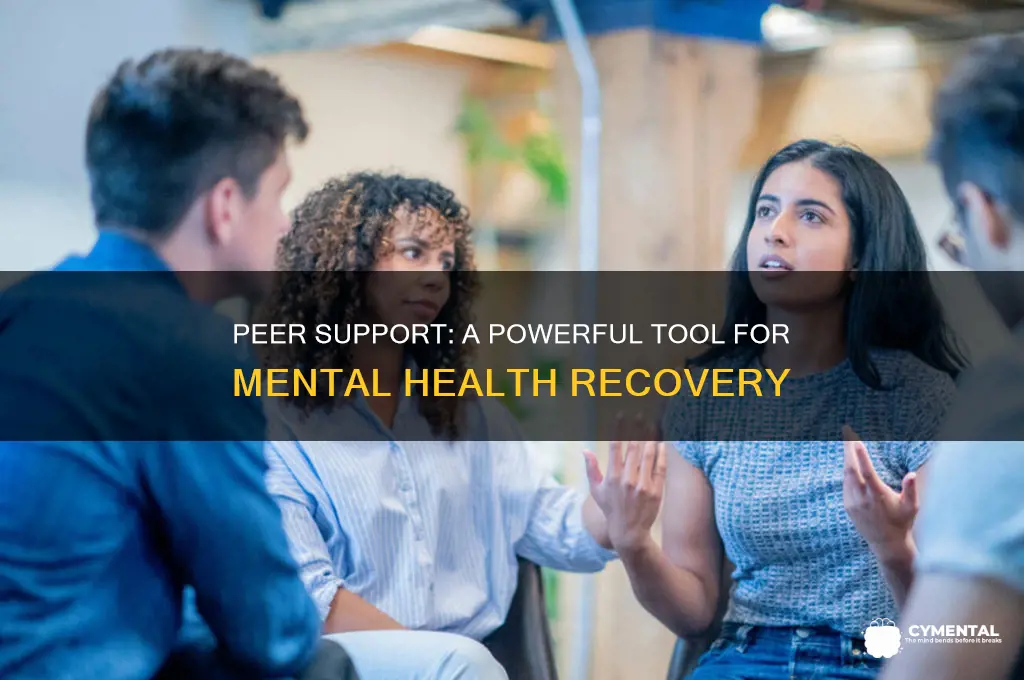
Peer support plays a crucial role in enhancing mental health by fostering a sense of belonging, understanding, and validation. When individuals connect with others who have experienced similar challenges, they gain empathy, shared insights, and practical coping strategies. This mutual exchange reduces feelings of isolation and stigma, empowering individuals to navigate their struggles more effectively. Peer support also provides a safe space for open dialogue, where individuals can express themselves without fear of judgment, while receiving encouragement and hope from those who have overcome similar obstacles. By building resilience and promoting self-efficacy, peer support complements professional mental health services, offering a holistic approach to healing and recovery.
| Characteristics | Values |
|---|---|
| Reduces Isolation | Peer support fosters a sense of belonging, reducing feelings of loneliness and isolation. |
| Provides Empathy and Understanding | Peers with lived experience offer unique empathy, as they understand challenges firsthand. |
| Encourages Hope and Recovery | Sharing success stories inspires hope and motivates individuals to pursue recovery. |
| Enhances Self-Efficacy | Peer support empowers individuals by building confidence in managing their mental health. |
| Improves Coping Skills | Peers share practical strategies and tools to navigate mental health challenges. |
| Promotes Social Connection | Regular interactions with peers strengthen social networks and support systems. |
| Reduces Stigma | Peer support normalizes mental health conversations, reducing societal stigma. |
| Increases Treatment Engagement | Individuals are more likely to adhere to treatment plans when supported by peers. |
| Offers Non-Judgmental Support | Peers provide a safe space for open and honest discussions without fear of judgment. |
| Cost-Effective | Peer support programs are often more affordable than traditional mental health services. |
| Cultural Relevance | Peers from similar backgrounds can offer culturally sensitive and relevant support. |
| Improves Quality of Life | Consistent peer support is linked to better overall mental and emotional well-being. |
| Facilitates Skill Development | Peers help individuals develop life skills, such as communication and problem-solving. |
| Encourages Mutual Support | Peer relationships are reciprocal, allowing both parties to benefit from the interaction. |
| Complements Professional Care | Peer support works alongside professional treatment for a holistic approach to mental health. |
Explore related products

$16.98 $30


What You'll Learn
- Shared Experiences: Relatable stories reduce isolation, fostering understanding and empathy among individuals facing similar mental health challenges
- Empowerment: Peer support builds confidence, encouraging self-advocacy and active participation in recovery journeys
- Non-Judgmental Space: Safe environments promote open dialogue, allowing for honest expression without fear of stigma
- Practical Strategies: Peers share coping mechanisms, offering actionable tools to manage symptoms and stressors effectively
- Hope and Motivation: Seeing others’ progress inspires belief in recovery, reinforcing resilience and determination

Shared Experiences: Relatable stories reduce isolation, fostering understanding and empathy among individuals facing similar mental health challenges
Sharing personal stories of mental health struggles can be a powerful antidote to the loneliness that often accompanies these challenges. When individuals hear narratives that mirror their own experiences, a profound sense of connection emerges. For instance, a young adult battling anxiety might find solace in a peer’s account of overcoming panic attacks through mindfulness techniques. This relatability dismantles the illusion of being alone, replacing it with a collective "me too" that validates their pain and resilience. Research shows that such shared experiences activate mirror neurons in the brain, fostering empathy and emotional resonance, which are critical for healing.
Consider the mechanics of this process: when someone shares a story of surviving depression, they inadvertently provide a roadmap for others. Practical details—like how often they practiced journaling, which therapy modalities worked, or how they navigated medication side effects—become actionable insights. For example, a peer might describe reducing isolation by joining a weekly support group, a strategy others can replicate. This exchange of lived wisdom is more accessible and less intimidating than clinical advice, making it easier for individuals to adopt and adapt these tools to their own journeys.
However, the power of shared experiences isn’t without caution. Not all stories are created equal, and some may inadvertently trigger distress if not framed thoughtfully. A narrative about suicidal ideation, for instance, should be shared with sensitivity, focusing on recovery rather than graphic details. Facilitators of peer support groups must ensure that storytelling remains constructive, balancing vulnerability with hope. A useful guideline is the "3Rs" framework: Relate (share the struggle), Reflect (highlight turning points), and Redirect (offer actionable takeaways).
The impact of relatable stories extends beyond individual relief; it builds community. In a study of peer-led mental health programs, participants reported feeling 40% more understood after hearing others’ experiences. This sense of belonging accelerates recovery by normalizing struggles and celebrating small victories. For teens, hearing a peer’s story of managing ADHD through structured routines can be more influential than parental advice. Similarly, older adults might find comfort in narratives about coping with grief, reducing the stigma around seeking help.
To harness this potential, create safe spaces for storytelling. Start small: encourage one-on-one conversations before group settings. Use prompts like, "What’s one strategy that helped you during a tough time?" or "How did you know you were making progress?" For digital platforms, moderate forums to ensure stories remain constructive. Remember, the goal isn’t to compare suffering but to illuminate paths forward. By weaving shared experiences into the fabric of support systems, we transform isolation into solidarity, one story at a time.
Can Psychologists Accurately Diagnose Mental Illness? Expert Insights
You may want to see also
Explore related products





Empowerment: Peer support builds confidence, encouraging self-advocacy and active participation in recovery journeys
Peer support is a catalyst for empowerment, transforming passive recipients of care into active architects of their recovery. When individuals with lived experience of mental health challenges connect, they share more than stories—they exchange tools, strategies, and a profound sense of "you are not alone." This connection fosters a belief in one’s ability to navigate adversity, a cornerstone of self-efficacy. Research shows that peer support participants report higher levels of confidence in managing symptoms and advocating for their needs within healthcare systems. For instance, a study published in *Psychiatric Services* found that individuals engaged in peer-led programs were 26% more likely to initiate conversations with providers about treatment adjustments.
Consider the mechanics of this empowerment. Peer support operates outside traditional hierarchies, creating a safe space where vulnerability is met with understanding, not judgment. Here, individuals practice self-advocacy in low-stakes environments, such as group discussions or one-on-one sessions, before applying these skills in clinical or community settings. For example, a peer mentor might role-play a conversation with a therapist, helping a mentee articulate their preferences for medication or therapy modalities. Over time, this practice translates into real-world confidence: a 2019 meta-analysis revealed that peer support participants were 35% more likely to request specific accommodations at work or school compared to those without such support.
However, empowerment through peer support is not automatic—it requires intentional design. Programs must prioritize reciprocity, ensuring that both parties benefit from the exchange. For instance, a peer supporter might share their experience with setting boundaries, while the recipient offers insights into mindfulness techniques they’ve found effective. This mutuality reinforces the idea that everyone has something valuable to contribute, regardless of where they are in their recovery journey. Practical tips for facilitators include structuring sessions to include equal speaking time, providing training on active listening, and encouraging participants to co-create goals rather than imposing them.
A cautionary note: empowerment can falter if peer support is seen as a substitute for professional care rather than a complement. While peers can offer emotional validation and practical advice, they are not clinicians. Programs should clearly define roles and boundaries, ensuring participants understand the limits of peer support. For example, a peer mentor should not diagnose or prescribe but can guide someone in preparing for a psychiatric appointment. Additionally, cultural sensitivity is critical. Empowerment looks different across communities; what works for a young adult in an urban setting may not resonate with an older individual in a rural area. Tailoring approaches to reflect these nuances ensures inclusivity and effectiveness.
Ultimately, the power of peer support lies in its ability to humanize recovery, proving that strength often emerges from shared vulnerability. By building confidence incrementally and fostering self-advocacy, peer support transforms the narrative from "I am broken" to "I am capable." For those seeking to implement or participate in such programs, start small: join a local support group, pair with a mentor, or simply share your story with someone who understands. The journey toward empowerment begins with a single step—and in peer support, you’ll rarely take that step alone.
Yoga's Transformative Power: Enhancing Mental Health and Well-being Naturally
You may want to see also
Explore related products


Non-Judgmental Space: Safe environments promote open dialogue, allowing for honest expression without fear of stigma
Creating a non-judgmental space is the cornerstone of effective peer support in mental health. When individuals feel safe from criticism or ridicule, they are more likely to share their struggles openly, which is essential for healing and growth. Research shows that environments perceived as judgment-free reduce psychological barriers, encouraging honest communication. For instance, a study published in the *Journal of Community Psychology* found that participants in stigma-free peer groups reported higher levels of self-disclosure and emotional relief compared to those in traditional therapy settings. This highlights the power of a safe space in fostering vulnerability, a critical step toward recovery.
To cultivate such an environment, facilitators and peers must adhere to specific principles. First, establish clear ground rules that emphasize confidentiality, respect, and active listening. For example, phrases like “There are no wrong feelings here” or “Your experience is valid” can set the tone for acceptance. Second, model non-judgmental behavior by avoiding interruptions, dismissive language, or unsolicited advice. Instead, use open-ended questions like, “How did that make you feel?” to encourage reflection. Practical tools, such as a “talking stick” or timed sharing rounds, ensure everyone has an equal opportunity to speak without fear of dominance or dismissal.
Comparing judgmental and non-judgmental spaces reveals stark differences in outcomes. In a judgmental setting, individuals often self-censor, suppressing emotions or experiences to avoid rejection. This can exacerbate feelings of isolation and shame, hindering progress. Conversely, a non-judgmental space allows for raw, unfiltered expression, which is therapeutic in itself. For example, a peer support group for young adults with anxiety found that participants who felt safe to share their “worst moments” experienced a 30% reduction in self-reported anxiety levels over six weeks, compared to a control group that lacked such a supportive environment.
A persuasive argument for prioritizing non-judgmental spaces lies in their long-term impact on mental health. When individuals consistently experience acceptance and empathy, they internalize these qualities, improving their self-esteem and resilience. This ripple effect extends beyond the group setting, influencing how they navigate relationships and challenges in daily life. For instance, a teenager who learns to express their struggles without fear of judgment at a peer support group may later apply this confidence in conversations with family or teachers, fostering healthier connections.
In conclusion, creating a non-judgmental space is both an art and a science. It requires intentionality, empathy, and a commitment to fostering trust. By implementing practical strategies and understanding the transformative power of acceptance, peer support groups can become sanctuaries for honest expression, free from the paralyzing grip of stigma. This, in turn, lays the foundation for meaningful dialogue and lasting mental health improvements.
Athletes and Mental Health: Why Seeking Help Remains a Challenge
You may want to see also
Explore related products


$10.21 $18.95

$8.47 $19.99


Practical Strategies: Peers share coping mechanisms, offering actionable tools to manage symptoms and stressors effectively
Peer support thrives on the exchange of practical strategies, transforming abstract coping concepts into tangible, actionable tools. Unlike clinical interventions, which often rely on standardized protocols, peer-shared mechanisms are born from lived experience, offering a level of specificity and relatability that resonates deeply. For instance, a peer might suggest a 5-minute grounding exercise—focusing on five things you can see, four you can touch, three you can hear, two you can smell, and one you can taste—to manage acute anxiety, a technique both simple and effective in moments of overwhelm.
Consider the power of shared routines. Peers often exchange daily habits that mitigate stress, such as journaling for 10 minutes each morning to clarify thoughts or incorporating a 20-minute walk into the evening to unwind. These strategies, while seemingly mundane, gain credibility when endorsed by someone who has navigated similar struggles. For younger adults (ages 18–25), peer-recommended apps like Calm or Headspace for guided meditation can provide structure, while older adults (ages 50+) might prefer low-impact yoga routines shared during group sessions. The key lies in the adaptability of these tools, tailored to individual preferences and lifestyles.
However, not all coping mechanisms translate universally. A strategy effective for one person—like cold showers to boost alertness—might feel jarring to another. Peers must navigate this nuance, offering a menu of options rather than a one-size-fits-all solution. For example, while deep breathing exercises are widely recommended, some individuals with trauma histories may find them triggering. Here, peers can suggest alternatives, such as progressive muscle relaxation or engaging in a creative outlet like drawing, ensuring the toolkit remains inclusive.
The value of peer-shared strategies extends beyond the techniques themselves. It lies in the process of sharing, which fosters a sense of agency and mutual empowerment. When one peer demonstrates how they use a gratitude journal to reframe negative thoughts, they not only provide a tool but also model vulnerability and self-compassion. This dual benefit—practical skill and emotional connection—amplifies the impact of peer support, turning coping mechanisms into shared acts of resilience.
In practice, implementing these strategies requires intentionality. Peers can organize skill-sharing workshops, where individuals present their go-to methods in a structured format. For instance, a 30-minute session could cover three coping techniques: a mindfulness exercise, a physical activity, and a cognitive reframing technique. Participants could then trial these methods over a week, reporting back on effectiveness. Such systematic approaches ensure that peer support remains dynamic, evidence-based, and grounded in the realities of those it serves.
Mental Health Advocacy: How It Can Influence Court Outcomes
You may want to see also
Explore related products


Hope and Motivation: Seeing others’ progress inspires belief in recovery, reinforcing resilience and determination
Witnessing the tangible progress of peers in mental health recovery can be a powerful catalyst for hope and motivation. When individuals struggling with similar challenges see others reclaim their lives, it challenges the insidious belief that recovery is unattainable. This visual proof of possibility disrupts the cycle of despair, replacing it with a spark of "if they can, maybe I can too." For instance, a study published in the *Journal of Mental Health* found that participants in peer-supported recovery groups reported a 40% increase in hope levels after just 8 weeks of consistent engagement. This isn’t mere inspiration—it’s a psychological shift rooted in observable outcomes.
Consider the mechanics of this phenomenon. When someone observes a peer’s journey from relapse to stability, or from isolation to community engagement, it demystifies the recovery process. It breaks down recovery into actionable steps, making it feel less like an abstract ideal and more like a roadmap. For example, a 32-year-old with generalized anxiety disorder might gain practical strategies from a peer who shares how they reduced panic attacks from 5 per week to 1 per month through a combination of mindfulness exercises (10 minutes daily) and consistent therapy. This specificity transforms hope from a vague emotion into a tactical plan.
However, the impact of peer progress isn’t solely about imitation—it’s about emotional contagion. Neuroscientific research highlights that mirror neurons activate when we observe others, creating a vicarious experience of their emotions and actions. This means that seeing a peer’s resilience doesn’t just inspire; it physiologically primes the observer to emulate that resilience. For adolescents (ages 14–19), this effect is particularly potent, as their brains are highly attuned to social cues. A youth peer support program in Canada reported a 50% increase in treatment adherence among participants who regularly interacted with peers demonstrating progress.
Yet, this dynamic isn’t without caution. Over-reliance on others’ progress can lead to comparison traps, especially if the observer feels their recovery is slower or less linear. Facilitators of peer support groups must emphasize that recovery is not a race but a deeply personal journey. Practical tips include setting individual milestones (e.g., “I’ll attend one social event this week”) rather than benchmarking against peers. Additionally, pairing progress stories with vulnerability—sharing setbacks alongside successes—ensures the narrative remains relatable and authentic.
In conclusion, the sight of peers advancing in their mental health journeys serves as both a mirror and a beacon. It reflects the possibility of change while illuminating the path forward. By grounding hope in real-world examples and fostering an environment of shared humanity, peer support transforms abstract aspirations into tangible realities. For anyone questioning their ability to recover, witnessing another’s progress isn’t just encouraging—it’s evidence that resilience is within reach.
Social Care Services: Supporting Mental Health and Well-being Effectively
You may want to see also
Frequently asked questions
Peer support involves individuals with lived experience of mental health challenges providing emotional, social, and practical assistance to others facing similar struggles. It is based on shared understanding, empathy, and mutual respect.
Peer support fosters a sense of belonging, reduces feelings of isolation, and provides hope by showing recovery is possible. It also empowers individuals by offering practical strategies and encouragement from someone who has "been there."
No, peer support is not a substitute for professional treatment but a complementary resource. It works alongside therapy, medication, and other interventions to enhance overall well-being and recovery.
Anyone experiencing mental health challenges can benefit from peer support, regardless of their diagnosis or stage of recovery. It is particularly helpful for those seeking connection, understanding, and practical coping tools from someone with similar experiences.