Madison Cole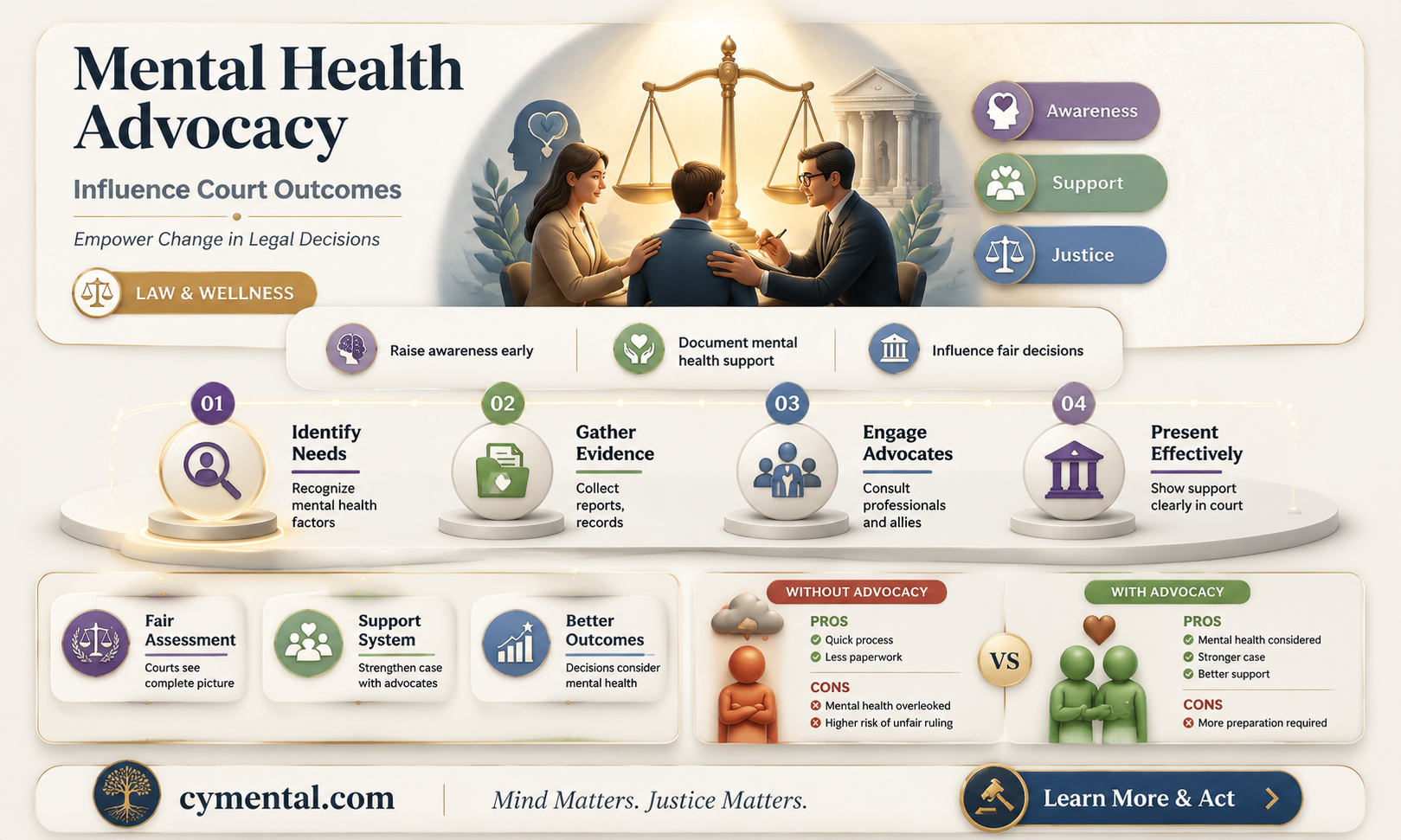
Mental health considerations are increasingly playing a pivotal role in legal proceedings, as courts recognize the profound impact psychological well-being can have on an individual’s behavior, decision-making, and capacity to stand trial. From mitigating circumstances in criminal cases to determining competency or influencing custody battles in family law, mental health evaluations and evidence are often crucial in shaping judicial outcomes. Advocates argue that integrating mental health expertise into legal processes can lead to fairer judgments, while critics raise concerns about potential biases or misuse of such information. As the intersection of mental health and law grows more complex, understanding how psychological factors are assessed and applied in court remains essential for both legal professionals and those seeking justice.
| Characteristics | Values |
|---|---|
| Mitigating Sentencing | Mental health issues can be considered during sentencing to reduce penalties or recommend treatment instead of incarceration. |
| Competency Evaluations | Courts may assess if a defendant is mentally competent to stand trial, potentially delaying proceedings until treatment is provided. |
| Insanity Defense | Defendants may plead not guilty by reason of insanity if their mental health impaired their ability to understand their actions. |
| Diversion Programs | Mental health courts or diversion programs offer treatment and support instead of traditional criminal penalties for eligible offenders. |
| Victim Impact | Mental health evidence can influence restitution or compensation decisions, especially if the defendant’s condition affected their actions. |
| Witness Credibility | Mental health history of witnesses or victims may be considered to assess their reliability or credibility in court. |
| Parental Rights | In family court, mental health evaluations can impact custody decisions, focusing on the best interests of the child. |
| Civil Commitments | Individuals with severe mental health issues may be involuntarily committed if deemed a danger to themselves or others. |
| Disability Accommodations | Courts may provide accommodations (e.g., breaks, simplified language) for individuals with mental health disabilities. |
| Probation Conditions | Mental health treatment may be mandated as a condition of probation or parole to address underlying issues. |
| Juvenile Justice | Mental health assessments are often used in juvenile cases to determine appropriate interventions and rehabilitation. |
| Appeals and Retrials | New mental health evidence can be grounds for appeals or retrials if it significantly impacts the case. |
| Restorative Justice | Mental health considerations may be integrated into restorative justice programs to address harm and promote healing. |
| Expert Testimony | Mental health professionals may testify to provide insights into a defendant’s state of mind or capacity. |
| Public Perception | Mental health advocacy in court can reduce stigma and promote understanding of mental health issues in legal contexts. |
Explore related products


What You'll Learn
- Evidence of Mental State: Mental health records can provide context for behavior during legal proceedings
- Competency Evaluations: Assess if a defendant understands charges and can assist in their defense
- Mitigating Sentencing: Mental health issues may reduce sentences or lead to alternative punishments
- Insanity Defense: Claims mental illness prevented understanding of criminal actions at the time
- Victim Support: Mental health resources for victims to cope with trauma during legal processes

Evidence of Mental State: Mental health records can provide context for behavior during legal proceedings
Mental health records can serve as a critical lens through which courts interpret behavior, offering context that might otherwise remain obscured. For instance, a defendant’s history of severe PTSD could explain erratic actions during an incident, shifting the narrative from intentional malice to a symptom of trauma. These records, when properly introduced, can humanize the accused, providing judges and juries with a fuller picture of their mental state at the time of the alleged offense. However, the admissibility and weight of such evidence vary widely depending on jurisdiction and the specifics of the case, making strategic presentation essential.
To leverage mental health records effectively, legal teams must follow precise steps. First, obtain written consent from the client to access their records, as privacy laws like HIPAA in the U.S. strictly govern medical information. Second, consult a mental health expert to interpret the records and testify about their relevance to the case. For example, a psychiatrist might explain how a client’s schizophrenia could have impaired their judgment during a crime. Third, align the evidence with legal defenses, such as diminished capacity or insanity, ensuring it directly supports the argument. Caution: poorly contextualized records can backfire, painting the defendant as unpredictable or dangerous if not framed carefully.
A comparative analysis reveals how mental health records have been pivotal in landmark cases. In *Clark v. Arizona* (2006), the U.S. Supreme Court upheld a defendant’s right to present evidence of mental illness to mitigate sentencing, even if it didn’t meet insanity plea standards. Conversely, in some jurisdictions, such records have been excluded when deemed irrelevant or prejudicial. This disparity underscores the need for tailored strategies. For instance, in juvenile cases, records detailing developmental disorders like ADHD or autism can sway outcomes by highlighting the defendant’s limited culpability, often leading to diversion programs rather than incarceration.
Practically, mental health records are not a one-size-fits-all solution. They must be paired with expert testimony to translate clinical jargon into actionable insights for the court. For example, a notation of “acute psychosis” in a record gains meaning when an expert explains its impact on decision-making. Additionally, timing matters: records from close to the incident date carry more weight than those from years prior. Attorneys should also prepare for pushback, as prosecutors may challenge the records’ validity or argue they distract from the facts of the case.
In conclusion, mental health records are a double-edged sword in legal proceedings. When wielded thoughtfully, they can provide indispensable context, humanizing defendants and influencing outcomes. Yet, their misuse can undermine a case, reinforcing stereotypes or raising doubts about the defendant’s stability. The key lies in strategic integration, ensuring records are presented as part of a coherent narrative that aligns with legal objectives. For practitioners, understanding this balance is not just a legal tactic—it’s a moral imperative to ensure justice accounts for the complexities of the human mind.
Finding Support: Where to Go for Help in Difficult Times
You may want to see also
Explore related products


Competency Evaluations: Assess if a defendant understands charges and can assist in their defense
In criminal proceedings, competency evaluations serve as a critical safeguard to ensure defendants can meaningfully participate in their defense. These assessments, typically conducted by forensic psychologists or psychiatrists, determine whether a defendant possesses the cognitive and emotional capacity to understand the charges against them, appreciate the legal process, and collaborate effectively with their attorney. Without such evaluations, individuals with severe mental impairments might face trial without the ability to advocate for themselves, violating fundamental principles of fairness and due process.
The process begins with a court-ordered evaluation, often triggered by observable signs of confusion, disorientation, or erratic behavior. Evaluators employ standardized tools, such as the MacArthur Competence Assessment Tool for Criminal Adjudication (MacCAT-CA), to measure a defendant’s grasp of legal concepts, such as the roles of the judge, jury, and defense attorney. For example, a defendant must demonstrate comprehension of plea bargains, the consequences of conviction, and the purpose of testimony. Practical tips for attorneys include requesting evaluations early in the case to avoid delays and ensuring evaluators have access to relevant medical records and prior psychological assessments.
A common misconception is that incompetency equates to insanity or guilt. In reality, competency focuses solely on procedural understanding and participation, not on the defendant’s mental state at the time of the alleged offense. For instance, a defendant with schizophrenia might be found competent if they can follow courtroom proceedings and communicate with their lawyer, even if their condition played a role in the charged conduct. This distinction underscores the evaluative framework’s narrow scope and its emphasis on procedural justice.
Restoration programs often come into play when a defendant is initially deemed incompetent. These court-supervised interventions, which may include medication management or psychotherapy, aim to restore competency within a reasonable timeframe, typically 6 to 12 months. However, if restoration efforts fail, the court may dismiss charges or commit the defendant to a mental health facility indefinitely. This outcome highlights the delicate balance between protecting public safety and respecting individual rights, as prolonged detention without trial raises ethical and constitutional concerns.
In conclusion, competency evaluations are indispensable tools for upholding the integrity of the legal system. By systematically assessing a defendant’s ability to engage in their defense, these evaluations prevent unjust trials while ensuring that those with treatable impairments receive appropriate support. Attorneys, judges, and mental health professionals must collaborate closely to navigate this complex intersection of law and psychology, prioritizing both fairness and compassion in every case.
Encouraging Mental Health Support for Your Husband: Options and Limits
You may want to see also
Explore related products


$69.99 $69.99

$15.99


Mitigating Sentencing: Mental health issues may reduce sentences or lead to alternative punishments
Mental health issues can significantly influence sentencing outcomes in court, often serving as a mitigating factor that reduces penalties or redirects cases toward alternative punishments. Judges and juries increasingly recognize that underlying psychological conditions may contribute to criminal behavior, prompting a shift from punitive measures to rehabilitative approaches. For instance, a defendant with severe depression or schizophrenia might receive a reduced sentence if their condition is deemed a substantial factor in the offense. This acknowledgment reflects a growing understanding that addressing mental health needs can prevent recidivism and promote public safety more effectively than incarceration alone.
Consider the case of a young adult diagnosed with bipolar disorder who committed a non-violent property crime during a manic episode. Instead of a lengthy prison term, the court might order probation, mandatory therapy, and medication management. This alternative not only holds the individual accountable but also provides treatment for the root cause of their actions. Such outcomes are often facilitated by mental health evaluations, which assess the defendant’s condition and its role in the crime. These evaluations are critical tools for attorneys arguing for leniency, as they provide concrete evidence of the defendant’s impaired judgment or lack of intent.
However, leveraging mental health as a mitigating factor requires strategic legal advocacy. Defense attorneys must present compelling evidence, such as psychiatric records, expert testimony, and a clear treatment plan, to demonstrate both the defendant’s condition and their commitment to recovery. Courts are more likely to consider alternatives like diversion programs, mental health courts, or supervised release if they believe the defendant poses no ongoing threat and is willing to engage in treatment. For example, mental health courts—specialized dockets that focus on treatment rather than punishment—have shown promising results in reducing reoffending rates among participants.
It’s important to note that not all mental health conditions or cases qualify for such considerations. Courts weigh factors like the severity of the crime, the defendant’s criminal history, and the availability of community-based treatment resources. For instance, a defendant with a history of violent offenses may face greater challenges in securing alternative sentencing, even with a documented mental illness. Additionally, access to these options often varies by jurisdiction, with urban areas offering more specialized programs than rural regions.
In practice, individuals and their legal teams should take proactive steps to maximize the potential for mitigated sentencing. This includes seeking a comprehensive mental health assessment early in the legal process, maintaining consistent treatment, and documenting progress. For families, advocating for the defendant’s needs and collaborating with legal and healthcare providers can strengthen the case for alternatives to incarceration. While mental health issues do not guarantee leniency, they can open pathways to outcomes that prioritize healing over punishment, benefiting both the individual and society.
Metabolic Screening: A New Tool for Mental Health Diagnosis?
You may want to see also
Explore related products


Insanity Defense: Claims mental illness prevented understanding of criminal actions at the time
The insanity defense is a legal argument that hinges on the claim that a defendant’s mental illness was so severe at the time of the crime that it prevented them from understanding the nature or wrongfulness of their actions. This defense is not about excusing behavior but about recognizing that culpability requires a functioning moral and cognitive capacity. To succeed, the defense must meet strict criteria, often rooted in tests like the M’Naghten Rule, which asks whether the defendant could distinguish right from wrong, or the broader Durham Rule, which considers whether the criminal act was the product of a mental defect. Despite its dramatic portrayal in media, the insanity defense is rarely used—less than 1% of criminal cases—and even more rarely successful, with acquittal rates hovering around 25% of those cases.
Consider the case of John Hinckley Jr., who attempted to assassinate President Ronald Reagan in 1981. Hinckley’s defense team argued that his actions were driven by severe mental illness, specifically schizophrenia and obsessive delusions tied to actress Jodie Foster. The jury found him not guilty by reason of insanity, a verdict that sparked public outrage and led to significant reforms in insanity defense laws. This example underscores the defense’s potential to divert individuals from prison to psychiatric treatment, but it also highlights the delicate balance between justice and compassion. Critics argue that such outcomes can undermine public trust in the legal system, while proponents emphasize the importance of addressing underlying mental health issues rather than punishing those who lack moral agency.
To mount an insanity defense, legal and medical teams must collaborate meticulously. Psychiatrists or psychologists evaluate the defendant’s mental state at the time of the crime, often relying on diagnostic tools like the DSM-5 or structured interviews. These evaluations must establish a clear link between the defendant’s mental illness and their inability to comprehend their actions. Attorneys then present this evidence in court, where it is scrutinized by judges, juries, and prosecutors. Key challenges include the subjective nature of mental health assessments and the difficulty of reconstructing a defendant’s state of mind months or years after the event. For instance, a defendant diagnosed with severe psychosis might describe experiencing command hallucinations that compelled them to act, but proving this in court requires corroborating evidence, such as medical records or witness testimony.
Practical considerations abound for defendants and their legal teams. First, invoking the insanity defense typically waives the right to remain silent, as the defendant’s mental state becomes the central issue. Second, successful acquittal often results in involuntary commitment to a psychiatric facility, which can last longer than a prison sentence. For example, Hinckley remained in institutional care for 35 years before being granted conditional release. Third, the defense is most viable in cases involving severe mental disorders like schizophrenia, bipolar disorder, or major depressive disorder with psychotic features, rather than personality disorders or substance abuse. Defendants and attorneys must weigh these factors carefully, as the stakes are high and the outcomes unpredictable.
Ultimately, the insanity defense serves as a critical, if controversial, intersection of law and mental health. It challenges society to grapple with questions of responsibility, treatment, and justice. While it offers a pathway for those genuinely incapable of understanding their actions, its rarity and stringent requirements reflect the legal system’s caution in applying it. For those considering this defense, thorough preparation, expert testimony, and a clear understanding of the potential consequences are essential. As mental health awareness grows, so too may the nuanced application of this defense, but for now, it remains a complex and sparingly used tool in the pursuit of equitable justice.
Accessing Mental Health Support: Affordable Options for the Uninsured
You may want to see also
Explore related products


Victim Support: Mental health resources for victims to cope with trauma during legal processes
Victims of crimes often face a daunting legal journey, one that can exacerbate the trauma they've already endured. The court process, with its formalities and adversarial nature, may retraumatize individuals, making it crucial to provide adequate mental health support. This is where specialized resources step in, offering a lifeline to those navigating the complex legal system while coping with emotional distress.
A Tailored Approach to Healing:
Mental health professionals play a pivotal role in victim support by offering tailored interventions. For instance, cognitive-behavioral therapy (CBT) can help individuals manage anxiety and depression, common reactions to trauma. This therapeutic approach equips victims with coping strategies, enabling them to challenge negative thought patterns and regain a sense of control. Additionally, eye movement desensitization and reprocessing (EMDR) therapy has shown effectiveness in processing traumatic memories, reducing their emotional impact. Such treatments can be particularly beneficial for victims preparing to testify, ensuring they are mentally prepared for the rigors of the courtroom.
Practical Support Strategies:
During legal proceedings, victims can access various practical resources. Support groups, facilitated by mental health professionals, provide a safe space for sharing experiences and fostering a sense of community. These groups often offer peer support, allowing individuals to connect with others who understand their struggles. Furthermore, psychoeducation workshops can empower victims by providing knowledge about the legal process, reducing anxiety related to the unknown. Simple mindfulness techniques, such as deep breathing exercises, can be taught to manage stress during court appearances, offering an accessible tool for immediate relief.
The Impact of Timely Intervention:
Early intervention is key to preventing long-term psychological harm. Research suggests that providing mental health support promptly after a traumatic event can significantly improve outcomes. For victims, this means having access to crisis hotlines, offering immediate counseling and guidance. These services can assess the need for further intervention, ensuring victims receive the right level of care. By addressing mental health concerns promptly, the legal process becomes more navigable, and victims are better equipped to engage with the justice system.
In the context of legal proceedings, mental health resources are not just beneficial; they are essential. They empower victims, ensuring their voices are heard while safeguarding their well-being. With the right support, the legal journey can become a path to healing, where justice and mental health go hand in hand. This comprehensive approach to victim support is a testament to the power of combining legal and psychological expertise.
Anime's Impact: Exploring Mental Health Benefits and Emotional Healing
You may want to see also
Frequently asked questions
Yes, mental health evaluations can significantly impact court decisions, especially in cases involving competency to stand trial, criminal responsibility, or sentencing. They provide judges with insights into a defendant’s mental state, which may lead to alternative outcomes like treatment programs instead of incarceration.
Mental health evidence can mitigate sentencing by demonstrating that a defendant’s actions were influenced by a mental health condition. This may result in reduced sentences, probation, or court-ordered treatment rather than imprisonment.
Yes, mental health issues can be used as a defense, particularly in cases of insanity or diminished capacity. If proven, it may lead to acquittal, reduced charges, or diversion to mental health treatment programs instead of traditional criminal penalties.