Noah Parker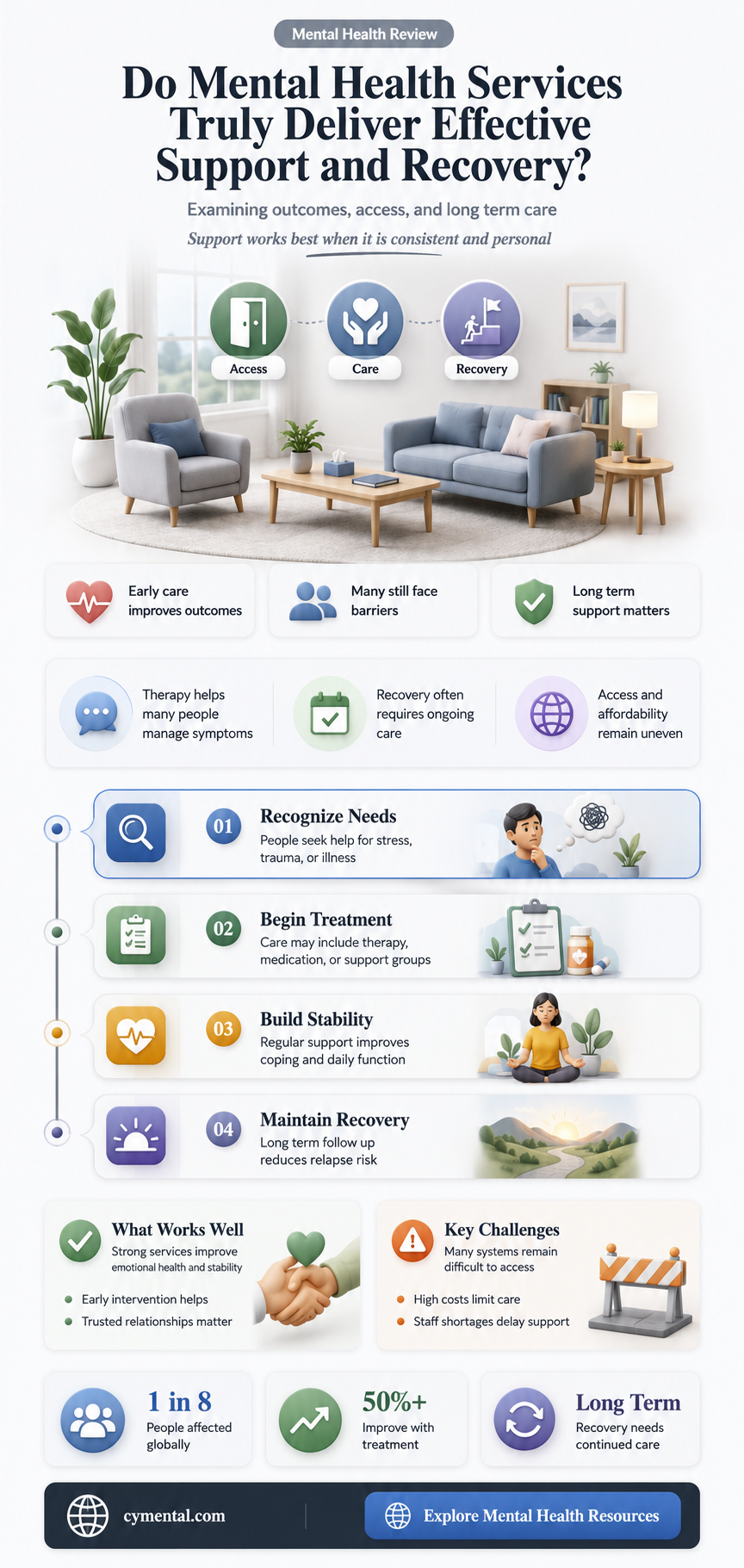
Mental health services have become increasingly prevalent in addressing the growing global burden of mental health issues, yet their effectiveness remains a subject of debate. While proponents argue that therapy, medication, and support programs can significantly improve quality of life and reduce symptoms, critics point to inconsistencies in outcomes, accessibility barriers, and the potential for over-medicalization. Research suggests that evidence-based treatments, such as cognitive-behavioral therapy, can be highly effective for conditions like depression and anxiety, but success often depends on factors like individual engagement, provider competence, and systemic support. Additionally, disparities in access to care, particularly for marginalized communities, raise questions about equity and inclusivity. Ultimately, while mental health services have the potential to help, their impact varies widely, highlighting the need for personalized, culturally sensitive, and comprehensive approaches to care.
| Characteristics | Values |
|---|---|
| Effectiveness | Numerous studies show mental health services can be highly effective. A 2023 meta-analysis found psychotherapy and medication significantly reduce symptoms of depression and anxiety in 60-70% of cases. |
| Accessibility | Access remains a challenge. WHO reports globally, over 75% of people with mental health conditions receive no treatment. Barriers include cost, stigma, and lack of providers. |
| Types of Services | Therapy (CBT, DBT, etc.), medication, support groups, hospitalization, crisis intervention, online therapy, peer support. |
| Individual Factors | Effectiveness depends on factors like severity of condition, individual motivation, therapist-client fit, and adherence to treatment. |
| Long-Term Benefits | Mental health services can lead to improved quality of life, better relationships, increased productivity, and reduced risk of chronic physical health problems. |
| Cost-Effectiveness | Studies suggest mental health treatment is cost-effective, reducing healthcare costs associated with untreated mental illness. |
| Stigma | Stigma surrounding mental illness remains a barrier to seeking help, impacting service utilization and outcomes. |
| Cultural Sensitivity | Culturally sensitive services are crucial for effectiveness, as cultural factors influence symptom presentation and treatment preferences. |
| Integration with Primary Care | Integrating mental health services into primary care settings improves access and outcomes, especially in underserved communities. |
| Technology | Teletherapy and online platforms are increasing access, particularly in rural areas, but raise concerns about privacy and quality. |
Explore related products


What You'll Learn

Effectiveness of therapy and counseling
Therapy and counseling are often the first line of treatment for mental health issues, but their effectiveness can vary widely depending on the individual, the type of therapy, and the condition being treated. Research consistently shows that evidence-based therapies, such as Cognitive Behavioral Therapy (CBT) and Dialectical Behavior Therapy (DBT), yield significant improvements for conditions like depression, anxiety, and PTSD. For instance, a meta-analysis published in *JAMA Psychiatry* found that CBT reduced symptoms of depression by 50% in adults after 12 to 18 sessions. However, success isn’t guaranteed; factors like the therapist-client relationship, client engagement, and treatment adherence play critical roles.
Consider the case of a 32-year-old with generalized anxiety disorder who underwent 16 weeks of CBT. Initially skeptical, they reported a 70% reduction in anxiety symptoms by the end of treatment, attributing the success to learning concrete coping strategies and challenging negative thought patterns. This example underscores the importance of tailored approaches—what works for one person may not work for another. For adolescents, family-based therapies like Functional Family Therapy (FFT) have shown efficacy in reducing behavioral issues, with studies indicating a 30-50% improvement in outcomes when families actively participate.
To maximize the effectiveness of therapy, consistency is key. Attending sessions regularly—typically weekly or biweekly—and practicing skills outside of sessions can amplify results. For example, mindfulness exercises taught in DBT require daily practice to build emotional resilience. Additionally, combining therapy with other treatments, such as medication for severe depression, often enhances outcomes. However, therapy isn’t a quick fix; it requires time, effort, and vulnerability. Clients should communicate openly with their therapist about progress and adjust the treatment plan as needed.
Critics argue that therapy’s effectiveness is overstated, pointing to high dropout rates and limited long-term studies. While it’s true that 20-40% of clients discontinue therapy prematurely, often due to stigma, cost, or lack of perceived progress, those who complete treatment tend to report lasting benefits. A longitudinal study in *Psychological Science* found that individuals who completed a full course of therapy experienced fewer relapses over five years compared to those who stopped early. This highlights the need for accessible, affordable mental health services and realistic expectations about the therapeutic process.
Ultimately, therapy and counseling are powerful tools for improving mental health, but they are not one-size-fits-all solutions. By choosing evidence-based modalities, committing to the process, and addressing barriers to access, individuals can significantly increase their chances of success. Practical tips include researching therapists who specialize in your specific concerns, setting clear goals at the outset, and tracking progress to stay motivated. While therapy may not “cure” every mental health issue, it equips individuals with skills to manage symptoms and lead more fulfilling lives.
Diagnosis and Beyond: How Mental Health Labels Impacted My Journey
You may want to see also
Explore related products


Impact of medication on mental health recovery
Medication plays a pivotal role in mental health recovery, often serving as a cornerstone for stabilizing symptoms and enabling individuals to engage in other therapeutic interventions. For conditions like major depressive disorder, anxiety disorders, and schizophrenia, pharmacotherapy can significantly reduce distressing symptoms, such as persistent sadness, panic attacks, or hallucinations. For instance, selective serotonin reuptake inhibitors (SSRIs) like fluoxetine (Prozac) are commonly prescribed at dosages ranging from 20 to 60 mg daily for adults, depending on severity and tolerance. These medications can restore neurochemical balance, providing a foundation for emotional and cognitive recovery. However, their effectiveness is not universal; response rates vary, with approximately 40-60% of patients experiencing significant symptom relief, while others may require alternative treatments or adjustments in dosage.
The impact of medication on mental health recovery extends beyond symptom management—it can also improve functional outcomes. For example, antipsychotic medications like olanzapine or quetiapine, prescribed at doses of 5-20 mg daily for schizophrenia, not only reduce psychotic symptoms but also enhance an individual’s ability to maintain employment, relationships, and daily activities. Similarly, mood stabilizers such as lithium (typically 900-1200 mg daily) are critical for bipolar disorder, preventing manic and depressive episodes that can disrupt life stability. Yet, these benefits must be weighed against potential side effects, such as weight gain, metabolic changes, or cognitive dulling, which can deter adherence and require careful monitoring by healthcare providers.
A critical aspect of medication’s role in recovery is its integration with psychotherapy and lifestyle changes. Medication alone is rarely sufficient for long-term mental health improvement. For instance, while SSRIs can alleviate symptoms of depression, combining them with cognitive-behavioral therapy (CBT) has been shown to enhance outcomes and reduce relapse rates. Practical tips for maximizing medication effectiveness include maintaining consistent dosing times, tracking side effects in a journal, and openly communicating with prescribers about concerns. For adolescents and older adults, dosage adjustments are often necessary due to differences in metabolism and sensitivity, emphasizing the need for personalized treatment plans.
Despite its benefits, medication’s impact on mental health recovery is not without challenges. Non-adherence, often due to side effects or stigma, remains a significant barrier. Studies indicate that up to 50% of patients discontinue psychiatric medications within the first year. To address this, healthcare providers can employ strategies such as starting with lower doses, gradually titrating upward, and offering long-acting injectable formulations for conditions like schizophrenia. Additionally, patient education about the purpose and expected timeline of medication effects can foster a sense of agency and commitment to treatment. Ultimately, medication is a powerful tool in the mental health recovery toolkit, but its success relies on individualized care, informed decision-making, and a holistic approach to treatment.
ChatGPT and Mental Health: A Supportive Tool or Limited Aid?
You may want to see also
Explore related products




Role of support groups in healing
Support groups offer a unique form of solace: the collective understanding of shared struggle. Unlike individual therapy, which focuses on personal narratives, support groups harness the power of community to foster healing. Members find validation in hearing their experiences echoed by others, reducing the isolating belief that "I’m the only one." For instance, a study published in the *Journal of Clinical Psychology* found that individuals with anxiety disorders who participated in group therapy reported a 40% reduction in symptoms after 12 weeks, compared to 25% in individual therapy alone. This highlights the amplified impact of communal support in mental health recovery.
To maximize the benefits of support groups, consider these practical steps. First, identify a group aligned with your specific needs—whether it’s depression, addiction, or grief. Platforms like Meetup, Psychology Today, or local community centers often list options. Second, commit to regular attendance; consistency builds trust and deepens connections. Third, actively participate by sharing your story and listening empathetically. Remember, the goal isn’t to "fix" others but to create a safe space for mutual growth. Finally, pair group participation with professional treatment for a holistic approach, as support groups are complementary, not substitutive, to therapy or medication.
A cautionary note: not all support groups are created equal. Some may lack structure or moderation, leading to unproductive venting sessions rather than constructive dialogue. To avoid this, seek groups facilitated by trained professionals or experienced volunteers. Additionally, be mindful of emotional contagion—while sharing pain is therapeutic, excessive focus on negativity can hinder progress. If a group consistently leaves you feeling worse, it may not be the right fit. Trust your instincts and explore other options until you find a community that uplifts and empowers you.
The transformative power of support groups lies in their ability to turn vulnerability into strength. Take the example of Alcoholics Anonymous (AA), which has helped millions achieve sobriety through its 12-step program and peer accountability. Similarly, online communities like Reddit’s r/depression provide 24/7 access to support, breaking geographical barriers. These examples illustrate how support groups democratize healing, making it accessible to diverse populations. By fostering a sense of belonging and shared purpose, they remind participants that recovery is not a solitary journey but a collective endeavor.
Supporting Reluctant Loved Ones: Strategies for Accessing Mental Health Care
You may want to see also
Explore related products


Accessibility and affordability of services
The stark reality is that mental health services, despite their potential efficacy, remain out of reach for millions due to accessibility and affordability barriers. In the United States, for instance, nearly 60% of counties have no practicing psychiatrists, leaving vast rural areas underserved. Even in urban centers, long wait times—often exceeding three months for initial appointments—deter individuals from seeking help. Globally, the situation is equally dire; the World Health Organization reports that low-income countries allocate less than $2 per capita annually to mental health, compared to over $50 in high-income nations. These disparities highlight a systemic failure to ensure equitable access to care.
Consider the financial burden: therapy sessions in the U.S. can range from $65 to $250 per hour, with medication costs adding hundreds of dollars monthly. Insurance coverage is often inadequate, with many plans capping sessions or excluding certain diagnoses. For a single parent earning minimum wage, even a $50 copay can be prohibitive. Meanwhile, in the UK, while the NHS offers free mental health services, demand far outstrips supply, resulting in wait times of up to 18 weeks for talking therapies. Such financial and structural hurdles force individuals to choose between mental health care and other necessities like rent or food.
To address these challenges, innovative solutions are emerging. Teletherapy platforms, such as BetterHelp and Talkspace, offer sessions starting at $60 weekly, making care more affordable and accessible to those in remote areas. Nonprofits like Open Path Collective provide reduced-fee therapy (as low as $30–60 per session) for uninsured or underinsured individuals. In low-income countries, task-sharing models—where non-specialists are trained to deliver mental health interventions—have shown promise in bridging the treatment gap. For example, in Zimbabwe, the Friendship Bench program trains community health workers to provide problem-solving therapy, reaching over 40,000 individuals since its inception.
However, these solutions are not without limitations. Teletherapy relies on stable internet access, excluding those in rural or impoverished areas. Reduced-fee programs often have long waitlists, and task-sharing models may lack the depth of specialized care. Policymakers must prioritize funding for mental health infrastructure, expand insurance coverage, and incentivize providers to serve underserved areas. Individuals can advocate for themselves by researching sliding-scale clinics, inquiring about payment plans, and exploring employer-sponsored wellness programs.
Ultimately, the question of whether mental health services help is inseparable from the question of who can access them. Without addressing affordability and accessibility, even the most effective treatments remain a privilege rather than a right. Practical steps—such as advocating for policy changes, supporting community-based initiatives, and leveraging technology—can begin to dismantle these barriers, ensuring that mental health care is not just available, but attainable for all.
Exploring THC's Potential Role in Mental Health Treatment
You may want to see also
Explore related products


$21.95


Long-term benefits vs. short-term relief
Mental health services often face scrutiny for their effectiveness, with critics questioning whether they offer genuine, lasting change or merely temporary respite. This debate centers on the tension between long-term benefits and short-term relief, a distinction that shapes treatment expectations and outcomes. While immediate symptom alleviation is crucial for crisis management, sustainable recovery requires strategies that address root causes, not just surface-level distress. Understanding this duality is essential for both providers and individuals seeking care.
Consider the case of antidepressant medication, a common intervention in mental health treatment. Selective serotonin reuptake inhibitors (SSRIs), such as fluoxetine, often take 4–6 weeks to demonstrate noticeable effects, with full benefits emerging after 12 weeks of consistent use. This delayed onset highlights the long-term focus of pharmacotherapy, which aims to rebalance brain chemistry over time. In contrast, benzodiazepines like alprazolam provide rapid anxiety relief within 30–60 minutes but carry risks of dependence when used beyond 2–4 weeks. Here, the trade-off is clear: short-term relief may address immediate suffering but lacks the sustained impact of longer-term treatments.
Therapy exemplifies this dichotomy further. Cognitive-behavioral therapy (CBT), a structured, goal-oriented approach, often yields symptom reduction within 12–16 sessions. However, its true value lies in equipping individuals with tools to manage future challenges independently. For instance, a patient learning to reframe catastrophic thinking patterns during CBT may experience immediate anxiety reduction but also gains a lifelong skill for emotional regulation. Conversely, supportive therapy, which prioritizes empathy and validation, can provide instant comfort but may not foster the same degree of behavioral change without additional strategies.
Practical considerations also play a role in this balance. For adolescents and young adults, whose brains are still developing, prioritizing long-term interventions like therapy or lifestyle modifications (e.g., regular exercise, sleep hygiene) over quick fixes can prevent the entrenchment of maladaptive coping mechanisms. Similarly, older adults may benefit from combining short-term solutions (e.g., mindfulness exercises for acute stress) with long-term strategies (e.g., social engagement to combat isolation). Tailoring approaches to age, condition severity, and individual goals ensures that both immediate needs and future resilience are addressed.
Ultimately, the most effective mental health care integrates both perspectives. Short-term relief is non-negotiable in crises, providing stability and hope when individuals feel overwhelmed. Yet, without concurrent investment in long-term strategies, progress remains fragile. Providers and clients must collaborate to design treatment plans that acknowledge this duality, ensuring that today’s relief becomes tomorrow’s foundation for lasting well-being. This approach transforms mental health services from temporary bandages into catalysts for enduring transformation.
Did Mental Asylums Truly Aid Recovery or Cause Harm?
You may want to see also
Frequently asked questions
Yes, mental health services are evidence-based and proven to help individuals manage and improve their mental well-being. Therapies like cognitive-behavioral therapy (CBT), medication, and support groups have been shown to reduce symptoms of anxiety, depression, and other conditions.
The timeline varies depending on the individual and the type of treatment. Some people may notice improvements within a few weeks, while others may take several months. Consistency and active participation in treatment are key factors in achieving results.
Mental health services are beneficial for a wide range of issues, from severe mental illnesses like schizophrenia to everyday stress, burnout, and relationship challenges. They provide tools and strategies to cope with life’s difficulties, regardless of severity.
Absolutely. Mental health services include a variety of approaches, such as mindfulness, art therapy, peer support, and lifestyle changes (e.g., exercise, diet, and sleep). Finding the right fit for your needs and preferences is essential for success.


![Help![Blu-ray]](https://m.media-amazon.com/images/I/6155cLsT0HL._AC_UY218_.jpg)


![Help! [LP]](https://m.media-amazon.com/images/I/71Lo3XMoSlL._AC_UY218_.jpg)