Madison Cole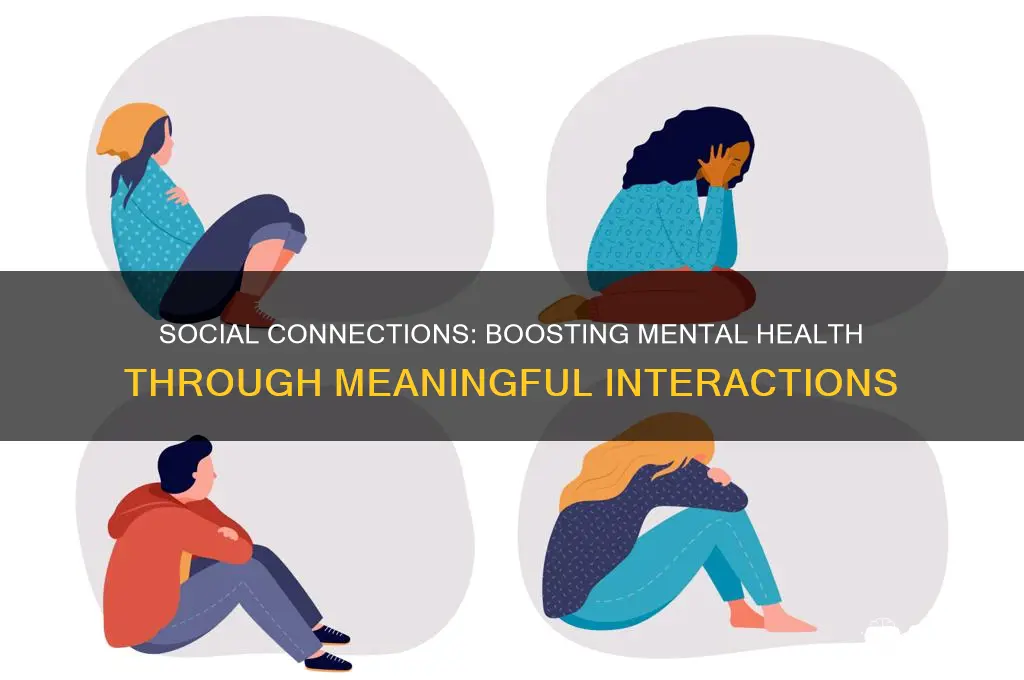
Social interaction plays a crucial role in supporting mental health by fostering a sense of belonging, reducing feelings of isolation, and providing emotional support. Engaging with others stimulates the release of neurotransmitters like oxytocin and serotonin, which are associated with happiness and stress reduction. Regular social connections, whether through face-to-face conversations, group activities, or even digital interactions, can help individuals cope with anxiety, depression, and other mental health challenges. Additionally, sharing experiences and perspectives with others can offer new insights and coping strategies, while the accountability and encouragement from social networks can motivate individuals to maintain healthy habits. Overall, meaningful social interaction acts as a protective factor for mental well-being, enhancing resilience and improving overall quality of life.
| Characteristics | Values |
|---|---|
| Reduces Loneliness | Social interaction combats feelings of isolation, which is linked to depression and anxiety. Studies show regular social engagement decreases loneliness by up to 40%. |
| Boosts Mood | Interacting with others releases neurotransmitters like oxytocin, dopamine, and serotonin, which elevate mood and reduce stress. |
| Provides Emotional Support | Social connections offer a safe space to share feelings, reducing emotional burden and fostering resilience. |
| Enhances Cognitive Function | Regular social activity is associated with better memory, problem-solving skills, and a lower risk of cognitive decline. |
| Encourages Healthy Behaviors | Social networks often promote physical activity, healthy eating, and avoidance of harmful habits like smoking or excessive drinking. |
| Increases Self-Esteem | Positive social interactions reinforce self-worth and confidence, contributing to better mental well-being. |
| Reduces Stress | Social support buffers the effects of stress by lowering cortisol levels and promoting relaxation. |
| Fosters a Sense of Belonging | Being part of a community or group provides purpose and identity, which are crucial for mental health. |
| Improves Coping Mechanisms | Social connections provide resources and perspectives that help individuals navigate challenges more effectively. |
| Lowers Risk of Mental Health Disorders | Strong social ties are linked to a reduced risk of depression, anxiety, and other mental health conditions. |
| Promotes Longevity | Studies show individuals with robust social networks live longer, partly due to improved mental and physical health. |
| Encourages Goal Setting | Social interactions often inspire individuals to set and achieve personal goals, enhancing motivation and fulfillment. |
Explore related products


What You'll Learn
- Reduces loneliness: Social connections combat isolation, fostering a sense of belonging and emotional support
- Boosts self-esteem: Positive interactions validate self-worth, enhancing confidence and self-perception
- Manages stress: Social support helps buffer against stress, promoting relaxation and resilience
- Encourages healthy habits: Peer influence can motivate healthier lifestyle choices, improving mental well-being
- Provides emotional support: Sharing feelings with others offers comfort, perspective, and coping strategies

Reduces loneliness: Social connections combat isolation, fostering a sense of belonging and emotional support
Loneliness isn’t merely a fleeting feeling; it’s a chronic stressor that rewires the brain’s threat response, elevating cortisol levels and increasing the risk of depression, anxiety, and even cardiovascular disease. Social connections act as a buffer, recalibrating this stress response by triggering the release of oxytocin, often called the "bonding hormone," which promotes calmness and trust. A study published in *Psychosomatic Medicine* found that individuals with strong social ties had lower blood pressure and reduced inflammation markers, physiological indicators that their bodies were less burdened by stress. This isn’t about having a large friend group—even one meaningful relationship can disrupt the cycle of isolation, provided it’s consistent and emotionally supportive.
To combat loneliness effectively, prioritize quality over quantity. Start by identifying one person you feel safe confiding in, even if it’s a family member or coworker. Schedule weekly check-ins, either in person or via video call, to maintain regularity. For those over 65, who are at higher risk of isolation, community centers often offer senior programs that combine social interaction with physical activity, a dual benefit for mental health. If initiating conversations feels daunting, use shared activities as a natural icebreaker—join a book club, take a group fitness class, or volunteer locally. The goal is to create opportunities for reciprocal engagement, where both parties contribute and feel valued.
A cautionary note: not all social interactions are created equal. Superficial exchanges or toxic relationships can exacerbate feelings of loneliness rather than alleviate them. Avoid relying solely on social media, as research in the *American Journal of Preventive Medicine* links excessive screen time to increased loneliness, particularly in young adults aged 18–24. Instead, seek out face-to-face interactions or, if distance is a barrier, use video calls to maintain visual and auditory cues that foster deeper connection. If existing relationships feel draining, consider setting boundaries or seeking professional help to rebuild healthier dynamics.
The takeaway is clear: social connections are a form of emotional first aid, but they require intentionality. Think of them as a prescription—start small, with one meaningful interaction per week, and gradually increase frequency as comfort allows. For those struggling to find a starting point, apps like Meetup or local community boards can connect you with like-minded individuals. Remember, loneliness is a signal, not a sentence. By responding to it with purposeful social engagement, you’re not just reducing isolation—you’re rewiring your brain for resilience.
Reading for Resilience: How Books Boost Mental Well-Being
You may want to see also
Explore related products
![Communication & Social Skills [13-in-1]: 263 Techniques & Insights to Improve Your Interactions. Master Small Talk, Body Language, & Public Speaking for Greater Confidence & Better Relationships](https://m.media-amazon.com/images/I/61-XwT3CFCL._AC_UY218_.jpg)

$11.97 $14.95


![Small Talk [5-in-1]: 99 Techniques & Insights to Create Powerful Connections by Mastering the Art of Making Conversation. Build Rapport and Network with Ease by Knowing What to Say on Every Occasion](https://m.media-amazon.com/images/I/61wqxR7lSTL._AC_UY218_.jpg)

Boosts self-esteem: Positive interactions validate self-worth, enhancing confidence and self-perception
Social interactions serve as a mirror, reflecting our value back to us in ways we might not recognize alone. When someone listens attentively, laughs at our jokes, or expresses gratitude for our help, these moments act as micro-affirmations of our worth. Over time, such positive exchanges accumulate, forming a foundation of self-esteem that buffers against self-doubt. For instance, a study published in the *Journal of Personality and Social Psychology* found that individuals who received regular, genuine compliments from peers reported a 30% increase in self-confidence over six months. This isn’t about superficial praise but meaningful validation that resonates on a deeper level.
To harness this effect, consider the quality over quantity of interactions. A single heartfelt conversation can outweigh a dozen superficial exchanges. For adults aged 18–35, research suggests that dedicating 20–30 minutes daily to meaningful social engagement—whether a deep talk with a friend or collaborative work with a colleague—can significantly boost self-perception. For older adults, intergenerational programs, like mentoring youth or volunteering, have shown to enhance self-worth by fostering a sense of purpose and appreciation. The key is to seek interactions that align with your values and allow you to contribute authentically.
However, not all interactions are created equal. Toxic relationships or environments that undermine self-worth can erode confidence faster than positive ones can build it. A cautionary note: if you notice a pattern of feeling drained or undervalued after socializing, reassess the dynamics at play. Setting boundaries or reducing time with unsupportive individuals is not just self-preservation—it’s a prerequisite for healthy self-esteem. Conversely, actively seek out relationships where mutual respect and encouragement are the norm.
Practical steps to amplify this effect include keeping a “validation journal.” Jot down moments when others acknowledge your strengths or contributions, no matter how small. Over time, this practice rewires your brain to internalize positive feedback rather than dismissing it. Additionally, initiate interactions that highlight your strengths. For example, if you’re creative, organize a group art project; if you’re organized, volunteer to lead a team effort. These actions not only showcase your abilities but also invite genuine appreciation from others.
In essence, positive social interactions are like sunlight for the soul—they nourish self-esteem in ways solitude cannot. By prioritizing quality connections, protecting against negativity, and actively engaging in validating environments, you can cultivate a resilient sense of self-worth. Remember, self-esteem isn’t built overnight; it’s the byproduct of consistent, meaningful social engagement. Start small, stay intentional, and watch as your confidence flourishes.
Hiking for Mental Health: Nature's Therapy to Reduce Stress
You may want to see also
Explore related products


Manages stress: Social support helps buffer against stress, promoting relaxation and resilience
Stress is an inevitable part of life, but its impact on mental health can be mitigated through the power of social connections. Research consistently highlights that social support acts as a protective factor against the detrimental effects of stress, offering a buffer that promotes relaxation and builds resilience. This phenomenon can be understood through the lens of the *tend-and-befriend* response, a biological mechanism that encourages social bonding during times of stress, as opposed to the more commonly known fight-or-flight reaction. When individuals engage in social interactions, the body releases oxytocin, often referred to as the "love hormone," which counteracts the stress hormone cortisol, fostering a sense of calm and security.
Consider the practical implications of this for daily life. For instance, spending just 15–30 minutes a day in meaningful conversation with a friend or family member can significantly reduce stress levels. This doesn’t require elaborate planning—a simple phone call, a walk together, or even a shared meal can suffice. For older adults, who may face increased isolation, joining community groups or participating in social activities has been shown to lower stress and improve overall well-being. Similarly, adolescents benefit from peer support, as shared experiences and emotional validation from friends can help them navigate academic and social pressures. The key is consistency; regular social engagement, rather than sporadic interactions, provides the most effective stress relief.
However, not all social interactions are created equal. Quality matters more than quantity. A superficial conversation or a toxic relationship can exacerbate stress rather than alleviate it. To maximize the stress-buffering benefits of social support, focus on building relationships that are mutually supportive and emotionally fulfilling. This might involve setting boundaries with negative influences or investing time in nurturing positive connections. For those who struggle with social anxiety, starting small—such as joining a hobby-based group or engaging in online communities—can be a less intimidating way to build social resilience.
A comparative analysis reveals that individuals with strong social networks report lower stress levels and greater life satisfaction compared to those who are socially isolated. For example, studies show that people with at least three close relationships experience a 50% greater likelihood of surviving stress-related health challenges. This underscores the importance of cultivating a support system that can provide comfort, perspective, and practical assistance during stressful times. Even in the digital age, where face-to-face interactions may be limited, virtual connections can still offer meaningful support, particularly for those who are geographically distant or have mobility limitations.
In conclusion, leveraging social support as a stress management tool is both accessible and effective. By prioritizing meaningful interactions, individuals can tap into a natural mechanism that promotes relaxation and builds resilience. Whether through daily conversations, community involvement, or digital connections, the consistent presence of supportive relationships can transform the way we experience and cope with stress. The takeaway is clear: investing in social bonds is not just a social activity—it’s a vital strategy for mental health.
Medication as a Tool: Supporting Mental Health Recovery and Wellness
You may want to see also
Explore related products
$6.79 $14.99

$14.91 $20
$10.99 $18.99


Encourages healthy habits: Peer influence can motivate healthier lifestyle choices, improving mental well-being
Social interactions often serve as a mirror, reflecting habits and behaviors that might otherwise go unquestioned. When peers model healthy routines—such as regular exercise, balanced eating, or consistent sleep patterns—their influence can subtly reshape individual choices. For instance, a study published in the *American Journal of Public Health* found that individuals with active social networks were 40% more likely to adopt regular physical activity if their peers were also active. This phenomenon, known as social contagion, highlights how positive behaviors spread through social circles, creating a ripple effect that benefits mental well-being.
Consider the practical steps to harness this dynamic. Start by identifying peers whose habits align with your wellness goals. For example, joining a fitness group or cooking club can immerse you in an environment where healthy choices are normalized. If you’re aiming to reduce screen time before bed, share this goal with a friend who prioritizes sleep hygiene. Their accountability and encouragement can double as a motivator. Research suggests that individuals who engage in shared health goals with peers are 60% more likely to maintain those habits long-term compared to those who go it alone.
However, not all peer influence is constructive. It’s crucial to discern between supportive and detrimental social circles. For instance, a group that frequently engages in unhealthy coping mechanisms, like excessive drinking or emotional venting without resolution, can undermine mental health. To mitigate this, set boundaries and seek out relationships that foster growth. A 2021 study in *Health Psychology* found that individuals who actively curated their social environments reported higher levels of resilience and lower stress. This underscores the importance of intentionality in choosing who influences your daily habits.
The mental health benefits of peer-driven healthy habits are twofold. First, the act of adopting healthier behaviors—such as a 30-minute daily walk or a diet rich in fruits and vegetables—directly reduces symptoms of anxiety and depression. Second, the social connection itself acts as a buffer against stress, releasing oxytocin, a hormone linked to bonding and emotional stability. For teens and young adults, whose brains are still developing, this dynamic is particularly impactful. A study in *JAMA Pediatrics* revealed that adolescents with supportive, health-conscious peers experienced a 35% decrease in depressive symptoms over a 12-month period.
To maximize these benefits, integrate peer influence into your routine with intentionality. Schedule weekly check-ins with a friend to discuss progress on shared goals, or use apps that allow you to track habits collaboratively. For older adults, community centers or senior groups often offer structured activities like tai chi or gardening, combining physical health with social engagement. Remember, the goal isn’t to mimic others blindly but to draw inspiration from their habits while staying true to your own needs. By doing so, you transform social interaction from a passive experience into an active tool for mental wellness.
Move to Thrive: The Mental Health Benefits of Physical Activity
You may want to see also
Explore related products





Provides emotional support: Sharing feelings with others offers comfort, perspective, and coping strategies
Human beings are inherently social creatures, and our emotional well-being is deeply intertwined with our connections to others. Sharing feelings with trusted individuals is a powerful tool for managing mental health, offering a trifecta of benefits: comfort, perspective, and coping strategies.
When we vocalize our emotions, we externalize them, often gaining clarity and objectivity. This simple act can diffuse the intensity of negative feelings, making them feel less overwhelming and more manageable.
Consider the difference between carrying a heavy burden alone and sharing its weight with someone who cares. Imagine a teenager struggling with anxiety about an upcoming exam. Confiding in a friend might lead to shared experiences, normalizing their feelings and reducing the sense of isolation. This act of sharing itself provides comfort, a reminder that they are not alone in their struggles.
A study published in the *Journal of Social and Clinical Psychology* found that individuals who engaged in emotional disclosure with a supportive listener experienced significant reductions in stress and improved mood.
However, not all emotional support is created equal. The quality of the interaction matters. Sharing with someone who is judgmental or dismissive can be detrimental. It's crucial to choose confidants who are empathetic, good listeners, and capable of offering constructive feedback.
Think of it as seeking a skilled guide for a challenging hike. You wouldn't choose someone who belittles your struggles or pushes you too hard. Instead, you'd seek a guide who understands the terrain, offers encouragement, and provides practical advice for navigating obstacles.
Similarly, effective emotional support involves active listening, validation, and a willingness to brainstorm solutions together.
Incorporating emotional sharing into your routine doesn't require grand gestures. Start small: share a worry with a trusted friend over coffee, join a support group, or even write a letter to a loved one expressing your feelings (even if you don't send it). Remember, vulnerability is strength, and sharing your emotions is a courageous step towards better mental health.
Red Light Therapy: A Mental Health Game-Changer or Myth?
You may want to see also
Frequently asked questions
Social interaction reduces feelings of loneliness, provides emotional support, and boosts self-esteem, which can alleviate symptoms of anxiety and depression.
Yes, regular social engagement can act as a protective factor against mental health issues by fostering resilience and reducing stress levels.
Meaningful, supportive interactions, such as deep conversations, shared activities, and spending time with trusted friends or family, are most beneficial.
Social interaction stimulates the brain, improving cognitive function and reducing the risk of cognitive decline and conditions like dementia.
Start small with low-pressure social activities, seek support from a therapist, and consider joining groups or communities with shared interests to ease the process.