Lucas Bennett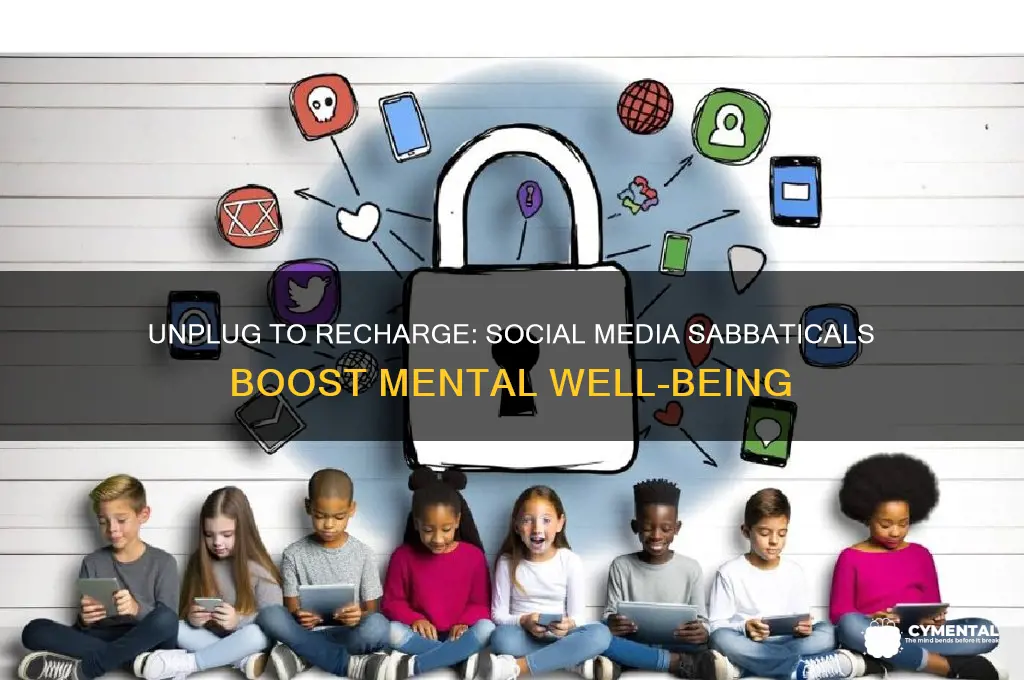
Taking a social media sabbatical, or a deliberate break from platforms like Instagram, Facebook, and Twitter, has emerged as a powerful strategy for improving mental health in an increasingly digital world. Constant exposure to curated highlights, endless scrolling, and the pressure to maintain an online presence can contribute to anxiety, depression, and feelings of inadequacy. By stepping away from these platforms, individuals often experience reduced stress, improved focus, and a greater sense of self-worth. This break allows people to reconnect with real-life interactions, hobbies, and mindfulness practices, fostering a healthier relationship with technology and themselves. Studies suggest that even short sabbaticals can lead to significant mental health benefits, making it a valuable practice for anyone feeling overwhelmed by the digital noise.
| Characteristics | Values |
|---|---|
| Reduced Stress and Anxiety | Lower cortisol levels, decreased symptoms of anxiety and overwhelm. |
| Improved Sleep Quality | Better sleep patterns due to reduced screen time before bed. |
| Enhanced Focus and Productivity | Increased ability to concentrate and complete tasks without distractions. |
| Boosted Self-Esteem | Less exposure to curated content reduces social comparison and self-doubt. |
| Increased Real-Life Connections | More time for face-to-face interactions and deeper relationships. |
| Mental Clarity and Mindfulness | Greater awareness of thoughts and emotions without constant notifications. |
| Reduced FOMO (Fear of Missing Out) | Less obsession with others' lives leads to greater contentment. |
| Improved Emotional Regulation | Better management of emotions without the influence of online triggers. |
| Increased Physical Activity | More time for exercise and outdoor activities. |
| Enhanced Creativity | Space for original thoughts and ideas without constant information intake. |
| Better Time Management | Reallocation of time to hobbies, learning, or relaxation. |
| Reduced Information Overload | Less exposure to news and updates reduces mental fatigue. |
| Improved Body Image | Less exposure to idealized body standards on social media. |
| Increased Gratitude | Focus on personal experiences rather than materialistic comparisons. |
| Long-Term Habit Formation | Potential to develop healthier social media habits post-sabbatical. |
Explore related products




What You'll Learn
- Reduced Anxiety: Less exposure to stressors and comparisons on social media lowers anxiety levels
- Improved Focus: Breaks enhance concentration by eliminating constant notifications and distractions
- Better Sleep: Limited screen time before bed improves sleep quality and duration
- Enhanced Self-Esteem: Avoiding curated content reduces feelings of inadequacy and boosts self-worth
- Stronger Relationships: More time for real-life interactions fosters deeper, more meaningful connections

Reduced Anxiety: Less exposure to stressors and comparisons on social media lowers anxiety levels
Social media platforms are designed to keep users engaged, often exposing them to a constant stream of stressors—from alarming news updates to curated highlights of others’ lives. This relentless influx can trigger the body’s stress response, releasing cortisol and heightening anxiety. A sabbatical from these platforms acts as a circuit breaker, interrupting this cycle. Research suggests that even a 30-minute reduction in daily social media use can lead to measurable decreases in anxiety levels, particularly in individuals aged 18–30, who are most active online.
Consider the mechanics of comparison, a silent anxiety amplifier. Every scroll through a feed invites unconscious benchmarking—your behind-the-scenes versus someone else’s highlight reel. This phenomenon, dubbed "compare and despair," is linked to increased symptoms of generalized anxiety disorder. By stepping away from these platforms, you eliminate the triggers for such comparisons. A study published in the *Journal of Social and Clinical Psychology* found that limiting social media use to 30 minutes per day significantly reduced anxiety and feelings of inadequacy in participants.
To maximize the anxiety-reducing benefits of a sabbatical, start with a structured plan. Begin by identifying peak usage times—often mornings and evenings—and replace them with activities that promote relaxation, such as reading, meditation, or physical exercise. For those hesitant to go cold turkey, a phased approach works: reduce usage by 15 minutes daily for the first week, then 30 minutes the next, until you reach a full break. Apps like *Freedom* or *Offtime* can help enforce boundaries by blocking access during designated periods.
However, a sabbatical alone isn’t a cure-all. Pair it with mindfulness practices to address underlying anxiety triggers. Journaling about your emotions during the break can provide insight into how social media affects your mental state. Additionally, establish a "no-phone zone" in your home, such as the bedroom, to create a sanctuary free from digital stressors. For parents, modeling this behavior can teach children healthy tech habits, reducing their anxiety levels as well.
The takeaway is clear: less exposure to social media’s stressors and comparisons directly correlates with lower anxiety levels. A sabbatical isn’t about abandoning technology but reclaiming control over your mental space. By setting boundaries and replacing screen time with calming activities, you can achieve a more balanced, anxiety-free state. Start small, stay consistent, and let the results speak for themselves.
Psychedelics as Treatment: Healing Drug-Induced Mental Illness?
You may want to see also
Explore related products




Improved Focus: Breaks enhance concentration by eliminating constant notifications and distractions
The average person checks their phone 96 times a day, often in response to notifications from social media platforms. This constant interruption fragments attention, making it difficult to sustain focus on tasks that require deep concentration. A social media sabbatical, even for a short period, can reset this pattern by eliminating the source of these distractions. Research shows that after just 24 hours without social media, individuals report a noticeable improvement in their ability to concentrate on work, reading, or creative activities. This immediate benefit underscores the power of removing digital interruptions from daily life.
To maximize the focus-enhancing effects of a social media break, start with a manageable duration, such as a weekend or three days. During this time, turn off all social media notifications and, if possible, delete the apps from your devices. Replace the time you would have spent scrolling with activities that demand sustained attention, like reading a book, solving puzzles, or engaging in a hobby. Studies indicate that the brain begins to rewire itself for deeper focus within 72 hours of reduced screen time, making this a critical window for retraining your attention span.
A comparative analysis reveals that individuals who take regular social media breaks outperform their peers in tasks requiring concentration. For example, a 2021 study found that students who abstained from social media for one week scored 20% higher on cognitive tests measuring sustained attention. This improvement is attributed to the brain’s ability to recover from the overstimulation caused by constant notifications. By contrast, those who maintained their regular social media usage showed no significant change in focus, highlighting the direct link between digital distractions and cognitive performance.
Practical tips for maintaining focus post-sabbatical include setting boundaries around social media use, such as designating specific times of day for checking platforms and limiting usage to 30 minutes or less. Tools like app blockers or “do not disturb” modes can help enforce these limits. Additionally, incorporating mindfulness practices, such as meditation or deep breathing exercises, can further enhance concentration by training the brain to resist distractions. For those in high-pressure environments, combining a social media sabbatical with these strategies can lead to sustained improvements in focus and productivity.
In conclusion, a social media sabbatical is a powerful tool for reclaiming focus in an increasingly distracted world. By eliminating constant notifications and creating space for uninterrupted thought, these breaks allow the brain to reset and rebuild its capacity for deep concentration. Whether you’re a student, professional, or creative, the benefits of improved focus are immediate and measurable, making a social media sabbatical a worthwhile investment in your mental health and cognitive performance.
Family Support: A Powerful Ally for Mental Health and Well-Being
You may want to see also
Explore related products


Better Sleep: Limited screen time before bed improves sleep quality and duration
The blue light emitted from screens suppresses melatonin, a hormone crucial for sleep regulation. This disruption can delay sleep onset by up to an hour, particularly in adolescents and young adults whose circadian rhythms are more sensitive. Reducing screen time at least one hour before bed allows melatonin production to resume naturally, promoting deeper and more restorative sleep cycles.
Consider this experiment: commit to a 7-day social media sabbatical in the evening. Replace scrolling with activities like reading a physical book, journaling, or practicing gentle stretches. Track your sleep using a journal or app, noting bedtime, wake time, and perceived sleep quality. Most participants report falling asleep faster and waking less frequently during the night, with improvements noticeable within 3–4 days.
For optimal results, combine limited screen time with other sleep hygiene practices. Maintain a consistent sleep schedule, even on weekends. Create a dim, tech-free bedroom environment, using blackout curtains and keeping the temperature between 60–67°F (15–19°C). Avoid caffeine after 2 PM and incorporate a relaxing bedtime routine, such as meditation or herbal tea. These measures amplify the benefits of reduced screen exposure, fostering a holistic approach to better sleep.
Critics argue that occasional evening screen use is unavoidable, especially for work or communication. However, even small adjustments make a difference. If you must use devices, enable night mode or blue light filters to minimize melatonin suppression. Alternatively, set boundaries like checking messages only until 8 PM, then silencing notifications. The goal isn’t perfection but progress—gradually reducing screen time to prioritize sleep and, by extension, mental well-being.
Congress and Mental Health: Assessing the Impact of Legislative Efforts
You may want to see also
Explore related products


Enhanced Self-Esteem: Avoiding curated content reduces feelings of inadequacy and boosts self-worth
Constant exposure to meticulously curated social media profiles can erode self-esteem, fostering a pervasive sense of inadequacy. Users often compare their behind-the-scenes realities to others' highlight reels, a phenomenon psychologists term "social comparison theory." This skewed perspective can lead to feelings of inferiority, particularly among adolescents and young adults, who are more susceptible to peer influence. A study published in the *Journal of Social and Clinical Psychology* found that limiting social media usage to 30 minutes per day significantly reduced feelings of loneliness and depression, highlighting the direct link between consumption and self-perception.
To counteract this, a social media sabbatical offers a reset for self-esteem. By stepping away from platforms like Instagram or TikTok, individuals break the cycle of comparison. Practical steps include setting a 7-day initial break, during which time can be redirected to activities that foster self-worth, such as journaling, exercising, or engaging in hobbies. For those hesitant to go cold turkey, a gradual approach—reducing usage by 15 minutes daily—can be equally effective. The key is consistency; even a short-term break can provide immediate relief from the pressure to measure up to unrealistic standards.
The psychological benefits of avoiding curated content are twofold. First, it diminishes the "imposter syndrome" effect, where individuals feel their lives fall short of others' seemingly perfect existences. Second, it encourages introspection, allowing people to reconnect with their values and achievements without external validation. For instance, a 2021 survey by the American Psychological Association revealed that 60% of participants reported higher self-esteem after a one-month social media hiatus, attributing it to reduced exposure to idealized images and narratives.
However, a sabbatical alone is not a panacea. Pairing it with mindfulness practices, such as daily affirmations or gratitude exercises, amplifies its impact. For teens, parental guidance in setting boundaries and discussing the realities behind online personas can be particularly beneficial. Employers can also play a role by promoting "digital detox" initiatives, fostering a culture that values offline productivity and mental well-being. Ultimately, the goal is not to eliminate social media entirely but to cultivate a healthier relationship with it, one that prioritizes self-worth over external validation.
Mental Representations: Unlocking Thought and Enhancing Communication Effectively
You may want to see also
Explore related products


Stronger Relationships: More time for real-life interactions fosters deeper, more meaningful connections
Social media sabbaticals, when done intentionally, can act as a catalyst for strengthening real-life relationships. By stepping away from the constant buzz of online interactions, individuals often find themselves with more time and mental bandwidth to invest in face-to-face connections. This shift allows for deeper conversations, shared experiences, and the kind of emotional intimacy that thrives in physical presence. For instance, a study published in the *Journal of Social and Personal Relationships* found that people who reduced their social media use reported feeling more connected to their friends and family, citing longer, more meaningful interactions as the primary reason.
To maximize this benefit, consider structuring your sabbatical with specific relationship-building goals. Allocate at least 1–2 hours daily for in-person interactions, whether it’s a coffee date, a walk with a friend, or a family dinner without screens. For those in long-distance relationships, use the time to schedule longer, more intentional video calls that go beyond surface-level updates. A practical tip: keep a small notebook to jot down conversation topics or questions you’d like to explore with loved ones, ensuring your interactions remain engaging and purposeful.
Contrast this with the fragmented nature of online communication, where conversations often feel rushed or superficial. Social media platforms are designed for quick exchanges, likes, and comments, which can dilute the quality of relationships. By taking a sabbatical, you create space to reconnect with the nuances of real-life interactions—tone of voice, body language, and shared laughter—that are impossible to replicate digitally. For example, a couple who took a month-long social media break reported rediscovering the joy of spontaneous conversations, leading to a renewed sense of closeness.
However, it’s important to approach this shift with caution. Suddenly increasing real-life interactions can feel overwhelming, especially for introverts or those accustomed to online communication. Start small by focusing on one or two relationships at a time, gradually expanding your circle as you feel more comfortable. Additionally, be mindful of replacing social media time with other isolating activities; the goal is to foster connection, not merely fill a void. A balanced approach might include joining a local club or class, where you can meet new people while engaging in a shared interest.
In conclusion, a social media sabbatical offers a unique opportunity to reinvest in real-life relationships, but it requires intentionality. By prioritizing quality time, setting clear goals, and being mindful of potential challenges, you can cultivate deeper, more meaningful connections that enrich your mental and emotional well-being. The key takeaway? Real-life interactions are a muscle—the more you exercise them, the stronger they become.
Sento's Soothing Embrace: Exploring Japan's Public Baths for Mental Wellness
You may want to see also
Frequently asked questions
A social media sabbatical is a deliberate break from using social media platforms for a set period. It benefits mental health by reducing stress, anxiety, and comparison-induced negativity, allowing individuals to focus on real-life interactions and self-reflection.
The duration varies, but even a short break of 7–30 days can yield noticeable benefits. Longer sabbaticals of 3–6 months may provide deeper mental clarity and habit recalibration.
Yes, by stepping away from curated online content, individuals often find they feel less lonely and more present in their own lives, reducing FOMO and fostering genuine connections offline.