Harper Lewis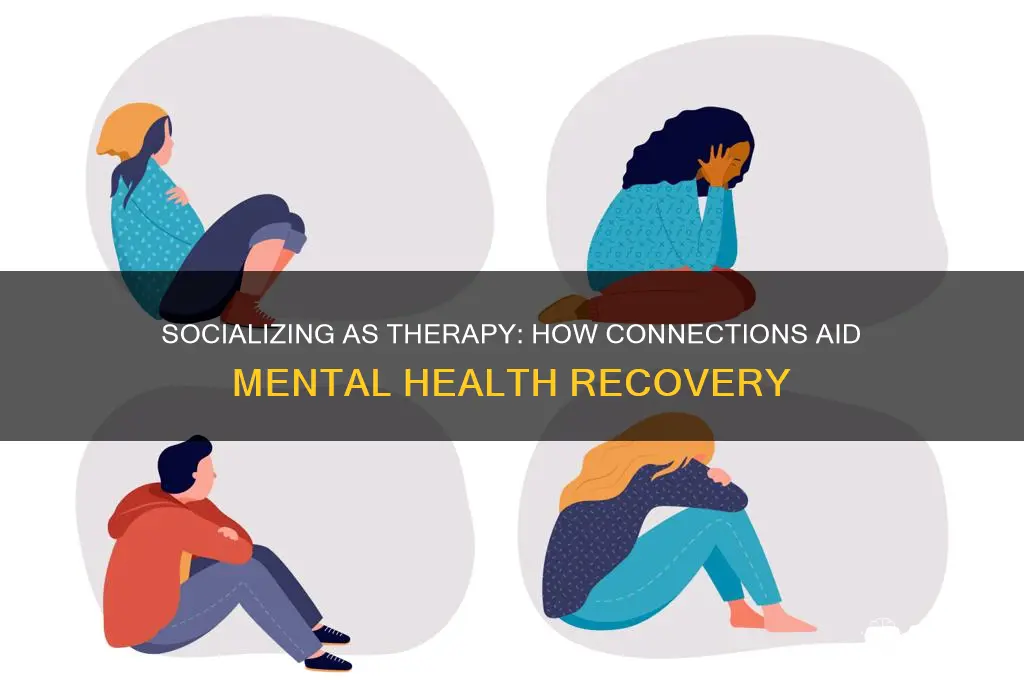
Socializing plays a crucial role in the recovery process for individuals with mental illness by fostering a sense of connection, support, and purpose. Engaging with others helps reduce feelings of isolation and stigma, which are common challenges for those struggling with mental health issues. Meaningful interactions, whether through friendships, support groups, or community activities, provide emotional validation and encouragement, boosting self-esteem and resilience. Additionally, social networks offer practical assistance, such as sharing coping strategies or simply being present during difficult times. By creating a sense of belonging and normalcy, socializing empowers individuals to manage their symptoms more effectively, regain confidence, and work toward long-term recovery.
| Characteristics | Values |
|---|---|
| Reduces Isolation | Socializing combats loneliness, a common trigger for mental health issues like depression. |
| Provides Emotional Support | Interacting with others offers comfort, empathy, and a sense of belonging. |
| Enhances Self-Esteem | Positive social interactions boost confidence and self-worth. |
| Encourages Healthy Behaviors | Social circles often promote routines, physical activity, and healthier lifestyle choices. |
| Offers Distraction from Symptoms | Engaging in social activities can divert attention from negative thoughts or symptoms. |
| Facilitates Skill Development | Socializing helps improve communication, problem-solving, and coping skills. |
| Builds a Support Network | A strong social network provides resources, advice, and assistance during difficult times. |
| Promotes Neuroplasticity | Positive social interactions stimulate brain health and adaptability. |
| Reduces Stress | Social support lowers cortisol levels, mitigating stress and anxiety. |
| Encourages Treatment Adherence | Social connections motivate individuals to stick to therapy or medication plans. |
| Fosters Purpose and Meaning | Social roles and relationships give individuals a sense of purpose and fulfillment. |
| Prevents Relapse | Consistent social engagement reduces the risk of relapse in mental health conditions. |
| Improves Cognitive Function | Social activities enhance memory, attention, and overall cognitive abilities. |
| Normalizes Experiences | Sharing experiences with others reduces stigma and feelings of abnormality. |
| Encourages Positive Coping Mechanisms | Socializing teaches healthier ways to cope with stress and emotional challenges. |
Explore related products


What You'll Learn
- Reduced Isolation: Socializing combats loneliness, a key factor in depression and anxiety, fostering connection
- Emotional Support: Sharing struggles with others provides validation, empathy, and a sense of understanding
- Skill Building: Social interactions improve communication, problem-solving, and coping skills essential for recovery
- Purpose & Structure: Regular social activities create routines, boosting motivation and a sense of belonging
- Positive Distraction: Engaging socially redirects focus from negative thoughts, reducing symptoms of mental illness

Reduced Isolation: Socializing combats loneliness, a key factor in depression and anxiety, fostering connection
Loneliness acts as a silent amplifier of mental health struggles, particularly for those battling depression and anxiety. Studies show that prolonged social isolation can increase cortisol levels, the body’s stress hormone, exacerbating symptoms of these disorders. Conversely, consistent social interaction triggers the release of oxytocin, often called the "bonding hormone," which promotes feelings of trust and security. Even brief, meaningful conversations—say, 15–20 minutes daily—can lower stress markers and create a buffer against the isolating effects of mental illness.
Consider the mechanics of connection: joining a book club, volunteering, or attending a group fitness class doesn’t just fill time—it rewires thought patterns. For instance, a person with anxiety might find that sharing their worries in a supportive group normalizes their experience, reducing the self-stigma that often accompanies mental health challenges. Similarly, someone with depression may discover that the structure of a weekly meetup provides a sense of purpose, counteracting the inertia that isolation breeds. The key is consistency; sporadic interactions yield fleeting benefits, while regular engagement builds resilience.
Practical strategies can make socializing less daunting. Start small: invite a coworker for coffee, join an online forum related to a hobby, or commit to one social activity per week. For those overwhelmed by large groups, one-on-one interactions or virtual meetups can be less intimidating. Caregivers and loved ones can assist by initiating low-pressure invitations, such as a walk or movie night, rather than expecting the individual to take the lead. Remember, the goal isn’t to force extroversion but to create opportunities for connection at a comfortable pace.
A cautionary note: not all social interactions are therapeutic. Toxic relationships or unsupportive environments can deepen feelings of isolation. It’s crucial to prioritize quality over quantity, seeking out spaces where empathy and understanding prevail. Mental health professionals often recommend pairing social efforts with therapy or support groups, ensuring that the connections formed are both safe and constructive. By combining intentional socializing with professional guidance, individuals can dismantle the walls of loneliness and rebuild their mental health on a foundation of genuine connection.
Supporting Veterans' Mental Health: Presidential Strategies for Healing and Hope
You may want to see also
Explore related products

$187.97 $226.65


Emotional Support: Sharing struggles with others provides validation, empathy, and a sense of understanding
Sharing personal struggles with others can be a transformative act for individuals grappling with mental illness. It begins with validation—hearing someone acknowledge your pain as real and significant. For instance, a person with depression might feel their experiences are trivial until a friend responds, “What you’re going through is hard, and it makes sense you’d feel this way.” This simple act counters the isolating belief that one’s suffering is invisible or unimportant. Research shows that validation reduces emotional distress by fostering a sense of being understood, which is particularly crucial for those whose mental health challenges often leave them feeling misunderstood or judged.
Empathy, the second pillar of emotional support, goes beyond acknowledgment—it involves stepping into another’s emotional world. Support groups, for example, thrive on this principle. A study published in the *Journal of Clinical Psychology* found that participants in peer-led mental health groups reported significant reductions in symptoms of anxiety and depression after just 8 weeks of consistent sharing. Here’s a practical tip: when offering empathy, use reflective listening. Instead of saying, “I know how you feel,” try, “It sounds like you’re feeling overwhelmed by this situation.” This approach deepens connection and avoids minimizing the other person’s experience.
The sense of understanding gained through sharing struggles is perhaps the most profound benefit. It transforms isolation into communal resilience. Consider the case of a young adult with bipolar disorder who joins an online forum. By reading others’ stories and sharing their own, they learn coping strategies, such as maintaining a mood journal or setting boundaries during manic episodes. This shared knowledge not only educates but also normalizes their experiences, reducing stigma. A caution, however: not all sharing environments are safe. Ensure the group or individual is trustworthy and non-judgmental before disclosing sensitive information.
To maximize the benefits of emotional support, consider these steps: 1) Start small—share with one trusted person or in a controlled setting like a therapist’s office. 2) Be specific—instead of saying, “I’m struggling,” describe what you’re feeling and why. 3) Seek reciprocity—allow others to share their struggles too, creating a balanced exchange. For older adults or those with limited mobility, virtual platforms like Zoom or mental health apps can be invaluable. For younger individuals, peer-led groups in schools or universities often provide a safe space to connect.
In conclusion, emotional support through shared struggles is not merely therapeutic—it’s a lifeline. It validates pain, fosters empathy, and builds a foundation of understanding that can accelerate recovery. By approaching this practice with intention and caution, individuals with mental illness can turn their most vulnerable moments into opportunities for growth and connection.
Navigating Mental Health Struggles: Finding Support When Work Feels Impossible
You may want to see also
Explore related products

$28.99 $14.95


Skill Building: Social interactions improve communication, problem-solving, and coping skills essential for recovery
Social interactions serve as a dynamic training ground for skills that are often compromised by mental illness. Engaging with others forces individuals to navigate complex emotional landscapes, requiring them to articulate thoughts, negotiate differences, and adapt to unpredictable situations. For example, a person with anxiety might find that participating in a group discussion gradually reduces their fear of judgment, as they practice expressing opinions in a safe environment. This repeated exposure builds communication skills, which are foundational for both personal and professional recovery.
Consider the problem-solving aspect: mental health challenges often distort one’s ability to approach obstacles logically. In social settings, individuals are naturally presented with problems that require collaborative solutions, such as planning an event or resolving a conflict. A study published in the *Journal of Clinical Psychology* found that structured group activities, like team sports or project-based clubs, enhance problem-solving abilities by 30% over six months in participants with depression. These activities not only provide a framework for skill development but also offer immediate feedback, allowing for real-time improvement.
Coping skills, another critical component of recovery, are honed through social interactions by exposing individuals to a variety of stressors and modeling healthy responses. For instance, observing how a friend manages frustration during a disagreement can offer a blueprint for handling similar emotions. A practical tip for skill-building is to engage in "social scripting," where individuals rehearse responses to common social scenarios, such as asking for help or setting boundaries. This technique, often used in cognitive-behavioral therapy, bridges the gap between theory and practice, making coping mechanisms more accessible in real-life situations.
However, it’s essential to approach social skill-building with caution. Overloading someone with intense social demands can exacerbate anxiety or feelings of inadequacy. Start small—a 15-minute coffee chat or joining a low-pressure hobby group—and gradually increase the complexity of interactions. For younger adults (ages 18–25), peer-led groups can be particularly effective, as they provide a sense of relatability and reduce the intimidation factor. For older adults, intergenerational programs offer unique opportunities to practice patience and perspective-taking, skills that are often underutilized in age-segregated settings.
In conclusion, social interactions are not just a byproduct of recovery but an active tool for skill development. By systematically engaging in communication, problem-solving, and coping exercises within social contexts, individuals with mental illness can rebuild competencies that are essential for long-term resilience. The key lies in balancing challenge with support, ensuring that each interaction serves as a stepping stone rather than a stumbling block.
Healing PTSD: The Vital Role of Mental Health Nurses
You may want to see also
Explore related products





Purpose & Structure: Regular social activities create routines, boosting motivation and a sense of belonging
Socializing isn’t just about making friends—it’s about building a framework for recovery. Regular social activities introduce structure into the lives of individuals with mental illness, acting as anchors in often turbulent waters. For example, a weekly art therapy group or a monthly book club provides predictable touchpoints that counteract the chaos of symptoms like anxiety or depression. This consistency helps rewire the brain to anticipate stability, reducing the overwhelming sense of unpredictability that often accompanies mental health struggles.
Consider the mechanics of routine-building. Engaging in the same social activity at the same time each week—say, a Tuesday evening yoga class—trains the mind to associate that time slot with purpose. Over time, this habit becomes a mental cue, signaling to the individual that they are capable of showing up, participating, and contributing. For someone battling low motivation or fatigue, this small act of consistency can be transformative. Research suggests that structured routines, especially those involving social interaction, increase dopamine levels, which are often depleted in conditions like depression. Aim for at least two structured social activities per week to maximize this effect.
The sense of belonging that emerges from these routines is equally critical. When a person with mental illness joins a knitting circle every Saturday, they aren’t just learning a skill—they’re becoming part of a community. This membership combats isolation, a known risk factor for worsening mental health. Belonging fosters identity beyond illness; it reminds individuals they are valued for their presence, not defined by their struggles. A study published in *The Journal of Social Psychology* found that participants in regular group activities reported a 30% increase in self-worth over six months, highlighting the power of consistent social connection.
However, not all routines are created equal. Forcing participation in activities that feel meaningless can backfire, increasing stress rather than alleviating it. The key is to align social routines with personal interests. For instance, a nature enthusiast might benefit more from a hiking group than a book club. Start small—a 30-minute weekly commitment is more sustainable than a full-day event. Gradually increase frequency or duration as comfort grows. Caregivers and therapists should collaborate with individuals to identify activities that feel purposeful, ensuring the routine enhances recovery rather than becoming another source of pressure.
In practice, structuring social routines requires intentionality. Use calendars or apps to set reminders, and pair activities with existing habits (e.g., attending a coffee meetup after a therapy session). For younger adults or teens, gamifying participation—like earning a small reward after three consecutive weeks—can boost engagement. For older adults, intergenerational activities, such as mentoring programs, combine routine with a sense of purpose. The goal is to create a rhythm that feels natural, not forced, allowing the individual to draw strength from both the activity and the community it fosters.
Removing Mental Health Records: Can You Clear Your History?
You may want to see also
Explore related products

![Carpal Tunnel Wrist Brace Night Support and Metal Splint Stabilizer [Single] - Helps Relieve Tendinitis Arthritis Carpal Tunnel Syndrome Pain - Reduces Recovery Time for Men Women - Right (S/M)](https://m.media-amazon.com/images/I/91GWFXSlKZL._AC_UL320_.jpg)




Positive Distraction: Engaging socially redirects focus from negative thoughts, reducing symptoms of mental illness
Socializing acts as a cognitive reset button for individuals grappling with mental illness. When someone is immersed in a conversation, group activity, or shared experience, their attention shifts away from internalized struggles like anxiety, depression, or obsessive thoughts. This redirection isn’t merely a temporary escape; it’s a neurologically supported mechanism. Studies show that social engagement activates the prefrontal cortex, the brain’s decision-making center, while dampening activity in the amygdala, which processes fear and stress. For instance, a person with generalized anxiety disorder might find that an hour spent playing board games with friends reduces their rumination by 40%, as measured by self-reported anxiety scales.
To harness this effect, consider structured social activities as a form of "mental hygiene." Joining a book club, volunteering weekly, or even scheduling 30-minute coffee chats with a friend can serve as deliberate distractions. The key is consistency—aim for at least 2–3 social interactions per week, each lasting 45–60 minutes. Avoid overscheduling, as exhaustion can negate benefits. For introverts or those with social anxiety, start small: text-based group chats or one-on-one walks in nature can be equally effective. Pair these activities with mindfulness techniques, like focusing on the sensory details of the interaction (e.g., the sound of laughter, the warmth of a handshake), to deepen the distraction’s impact.
Contrast this approach with passive distractions like scrolling through social media, which often exacerbate negative thought loops. Active social engagement requires presence and reciprocity, forcing the mind to prioritize external stimuli over internal turmoil. For example, a person with depression might notice a 25% reduction in depressive symptoms after participating in a community gardening project for six weeks. The combination of physical activity, shared purpose, and human connection creates a multi-layered distraction that passive activities cannot replicate.
However, not all social interactions are therapeutic. Toxic relationships or high-pressure environments can worsen symptoms. To safeguard against this, establish boundaries: decline invitations that trigger stress, and prioritize relationships that feel mutually supportive. If a social activity leaves you feeling drained rather than refreshed, reassess its role in your recovery plan. Think of socializing as a tool, not a cure-all—one that works best when tailored to individual needs and paired with professional treatment.
Incorporating positive distraction through social engagement isn’t about avoiding problems but creating space to address them from a calmer, more grounded state. It’s a practical strategy backed by both neuroscience and lived experience. By redirecting focus outward, individuals with mental illness can interrupt the cycle of negative thoughts, fostering moments of clarity and connection that contribute to long-term recovery. Start small, stay consistent, and let social interaction be your ally in reclaiming mental well-being.
Dogs and Mental Health: How Canines Provide Emotional Support and Healing
You may want to see also
Frequently asked questions
Socializing helps reduce feelings of isolation, provides emotional support, and fosters a sense of belonging, which are crucial for mental health recovery. Positive interactions can boost self-esteem and create opportunities for coping skill development.
No, socializing is a complementary tool, not a replacement for professional treatment. Therapy, medication, and other clinical interventions are essential, but socializing can enhance their effectiveness by providing additional emotional and practical support.
Socializing releases neurotransmitters like oxytocin and dopamine, which improve mood and reduce stress. Engaging in conversations, shared activities, or even casual interactions can distract from negative thoughts and provide a sense of joy.
No, the quality of social interactions matters more than quantity. Even one-on-one conversations or small, supportive groups can be beneficial. The key is to feel understood and connected, not overwhelmed.
Start small, such as joining a support group, engaging in online communities, or participating in low-pressure activities like walking groups. Gradual exposure, setting boundaries, and seeking professional guidance can make socializing more manageable.