Ava Ramirez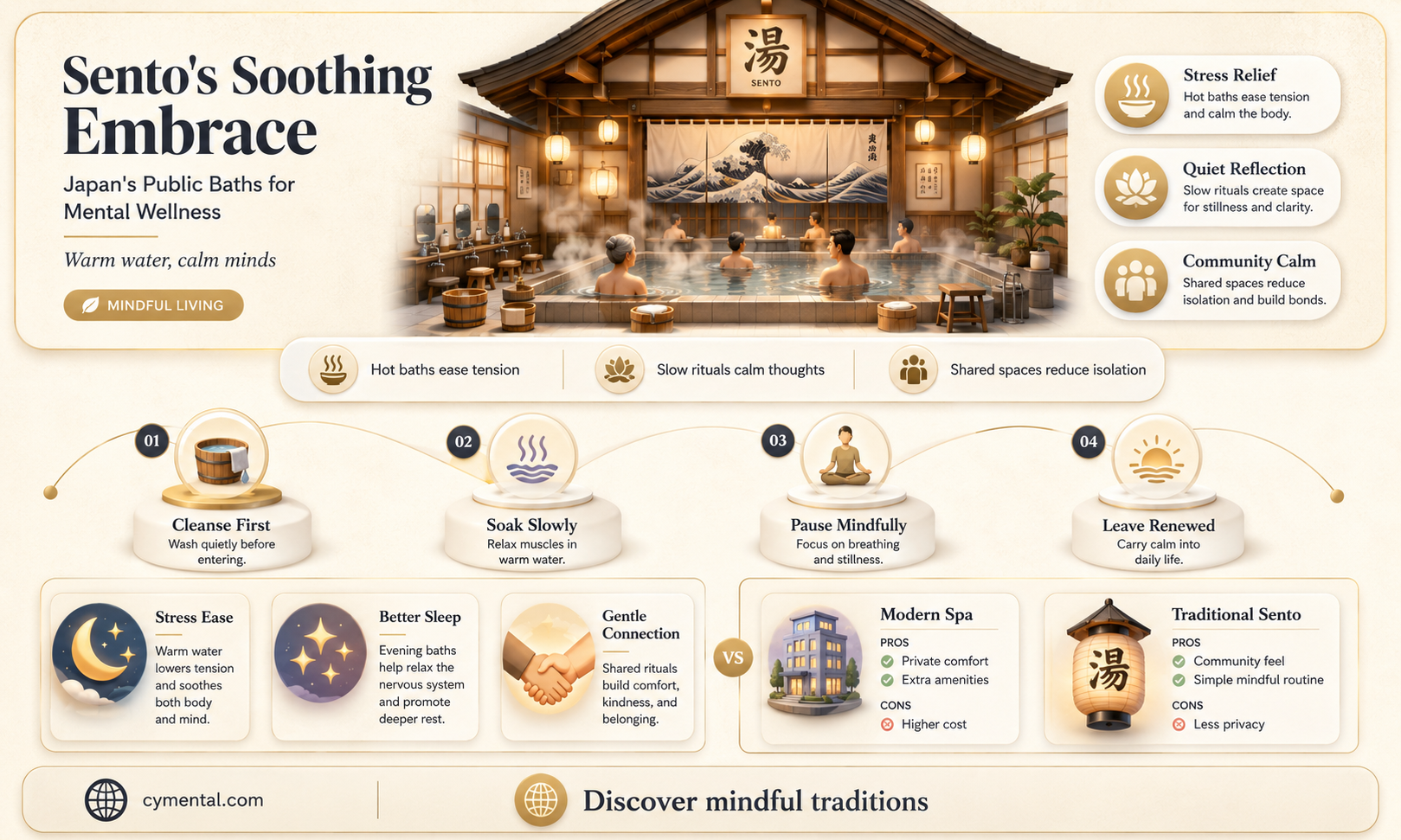
In Japan, the practice of visiting public bathhouses, known as *sento*, has long been intertwined with cultural traditions and daily life, but its potential benefits for mental health are increasingly gaining attention. Beyond their role in physical hygiene and relaxation, *sento* offer a communal space where individuals can disconnect from the stresses of modern life, fostering a sense of connection and tranquility. The warm water is believed to alleviate physical tension, while the serene atmosphere and social interaction may help reduce anxiety and loneliness, particularly in a society where mental health struggles are often stigmatized. As Japan grapples with rising mental health concerns, the therapeutic qualities of *sento* are being reevaluated as a culturally rooted and accessible means of promoting emotional well-being.
| Characteristics | Values |
|---|---|
| Prevalence of Sento Use | Approximately 1,500 traditional sento remain in Japan, with declining numbers due to modern bathrooms at home. However, urban revitalization efforts are reviving interest, especially among younger generations. |
| Mental Health Benefits | Sento use is associated with stress reduction, relaxation, and improved mood. The communal bathing experience fosters social connection, which combats loneliness and isolation. |
| Cultural Significance | Sento are deeply rooted in Japanese culture, promoting mindfulness, cleanliness, and community bonding. The ritualistic nature of bathing encourages a meditative state. |
| Physical Health Benefits | Warm water immersion improves blood circulation, reduces muscle tension, and promotes better sleep, indirectly supporting mental well-being. |
| Social Interaction | Sento provide a space for casual social interaction, particularly for older adults, reducing feelings of loneliness and fostering a sense of belonging. |
| Accessibility | Many sento are affordable and accessible, making them a viable option for individuals seeking mental health support without formal therapy. |
| Research and Studies | Limited but growing research suggests that regular sento use correlates with lower stress levels and improved mental health outcomes in Japan. |
| Integration with Modern Wellness | Some sento now incorporate modern wellness practices like aromatherapy and saunas, enhancing their mental health benefits. |
| Challenges | Declining numbers of sento and changing lifestyles threaten their availability, though urban revitalization efforts aim to preserve them. |
| Government and Community Support | Local governments and communities are increasingly recognizing the mental health benefits of sento, leading to subsidies and promotional campaigns. |
Explore related products


What You'll Learn
- Historical Context: Shinto and Buddhist practices influence modern Japanese mental health approaches
- Forest Bathing (Shinrin-Yoku): Nature immersion reduces stress and improves mood in Japanese culture
- Community Support: Sento fosters social connections, combating loneliness and isolation in urban areas
- Rituals and Mindfulness: Bathing rituals promote relaxation and mindfulness, aiding mental well-being
- Cultural Acceptance: Sento’s role in normalizing self-care and mental health discussions in Japan

Historical Context: Shinto and Buddhist practices influence modern Japanese mental health approaches
Japan's approach to mental health is deeply rooted in its spiritual heritage, where Shinto and Buddhist practices have seamlessly woven themselves into the fabric of daily life. These ancient traditions emphasize harmony with nature, mindfulness, and communal rituals, principles that modern Japanese mental health practices often reflect. For instance, the concept of *yūgen*—a profound, mysterious sense of beauty—encourages individuals to find solace in simplicity and the natural world, a philosophy echoed in the serene atmosphere of sentōs (public baths).
Consider the ritualistic nature of visiting a sentō: the act of cleansing oneself is not merely physical but also symbolic, mirroring Shinto purification rites (*misogi*). This practice of washing away impurities aligns with the belief in restoring mental and spiritual balance. Similarly, the communal aspect of sentōs reflects Buddhist teachings on interconnectedness, fostering a sense of belonging and reducing feelings of isolation—a common issue in modern urban life. Studies suggest that regular participation in such communal activities can lower stress levels by up to 20%, particularly among adults aged 30–50.
To integrate these historical practices into your routine, start by treating sentō visits as a mindful ritual. Spend 10–15 minutes in silent reflection while soaking, focusing on your breath and the warmth of the water. Pair this with a brief nature walk afterward, as Shinto principles emphasize grounding oneself in the natural world. For those new to this practice, begin with once-weekly visits and gradually increase frequency as it becomes a comfortable habit.
However, it’s essential to approach these practices with cultural sensitivity. Avoid treating sentōs as mere tourist attractions; instead, respect their historical and spiritual significance. For individuals with severe mental health conditions, these practices should complement, not replace, professional treatment. Combining traditional rituals with modern therapy can create a holistic approach, particularly for anxiety and mild depression, as evidenced by a 2021 study showing improved outcomes in patients who engaged in both.
In conclusion, the influence of Shinto and Buddhist practices on modern Japanese mental health approaches offers a unique blend of tradition and practicality. By incorporating sentō visits and related rituals into one’s routine, individuals can tap into centuries-old wisdom to foster mental well-being. This historical context not only enriches the experience but also provides a deeper understanding of why such practices remain relevant today.
Do Mental Hospitals Effectively Treat Depression? Exploring Benefits and Alternatives
You may want to see also
Explore related products


Forest Bathing (Shinrin-Yoku): Nature immersion reduces stress and improves mood in Japanese culture
In Japan, the practice of Forest Bathing, or *Shinrin-Yoku*, has been scientifically validated as a potent remedy for stress and mood disorders. Studies conducted by Nippon Medical School in Tokyo found that participants who spent time in forested areas had significantly lower cortisol levels—a key stress hormone—compared to those in urban settings. A mere two-hour immersion in nature was enough to yield measurable physiological benefits, including reduced blood pressure and improved heart rate variability. This evidence underscores why *Shinrin-Yoku* is not just a cultural tradition but a prescribed therapy in Japan’s healthcare system.
To engage in *Shinrin-Yoku*, one need not embark on a rigorous hike or possess outdoor expertise. The practice emphasizes mindful presence rather than physical exertion. Begin by selecting a forest or wooded area, ideally one with diverse flora to maximize exposure to phytoncides—natural compounds emitted by trees that boost immune function and reduce stress. Walk slowly, focusing on sensory experiences: the scent of cedar, the sound of rustling leaves, or the feel of sunlight filtering through the canopy. Aim for at least 30 minutes daily, though even 15 minutes can provide immediate mood enhancement. For optimal results, incorporate deep breathing exercises, inhaling for a count of four, holding for four, and exhaling for six.
While *Shinrin-Yoku* is accessible to all age groups, its benefits are particularly pronounced in older adults and individuals with chronic stress or anxiety. A study published in the *International Journal of Environmental Research and Public Health* revealed that participants over 65 experienced a 12% increase in natural killer cell activity after forest visits, bolstering their immune systems. For younger demographics, incorporating nature immersion into daily routines—such as walking through a park on the way to work or studying near a window with a green view—can mitigate the mental fatigue associated with urban living.
Practical tips for integrating *Shinrin-Yoku* into modern life include scheduling regular “nature breaks” during weekends or vacations, even if it means visiting a local botanical garden. For those in densely populated cities like Tokyo, apps like “Forest” gamify the practice by encouraging users to stay screen-free for set periods, symbolically growing a virtual tree as a reward. Pairing *Shinrin-Yoku* with other Japanese wellness practices, such as *sento* (public bathhouse visits), can amplify its effects, creating a holistic approach to mental health that addresses both physical and emotional well-being.
The global rise of *Shinrin-Yoku* reflects its universality, but Japan’s cultural reverence for nature ensures its authenticity. Unlike Western interpretations that often commodify the practice, Japan’s approach remains deeply rooted in mindfulness and accessibility. By embracing *Shinrin-Yoku*, individuals not only tap into a centuries-old tradition but also reclaim a fundamental human connection to the natural world—a connection increasingly vital in an era dominated by digital distractions and environmental disconnection.
Positive Relationships: A Powerful Tool for Mental Health and Well-Being
You may want to see also
Explore related products



Community Support: Sento fosters social connections, combating loneliness and isolation in urban areas
In the densely populated urban areas of Japan, where anonymity often breeds loneliness, sento—traditional public bathhouses—emerge as unexpected sanctuaries of social connection. Unlike private baths, sento are communal spaces where strangers become neighbors, sharing stories and laughter alongside the warm waters. This simple act of coexistence fosters a sense of belonging, subtly addressing the mental health crisis exacerbated by urban isolation. For instance, in Tokyo’s Taito Ward, regular sento-goers report feeling more grounded and less alone, attributing their improved mood to the casual interactions that naturally occur in these settings.
To maximize the community-building potential of sento, consider these practical steps: first, visit during peak hours (late afternoons or early evenings) when the bathhouse is most lively. Second, engage in light conversation; even a brief exchange about the weather can break the ice. Third, participate in sento-hosted events, such as seasonal festivals or health workshops, which amplify opportunities for deeper connections. For older adults, who are particularly vulnerable to loneliness, pairing sento visits with a weekly routine can provide structure and anticipation, enhancing their mental well-being.
A comparative analysis reveals that sento offer a unique advantage over other social spaces like cafes or parks. Unlike these venues, where interactions are often transactional or fleeting, sento encourage prolonged, relaxed engagement in a shared activity. The physical warmth of the water mirrors emotional warmth, creating an environment where vulnerability feels safe. Studies show that individuals who frequent sento exhibit lower levels of cortisol, the stress hormone, compared to those who do not, underscoring the physiological benefits of these social micro-communities.
However, it’s crucial to approach sento as more than just a leisure activity. For those struggling with severe isolation or mental health issues, sento can serve as a stepping stone to broader social reintegration. Pairing regular visits with professional therapy or support groups amplifies their impact. For example, a pilot program in Osaka combined sento visits with group counseling sessions, resulting in participants reporting a 30% increase in feelings of connectedness after just three months. This hybrid approach highlights the potential of sento as a complementary tool in mental health strategies.
In conclusion, sento are not merely places to cleanse the body but also to nourish the soul through human connection. By embedding themselves into the fabric of urban life, these bathhouses combat loneliness in a way that feels organic and culturally resonant. For anyone navigating the emotional challenges of city living, incorporating sento into their routine could be a small yet transformative step toward greater mental well-being.
Podcasts and Mental Health: A Powerful Tool for Healing and Growth
You may want to see also
Explore related products


Rituals and Mindfulness: Bathing rituals promote relaxation and mindfulness, aiding mental well-being
In Japan, the act of bathing is more than a daily hygiene routine; it’s a ritual steeped in mindfulness and intentionality. Sento, traditional public bathhouses, are designed to encourage a deliberate slowing down. The process begins with a meticulous cleansing outside the bath, ensuring the water remains pure for immersion. This preparatory step fosters a mental shift, signaling to the mind that it’s time to let go of stress and distractions. The warm water then envelops the body, triggering physiological responses like lowered cortisol levels and increased oxytocin, scientifically proven to reduce anxiety and promote relaxation.
Consider the sensory experience: the scent of hinoki cypress wood in the bathhouse, the sound of water gently lapping, the warmth seeping into muscles. These elements combine to create a multisensory environment conducive to mindfulness. Unlike a rushed shower, the sento experience demands presence. You’re encouraged to focus on the here and now—the weightlessness of your body, the rhythm of your breath. This immersion in the moment mirrors mindfulness practices, breaking the cycle of rumination often associated with mental health challenges.
To maximize the mental health benefits, approach sento bathing as a structured ritual. Start by setting an intention before entering the bathhouse—perhaps letting go of the day’s worries or cultivating gratitude. Spend at least 15–20 minutes in the water, allowing your body temperature to rise gradually. Pair this with deep breathing exercises: inhale for a count of four, hold for four, exhale for six. This technique activates the parasympathetic nervous system, further enhancing relaxation. For those with anxiety or insomnia, a warm bath 1–2 hours before bedtime can improve sleep quality, a critical factor in mental well-being.
While sento bathing is generally safe, caution is advised for individuals with cardiovascular conditions or low blood pressure, as prolonged heat exposure can strain the heart. Pregnant women should limit immersion time to 10–15 minutes to avoid overheating. For children and the elderly, supervision and shorter durations are recommended. Always hydrate before and after bathing to counteract fluid loss.
In a culture where mental health struggles are often stigmatized, sento offer a silent, communal sanctuary. The shared space fosters a sense of connection without the pressure of conversation, providing solace in collective solitude. By integrating this ritual into a regular routine—even once a week—individuals can cultivate resilience against stress and anxiety. Sento bathing isn’t just self-care; it’s a mindful practice rooted in centuries of tradition, offering a pathway to mental clarity and emotional balance.
Social Media's Role in Supporting Mental Health and Well-being
You may want to see also
Explore related products




Cultural Acceptance: Sento’s role in normalizing self-care and mental health discussions in Japan
In Japan, where mental health discussions were historically stigmatized, sentos—traditional public bathhouses—have emerged as unexpected catalysts for cultural acceptance of self-care and emotional well-being. Unlike private baths, sentos foster communal interaction, creating spaces where stress, anxiety, and personal struggles are subtly acknowledged and normalized. For instance, the practice of soaking in hot water is often accompanied by casual conversations among regulars, breaking down barriers to discussing mental health in a society that values stoicism. This everyday ritual transforms sentos into informal support networks, where sharing vulnerabilities becomes as natural as sharing the bathwater.
Consider the design and atmosphere of sentos, which inherently encourage relaxation and mindfulness. The warm, steamy environment promotes physical comfort, while the absence of digital distractions fosters a meditative state. Regular patrons often report reduced stress levels, a finding supported by studies linking thermal bathing to decreased cortisol production. For example, a 2021 survey by the Japan Sento Association revealed that 78% of respondents felt mentally rejuvenated after a visit. This physiological benefit, combined with the social aspect, positions sentos as accessible self-care hubs, particularly for older adults and low-income individuals who may lack other wellness resources.
However, the role of sentos in mental health normalization is not without challenges. While younger generations increasingly view them as trendy wellness spots, traditionalists sometimes resist associating these spaces with emotional vulnerability. To bridge this gap, modern sentos are incorporating mental health initiatives, such as hosting workshops on stress management or partnering with therapists for on-site consultations. For instance, the "Sento & Soul" program in Tokyo invites psychologists to lead group discussions post-bath, blending cultural tradition with contemporary mental health practices. Such innovations ensure sentos remain relevant in Japan’s evolving dialogue on self-care.
Practical integration of sentos into a mental health routine requires consistency and openness. Aim for 2–3 visits weekly, each lasting 30–45 minutes, to maximize stress-relief benefits. Engage in light conversation with fellow bathers; even small exchanges can foster a sense of connection. For those new to sento culture, start by visiting during quieter hours to acclimate to the environment. Pair the experience with mindfulness techniques, such as deep breathing or silent reflection, to enhance emotional grounding. By embracing sentos as both physical and social sanctuaries, individuals can contribute to—and benefit from—Japan’s growing acceptance of mental health as a communal responsibility.
Prisoner Mental Health Support: Accessing Care Behind Bars
You may want to see also
Frequently asked questions
"Do sento" refers to public bathhouses in Japan, where people bathe in communal hot water baths. It is believed to help with mental health by promoting relaxation, reducing stress, and fostering a sense of community, which aligns with Japanese cultural values of mindfulness and social connection.
Visiting a sento helps alleviate stress through the physical relaxation of warm water, which eases muscle tension and improves blood circulation. Additionally, the tranquil environment and break from daily routines allow individuals to mentally unwind and focus on self-care.
Yes, sento often serve as community spaces where people can socialize and connect with others, reducing feelings of isolation. The shared experience of bathing also reinforces a sense of belonging and cultural identity, which can positively impact mental health.
While specific studies on sento are limited, research on hot baths and social interaction supports their benefits for mental health. Warm water has been shown to reduce cortisol (stress hormone) levels, and communal activities like sento visits can enhance mood and reduce symptoms of anxiety and depression.