Madison Cole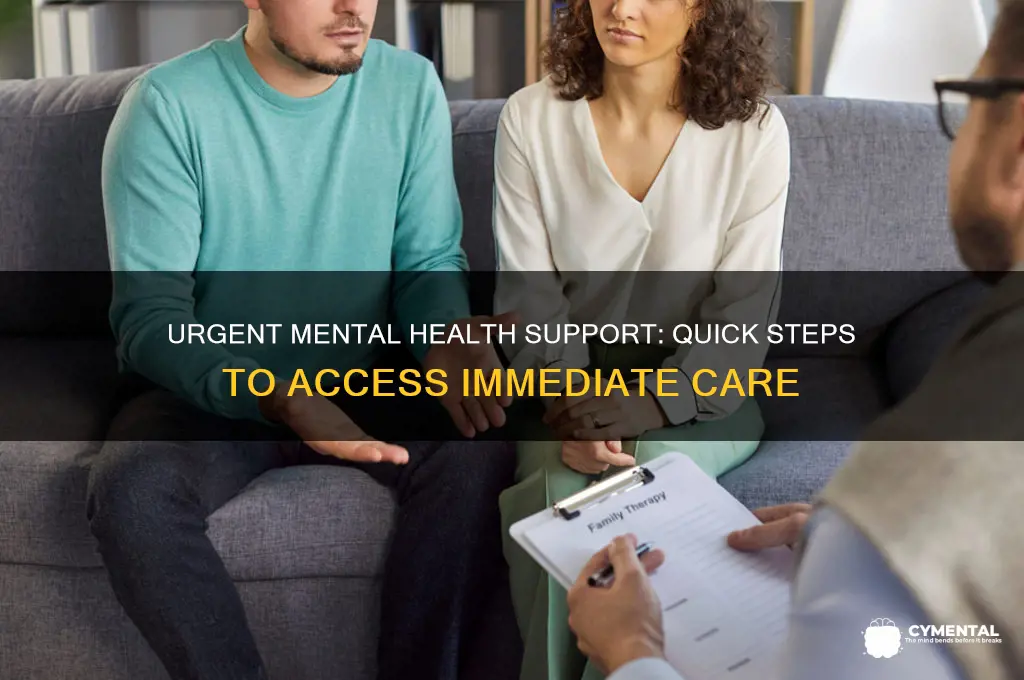
Seeking immediate mental health support is crucial when facing emotional distress or crisis. If you or someone you know is in urgent need of assistance, start by contacting local emergency services or a mental health hotline, such as the National Suicide Prevention Lifeline (988 in the U.S.). Many countries offer 24/7 crisis lines staffed by trained professionals who can provide guidance and resources. Additionally, consider reaching out to a trusted friend, family member, or healthcare provider for immediate support. Online platforms and telehealth services also offer quick access to therapists or counselors, ensuring you can connect with a professional promptly. Remember, prioritizing your mental well-being is essential, and help is always available.
| Characteristics | Values |
|---|---|
| Emergency Hotlines | Call 911 (USA), 999 (UK), 112 (EU), or local emergency numbers for immediate help. |
| Crisis Text Lines | Text HOME to 741741 (USA) or 85258 (UK) for 24/7 crisis support. |
| Online Therapy Platforms | BetterHelp, Talkspace, 7 Cups, and Calm offer immediate access to therapists. |
| Local Mental Health Clinics | Visit community mental health centers for walk-in or same-day appointments. |
| Telehealth Services | Platforms like Teladoc and Amwell provide virtual mental health consultations. |
| Support Groups | Join local or online support groups via organizations like NAMI or Meetup. |
| Mobile Apps | Apps like Crisis Text Line, Sanvello, and Headspace offer immediate tools and resources. |
| Primary Care Physicians | Contact your doctor for urgent referrals to mental health specialists. |
| Hospital Emergency Departments | Visit the nearest hospital for immediate psychiatric evaluation and care. |
| Employee Assistance Programs (EAPs) | Check workplace benefits for free, confidential mental health resources. |
| National Helplines | Call National Suicide Prevention Lifeline (988) or Samaritans (116 123) for urgent support. |
| Peer Support | Reach out to trusted friends, family, or peers for immediate emotional support. |
| Self-Help Resources | Use mindfulness, breathing exercises, or grounding techniques as temporary coping tools. |
| Insurance Coverage | Verify mental health coverage with your provider for expedited appointments. |
| Urgent Care Centers | Some urgent care facilities offer mental health screenings and referrals. |
| School/University Counseling | Students can access on-campus counseling services for immediate help. |
Explore related products


What You'll Learn
- Crisis Hotlines: Immediate support via phone or text for urgent mental health crises
- Emergency Services: Visit ER or call 911 for severe, life-threatening situations
- Teletherapy Apps: Access licensed therapists quickly through online platforms or mobile apps
- Local Clinics: Find walk-in mental health clinics for immediate in-person assistance
- Support Groups: Join peer-led groups for quick emotional support and coping strategies

Crisis Hotlines: Immediate support via phone or text for urgent mental health crises
In moments of acute mental distress, every second counts. Crisis hotlines offer a lifeline, providing immediate, confidential support via phone or text. These services are staffed by trained professionals who can de-escalate crises, offer coping strategies, and connect individuals to local resources. For instance, the National Suicide Prevention Lifeline (988 in the U.S.) is accessible 24/7, ensuring help is always within reach. Unlike therapy or medication, which require appointments or prescriptions, hotlines deliver instant relief, making them a critical first step in urgent situations.
Consider the mechanics of these services: a text-based hotline like Crisis Text Line (741741 in the U.S.) allows individuals to communicate silently, ideal for those in public spaces or unsafe environments. Phone hotlines, on the other hand, provide real-time vocal interaction, which can be more comforting for some. Both methods are effective, but the choice depends on the individual’s comfort and situation. For example, a teenager in a crowded school might prefer texting, while someone at home may opt for a call. Knowing these options empowers individuals to act swiftly when needed.
One common misconception is that hotlines are only for suicidal crises. In reality, they address a wide range of urgent mental health issues, from panic attacks to overwhelming stress. For instance, the Trevor Project’s lifeline (1-866-488-7386) specializes in LGBTQ+ youth, offering tailored support for unique challenges. Similarly, the Veterans Crisis Line (press 1 after calling 988) caters to military veterans. This specificity ensures that callers receive relevant, empathetic assistance, not a one-size-fits-all response.
Practical tips can maximize the effectiveness of these services. First, keep hotline numbers saved in your phone or written down for quick access. Second, if texting, be concise but clear about your situation—e.g., “I’m having a panic attack and need help calming down.” Third, if calling, find a quiet space if possible, but don’t delay reaching out if privacy is impossible. Finally, remember that hotlines are not a substitute for long-term care but a bridge to it. After stabilization, follow up with a mental health professional for ongoing support.
In comparison to other immediate mental health resources, crisis hotlines stand out for their accessibility and anonymity. Apps or online forums may offer peer support, but they lack the immediacy and expertise of trained responders. Emergency rooms, while vital in severe cases, can be overwhelming and time-consuming. Hotlines strike a balance, providing professional help without the barriers of cost, wait times, or stigma. Their role in the mental health ecosystem is irreplaceable, offering a human connection when it’s needed most.
Supporting Mental Health: How Loved Ones Can Make a Difference
You may want to see also
Explore related products


Emergency Services: Visit ER or call 911 for severe, life-threatening situations
In moments of severe mental health crisis, when thoughts of self-harm or suicide become overwhelming, immediate action is non-negotiable. Emergency services—specifically visiting the Emergency Room (ER) or calling 911—are designed to address life-threatening situations swiftly. These resources are not overreactions but critical lifelines. For instance, if someone is actively planning suicide, has access to lethal means, or is experiencing severe psychosis with danger to self or others, delay can be fatal. The ER provides rapid medical intervention, including psychiatric evaluation, medication stabilization, and hospitalization if necessary. Calling 911 ensures trained professionals arrive on-scene to de-escalate the situation and transport the individual to safety.
Consider this scenario: A 28-year-old with a history of depression texts a friend, "I can't do this anymore. I have the pills ready." The friend, recognizing the urgency, calls 911. Within minutes, emergency responders arrive, administer care, and transport the individual to the ER. There, they receive a psychiatric hold, medication adjustments, and a referral to inpatient treatment. This swift action prevents tragedy. The takeaway? Emergency services are not just for physical trauma; they are equally vital for mental health crises. Hesitation or downplaying symptoms can have irreversible consequences.
While the ER or 911 may seem extreme, they are specifically equipped to handle such emergencies. For example, ERs have protocols for psychiatric emergencies, including rapid assessment by mental health professionals and access to medications like benzodiazepines for acute agitation or antidepressants for severe depression. However, it’s important to note that these services are not long-term solutions. They stabilize the immediate crisis but require follow-up care, such as outpatient therapy or psychiatric consultation. Think of them as the first step in a continuum of care, not the final destination.
Critics might argue that ERs are overcrowded or that mental health crises don’t warrant such drastic measures. Yet, data shows that untreated severe mental health episodes often escalate, leading to hospitalization or worse. For instance, a study in *JAMA Psychiatry* found that individuals who received immediate ER intervention during suicidal crises had significantly lower rates of completed suicide compared to those who delayed care. Practical tip: If you’re unsure whether a situation qualifies as "life-threatening," err on the side of caution. Phrases like "I want to die" or behaviors like giving away prized possessions are red flags that demand immediate action.
In conclusion, emergency services are not a last resort but a first line of defense in severe mental health crises. They offer rapid, life-saving interventions tailored to acute situations. While they may not address underlying issues, they provide the stability needed to pursue long-term treatment. Remember: Seeking help is not a sign of weakness but a courageous step toward recovery. If you or someone you know is in immediate danger, don’t hesitate—visit the ER or call 911. Your life or theirs depends on it.
Paws in the Classroom: Pets Boosting Student Mental Health
You may want to see also
Explore related products





Teletherapy Apps: Access licensed therapists quickly through online platforms or mobile apps
In moments of crisis, the ability to connect with a licensed therapist within minutes can be a lifeline. Teletherapy apps like BetterHelp, Talkspace, and Calmerry offer exactly that—immediate access to mental health professionals via text, video, or voice chat. These platforms typically require users to fill out a brief assessment, after which they are matched with a therapist who can address their specific needs. For instance, someone experiencing panic attacks might be paired with a cognitive-behavioral therapist specializing in anxiety disorders. The convenience of these apps lies in their 24/7 availability, eliminating the need to wait weeks for an in-person appointment.
Consider the process as a streamlined version of traditional therapy. After downloading the app and creating an account, users often pay a subscription fee (ranging from $60 to $100 per week, depending on the platform and services). This fee typically includes unlimited messaging with a therapist and one live session per week. For those who prefer flexibility, some apps allow users to switch therapists if the initial match isn’t a good fit. While teletherapy isn’t a replacement for emergency services, it’s an effective way to address acute stress, relationship issues, or mild to moderate depression and anxiety promptly.
One of the standout advantages of teletherapy apps is their accessibility. They remove barriers like geographic location, transportation, and stigma, making mental health care available to individuals in rural areas or those with busy schedules. For example, a working parent can message their therapist during a lunch break or schedule a video session after the kids are in bed. However, it’s crucial to note that these apps are not suited for severe mental health crises, such as suicidal ideation, which require immediate in-person intervention.
Critics argue that the quality of care may vary, as the therapist-client relationship can feel less personal through a screen. To mitigate this, users should actively communicate their needs and expectations. For instance, if someone prefers a therapist with experience in trauma, they should specify this during the initial assessment. Additionally, while teletherapy apps are convenient, they may not be covered by insurance, so users should verify their plan’s policies. Despite these limitations, teletherapy remains a valuable tool for those seeking quick, flexible mental health support.
In conclusion, teletherapy apps provide a practical solution for individuals needing immediate mental health assistance. By offering quick access to licensed professionals, these platforms bridge the gap between urgency and availability. While they aren’t a one-size-fits-all solution, their convenience, affordability, and accessibility make them a viable option for many. For anyone wondering how to get mental help ASAP, exploring these apps could be a first step toward finding the support they need.
Boost Your Mind: The Powerful Link Between Body and Mental Health
You may want to see also
Explore related products





Local Clinics: Find walk-in mental health clinics for immediate in-person assistance
In moments of acute mental distress, the immediacy of in-person support can be a lifeline. Walk-in mental health clinics offer precisely this—a physical space where individuals can receive immediate assistance without an appointment. These clinics are staffed with professionals trained to handle crises, from severe anxiety and panic attacks to suicidal ideation. Unlike traditional therapy, which often requires scheduling weeks in advance, walk-in clinics prioritize urgency, ensuring that no one is turned away during their darkest hour.
Locating a walk-in clinic begins with a quick online search or a call to local health resources. Many cities maintain directories of mental health facilities, often categorized by services offered. For instance, some clinics specialize in youth mental health, while others focus on trauma or substance abuse. Practical tips include checking operating hours, as some clinics offer extended hours or weekend availability. Additionally, verifying insurance coverage or sliding-scale fees can alleviate financial concerns, ensuring access for all socioeconomic groups.
A visit to a walk-in clinic typically involves an initial assessment by a mental health professional, who evaluates the severity of the crisis and determines the appropriate intervention. This could range from immediate counseling to referrals for medication or long-term therapy. For example, a person experiencing a panic attack might receive breathing exercises and grounding techniques on the spot, followed by a recommendation for cognitive-behavioral therapy. The goal is stabilization and a clear plan for ongoing care.
While walk-in clinics are invaluable, they are not a one-size-fits-all solution. They excel in crisis management but may not address complex, long-term mental health issues. For instance, chronic depression or personality disorders often require consistent, in-depth treatment beyond what a single visit can provide. However, these clinics serve as a critical entry point, connecting individuals to the broader mental health system. By offering immediate relief and a pathway to sustained care, they bridge a vital gap in mental health accessibility.
In conclusion, walk-in mental health clinics are a cornerstone of immediate mental health support, providing a tangible, human-centered response to crises. Their accessibility, combined with professional expertise, makes them an essential resource for anyone in urgent need. By understanding their role and how to access them, individuals can take proactive steps toward healing, even in the most challenging moments.
Finding Mental Health Support: Where to Go for Help and Healing
You may want to see also
Explore related products


Support Groups: Join peer-led groups for quick emotional support and coping strategies
In moments of crisis, the power of shared experience can be a lifeline. Support groups offer a unique form of solace, connecting you with individuals who truly understand your struggles. These peer-led gatherings provide a safe space to express yourself without fear of judgment, allowing for raw, unfiltered conversations that can be incredibly therapeutic. Imagine finding a community where your pain is not only acknowledged but also mirrored, creating a sense of belonging that is often the first step towards healing.
The Process of Joining: Locating a suitable support group is now more accessible than ever. Online platforms and local community boards often list various groups catering to specific needs, such as anxiety, depression, or grief. Websites like Meetup and Facebook have dedicated sections for support groups, making it easy to find one that aligns with your concerns. Some groups may require a simple registration process, while others might offer drop-in sessions, ensuring you can access support promptly. For instance, a quick search for 'anxiety support groups' in your area could lead you to a weekly meeting where you can share your experiences and learn coping mechanisms from peers.
Benefits and Strategies: The beauty of support groups lies in their ability to provide immediate emotional relief and practical tools. Here, you'll find a treasure trove of coping strategies, from breathing techniques to cognitive reframing, shared by individuals who have navigated similar challenges. These groups often foster a culture of mutual support, where members encourage each other to set small, achievable goals, providing a sense of accountability and progress. For example, a peer might suggest a 5-minute daily journaling practice to manage anxiety, a simple yet effective strategy that can be implemented immediately.
Consider the impact of hearing someone say, "I've been there, and this is what helped me." This peer-to-peer learning can be incredibly empowering, offering a sense of hope and a toolkit to manage your mental health. Support groups also provide a platform to challenge negative thought patterns and behaviors in a supportive environment, facilitating personal growth and resilience.
A Word of Caution: While support groups are invaluable, they are not a replacement for professional therapy or medical advice. It's essential to view them as a complementary resource, especially in severe cases. Some groups may also have specific guidelines or structures, so understanding their format beforehand can ensure a comfortable experience. For instance, certain groups might follow a 12-step program, while others could be more open-discussion based.
In the journey towards better mental health, support groups can be a powerful ally, offering quick access to a community that understands and cares. They provide a unique blend of emotional support and practical strategies, all within a non-judgmental, peer-led environment. By sharing and learning from collective experiences, individuals can find solace, hope, and effective tools to navigate their mental health challenges. This approach not only fosters a sense of community but also empowers individuals to take an active role in their healing process.
Supporting Your Friend: Encouraging Mental Health Treatment with Compassion
You may want to see also
Frequently asked questions
Call emergency services (911 in the U.S.) or a local crisis hotline like the National Suicide Prevention Lifeline (988 in the U.S.). Many countries have similar hotlines available 24/7 for immediate assistance.
Look for low-cost or sliding-scale clinics, community mental health centers, or online therapy platforms that offer affordable options. Some organizations also provide free counseling services.
Yes, platforms like Crisis Text Line, 7 Cups, and BetterHelp offer immediate or near-immediate support. Additionally, apps like Calm and Headspace provide tools for managing stress and anxiety.
Encourage them gently and express your concern. Offer to help them find resources or accompany them to an appointment. In severe cases, consult a mental health professional for guidance on intervention options.