Caleb Wright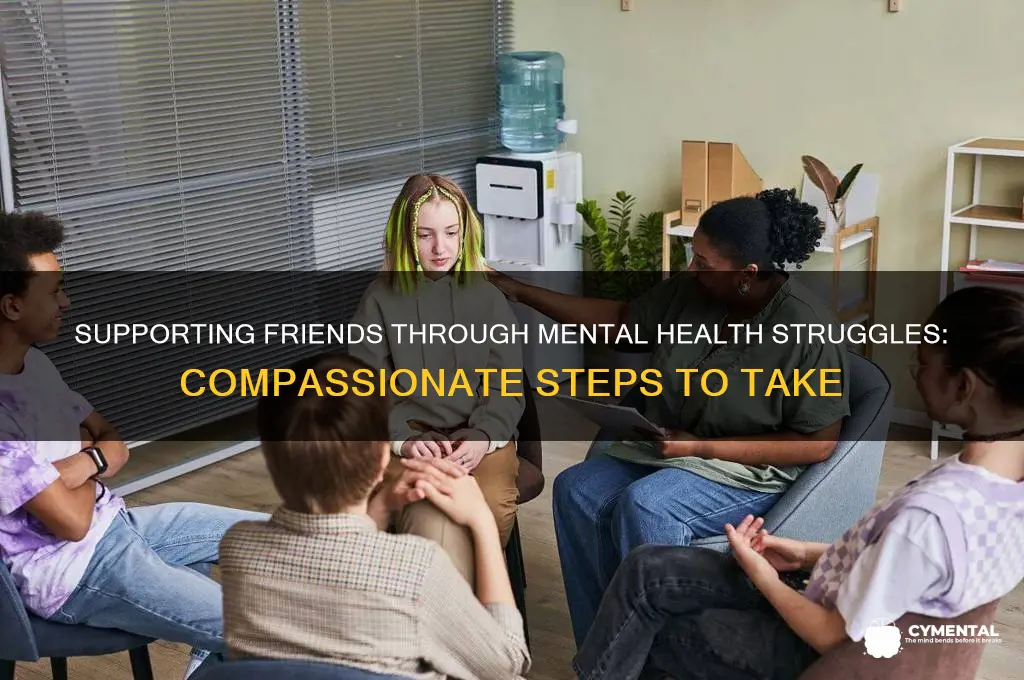
Supporting a friend with mental health issues requires empathy, patience, and understanding. Start by creating a safe, non-judgmental space where they feel comfortable sharing their feelings. Listen actively without trying to fix their problems, and validate their emotions to show you care. Encourage them to seek professional help if needed, and offer to assist with finding resources or accompanying them to appointments. Be consistent in your support, but also remember to set boundaries to protect your own well-being. Small gestures, like checking in regularly or spending quality time together, can make a significant difference in their journey toward healing.
Explore related products


What You'll Learn
- Listen Actively: Show empathy, avoid judgment, and give undivided attention to their feelings and concerns
- Encourage Professional Help: Gently suggest therapy or counseling as a supportive step for recovery
- Stay Connected: Regularly check in, maintain contact, and show consistent support through actions and words
- Educate Yourself: Learn about their condition to better understand and respond to their needs
- Promote Self-Care: Encourage healthy habits like exercise, sleep, and mindfulness to aid their well-being

Listen Actively: Show empathy, avoid judgment, and give undivided attention to their feelings and concerns
Active listening is the cornerstone of supporting a friend with mental health issues. It’s not about offering solutions or fixing problems—it’s about creating a safe space where they feel heard and understood. When your friend shares their struggles, resist the urge to jump in with advice or comparisons. Instead, focus on their words, tone, and body language. Mirror their emotions by saying, “It sounds like you’re feeling overwhelmed,” or “I can tell this is really hard for you.” This validates their experience and shows you’re fully present, fostering trust and openness.
Empathy transforms a superficial conversation into a meaningful connection. Put yourself in their shoes without losing sight of your own boundaries. Avoid phrases like “I know how you feel” or “It could be worse,” which can minimize their pain. Instead, ask open-ended questions like, “How has this been affecting you?” or “What’s been the hardest part?” These questions encourage them to express themselves more deeply while demonstrating genuine curiosity about their inner world. Remember, empathy isn’t about agreeing—it’s about acknowledging their reality as they perceive it.
Judgment, even unintentional, can shut down communication faster than anything else. Mental health struggles often come with shame or guilt, and your friend may already be their own harshest critic. Phrases like “You should just…” or “Why don’t you try…” can feel dismissive, even if well-intentioned. Instead, use neutral language and affirmations like, “It makes sense that you’re feeling this way,” or “You’re handling this better than you think.” Your role isn’t to evaluate their feelings but to accept them as valid, no matter how messy or uncomfortable.
Undivided attention is a rare gift in a distracted world. When your friend is sharing, silence notifications, maintain eye contact (if in person), and avoid multitasking. If your mind wanders, gently bring it back to their words. Summarize what they’ve said periodically to confirm understanding: “So, what I’m hearing is that you’re feeling trapped and unsure of what to do next.” This not only ensures clarity but also reinforces that you’re fully engaged. In a culture where attention is fragmented, giving yours completely communicates care in a way words often can’t.
Active listening isn’t a one-time act but a practice that builds over time. Be patient with yourself and your friend—it’s okay if you don’t always get it right. What matters is your willingness to show up, listen deeply, and hold space for their pain without trying to fix it. Over time, this kind of support can be as healing as any professional intervention, reminding your friend they’re not alone in their struggle. In the end, the simplest yet most powerful thing you can offer is your presence—quiet, nonjudgmental, and unwavering.
Do Mental Hospitals Help: Exploring Effectiveness and Patient Outcomes
You may want to see also
Explore related products


Encourage Professional Help: Gently suggest therapy or counseling as a supportive step for recovery
Recognizing when a friend might benefit from professional mental health support is a delicate but crucial skill. While your presence and empathy are invaluable, certain struggles require expertise beyond what friendship can offer. Therapy or counseling isn’t a last resort—it’s a proactive step toward healing, much like seeing a doctor for a physical ailment. Mental health professionals provide tools, strategies, and insights that can transform how your friend navigates their challenges.
Approaching this conversation requires sensitivity and timing. Start by expressing your concern in a non-judgmental way, using "I" statements to avoid sounding accusatory. For example, "I’ve noticed you’ve been feeling overwhelmed lately, and I’m worried about you. Have you ever considered talking to someone about it?" Frame therapy as a collaborative resource, not a critique of their coping abilities. Mention specific benefits, like learning coping mechanisms, gaining perspective, or having a safe space to process emotions.
Be prepared for resistance, as stigma or fear of vulnerability might make your friend hesitant. Avoid pushing too hard; instead, offer to help them find a therapist or accompany them to the first session. Share normalized examples, such as, "A lot of people find it helpful to talk to someone who’s trained to listen without judgment." If cost is a concern, suggest sliding-scale clinics, telehealth options, or employee assistance programs.
Finally, remember your role is to support, not to fix. Encouraging professional help doesn’t diminish your friendship—it strengthens it by showing you care enough to want the best for them. Keep the door open for future conversations, and let them know you’re there regardless of their decision. Sometimes, just planting the seed is enough; they may return to the idea when they’re ready.
Assessing Mental Illness Impairment: Essential Tools for Clinicians
You may want to see also
Explore related products





Stay Connected: Regularly check in, maintain contact, and show consistent support through actions and words
Human connection is a lifeline for those navigating mental health challenges. Isolation can exacerbate feelings of hopelessness and despair, making consistent contact a powerful tool for support. Regular check-ins, even brief ones, signal to your friend that they are not alone in their struggle. A simple text asking, "How are you holding up today?" or a quick phone call can make a significant difference. The key is consistency; sporadic outreach may leave them feeling overlooked, while regular contact reinforces your commitment to their well-being.
Maintaining contact goes beyond mere communication—it involves showing up in meaningful ways. For instance, if your friend is dealing with anxiety, offer to accompany them to a therapy session or a support group meeting. If they’re struggling with depression, propose a low-key activity like a short walk or watching a movie together. These actions demonstrate that you’re willing to adapt to their needs and engage with their reality. Remember, it’s not about fixing their problems but about being present and reliable.
The power of words should not be underestimated. Choose your language carefully to avoid invalidating their experiences. Instead of saying, "Just think positively," try, "I’m here for you, no matter how hard things get." Phrases like "I’m proud of you for taking steps to feel better" can reinforce their efforts and boost their self-esteem. Be mindful of tone as well; a calm, empathetic voice can provide comfort during moments of distress. Avoid overwhelming them with advice unless they explicitly ask for it—sometimes, simply listening is the most supportive action.
Consistency is the backbone of staying connected. Set reminders if necessary to ensure you’re reaching out regularly, but avoid making it feel obligatory. Authenticity matters; your friend will sense if your efforts are genuine. If you’re unsure how to help, ask them directly: "What would be most helpful for you right now?" This not only shows your willingness to support them but also empowers them to articulate their needs. Over time, this consistent, thoughtful approach can help rebuild their sense of trust and security.
Finally, be patient with both your friend and yourself. Supporting someone with mental health issues is a long-term commitment, and progress may be slow. Celebrate small victories, like a day when they feel slightly better or a step they take toward self-care. By staying connected through regular check-ins, meaningful actions, and thoughtful words, you’re providing a vital source of strength and hope. Your presence alone can remind them that recovery is possible and that they have someone to lean on along the way.
Supporting Student Well-being: Practical Strategies for Schools to Enhance Mental Health
You may want to see also
Explore related products


Educate Yourself: Learn about their condition to better understand and respond to their needs
Understanding your friend's mental health condition is the cornerstone of providing meaningful support. Each diagnosis comes with its own set of symptoms, triggers, and coping mechanisms. For instance, someone with generalized anxiety disorder might experience persistent worry and physical symptoms like fatigue, while someone with depression may struggle with feelings of hopelessness and a lack of energy. By familiarizing yourself with these specifics, you can avoid misunderstandings and offer more tailored assistance. Start by researching reputable sources such as the National Alliance on Mental Illness (NAMI) or the World Health Organization (WHO), which provide detailed guides on various mental health conditions.
Consider this: asking your friend to explain their condition can be overwhelming for them. Instead, take the initiative to educate yourself first. This not only demonstrates your commitment to their well-being but also ensures you approach conversations with empathy rather than assumptions. For example, learning that panic attacks can mimic heart attacks might help you remain calm and reassuring during an episode, rather than reacting with alarm. Knowledge equips you to be a more effective ally, reducing the risk of saying or doing something unintentionally hurtful.
However, educating yourself isn’t just about reading articles or watching videos. It’s also about understanding your friend’s unique experience within the broader framework of their condition. Mental health is deeply personal, and two people with the same diagnosis may have vastly different struggles. Engage in open, non-judgmental conversations to learn how their condition manifests in their daily life. For instance, one person with OCD might struggle with intrusive thoughts, while another might focus on compulsive behaviors like excessive cleaning. Tailoring your support to their individual needs shows respect for their autonomy and fosters trust.
A practical tip is to keep a notebook or digital document where you jot down key insights about their condition and personal triggers. This can serve as a reference during moments when your friend needs help but isn’t able to articulate it clearly. Additionally, be mindful of the language you use. Avoid phrases like “just stay positive” or “it’s all in your head,” which can minimize their experience. Instead, opt for phrases like “I’m here for you” or “How can I support you right now?” that validate their feelings and reinforce your role as a safe space.
Finally, remember that education is an ongoing process. Mental health conditions can evolve, and new research or treatments may emerge. Stay updated by subscribing to mental health newsletters, attending workshops, or joining support groups for friends and family of individuals with mental health challenges. By continually expanding your knowledge, you not only improve your ability to help your friend but also contribute to breaking the stigma surrounding mental health in your community.
Overcoming Mental Blocks: Strategies to Support Athletes' Performance and Resilience
You may want to see also
Explore related products



Promote Self-Care: Encourage healthy habits like exercise, sleep, and mindfulness to aid their well-being
Self-care isn’t selfish—it’s foundational. When a friend is struggling with mental health, their basic needs often fall by the wayside. Encouraging healthy habits like exercise, sleep, and mindfulness isn’t about imposing a lifestyle; it’s about offering tools they can use to rebuild stability. Start small: suggest a 10-minute walk together or share a guided meditation app. These actions signal that you’re invested in their well-being without overwhelming them with expectations.
Exercise, even in modest doses, can be a game-changer. Research shows that 30 minutes of moderate activity, like brisk walking or cycling, three times a week can reduce symptoms of depression and anxiety. For younger adults, team sports or yoga classes might appeal, while older friends may prefer low-impact options like swimming or tai chi. The key is to frame it as a shared activity, not a chore. For instance, invite them to join you for a hike or a dance class, emphasizing the fun over the fitness.
Sleep deprivation exacerbates mental health issues, yet it’s often overlooked. Adults need 7–9 hours of sleep per night, but stress can disrupt even the best intentions. Help your friend establish a bedtime routine: dim lights an hour before bed, limit screen time, and incorporate calming activities like reading or journaling. If they’re open to it, suggest they track their sleep using a wearable device or app to identify patterns. Small adjustments, like avoiding caffeine after 2 p.m., can make a significant difference.
Mindfulness isn’t about achieving zen—it’s about being present. For someone overwhelmed by anxiety or racing thoughts, grounding techniques can provide immediate relief. Teach them the 5-4-3-2-1 method: name five things they can see, four they can touch, three they can hear, two they can smell, and one they can taste. Alternatively, encourage them to try a mindfulness app like Headspace or Calm, which offer short, accessible sessions. Consistency matters more than duration; even 5 minutes a day can foster a sense of calm.
The goal of promoting self-care is to empower, not to pressure. Be patient and adaptable—what works for one person may not work for another. Celebrate small victories, like a consistent bedtime or a week of daily walks, to reinforce progress. Remember, you’re not their therapist, but by fostering these habits, you’re helping them build a toolkit to manage their mental health. Over time, these practices can become second nature, offering a foundation of resilience in challenging moments.
Sleep's Role in Boosting Mental Health and Emotional Well-Being
You may want to see also
Frequently asked questions
Approach them in a private, comfortable setting and express your concern in a gentle, non-judgmental way. Use "I" statements, such as "I’ve noticed you seem upset lately, and I’m here for you if you want to talk."
Respect their boundaries and let them know you’re available whenever they’re ready. Continue to show support through small gestures, like checking in regularly or spending time together without pressuring them to open up.
Set healthy boundaries and prioritize your own mental well-being. Encourage them to seek professional help, and remember it’s not your responsibility to "fix" their issues—your role is to be a supportive friend.
Listen actively without judgment, educate yourself about their struggles, and encourage professional resources like therapy or support groups. Offer to accompany them to appointments or simply be present during difficult times.