Caleb Wright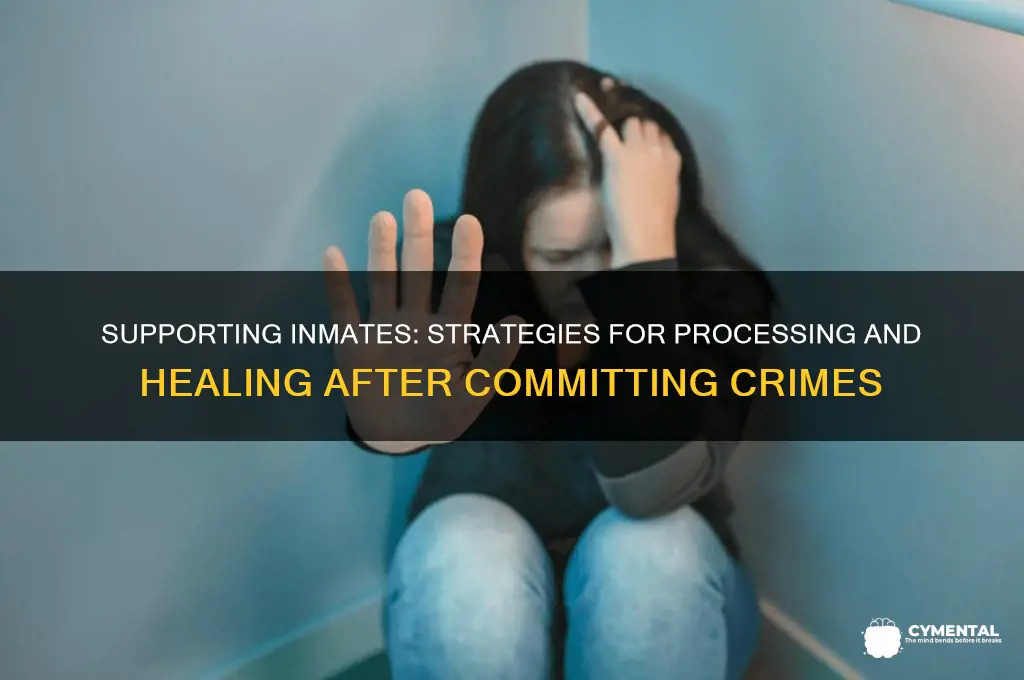
Helping an inmate mentally process their crime is a critical yet complex task that requires empathy, patience, and a structured approach. Many inmates struggle with guilt, shame, and trauma related to their actions, often compounded by the isolating and stressful environment of incarceration. To support their mental processing, it is essential to create a safe, non-judgmental space where they can reflect on their actions, understand the consequences, and take responsibility. This can involve therapeutic interventions such as cognitive-behavioral therapy, restorative justice programs, or one-on-one counseling to explore the root causes of their behavior and foster accountability. Encouraging self-reflection, promoting empathy for victims, and helping inmates develop coping strategies are key steps in facilitating healing and reducing the risk of reoffending. Ultimately, the goal is to guide them toward genuine remorse, personal growth, and a sense of purpose beyond their past actions.
Explore related products


What You'll Learn
- Encourage Self-Reflection: Prompt inmates to examine their actions, motivations, and consequences of their crime honestly
- Provide Therapy Access: Ensure inmates have regular access to mental health professionals for counseling and support
- Teach Accountability: Help inmates understand their responsibility and the impact of their actions on victims
- Promote Rehabilitation Programs: Enroll inmates in programs focused on skill-building, education, and personal growth
- Foster Support Networks: Encourage peer support groups and family connections to aid emotional healing

Encourage Self-Reflection: Prompt inmates to examine their actions, motivations, and consequences of their crime honestly
Incarcerated individuals often struggle to confront the gravity of their actions, a necessary step for genuine rehabilitation. Encouraging self-reflection isn’t about assigning blame but fostering accountability. Start by creating a safe, nonjudgmental space where inmates feel comfortable exploring their thoughts. Use open-ended questions like, *“What were you hoping to achieve when you made that decision?”* or *“How do you think your actions affected others?”* These prompts invite introspection without leading their responses. Pair this with structured journaling exercises—for instance, dedicating 15 minutes daily to write about their crime from different perspectives (their own, the victim’s, or a bystander’s). Over time, this practice can dismantle denial and reveal patterns of thought or behavior that led to the crime.
Consider the case of a 28-year-old inmate who, through guided self-reflection, realized his thefts were driven by a desire to prove himself to peers rather than financial need. This breakthrough came after weeks of journaling and one-on-one sessions where he was asked to dissect his motivations. The facilitator avoided accusatory language, instead using phrases like, *“What do you think was the root of that choice?”* This approach allowed him to connect his actions to deeper insecurities, a critical step in addressing the underlying issues. For younger inmates (ages 18–25), whose brains are still developing impulse control, incorporating visual aids like decision-making flowcharts can make abstract concepts more tangible.
While self-reflection is powerful, it’s not without risks. Inmates may experience overwhelming guilt or shame, which can derail progress if not managed carefully. Facilitators should monitor emotional responses and introduce grounding techniques, such as deep breathing or mindfulness exercises, when necessary. For example, if an inmate becomes visibly distressed while discussing their crime, pause the session and guide them through a 3-minute breathing exercise: inhale for 4 seconds, hold for 4 seconds, exhale for 6 seconds. This prevents emotional flooding and ensures the process remains constructive rather than retraumatizing.
Comparing self-reflection to physical therapy can help inmates understand its purpose. Just as a broken bone requires consistent, deliberate movement to heal, emotional and psychological wounds need regular examination to mend. Assign weekly reflection tasks, such as writing a letter to their past self or creating a timeline of events leading up to the crime. These activities should be tailored to the individual’s cognitive level and emotional readiness. For instance, a 45-year-old inmate with a history of substance abuse might benefit from reflecting on how addiction clouded his judgment, while a younger offender could focus on peer influence.
Ultimately, self-reflection is a tool, not a cure-all. Its effectiveness depends on consistency, empathy, and a clear framework. Train facilitators to recognize when inmates are intellectualizing their crimes (e.g., focusing on legal loopholes instead of personal responsibility) and gently redirect them. Pair reflection exercises with actionable goals, like developing a personal accountability plan or identifying triggers to avoid in the future. When done thoughtfully, this process doesn’t just help inmates understand their past—it equips them to build a different future.
Healing Hooves: Building Trust Through Equine Therapy for Mental Health
You may want to see also
Explore related products


Provide Therapy Access: Ensure inmates have regular access to mental health professionals for counseling and support
Incarcerated individuals often grapple with the psychological weight of their crimes, a burden that can fester without intervention. Providing regular access to mental health professionals isn’t just a humanitarian gesture—it’s a strategic investment in rehabilitation. Studies show that inmates who engage in therapy are 20% less likely to reoffend, demonstrating the tangible impact of addressing underlying mental health issues. This isn’t about excusing behavior; it’s about equipping individuals with the tools to confront their actions and rebuild a sense of accountability.
Implementing therapy access requires a structured approach. Start by ensuring at least one licensed therapist is available for every 50 inmates, with sessions scheduled weekly for high-risk individuals and biweekly for others. Cognitive-behavioral therapy (CBT) has proven particularly effective, helping inmates identify harmful thought patterns and develop healthier coping mechanisms. Group therapy sessions can also foster peer support, though individual sessions remain critical for addressing personal trauma and guilt. Prisons should prioritize training staff to recognize signs of mental distress, ensuring inmates are referred to professionals promptly.
Critics often argue that therapy is a luxury inmates don’t deserve, but this perspective overlooks the societal benefits. Untreated mental health issues can lead to self-harm, violence, or recidivism, all of which strain resources and public safety. By contrast, therapy can humanize the correctional process, encouraging inmates to see themselves as capable of change. For example, a pilot program in a Texas prison reduced self-harm incidents by 30% after introducing mandatory therapy sessions. This isn’t about coddling; it’s about breaking cycles of harm.
Practical barriers, however, cannot be ignored. Overcrowded facilities and budget constraints often limit therapy availability. To address this, prisons can partner with local universities to bring in graduate psychology students under supervision, offering them hands-on experience while expanding inmate access. Teletherapy is another cost-effective solution, particularly in rural areas. Additionally, incorporating mindfulness or journaling exercises between sessions can reinforce therapeutic progress, though these should complement, not replace, professional care.
Ultimately, therapy access isn’t a silver bullet, but it’s a cornerstone of helping inmates process their crimes. By treating mental health as a priority, correctional systems can shift from punishment to transformation. This approach doesn’t erase the past, but it offers a pathway to a future where individuals understand the gravity of their actions and strive to make amends. In doing so, society gains not just safer communities, but the possibility of redemption.
Seeking Support: A Guide to Accessing Mental Health Assistance
You may want to see also
Explore related products


Teach Accountability: Help inmates understand their responsibility and the impact of their actions on victims
Incarcerated individuals often struggle to connect their actions to the harm they’ve caused, a disconnect that hinders rehabilitation. Teaching accountability begins with dismantling this cognitive barrier. Facilitate structured reflection exercises where inmates recount their crimes in detail, focusing not on justification but on the sequence of choices that led to the outcome. For instance, a weekly journaling prompt like, “Describe the moment you realized your actions were irreversible,” can force confrontation with personal agency. Pair this with victim impact statements, either written or recorded, to humanize the consequences. Research shows that when inmates hear victims’ stories, empathy increases by 30%, fostering a deeper understanding of their role in the harm inflicted.
Accountability is not an abstract concept but a skill that requires practice. Implement role-playing scenarios where inmates act as mediators in hypothetical conflicts, encouraging them to identify points where intervention could have prevented escalation. For example, a scenario involving a heated argument can prompt questions like, “What could you have said or done differently?” This shifts focus from blame to problem-solving, reinforcing the idea that actions have predictable outcomes. Caution: Avoid shaming or guilt-tripping, as these tactics often lead to defensiveness. Instead, frame accountability as a tool for personal growth, emphasizing that taking responsibility is the first step toward rebuilding trust—both with oneself and society.
Comparative analysis can also be a powerful tool. Present case studies of individuals who committed similar crimes but took different paths post-incarceration. Highlight those who embraced accountability and achieved positive outcomes, such as restored relationships or successful reintegration. For instance, a study of 500 inmates found that those who participated in restorative justice programs, which require direct acknowledgment of harm, had a 40% lower recidivism rate. This approach not only educates but inspires, showing that accountability is not a punishment but a pathway to redemption. Encourage inmates to create personal accountability plans, outlining steps they’ll take to address the harm they’ve caused, whether through restitution, community service, or personal amends.
Finally, accountability must extend beyond the crime itself to include the systemic factors that contributed to it. Facilitate group discussions on topics like socioeconomic pressures, trauma, or lack of opportunities, but with a critical twist: challenge inmates to identify how these factors influenced their choices without absolving them of responsibility. For example, a 25-year-old inmate who grew up in poverty might acknowledge that limited resources shaped his environment but still recognize that stealing was a decision, not an inevitability. This nuanced understanding fosters a mature sense of accountability—one that acknowledges external pressures while affirming personal agency. By weaving these threads together, inmates can develop a holistic sense of responsibility that prepares them for meaningful change.
Belonging and Mental Health: How Connection Impacts Well-Being
You may want to see also
Explore related products


Promote Rehabilitation Programs: Enroll inmates in programs focused on skill-building, education, and personal growth
Incarceration often strips individuals of purpose and self-worth, exacerbating the mental turmoil that accompanies their crimes. Rehabilitation programs counter this by offering structure, goals, and measurable progress. Skill-building initiatives, such as vocational training in carpentry, welding, or coding, provide inmates with tangible achievements, fostering a sense of accomplishment and future employability. Education programs, ranging from GED preparation to college courses, empower inmates with knowledge, critical thinking skills, and a renewed sense of agency. Personal growth workshops, including anger management, emotional intelligence, and mindfulness training, address the root causes of criminal behavior, equipping inmates with tools to process their actions and make amends.
Consider the case of a 28-year-old inmate enrolled in a 12-week cognitive-behavioral therapy (CBT) program paired with a culinary arts certification. The CBT sessions, held twice weekly for 90 minutes, focus on identifying triggers, reframing negative thought patterns, and practicing empathy through role-playing scenarios. Simultaneously, the culinary program requires 20 hours of hands-on training per week, culminating in a certification recognized by local restaurants. This dual approach not only helps the inmate process the consequences of their crime but also builds a skill set that reduces recidivism by 30%, according to a 2021 study by the RAND Corporation. Such programs demonstrate that rehabilitation is not just about punishment but about transformation.
Implementing these programs requires careful planning and collaboration. Correctional facilities should partner with community colleges, nonprofits, and mental health organizations to design curricula tailored to inmates’ needs and local job markets. For instance, a rural facility might prioritize agricultural training, while an urban one could focus on IT or healthcare certifications. Programs should be age-specific: younger inmates (18–25) may benefit from life skills and financial literacy courses, while older inmates (40+) might engage more with conflict resolution and mentorship programs. Facilities must also ensure continuity by providing post-release resources, such as job placement services or transitional housing, to sustain the progress made during incarceration.
Critics argue that rehabilitation programs are costly and divert resources from security measures. However, the long-term savings are undeniable. The average cost of incarcerating one person in the U.S. is $36,000 annually, whereas investing $5,000 in education and vocational training per inmate reduces recidivism rates, lowering future incarceration costs. Moreover, these programs create safer communities by addressing the psychological and socioeconomic factors that drive criminal behavior. By reframing incarceration as an opportunity for growth rather than merely punishment, society can break cycles of crime and foster meaningful reintegration.
Ultimately, rehabilitation programs are not a luxury but a necessity for inmates to mentally process their crimes and rebuild their lives. They provide a roadmap for self-improvement, replacing shame and stagnation with hope and purpose. Correctional systems must prioritize these initiatives, recognizing that an inmate’s ability to confront their past and envision a future hinges on the opportunities provided during their sentence. In doing so, they not only serve justice but also cultivate a more compassionate and productive society.
Nutrition's Powerful Role in Boosting Mental Health and Well-Being
You may want to see also
Explore related products


$9.99


Foster Support Networks: Encourage peer support groups and family connections to aid emotional healing
Incarcerated individuals often face profound isolation, which can exacerbate feelings of guilt, shame, and despair associated with their crimes. Establishing support networks—both among peers and with family—can provide a vital emotional scaffold, fostering accountability, empathy, and healing. Peer support groups within correctional facilities create a safe space where inmates can share experiences, challenge destructive thought patterns, and learn from one another’s journeys toward redemption. Simultaneously, maintaining or rebuilding family connections offers a reminder of the human relationships worth preserving, grounding inmates in a sense of belonging and purpose.
To implement peer support groups effectively, start by identifying natural leaders or empathetic individuals within the inmate population who can facilitate discussions. These groups should meet weekly for 60–90 minutes, structured around themes like accountability, forgiveness, and personal growth. Incorporate evidence-based practices such as cognitive-behavioral techniques or restorative justice principles to guide conversations. For example, a group might analyze the ripple effects of their actions on victims and communities, fostering deeper understanding and remorse. Caution: Ensure facilitators receive training to handle sensitive topics and prevent retraumatization, as unchecked discussions can lead to emotional harm.
Family connections, though often strained, are equally critical. Correctional facilities should offer regular visitation hours, supplemented by video calls or letter-writing programs for those with geographic barriers. For families hesitant to engage, provide counseling services to address unresolved anger or betrayal, helping them navigate the complexities of forgiveness and support. Practical tip: Encourage inmates to write reflective letters to family members, expressing remorse and outlining steps they’re taking to change. This not only aids personal healing but also rebuilds trust incrementally.
Comparatively, while individual therapy is valuable, support networks offer a communal dimension that reinforces progress. Peer groups provide ongoing accountability, while family connections offer a tangible reason to strive for betterment. For instance, a father reconnecting with his children may find renewed motivation to address his past actions, whereas solitary reflection might lack this external anchor. The combination of peer and familial support creates a holistic environment for emotional repair, addressing both internal guilt and external relationships.
In conclusion, fostering support networks is not merely a supplementary strategy but a cornerstone of helping inmates process their crimes. By structuring peer groups with care and facilitating family reconnection, correctional systems can transform isolation into a pathway for healing. This approach acknowledges that redemption is not an individual endeavor but a collective one, rooted in shared humanity and the relationships that define it.
Supporting Young Minds: A Guide to Accessing Children's Mental Health Services
You may want to see also
Frequently asked questions
Create a non-judgmental, empathetic environment where the inmate feels safe to open up. Use open-ended questions like, "What were you thinking at the time?" or "How do you feel about what happened now?" to guide their reflection without imposing guilt.
Active listening helps inmates feel heard and understood, which can reduce defensiveness and encourage deeper self-reflection. Focus on their emotions and experiences rather than the details of the crime, and validate their feelings to build trust.
Encourage empathy by asking questions like, "How do you think your actions affected the victim or their family?" or "What would you want someone to do if they were in your position?" This can help them connect their actions to the broader consequences.
Avoid confrontation and instead focus on building rapport and trust over time. Use indirect approaches, such as discussing general topics like accountability or personal growth, and gradually steer the conversation toward their crime when they feel more comfortable.


![Redemption [DVD + Digital]](https://m.media-amazon.com/images/I/81cvciX-pGL._AC_UY218_.jpg)