Noah Parker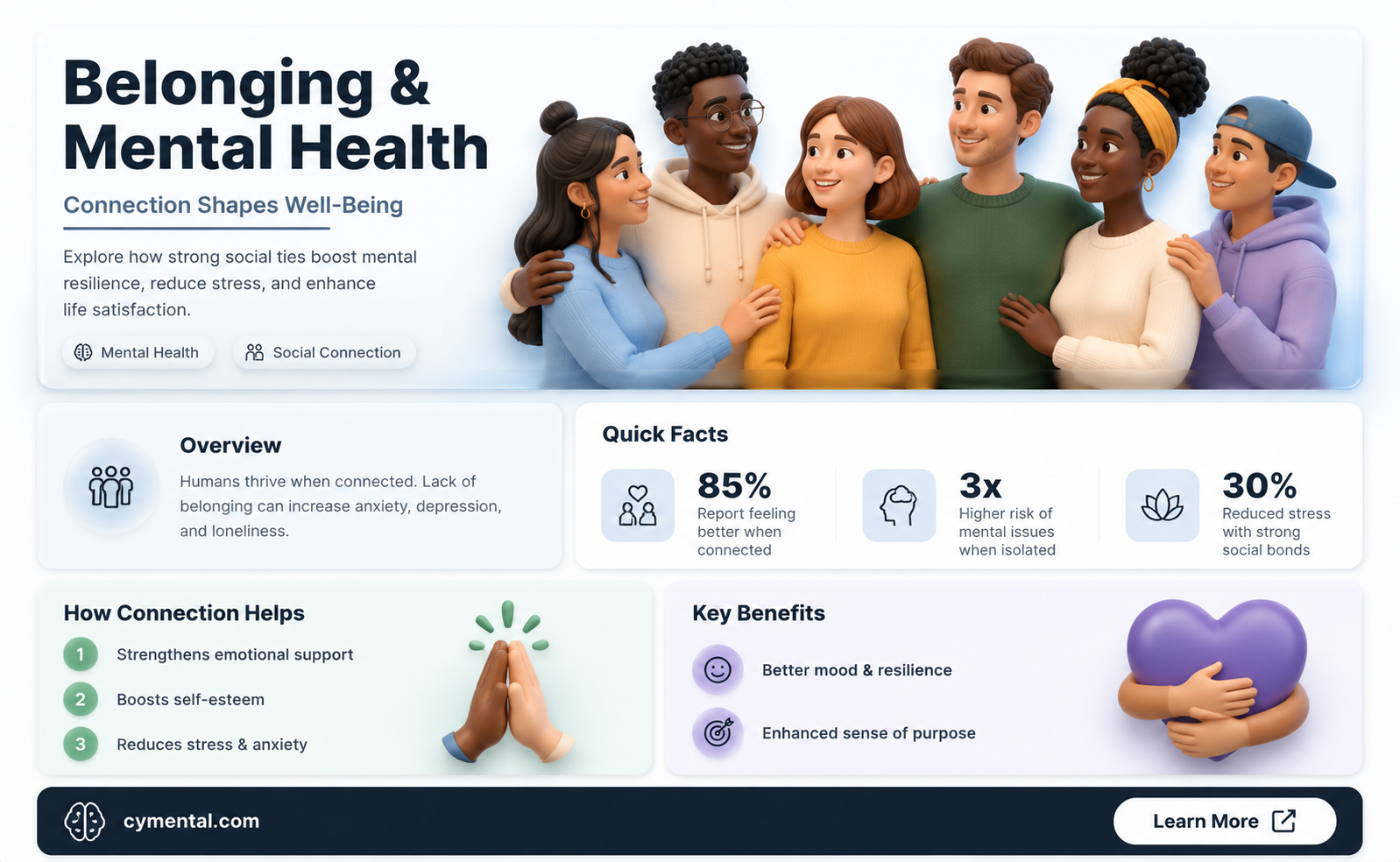
A sense of belonging, the feeling of being accepted, valued, and connected to others, plays a crucial role in shaping mental health and overall well-being. Research consistently highlights that individuals who experience a strong sense of belonging tend to report lower levels of anxiety, depression, and loneliness, while also demonstrating higher levels of self-esteem and resilience. This connection stems from the inherent human need for social interaction and emotional support, which fosters a sense of security and purpose. Conversely, feelings of isolation and exclusion can exacerbate mental health challenges, underscoring the importance of fostering inclusive environments and meaningful relationships. Understanding how belonging impacts mental health not only sheds light on the protective factors against psychological distress but also informs strategies for promoting healthier, more connected communities.
Explore related products


What You'll Learn

Social connections reduce loneliness and anxiety
Human beings are inherently social creatures, and our mental well-being is deeply intertwined with the quality of our social connections. Research consistently shows that individuals with strong social ties report lower levels of loneliness and anxiety. For instance, a study published in the *Journal of Health and Social Behavior* found that social integration—measured by factors like marital status, frequency of social contact, and participation in community groups—significantly reduces the risk of anxiety disorders. This isn’t merely anecdotal; it’s a biological reality. Social interaction triggers the release of oxytocin, often called the "bonding hormone," which promotes feelings of trust and reduces stress. Conversely, loneliness activates the body’s stress response, increasing cortisol levels and contributing to anxiety. The takeaway? Building and maintaining social connections isn’t just a nice-to-have—it’s a critical component of mental health.
Consider the practical steps to foster these connections. Start small: commit to one social activity per week, whether it’s joining a book club, attending a fitness class, or volunteering. For those who struggle with anxiety, exposure therapy principles apply here—gradual, consistent engagement can desensitize you to social fears. Technology can also be a tool, but use it mindfully. Video calls, for example, are more effective than texting in reducing loneliness because they mimic face-to-face interaction. However, beware of over-reliance on digital connections; they should complement, not replace, in-person interactions. For older adults, who are particularly vulnerable to loneliness, intergenerational programs—like mentoring or community gardening—can provide both purpose and companionship. The key is intentionality: treat social connections like a prescription, with a specific "dosage" of time and effort.
A comparative analysis reveals that not all social connections are created equal. Superficial interactions, like small talk with a barista, offer fleeting benefits, while deep, meaningful relationships provide lasting mental health support. For example, a close friend who listens empathetically can buffer against anxiety more effectively than a large but distant social network. This distinction highlights the importance of quality over quantity. If you’re unsure where to start, focus on nurturing existing relationships by practicing active listening, expressing gratitude, and being vulnerable. These behaviors strengthen emotional bonds and create a sense of belonging, which acts as a protective barrier against loneliness and anxiety.
Finally, it’s worth addressing a common misconception: that introverts don’t need social connections as much as extroverts. While introverts may thrive with fewer interactions, they still require meaningful social engagement. The difference lies in the type and frequency of connections, not their necessity. For introverts, one-on-one conversations or small, intimate gatherings may be more beneficial than large parties. The goal isn’t to change your personality but to create opportunities for connection that align with your comfort level. Regardless of temperament, the evidence is clear: social connections are a powerful antidote to loneliness and anxiety, and prioritizing them is one of the most effective steps you can take for your mental health.
Helping Others, Hurting Yourself: The Mental Health Toll of Caregiving
You may want to see also
Explore related products


Community support fosters emotional resilience and coping skills
Human connection is a powerful buffer against life’s stressors. Research consistently shows that individuals embedded in supportive communities report higher levels of emotional resilience, the ability to adapt and recover from adversity. This isn’t merely anecdotal; studies link social support to reduced cortisol levels, a key stress hormone, and increased oxytocin, associated with bonding and trust.
Consider the example of peer support groups for individuals struggling with anxiety. In these settings, sharing experiences and strategies normalizes challenges, reducing feelings of isolation. Members learn coping mechanisms from one another, such as mindfulness techniques or cognitive reframing, which they might not discover alone. A 2020 study found that participants in such groups reported a 30% decrease in anxiety symptoms after just 8 weeks of regular meetings.
Building emotional resilience through community isn’t passive; it requires active engagement. Start by identifying local or online groups aligned with your interests or needs. Commit to regular participation, even when it feels uncomfortable. Vulnerability is key—sharing your struggles fosters deeper connections and allows others to offer meaningful support. Remember, resilience is a skill, and like any skill, it improves with practice and guidance.
However, not all communities are created equal. Toxic environments can erode resilience rather than build it. Be mindful of groups that foster competition, judgment, or negativity. Seek out spaces characterized by empathy, mutual respect, and constructive feedback. If a group doesn’t feel supportive, don’t hesitate to explore other options. Your mental health depends on finding the right fit.
Ultimately, community support acts as a scaffold for emotional resilience, providing both the tools and the encouragement to navigate life’s challenges. By actively engaging in supportive networks, individuals can cultivate coping skills that last a lifetime. The takeaway? Don’t underestimate the power of collective strength—it’s one of the most effective resources for weathering adversity and thriving in the face of stress.
Exercise Boosts Elderly Mental Health: Benefits and Strategies for Wellbeing
You may want to see also
Explore related products


Inclusion boosts self-esteem and reduces depression symptoms
A sense of inclusion acts as a powerful antidote to the corrosive effects of social isolation, which is a known risk factor for depression. When individuals feel valued and accepted within a group, their brains release neurotransmitters like oxytocin and dopamine, often referred to as the "feel-good" hormones. These chemicals not only elevate mood but also foster a positive self-image. For instance, a study published in the *Journal of Social and Clinical Psychology* found that adolescents who reported higher levels of inclusion in peer groups exhibited significantly lower levels of depressive symptoms compared to their excluded counterparts. This biological and psychological interplay underscores the tangible impact of inclusion on mental health.
To harness the benefits of inclusion, consider practical steps that foster a sense of belonging in daily life. For adults, joining community groups or clubs aligned with personal interests can provide structured opportunities for connection. For children and teenagers, schools can implement inclusive practices such as cooperative learning activities or peer mentoring programs. Even small gestures, like inviting a colleague to lunch or acknowledging someone’s contribution in a meeting, can reinforce feelings of acceptance. The key is consistency; sporadic interactions may not yield the same mental health benefits as regular, meaningful engagement.
Contrastingly, exclusion can have devastating effects on self-esteem and mental well-being. Research from the *American Psychological Association* highlights that prolonged social rejection can lead to a negative self-perception, where individuals internalize feelings of worthlessness. This cycle often exacerbates depressive symptoms, creating a barrier to seeking help or forming new connections. Inclusion, therefore, serves as both a preventive measure and a therapeutic tool, breaking the cycle of isolation and self-doubt.
For those struggling with depression, incorporating inclusion-focused strategies into treatment plans can be transformative. Therapists might encourage clients to engage in group activities or practice social skills in low-stakes environments. Employers can play a role by fostering inclusive workplace cultures, which have been shown to reduce absenteeism and improve productivity. A study by the *Harvard Business Review* found that employees who felt included were 12% more productive and 3.5 times more likely to contribute their full innovative potential. This demonstrates that inclusion not only benefits individual mental health but also has broader societal and economic implications.
In conclusion, inclusion is a potent catalyst for enhancing self-esteem and mitigating depression symptoms. By creating environments where individuals feel seen, heard, and valued, we can address the root causes of mental health challenges. Whether through structured programs, intentional social interactions, or workplace policies, the practice of inclusion offers a sustainable path to emotional well-being. The evidence is clear: belonging is not just a luxury—it’s a necessity for thriving.
Ancient Rome's Approach to Mental Health: Care or Neglect?
You may want to see also
Explore related products


Belonging enhances purpose, reducing feelings of hopelessness
A profound sense of hopelessness often stems from feeling disconnected, as if one’s existence lacks meaning or direction. Belonging to a community, whether it’s a family, social group, or shared interest collective, anchors individuals to a larger narrative. This connection fosters a sense of purpose by embedding personal identity within a meaningful framework. For instance, a study published in the *Journal of Community Psychology* found that individuals who actively participated in community groups reported higher levels of purpose and lower rates of depression compared to those who felt isolated. The act of contributing to a group—whether through volunteering, shared hobbies, or mutual support—reinforces the belief that one’s actions matter, directly countering feelings of futility.
Consider the practical steps to cultivate belonging and, in turn, enhance purpose. Start by identifying groups aligned with personal values or interests, such as local clubs, online forums, or faith-based organizations. Consistency is key; attending regular meetings or events builds familiarity and deepens connections. For younger adults (ages 18–25), who are particularly vulnerable to feelings of aimlessness, joining mentorship programs or peer support groups can provide both structure and a sense of contribution. Older adults (ages 65+), meanwhile, may benefit from intergenerational programs that bridge age gaps and reaffirm their role as valued community members. Even small acts, like initiating conversations or offering help, can strengthen ties and reinforce a sense of belonging.
Contrast the experience of someone who feels isolated versus one who is deeply embedded in a community. The former may struggle with existential questions like, “Why does any of this matter?” while the latter is more likely to derive purpose from shared goals or collective achievements. For example, a person involved in a community garden not only enjoys the fruits of their labor but also contributes to a tangible outcome—nourishing others and beautifying the neighborhood. This tangible impact serves as a constant reminder of one’s significance, diminishing hopelessness. Research from the *American Psychological Association* highlights that individuals with strong social ties are 50% more likely to survive health challenges, underscoring the life-affirming power of belonging.
Finally, it’s crucial to acknowledge that fostering belonging requires vulnerability and intentionality. Joining a group may feel uncomfortable initially, but persistence pays dividends. For those hesitant to engage, start with low-stakes interactions, such as attending a single event or participating in online discussions. Over time, deepen involvement by taking on small responsibilities, like organizing a meetup or sharing personal experiences. Remember, purpose is not solely derived from grand achievements but from consistent, meaningful engagement. By embedding oneself in a community, individuals not only combat hopelessness but also discover a renewed sense of direction and worth.
How Mental Health Case Managers Assist in Securing SSI Benefits
You may want to see also
Explore related products




Group identity provides validation, lowering stress levels
Belonging to a group fundamentally reshapes how individuals perceive themselves and their place in the world. When someone identifies with a collective—whether it’s a cultural community, hobbyist group, or professional network—their self-worth becomes anchored in shared values and mutual recognition. This validation acts as a psychological buffer, counteracting the isolating effects of self-doubt or societal rejection. For instance, a study published in *Social Psychological and Personality Science* found that individuals who strongly identified with a social group reported 25% lower cortisol levels (a stress hormone) during challenging tasks compared to those without such affiliations. The brain’s reward centers, particularly the ventral striatum, activate more robustly when group acceptance is affirmed, mimicking the neurological response to tangible rewards like food or money.
To harness this effect, consider the following actionable steps. First, actively participate in group activities that align with your interests or values—consistency in engagement deepens your connection. For example, attending weekly meetings of a book club or volunteering monthly with a local charity reinforces your role within the group. Second, seek roles that allow you to contribute uniquely; being seen as indispensable fosters a stronger sense of validation. A caution, however: avoid groups that demand conformity at the expense of individuality, as this can heighten stress rather than alleviate it. Research shows that authentic belonging, where personal identity is respected, is far more effective in reducing anxiety than forced assimilation.
Comparatively, the stress-reducing benefits of group validation are particularly pronounced in adolescents and young adults, whose identities are still forming. A 2019 study in *Developmental Psychology* revealed that teenagers who felt accepted by their peer groups exhibited 40% fewer symptoms of depression and anxiety compared to those who felt excluded. This age group’s heightened sensitivity to social feedback makes group identity a critical protective factor during developmental years. However, older adults also benefit; seniors in community groups report lower blood pressure and improved mood, likely due to the validation of their life experiences and wisdom.
Descriptively, imagine a scenario where a new employee joins a workplace known for its cliquish culture. Initially, the stress of fitting in elevates their cortisol levels, disrupting sleep and concentration. However, after being invited to a team lunch and praised for a project contribution, they begin to internalize their role as a valued member. Over weeks, their stress response diminishes as the group’s validation becomes a psychological safety net. This transformation illustrates how group identity shifts the narrative from “I must prove myself” to “I belong here,” recalibrating the body’s stress mechanisms.
In conclusion, group identity serves as a powerful antidote to stress by providing validation that resonates on both emotional and biological levels. By embedding oneself in meaningful collectives and contributing authentically, individuals can lower stress hormones, improve mental resilience, and foster a lasting sense of security. Whether through peer groups, cultural communities, or professional networks, the key lies in finding spaces where one’s identity is not only accepted but celebrated.
Can Individuals Be Legally Compelled to Seek Mental Health Treatment?
You may want to see also
Frequently asked questions
A sense of belonging positively impacts mental health by reducing feelings of loneliness, anxiety, and depression. It fosters emotional support, self-worth, and resilience, contributing to overall psychological well-being.
Yes, a lack of belonging can exacerbate mental health issues by increasing stress, isolation, and negative self-perception. It may lead to heightened risks of depression, anxiety, and even suicidal ideation.
Practical ways include joining community groups, building meaningful relationships, engaging in shared activities, seeking support networks, and practicing self-compassion to foster connection and acceptance.