Noah Parker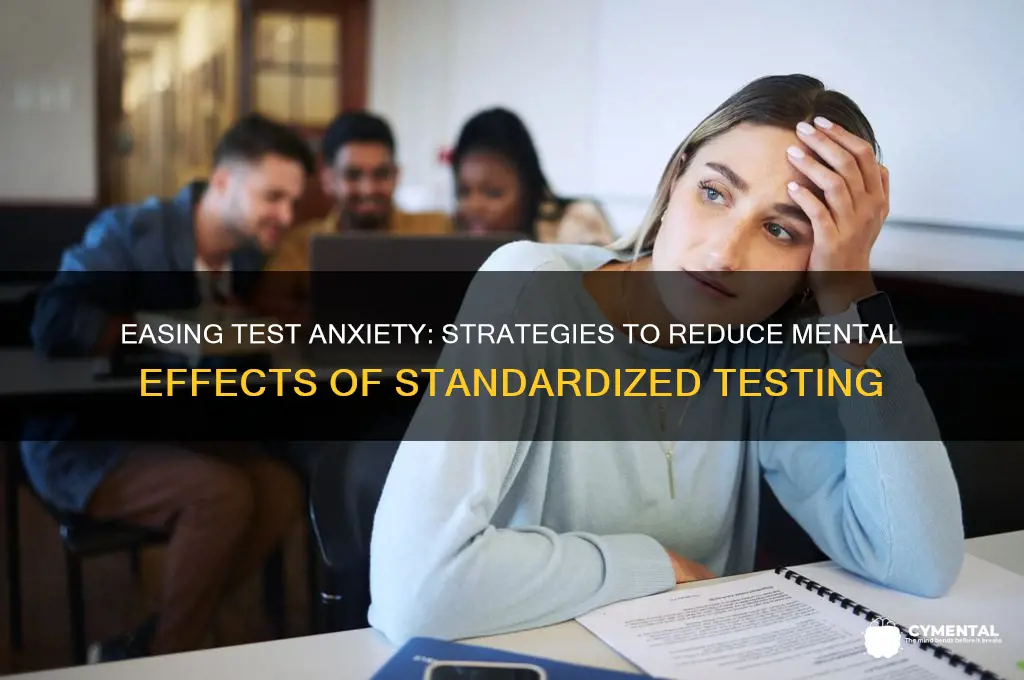
Standardized testing, while a common educational tool, can significantly impact students' mental health, often leading to stress, anxiety, and burnout. The pressure to perform, coupled with high stakes outcomes, can exacerbate feelings of inadequacy and self-doubt. To mitigate these effects, it is essential to implement strategies that promote mental well-being, such as fostering a growth mindset, encouraging self-care practices, and providing access to support systems like counseling or peer groups. Additionally, educators and parents can play a crucial role by setting realistic expectations, emphasizing effort over outcomes, and creating a nurturing environment that values learning over mere test scores. By addressing the emotional and psychological challenges associated with standardized testing, we can help students navigate these experiences with greater resilience and confidence.
Explore related products


What You'll Learn
- Promote Mindfulness Techniques: Teach students simple mindfulness exercises to reduce anxiety during exams
- Encourage Regular Breaks: Schedule short breaks during study sessions to prevent burnout and fatigue
- Foster Positive Self-Talk: Help students reframe negative thoughts into constructive, confidence-building affirmations
- Provide Emotional Support: Ensure access to counselors or mentors for stress management and coping strategies
- Balance Study and Relaxation: Encourage hobbies and leisure activities to maintain mental well-being during preparation

Promote Mindfulness Techniques: Teach students simple mindfulness exercises to reduce anxiety during exams
Standardized testing often triggers anxiety, but mindfulness techniques can serve as a practical antidote. By teaching students simple exercises, educators and parents can equip them with tools to manage stress during exams. Start by introducing deep breathing exercises, such as the 4-7-8 technique: inhale for 4 seconds, hold for 7 seconds, exhale for 8 seconds. This method, backed by research, activates the parasympathetic nervous system, reducing cortisol levels and promoting calmness. For younger students (ages 8–12), simplify the process by using visual aids like a breathing ball or a timer app to make it engaging and accessible.
Next, incorporate body scans to help students ground themselves in the present moment. Instruct them to close their eyes and mentally scan their body from head to toe, noticing sensations without judgment. This practice, which takes 3–5 minutes, can be done before an exam to alleviate physical tension. Pair it with a brief guided script for beginners, emphasizing phrases like, "Notice the weight of your feet on the floor. Let your shoulders soften." For older students (ages 13–18), encourage daily practice to build familiarity, ensuring the technique feels natural under pressure.
Another effective strategy is mindful observation, which redirects focus away from anxious thoughts. Ask students to identify five things they can see, four they can touch, three they can hear, two they can smell, and one they can taste (the 5-4-3-2-1 method). This sensory grounding exercise takes less than 2 minutes and can be done discreetly during exams. For students with sensory sensitivities, adapt the exercise by focusing on just two or three senses to avoid overwhelm.
Finally, mindful movement can help release pent-up energy. Teach students simple stretches or yoga poses, such as seated twists or forward folds, to perform before or between test sections. These movements improve blood flow and reduce muscle tension, enhancing focus. For group settings, consider a brief 2-minute stretching routine led by a teacher or peer, making it a communal stress-relief practice.
While mindfulness techniques are powerful, they require consistent practice to be effective. Encourage students to incorporate these exercises into their daily routines, not just during exams. Pair mindfulness with positive affirmations, such as "I am prepared, and I can handle this," to reinforce confidence. By embedding these practices into the educational environment, schools can foster resilience and reduce the mental toll of standardized testing.
Logic's Role in Managing Mental Illness: A Thoughtful Exploration
You may want to see also
Explore related products





Encourage Regular Breaks: Schedule short breaks during study sessions to prevent burnout and fatigue
Prolonged study sessions without breaks can lead to diminishing returns, as cognitive fatigue sets in and focus wanes. The brain, like any muscle, requires periodic rest to function optimally. Incorporating regular breaks into a study schedule isn’t just a luxury—it’s a scientifically backed strategy to enhance retention, reduce stress, and maintain mental clarity. For students preparing for standardized tests, this practice can be the difference between feeling overwhelmed and staying energized.
To implement this effectively, follow the Pomodoro Technique, a time-tested method that divides work into intervals, typically 25 minutes of focused study followed by a 5-minute break. After four cycles, take a longer break of 15–30 minutes. This structure aligns with the brain’s natural attention span and prevents burnout. For younger students (ages 10–14), shorter intervals of 20 minutes with 5-minute breaks may be more suitable, as their attention spans are still developing. During breaks, avoid mentally taxing activities like scrolling through social media; instead, opt for light physical activity, such as stretching, walking, or deep breathing exercises, which promote blood flow and relaxation.
While breaks are essential, their effectiveness depends on how they’re used. A common mistake is letting breaks extend beyond their allotted time, disrupting the study rhythm. To avoid this, set a timer and stick to it. Additionally, ensure the study environment is conducive to focus during work intervals—minimize distractions like notifications or noisy surroundings. For older students (ages 16+), combining breaks with mindfulness practices, such as a 5-minute meditation or journaling, can further reduce test-related anxiety and improve emotional regulation.
The benefits of regular breaks extend beyond immediate study sessions. They foster a sustainable approach to learning, teaching students to recognize their limits and prioritize self-care. This habit can be particularly valuable during the high-pressure period leading up to standardized tests, where stress levels often peak. By integrating breaks strategically, students not only preserve their mental stamina but also approach their studies with renewed motivation and clarity, ultimately enhancing their performance on test day.
Supporting Your Boyfriend’s Mental Health: Practical Ways to Help Him Thrive
You may want to see also
Explore related products



Foster Positive Self-Talk: Help students reframe negative thoughts into constructive, confidence-building affirmations
Standardized testing often amplifies self-doubt, turning minor mistakes into catastrophic failures in a student’s mind. "I’m not good enough" or "I’ll never pass" become mantras that erode confidence and heighten anxiety. To counteract this, teach students to identify these negative thought patterns and challenge their validity. For instance, if a student thinks, "I always fail math tests," prompt them to ask, "Is that entirely true? Have I *always* failed, or are there exceptions?" This cognitive reframing disrupts the cycle of self-defeat, replacing absolutes with nuance and realism.
Begin by modeling the process. During a practice session, pause after a student expresses self-criticism, such as, "I’m terrible at this." Respond with, "Let’s try rewording that. What if you said, 'This is challenging, but I’m learning how to improve'?" Gradually, students internalize this technique, turning it into a habit. For younger learners (ages 8–12), use visual aids like thought bubbles to differentiate negative and positive self-talk. For teens, encourage journaling to track and reframe thoughts daily, especially in the week leading up to exams.
Affirmations are most effective when they are specific, actionable, and grounded in reality. Instead of vague statements like "I’m smart," guide students to craft affirmations tied to their efforts and goals, such as, "I’ve studied hard, and I’m prepared to do my best." Pair these affirmations with physical cues—a deep breath, a fist pump, or even a sticky note on their desk—to reinforce the message. Research shows that repeating affirmations 3–5 times daily, particularly in high-stress moments, can rewire neural pathways, fostering resilience over time.
While positive self-talk is powerful, it’s not a cure-all. Avoid oversimplifying struggles by dismissing genuine concerns with platitudes. For example, telling a student, "Just think positively!" can feel dismissive if they’re grappling with systemic barriers or learning difficulties. Instead, acknowledge their feelings first: "It’s okay to feel nervous. Let’s focus on what you *can* control." This balanced approach ensures affirmations feel authentic, not forced, and empowers students to navigate testing season with both compassion and confidence.
Meditation's Mental Benefits: Enhancing Mindfulness, Reducing Stress, and Improving Focus
You may want to see also
Explore related products


Provide Emotional Support: Ensure access to counselors or mentors for stress management and coping strategies
Standardized testing often amplifies anxiety, leaving students feeling isolated and overwhelmed. Providing emotional support through access to counselors or mentors can mitigate these effects by offering a safe space to process emotions and develop coping strategies. Unlike generic stress-relief advice, professional guidance tailors solutions to individual needs, addressing the root causes of test-related distress rather than merely its symptoms.
Consider the implementation process: schools should allocate dedicated time for students to meet with counselors, ideally in the weeks leading up to exams. For younger students (ages 10–14), group sessions can foster peer support, while older students (ages 15–18) may benefit from one-on-one meetings to explore personalized strategies. Counselors can introduce techniques such as mindfulness exercises, time management frameworks, and cognitive reframing to challenge negative thought patterns. For instance, a 10-minute daily mindfulness practice has been shown to reduce test anxiety by up to 25% in adolescents.
However, access alone is insufficient. Schools must actively promote these resources, normalizing the act of seeking help. Posters, assemblies, and teacher endorsements can destigmatize counseling, encouraging even hesitant students to participate. Additionally, mentors—whether teachers, alumni, or external volunteers—can complement professional support by sharing relatable experiences and practical advice. For example, a mentor who once struggled with test anxiety might demonstrate how they used visualization techniques to stay calm during exams.
A cautionary note: emotional support should not replace systemic changes to reduce testing pressures. Over-reliance on counseling can inadvertently shift responsibility onto students, implying that their distress is solely a matter of personal resilience. Instead, pair emotional support with broader initiatives, such as revising testing schedules or diversifying assessment methods, to address the issue holistically.
In conclusion, providing emotional support through counselors and mentors is a proactive step toward alleviating the mental toll of standardized testing. By combining professional guidance with peer-based encouragement and systemic awareness, schools can empower students to navigate exam stress with resilience and confidence.
Walking Wonders: Boosting Mental Health One Step at a Time
You may want to see also
Explore related products


Balance Study and Relaxation: Encourage hobbies and leisure activities to maintain mental well-being during preparation
Studying for standardized tests can feel like a mental marathon, and without breaks, burnout is inevitable. Incorporating hobbies and leisure activities isn’t just a luxury—it’s a strategic necessity. Research shows that engaging in non-academic pursuits reduces cortisol levels, enhances focus, and improves problem-solving skills. For instance, a 2020 study in the *Journal of Applied Psychology* found that students who took regular breaks to pursue hobbies retained information 20% better than those who studied continuously. The brain thrives on variety, and hobbies provide the mental reset needed to tackle complex concepts with renewed energy.
To effectively balance study and relaxation, start by scheduling leisure time as rigorously as study sessions. Allocate 30–60 minutes daily for a hobby, treating it as a non-negotiable appointment. For younger students (ages 13–16), physical activities like sports or dance are particularly beneficial, as they release endorphins and improve mood. Older students (ages 17–22) might find creative outlets like painting, writing, or playing music more rejuvenating. The key is to choose activities that feel genuinely enjoyable, not like additional tasks. For example, if you love gaming, set aside time for it guilt-free—studies show that moderate gaming can improve cognitive flexibility.
However, not all hobbies are created equal in their ability to reduce test-related stress. Avoid activities that mimic the mental strain of studying, such as competitive gaming or complex puzzles. Instead, opt for pursuits that engage different parts of the brain. Gardening, for instance, combines physical activity with mindfulness, while cooking allows for creativity and sensory engagement. Even passive hobbies like reading fiction or listening to music can provide a mental escape, as long as they’re not related to test preparation. The goal is to create a mental boundary between study time and relaxation, allowing the brain to fully disengage.
One common pitfall is feeling guilty for taking breaks, especially as test day approaches. To combat this, reframe leisure time as an investment in productivity. For every 90 minutes of focused study, take a 15–20 minute break for a hobby. This aligns with the Pomodoro Technique, which maximizes efficiency by balancing work and rest. Additionally, use hobbies as a reward system: complete a challenging study session, then indulge in an episode of your favorite show or a chapter of a novel. This positive reinforcement makes the grind more bearable and reinforces the habit of self-care.
Ultimately, integrating hobbies into your study routine isn’t about escaping responsibility—it’s about sustaining mental stamina. Think of it as cross-training for the brain. Just as athletes alternate between strength and flexibility exercises, students need to alternate between cognitive rigor and mental relaxation. By prioritizing hobbies, you’re not just surviving test prep; you’re thriving through it. The result? A clearer mind, better retention, and a healthier approach to achieving your goals.
Exercise and Mental Health: Boosting Mood, Reducing Stress, and Enhancing Well-being
You may want to see also
Frequently asked questions
Students can reduce anxiety by practicing relaxation techniques like deep breathing, mindfulness, or progressive muscle relaxation. Establishing a consistent study routine, getting adequate sleep, and maintaining a balanced diet also help. Encouraging positive self-talk and focusing on preparation rather than perfection can alleviate stress.
Educators can create a supportive environment by emphasizing effort and growth over scores, providing clear expectations, and offering extra help or resources. Incorporating stress-management activities into the classroom and avoiding excessive test preparation can also reduce student anxiety.
Parents can help by maintaining open communication, validating their child’s feelings, and avoiding excessive focus on test results. Encouraging breaks, physical activity, and hobbies during preparation can reduce stress. Celebrating effort rather than outcomes fosters a healthier mindset.