Noah Parker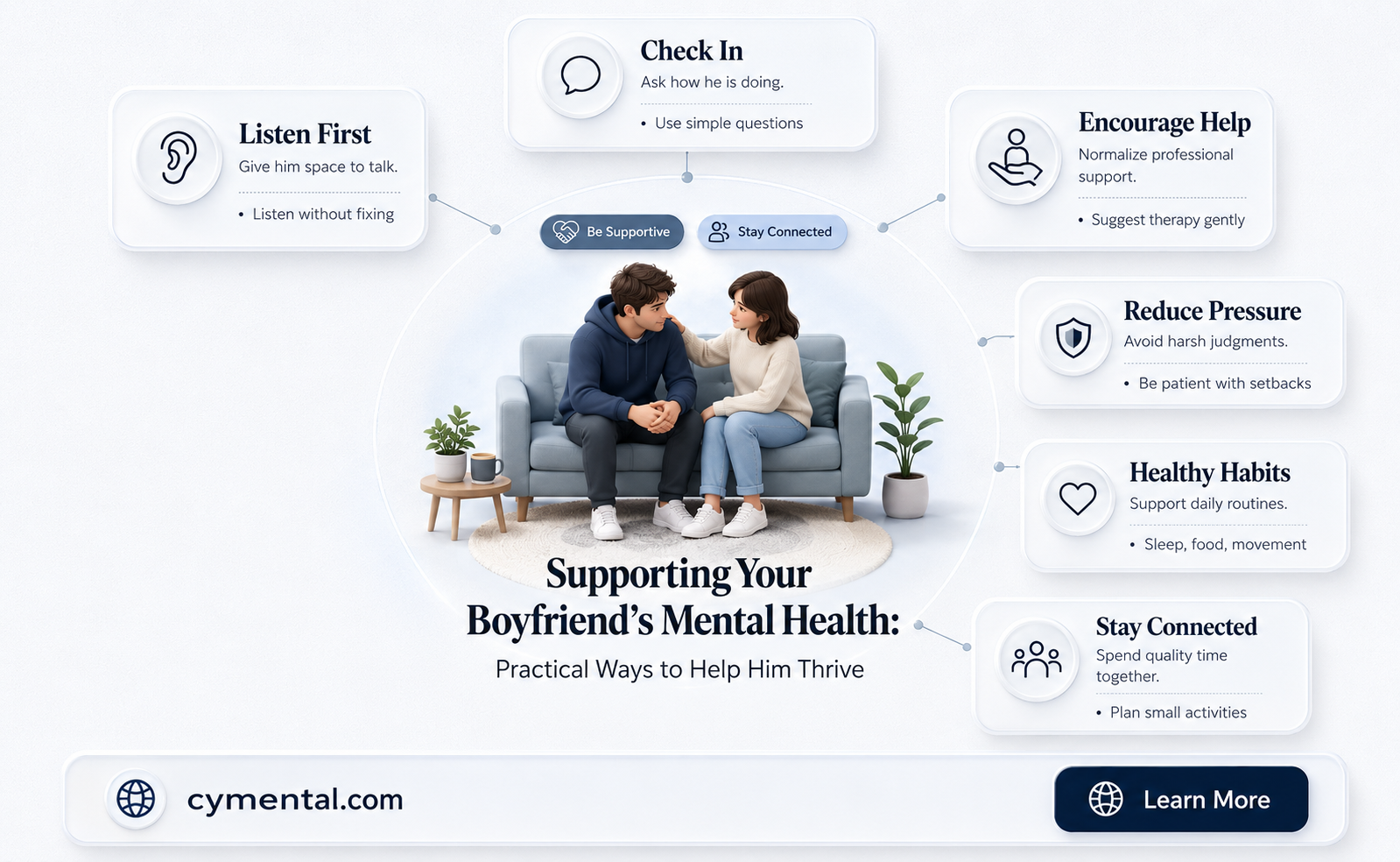
Supporting your boyfriend through his mental health struggles is a deeply caring and important role, but it requires understanding, patience, and boundaries. Start by actively listening without judgment, letting him express his feelings at his own pace, and validating his emotions. Educate yourself about his specific challenges, whether it’s anxiety, depression, or another condition, to better understand what he’s experiencing. Encourage professional help, such as therapy or counseling, while also being a consistent source of emotional support. Small, thoughtful gestures—like checking in regularly, planning relaxing activities, or simply being present—can make a big difference. Remember to prioritize your own well-being too, as supporting someone with mental health issues can be emotionally taxing. By fostering open communication, offering practical assistance, and being a compassionate ally, you can help create a safe and supportive environment for him to heal and grow.
Explore related products


What You'll Learn
- Encourage Open Conversations: Create safe, non-judgmental spaces for him to express feelings and thoughts freely
- Educate Yourself: Learn about his specific struggles to better understand and support him effectively
- Promote Self-Care: Encourage healthy habits like exercise, sleep, and hobbies to boost his well-being
- Seek Professional Help: Suggest therapy or counseling and offer to accompany him if needed
- Be Patient & Consistent: Show unwavering support, even if progress seems slow or challenging

Encourage Open Conversations: Create safe, non-judgmental spaces for him to express feelings and thoughts freely
Men often face societal pressure to suppress emotions, which can lead to internalized struggles and reluctance to share vulnerabilities. To counteract this, establish a safe, non-judgmental space where your boyfriend feels comfortable expressing himself without fear of ridicule, dismissal, or overreaction. Start by choosing a calm, private setting—perhaps during a quiet evening at home or a leisurely walk—and initiate conversations with open-ended questions like, "How have you been feeling lately?" or "What’s been on your mind?" Avoid interrupting or offering solutions immediately; instead, focus on active listening, nodding, and reflecting back what he shares to show you’re fully present.
Creating safety extends beyond the conversation itself. Be mindful of your reactions; even subtle changes in tone or body language can signal judgment. For instance, if he shares a fear or insecurity, resist the urge to say, "You shouldn’t feel that way," which invalidates his experience. Instead, respond with empathy: "That sounds really tough. I’m here for you." Consistency is key—make these conversations a regular part of your relationship, not just when you sense something is wrong. Over time, this predictability fosters trust and reassures him that his feelings are always welcome.
Practical tools can enhance these spaces. For example, establish a "no-fix" rule where neither of you tries to solve the other’s problems during emotional talks. This shifts the focus from problem-solving to emotional support, which is often what someone needs most in the moment. Additionally, consider incorporating non-verbal cues of safety, such as holding hands or sitting side by side, which can reduce anxiety and encourage openness. If he struggles to articulate feelings, suggest journaling together or sharing thoughts through letters, which can feel less intimidating than face-to-face dialogue.
Finally, model vulnerability yourself. Sharing your own feelings—even small, everyday ones—demonstrates that openness is a two-way street and not a sign of weakness. For instance, you might say, "I felt overwhelmed at work today, but talking about it helps." This normalizes emotional expression and shows him that vulnerability strengthens your bond. Remember, the goal isn’t to "fix" his mental health but to create a partnership where both of you feel seen, heard, and supported. Over time, these safe spaces can become a cornerstone of resilience for both of you.
Dark Chocolate's Role in Supporting Mental Health: Fact or Fiction?
You may want to see also
Explore related products


Educate Yourself: Learn about his specific struggles to better understand and support him effectively
Understanding your boyfriend's mental health struggles begins with recognizing that mental health conditions are as unique as fingerprints. No two people experience depression, anxiety, or PTSD in the same way. For instance, while one person with anxiety might struggle with social situations, another might experience debilitating panic attacks triggered by specific sensory inputs. By familiarizing yourself with his particular symptoms, triggers, and coping mechanisms, you can tailor your support to his needs rather than relying on generic advice. Start by asking open-ended questions like, “What does your anxiety feel like for you?” or “What helps you feel grounded when you’re overwhelmed?” This shows you’re committed to understanding his experience on his terms.
A practical first step is to research the specific condition(s) he’s dealing with. For example, if he has bipolar disorder, learn the differences between manic and depressive episodes, and the warning signs of each. Websites like the National Alliance on Mental Illness (NAMI) or the Anxiety and Depression Association of America (ADAA) offer reliable, condition-specific resources. Books like *The Bipolar Workbook* by Monica Ramirez Basco or *First, We Make the Beast Beautiful* by Sarah Wilson provide firsthand perspectives. However, avoid diagnosing or assuming—use this knowledge to deepen your empathy, not to play armchair psychologist.
One common mistake is assuming that what works for one person will work for another. For instance, while exercise is often recommended for managing depression, someone experiencing severe fatigue may find the suggestion overwhelming. Instead, observe and ask how he’s tried to cope in the past. Did journaling help during a previous low point? Does he find solace in nature or music? Incorporate these insights into your support strategy. For example, if he mentions feeling calmer after walks, suggest a short hike together rather than pushing for a high-intensity workout.
Caution: While educating yourself is crucial, avoid becoming overly focused on his struggles to the point of neglecting your own well-being. Supporting someone with mental health challenges can be emotionally taxing, and burnout is a real risk. Set boundaries, such as designated times to discuss his feelings and times to focus on lighter topics. Additionally, be mindful of language—phrases like “Why can’t you just snap out of it?” can invalidate his experience, even if unintentional. Instead, use phrases like, “I’m here for you, and I want to understand how I can help.”
Finally, remember that education is an ongoing process. Mental health is dynamic, and what works today might not work tomorrow. Stay curious, keep communicating, and celebrate small victories together. For example, if he successfully uses a grounding technique during a panic attack, acknowledge his effort and ask how you can support him in practicing it more regularly. By investing time in understanding his specific struggles, you’re not just offering help—you’re building a partnership rooted in empathy, patience, and shared growth.
Creativity's Healing Power: Boosting Mental Health Through Artistic Expression
You may want to see also
Explore related products





Promote Self-Care: Encourage healthy habits like exercise, sleep, and hobbies to boost his well-being
Physical and mental health are deeply interconnected, and fostering self-care habits can significantly impact your boyfriend’s well-being. Start by encouraging regular exercise, which releases endorphins, reduces stress, and improves mood. Aim for at least 30 minutes of moderate activity, like brisk walking or cycling, most days of the week. If he’s not used to working out, suggest activities he enjoys, such as hiking, dancing, or team sports, to make it feel less like a chore. Pairing exercise with a shared activity, like a weekend jog or a yoga class, can also strengthen your bond while promoting his mental health.
Sleep is another cornerstone of self-care often overlooked in busy lives. Poor sleep exacerbates anxiety, depression, and irritability, so help him establish a consistent sleep routine. Encourage him to go to bed and wake up at the same time daily, even on weekends. Create a calming bedtime ritual—dimming lights, avoiding screens an hour before bed, or incorporating relaxation techniques like deep breathing or meditation. If he struggles with insomnia, suggest limiting caffeine after 2 p.m. and ensuring the bedroom is cool, dark, and quiet. Small changes can lead to significant improvements in both sleep quality and mental clarity.
Hobbies aren’t just distractions; they’re essential outlets for creativity, stress relief, and self-expression. If your boyfriend has abandoned hobbies due to a hectic schedule or low mood, gently reintroduce them or help him discover new ones. Whether it’s painting, playing an instrument, gardening, or gaming, hobbies provide a sense of accomplishment and purpose. Set aside dedicated time each week for him to engage in these activities, even if it’s just 30 minutes. If he’s unsure where to start, suggest trying something new together, like a cooking class or photography, to spark interest and make it a shared experience.
Finally, lead by example. Incorporate self-care into your own life and invite him to join you. Cook a nutritious meal together, plan a weekend getaway focused on relaxation, or commit to a joint fitness goal. By normalizing self-care as a priority, you create an environment where he feels supported and motivated to take care of himself. Remember, consistency is key—small, sustainable habits over time yield the most lasting benefits for his mental health.
Education's Impact: Boosting Mental Health Through Learning and Growth
You may want to see also
Explore related products



Seek Professional Help: Suggest therapy or counseling and offer to accompany him if needed
Professional mental health support can be transformative, yet many hesitate to take the first step. If your boyfriend is struggling, suggesting therapy or counseling isn’t just a suggestion—it’s an act of care. Frame it as a collaborative effort, not a critique. For example, say, *"I’ve noticed you’ve been feeling overwhelmed lately, and I think talking to someone could really help. I’d be happy to help you find a therapist or even go with you if you’d like."* This approach removes stigma and emphasizes partnership.
Choosing the right therapist is critical. Research shows that the therapeutic relationship is a key predictor of success, so encourage him to interview a few therapists until he finds a good fit. Offer to help with logistics: finding providers, checking insurance coverage, or scheduling appointments. If he’s hesitant, remind him that therapy isn’t just for crises—it’s a tool for growth, self-awareness, and coping. Share statistics if it helps: 75% of people who enter therapy experience improvement, according to the American Psychological Association.
Accompanying him to the first session can ease anxiety, but respect his boundaries. Some may prefer to go alone, while others find comfort in having a familiar face nearby. If he agrees, your presence signals unwavering support. Afterward, avoid prying into details unless he volunteers them. Instead, ask open-ended questions like, *"How did that feel for you?"* or *"Is there anything I can do to support you this week?"*
Be patient. Therapy isn’t a quick fix; it’s a process. Encourage consistency—most therapists recommend weekly sessions initially—and celebrate small victories. If he resists, don’t push. Instead, normalize the conversation by sharing resources like podcasts, books, or articles about mental health. Over time, your encouragement and understanding can make all the difference in helping him take this vital step.
Supporting Mentally Ill Homeless Relatives: Compassionate Strategies for Family Care
You may want to see also
Explore related products


Be Patient & Consistent: Show unwavering support, even if progress seems slow or challenging
Mental health recovery is rarely a linear journey, and your boyfriend’s path may include setbacks, plateaus, or moments of frustration. During these times, your patience and consistency can be the anchor he needs to keep moving forward. Think of it as tending to a garden: growth takes time, and some days it feels like nothing is happening, but consistent care eventually yields results. Your unwavering support, even when progress seems slow, communicates that you’re in this for the long haul—a message that can be profoundly stabilizing for someone struggling with mental health.
To embody this, establish small, repeatable actions that show your commitment. For example, set aside 10 minutes each day to check in with him, not just about his mental health, but about his day, his interests, or his goals. Consistency in these moments reinforces that your support isn’t conditional on his progress. Similarly, avoid phrases like “You should be better by now” or “Why is this taking so long?” which can undermine his efforts. Instead, use phrases like “I’m here for you, no matter how long this takes” or “I’m proud of the steps you’re taking, even if they feel small.”
A caution: patience doesn’t mean passivity. While it’s important to avoid pushing him to “get better faster,” it’s equally crucial to encourage healthy habits and professional help when needed. For instance, if he’s resistant to therapy, frame it as a collaborative step you’re both taking, not as a critique of his ability to cope. Offer to help him find a therapist, accompany him to the first session, or simply remind him of appointments. This balance between patience and proactive support ensures you’re not enabling stagnation but fostering growth.
Finally, remember that your consistency also requires self-care. Supporting someone through mental health challenges can be emotionally taxing, and burnout will hinder your ability to provide the steady support he needs. Schedule regular time for your own well-being—whether it’s exercise, therapy, or hobbies—and communicate openly about your boundaries. By modeling self-care, you not only preserve your ability to support him but also demonstrate a healthy approach to managing life’s challenges. In this way, patience and consistency become a two-way street, strengthening both your relationship and his recovery.
Mental Health Attitudes: Impact on Help-Seeking Behavior and Service Utilization
You may want to see also
Frequently asked questions
Choose a calm, private moment and express your concern in a gentle, non-judgmental way. Use "I" statements, like "I’ve noticed you seem stressed lately, and I’m here to support you if you want to talk."
Offer your presence and let him know you’re there for him, but respect his boundaries. Listen actively without trying to "fix" things, and encourage professional help if needed.
Normalize therapy by sharing positive experiences or statistics about its benefits. Offer to help him find a therapist or accompany him to the first appointment if he’s open to it.
Communicate openly about how his struggles impact you, but focus on teamwork rather than blame. Seek couples counseling if needed to navigate the challenges together.
Set boundaries, prioritize self-care, and seek your own support system. Remember, you can’t pour from an empty cup—taking care of yourself is essential to being a helpful partner.