Lucas Bennett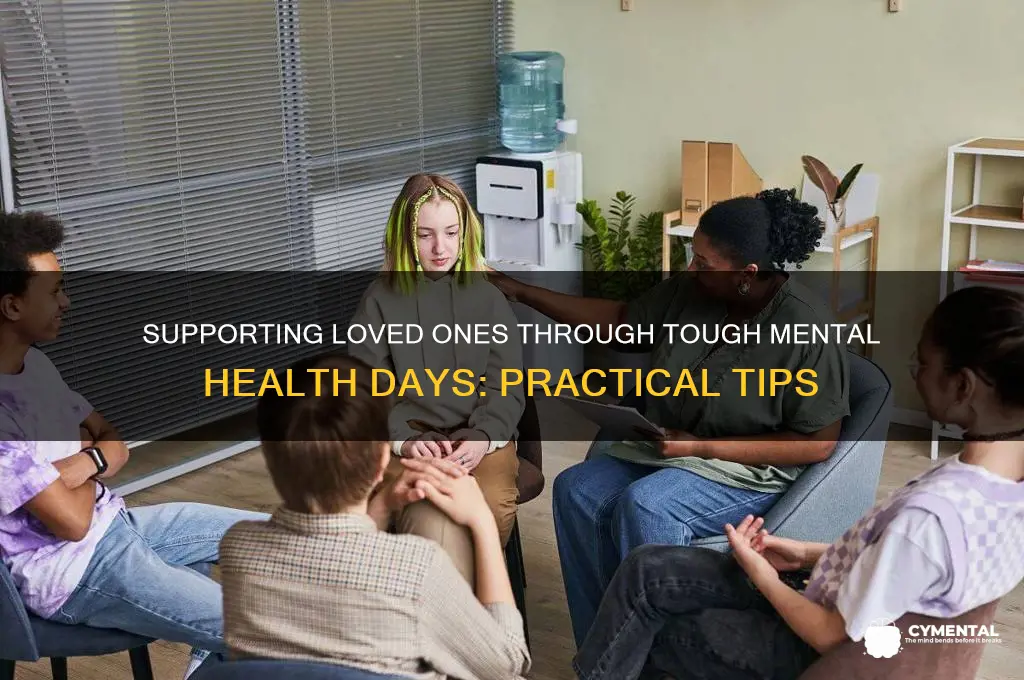
Helping someone having a bad mental health day requires empathy, patience, and understanding. Start by creating a safe and non-judgmental space where they feel comfortable expressing their feelings. Listen actively without trying to fix their problems, and validate their emotions by acknowledging their struggles. Offer gentle encouragement and remind them that it’s okay to not be okay. Suggest small, manageable activities like going for a walk, practicing deep breathing, or simply resting. If appropriate, encourage them to seek professional help or connect with resources like a therapist or helpline. Above all, let them know they’re not alone and that you’re there to support them, even in the smallest ways.
Explore related products


What You'll Learn
- Listen Actively: Give undivided attention, avoid judgment, and validate their feelings without interrupting or offering solutions
- Encourage Self-Care: Suggest simple activities like deep breathing, hydration, or a short walk to reset
- Offer Practical Help: Assist with tasks like cooking, cleaning, or running errands to ease their burden
- Stay Present: Avoid pressuring them to cheer up and instead focus on being supportive and patient
- Seek Professional Help: Gently suggest contacting a therapist or crisis line if needed, and offer to assist

Listen Actively: Give undivided attention, avoid judgment, and validate their feelings without interrupting or offering solutions
Active listening is a cornerstone of supporting someone through a mental health crisis, yet it’s often misunderstood or underutilized. It’s not about waiting for your turn to speak or crafting the perfect response—it’s about creating a safe, nonjudgmental space where the person feels heard and understood. When someone is struggling, their emotions can feel chaotic and overwhelming. By giving them your undivided attention, you signal that their experience matters, which can be profoundly stabilizing. Avoid distractions like checking your phone or glancing at the clock; these small actions can undermine trust and reinforce feelings of isolation. Instead, use nonverbal cues like nodding, maintaining eye contact (when culturally appropriate), and leaning in slightly to show engagement.
Validation is a critical component of active listening, but it requires precision. Phrases like “That sounds really hard” or “I can see why you’d feel that way” acknowledge their emotions without dismissing or minimizing them. Avoid toxic positivity—statements like “It could be worse” or “Just think positively” can invalidate their pain and create emotional distance. Validation doesn’t mean agreeing with their perspective but recognizing the legitimacy of their feelings. For example, if someone expresses fear about the future, respond with empathy: “It’s completely understandable to feel scared when things feel uncertain.” This approach fosters connection and encourages them to open up further.
One common pitfall is the urge to offer solutions or advice, even with good intentions. While problem-solving can be helpful in other contexts, during a mental health crisis, it can feel dismissive or overwhelming. Imagine someone drowning in their emotions—throwing them a lifeline of advice is less effective than simply being present in the water with them. Instead, focus on reflective listening: paraphrase what they’ve said to confirm understanding. For instance, “It sounds like you’re feeling overwhelmed by work and like no one appreciates your effort.” This not only clarifies their thoughts but also reinforces that you’re fully engaged.
Active listening also involves managing your own reactions. If their emotions trigger discomfort or defensiveness in you, take a silent pause to center yourself before responding. Remember, this isn’t about you—it’s about holding space for their pain. If you’re unsure how to respond, it’s okay to say, “I’m here for you, and I’m trying to understand.” Authenticity builds trust more than polished words ever could. By prioritizing their emotional experience over your own need to “fix” the situation, you demonstrate genuine care and respect.
In practice, active listening is a skill that improves with intentionality. Start by setting aside at least 10–15 minutes to be fully present, free from interruptions. If you’re in a public space, choose a quiet, private area to minimize external distractions. Afterward, resist the urge to recap or summarize their feelings unless they ask for it. Sometimes, the greatest gift you can give is simply being a witness to their pain. Over time, this approach not only helps them feel supported but also strengthens your relationship by fostering deeper emotional intimacy.
Unleashing Creativity: A Powerful Tool to Combat Mental Illness
You may want to see also
Explore related products


Encourage Self-Care: Suggest simple activities like deep breathing, hydration, or a short walk to reset
On a bad mental health day, the weight of the world can feel crushing, making even small tasks seem insurmountable. Encouraging self-care through simple, accessible activities can act as a lifeline, offering immediate relief and a sense of control. Deep breathing, for instance, is a scientifically backed technique that activates the parasympathetic nervous system, reducing stress hormones like cortisol. Try guiding the person to inhale for four counts, hold for four, and exhale for six, repeating this cycle for two minutes. This structured approach provides a tangible focus, grounding them in the present moment.
Hydration, often overlooked, plays a critical role in mental clarity and emotional regulation. Dehydration can exacerbate anxiety and fatigue, amplifying the intensity of a bad mental health day. Encourage the person to drink a glass of water slowly, perhaps adding a slice of lemon or cucumber for a sensory boost. For those who struggle to remember, suggest setting a timer every hour or using a marked water bottle to track intake. Small, consistent efforts can make a noticeable difference without overwhelming them.
A short walk, even just 10 minutes, can reset the mind by increasing blood flow and releasing endorphins. Unlike intense exercise, which might feel daunting, a gentle stroll is approachable and requires no special equipment. Suggest walking barefoot on grass if possible, as this practice, known as "earthing," has been shown to reduce stress and improve mood. If outdoor space is limited, pacing indoors or even standing by a window for fresh air can provide similar benefits. The goal is movement, not mileage.
These activities—deep breathing, hydration, and walking—are not just placeholders for self-care; they are evidence-based tools that address physiological and psychological needs. By framing them as manageable steps rather than grand gestures, you empower the person to take action without feeling pressured. Each activity serves as a reminder that self-care doesn’t require hours or resources—it’s about intentional, mindful moments that accumulate into relief. In the chaos of a bad mental health day, these simple practices can be the first step toward reclaiming calm.
Sento's Soothing Embrace: Exploring Japan's Public Baths for Mental Wellness
You may want to see also
Explore related products


Offer Practical Help: Assist with tasks like cooking, cleaning, or running errands to ease their burden
On days when mental health struggles feel overwhelming, even the simplest tasks can become monumental hurdles. Offering practical help by assisting with daily chores like cooking, cleaning, or running errands can significantly alleviate the burden, allowing the person to focus on self-care and recovery. This kind of support isn’t just about completing tasks—it’s about showing that you’re there to share the load when they can’t carry it alone.
Consider the logistics of how to provide this help effectively. Start by asking specific questions like, “Would it help if I picked up groceries for you?” or “Can I cook dinner tonight?” Instead of a vague offer, tailor your assistance to their immediate needs. For instance, if they’re struggling with energy levels, focus on tasks that require physical effort, such as vacuuming or doing laundry. If time management is the issue, offer to handle errands like dropping off packages or picking up prescriptions. The key is to be proactive and observant, identifying areas where your help can make the most impact.
It’s also important to approach this with sensitivity and respect. Avoid making assumptions about what they need or taking over without their consent. Some individuals may feel a loss of control when others intervene, so frame your offer as a collaboration rather than a takeover. For example, say, “I’d like to help with [specific task]—how would you like me to do it?” This empowers them to maintain agency while still receiving support. Additionally, be mindful of their comfort level; some may prefer help from a distance, like leaving groceries at their doorstep instead of coming inside.
The benefits of practical assistance extend beyond the completion of tasks. By easing their workload, you’re indirectly reducing stress and creating space for them to engage in activities that promote mental well-being, such as resting, meditating, or connecting with loved ones. Studies show that social support, even in the form of tangible help, can lower cortisol levels and improve mood. Your actions communicate that their struggles are valid and that they don’t have to face them alone.
Finally, remember that this kind of support is most effective when it’s consistent and non-judgmental. Mental health challenges often aren’t resolved overnight, so be prepared to offer help over time, even if it’s just checking in weekly to see if they need assistance. Small, repeated acts of kindness can build trust and strengthen your relationship, making it easier for them to accept help in the future. Practical assistance isn’t just about ticking off to-do lists—it’s about fostering an environment where healing can take place.
Should You Seek Mental Health Support? Signs and Guidance
You may want to see also
Explore related products


Stay Present: Avoid pressuring them to cheer up and instead focus on being supportive and patient
When someone is struggling with their mental health, the instinct to offer quick fixes or upbeat encouragement can be overwhelming. However, phrases like “cheer up” or “look on the bright side” often minimize their experience and create additional pressure. Instead, staying present with them—without an agenda to fix or change their mood—can be profoundly supportive. This approach acknowledges their pain as valid and communicates that you’re willing to sit with them in their discomfort, rather than rushing them through it.
Consider the analogy of a storm: you wouldn’t tell someone caught in heavy rain to “just stop being wet.” Similarly, pressuring someone to “cheer up” ignores the complexity of their emotional state. Being present means offering a metaphorical umbrella—a safe, non-judgmental space where they can express themselves without fear of dismissal. Practical ways to do this include active listening, such as nodding, maintaining eye contact (if culturally appropriate), and reflecting back what they’ve said to show you’re fully engaged. For example, instead of saying, “It’s not that bad,” try, “It sounds like this is really hard for you right now.”
Patience is another critical component of staying present. Mental health struggles often unfold on their own timeline, and rushing the process can be counterproductive. Imagine a wound healing—you wouldn’t peel off the bandage prematurely, even if it’s uncomfortable to see. Similarly, allow the person to move through their emotions at their own pace. If they’re silent, resist the urge to fill the space with chatter. Silence can be a powerful form of support, signaling that you’re there without demanding anything from them.
Finally, being present doesn’t mean you have to carry their emotional burden alone. It’s about offering consistent, low-pressure companionship rather than heroic solutions. Small, practical gestures—like bringing them a glass of water, suggesting a short walk, or simply sitting nearby—can convey care without overwhelming them. Remember, the goal isn’t to “fix” their day but to let them know they’re not facing it alone. This approach fosters trust and creates a foundation for deeper, more meaningful support over time.
Empowering Your Friend: Overcoming Victim Mentality with Compassion and Support
You may want to see also
Explore related products


Seek Professional Help: Gently suggest contacting a therapist or crisis line if needed, and offer to assist
Recognizing when a bad mental health day has escalated beyond the scope of casual support is crucial. While offering a listening ear or a comforting presence can be immensely helpful, there are moments when professional intervention becomes necessary. If you notice persistent symptoms like severe anxiety, suicidal thoughts, or an inability to function, it’s time to gently suggest seeking professional help. This isn’t about diminishing your role as a supporter but acknowledging the limits of non-expert assistance. Mental health crises require specialized care, and therapists, counselors, or crisis lines are equipped to provide it.
The art of suggesting professional help lies in sensitivity and timing. Avoid phrases like “You need help” or “This is too much for me,” which can feel dismissive or overwhelming. Instead, frame it as a collaborative step forward: “I’m here for you, but I also think talking to a professional could give you some tools we might not have thought of.” Offer concrete assistance, such as helping them find a therapist, scheduling an appointment, or even sitting with them while they call a crisis line. The National Suicide Prevention Lifeline (988 in the U.S.) is a widely accessible resource, available 24/7 for immediate support.
Comparing the role of a friend to that of a professional can clarify why both are valuable. Friends provide emotional grounding and a sense of connection, while therapists offer evidence-based strategies, unbiased perspectives, and structured interventions. For instance, cognitive-behavioral therapy (CBT) can help reframe negative thought patterns, and medication management can address chemical imbalances—tools beyond the scope of casual support. By encouraging professional help, you’re not stepping back but ensuring they receive comprehensive care tailored to their needs.
Finally, remember that suggesting professional help is an act of care, not a failure. It’s easy to feel inadequate when you can’t “fix” someone’s pain, but your role is to guide, not to heal. Practical tips include researching therapists in their area (Psychology Today’s “Find a Therapist” tool is a great starting point) or offering to accompany them to their first session. For immediate crises, keep a list of local and national hotlines handy, such as the Crisis Text Line (text HOME to 741741). By bridging the gap between personal support and professional care, you’re helping them take a vital step toward long-term recovery.
Seeking Support: A Guide to Asking for Mental Health Help
You may want to see also
Frequently asked questions
Approach them with empathy and without judgment. Use a calm, gentle tone and let them know you’re there to listen if they want to talk. Avoid pressuring them to open up if they’re not ready.
Keep it simple and supportive. Say things like, “I’m here for you,” “How can I help?,” or “It’s okay to feel this way.” Avoid minimizing their feelings or offering unsolicited advice.
Respect their boundaries and let them know you’re available when they’re ready. Offer to do something low-key together, like watching a movie or going for a walk, to show your support without forcing conversation.
Offer to help with small tasks like cooking, cleaning, or running errands. Encourage self-care activities like taking a bath, meditating, or resting. If they’re open to it, suggest professional resources like therapy or hotlines.