Harper Lewis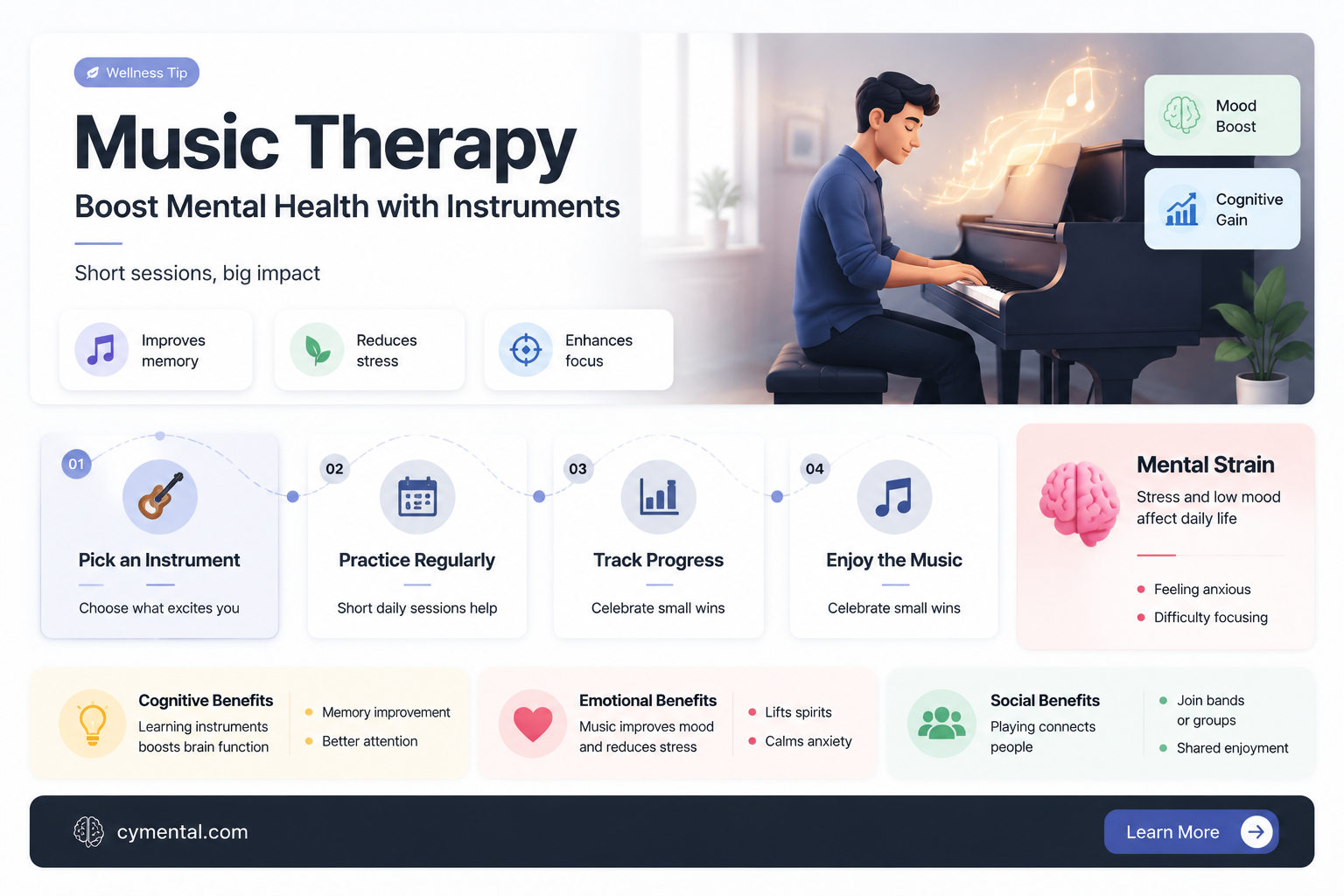
Learning to play a musical instrument has long been celebrated for its creative and cultural benefits, but emerging research suggests it may also have profound positive effects on mental health. Engaging with music, whether through playing an instrument, composing, or practicing, has been shown to reduce stress, anxiety, and symptoms of depression by promoting relaxation and emotional expression. The structured nature of learning an instrument can provide a sense of accomplishment and purpose, boosting self-esteem and cognitive function. Additionally, music acts as a therapeutic outlet, allowing individuals to process complex emotions and connect with others, fostering a sense of community and belonging. As mental health challenges continue to rise globally, exploring the role of music as a complementary tool for well-being offers a promising and accessible avenue for support.
| Characteristics | Values |
|---|---|
| Stress Reduction | Playing an instrument reduces cortisol levels (stress hormone) and promotes relaxation. Studies show a 25-30% decrease in stress markers after music engagement. |
| Improved Mood | Music stimulates the release of dopamine, a neurotransmitter associated with pleasure and reward, leading to improved mood and reduced symptoms of depression. |
| Cognitive Enhancement | Learning an instrument enhances memory, attention, and problem-solving skills. It increases gray matter volume in the brain, particularly in areas related to auditory processing and motor control. |
| Emotional Expression | Music provides a non-verbal outlet for emotions, helping individuals process and express feelings that may be difficult to articulate verbally. |
| Social Connection | Joining ensembles or bands fosters social interaction, reduces feelings of loneliness, and builds a sense of community, which is crucial for mental well-being. |
| Mindfulness and Focus | Playing an instrument requires concentration, promoting mindfulness and reducing symptoms of anxiety by grounding the individual in the present moment. |
| Sense of Achievement | Mastering a piece of music boosts self-esteem and provides a sense of accomplishment, which can counteract feelings of inadequacy or low self-worth. |
| Therapeutic Applications | Music therapy is widely used to treat mental health conditions such as PTSD, anxiety, and depression, with evidence showing significant improvements in symptoms. |
| Neuroplasticity | Learning an instrument strengthens neural connections and promotes neuroplasticity, aiding in recovery from brain injuries and slowing cognitive decline in aging populations. |
| Reduction in Anxiety | Studies indicate that listening to or playing music can lower heart rate, blood pressure, and anxiety levels, particularly in high-stress situations. |
| Improved Sleep Quality | Engaging in music before bedtime can improve sleep patterns by reducing insomnia and promoting deeper, more restful sleep. |
| Coping Mechanism | Music serves as a healthy coping mechanism for dealing with trauma, grief, or chronic stress, offering a distraction from negative thoughts and emotions. |
| Long-Term Mental Health Benefits | Lifelong engagement with music is associated with lower rates of cognitive decline, depression, and anxiety in older adults, highlighting its long-term mental health benefits. |
| Accessibility | Learning an instrument is accessible to people of all ages and skill levels, making it a versatile tool for mental health improvement across diverse populations. |
Explore related products

$29.99 $34.99


What You'll Learn

Stress reduction through music
Music has a profound impact on the human brain, and its therapeutic effects are well-documented. One of the most significant benefits of engaging with music, whether through listening or playing an instrument, is its ability to reduce stress levels. When you play an instrument, your brain releases dopamine, a neurotransmitter associated with pleasure and reward, which can counteract the negative effects of stress hormones like cortisol. For instance, a study published in the journal *Public Health* found that adults who engaged in regular musical activities reported lower stress levels compared to those who did not. This suggests that incorporating music into your routine could be a practical strategy for managing daily stressors.
To harness the stress-reducing benefits of music, consider starting with short, structured practice sessions. Research indicates that even 15–30 minutes of daily instrument practice can yield noticeable improvements in mood and stress reduction. Beginners might find it helpful to focus on simple, repetitive pieces that allow for a sense of accomplishment without overwhelming complexity. For example, learning basic chords on a guitar or a few scales on a piano can provide a meditative quality, as the repetitive motions help calm the mind. Pairing this practice with deep breathing exercises can further enhance relaxation, as the rhythmic nature of music naturally aligns with controlled breathing patterns.
A comparative analysis of stress reduction methods reveals that music stands out for its accessibility and versatility. Unlike mindfulness or exercise, which may require specific environments or physical ability, playing an instrument can be done almost anywhere and adapted to individual preferences. For instance, a teenager might find stress relief in the energetic rhythms of drumming, while an older adult may prefer the soothing tones of a flute. This adaptability makes music a uniquely inclusive tool for stress management across age groups and lifestyles. Additionally, group activities like joining a community choir or band can provide social support, further amplifying the stress-reducing effects.
Practical tips for integrating music into your stress-reduction routine include creating a dedicated practice space free from distractions, setting realistic goals to avoid frustration, and experimenting with different instruments to find what resonates with you. For those with busy schedules, incorporating music into daily activities—such as playing while commuting or during breaks—can maximize its benefits. It’s also important to remember that progress, not perfection, is the goal. Even if you’re not producing concert-quality sounds, the act of engaging with music itself is what matters for stress relief. By making music a consistent part of your life, you can build resilience against stress and cultivate a sense of calm amidst chaos.
Unlocking Hope: Effective Mental Health Care in Prisons Explored
You may want to see also
Explore related products





Improved focus and cognitive function
Learning a musical instrument is akin to a full-body workout for the brain, engaging multiple regions simultaneously. Studies show that musicians exhibit stronger neural connections in areas responsible for memory, attention, and spatial reasoning. For instance, a 2018 study published in *Frontiers in Psychology* found that children who received music training demonstrated enhanced verbal memory and improved cognitive flexibility compared to their non-musical peers. This suggests that the structured practice required to master an instrument fosters a more resilient and adaptable mind.
To harness these benefits, consistency is key. Aim for 30 minutes of focused practice daily, breaking it into smaller sessions if needed. Beginners should start with simple exercises, such as scales or basic melodies, gradually increasing complexity. Incorporating mindfulness techniques, like deep breathing before practice, can further enhance concentration. For adults, even 20 minutes of daily engagement can yield noticeable improvements in focus and mental clarity within a few weeks.
One practical tip is to treat practice sessions as a mental exercise rather than a performance. Focus on the process—finger placement, rhythm, and tone—rather than the outcome. This shifts the brain into a state of active learning, strengthening neural pathways associated with attention and problem-solving. For children, gamifying practice through apps or reward systems can make it more engaging, ensuring they stay focused and motivated.
Comparatively, the cognitive benefits of learning an instrument extend beyond those of other hobbies. While activities like reading or painting also engage the brain, music uniquely combines auditory, motor, and emotional processing. A 2014 study in *NeuroImage* revealed that musicians have a thicker corpus callosum, the bridge between the brain’s hemispheres, enabling faster communication and improved multitasking abilities. This distinct advantage underscores why music training is particularly effective in boosting focus and cognitive function.
Incorporating music into daily life doesn’t require becoming a virtuoso. Even casual learners can experience benefits by setting realistic goals, such as mastering a new chord each week or playing a short piece fluently. The key is sustained engagement, as the brain thrives on repetition and challenge. Whether you’re 8 or 80, picking up an instrument offers a tangible way to sharpen your mind, improve focus, and enhance overall cognitive health.
Seeking Support: A Guide to Asking for Mental Health Assistance
You may want to see also
Explore related products




Emotional expression and release
Music has long been recognized as a universal language of emotion, and learning to play an instrument can serve as a powerful tool for emotional expression and release. Unlike verbal communication, which often requires clarity and structure, music allows for the articulation of complex feelings that words alone cannot capture. Whether it’s the melancholy of a minor chord or the exuberance of a fast-paced rhythm, playing an instrument provides a direct channel for emotions to flow freely, bypassing the constraints of language.
Consider the act of improvising on a piano or strumming a guitar. These activities encourage spontaneity, enabling individuals to translate their emotional state into sound in real time. Research suggests that such creative expression can reduce stress and anxiety by activating the parasympathetic nervous system, which promotes relaxation. For instance, a study published in the *Journal of Music Therapy* found that participants who engaged in improvisational music-making experienced significant decreases in cortisol levels, a key stress hormone. To harness this benefit, beginners can start with simple exercises like playing a single note or chord progression that reflects their current mood, gradually building complexity as their skills and emotional vocabulary grow.
However, emotional release through music is not solely about improvisation. Structured practice, such as learning a piece that resonates emotionally, can also be therapeutic. For example, mastering a poignant classical piece or a soulful blues riff allows individuals to externalize their emotions through disciplined repetition. This process not only provides a sense of accomplishment but also helps in processing feelings that may be difficult to confront directly. A practical tip for learners is to choose pieces that align with their emotional needs—whether it’s a calming melody to soothe anxiety or an energetic tune to release frustration.
It’s important to note that the emotional benefits of playing an instrument are not limited to the individual; they can also foster connection and empathy. Group settings, such as ensemble performances or jam sessions, amplify these effects by creating a shared emotional experience. For instance, adolescents struggling with emotional regulation have been shown to benefit from collaborative music-making, as it provides a safe space to express vulnerability while building social bonds. Parents and educators can encourage this by organizing group activities that emphasize cooperation and emotional expression through music.
Incorporating music into a mental health routine requires consistency but doesn’t demand perfection. Even 15–20 minutes of daily practice can yield noticeable emotional benefits over time. For those new to instruments, starting with accessible options like the ukulele or keyboard can reduce the barrier to entry, making the practice more enjoyable and sustainable. Ultimately, learning an instrument is not just about acquiring a skill—it’s about unlocking a lifelong resource for emotional expression and release.
Dogs and Mental Health: How Canines Provide Emotional Support and Healing
You may want to see also
Explore related products


Enhanced social connections
Learning an instrument isn’t just a solo endeavor—it’s a gateway to building and strengthening social connections. Group lessons, ensembles, and community bands create opportunities to collaborate with others who share a common interest. This shared goal fosters a sense of belonging and camaraderie, reducing feelings of isolation. For example, a study published in *Psychology of Music* found that adolescents who participated in group music activities reported higher levels of social cohesion and lower levels of anxiety compared to their non-musical peers. The act of making music together requires communication, trust, and mutual respect, skills that translate into healthier relationships outside the rehearsal room.
Consider the structure of a typical group lesson: participants take turns playing, listening, and providing feedback. This dynamic encourages active engagement and empathy, as individuals learn to appreciate others’ perspectives and contributions. For adults, joining a community choir or orchestra can be particularly impactful. A 2019 study in *Frontiers in Psychology* highlighted that older adults who participated in group music activities experienced reduced symptoms of depression and increased social interaction. The regularity of rehearsals and performances provides a consistent social anchor, combating loneliness and fostering a sense of purpose.
For children and teenagers, music education offers a unique social outlet. Schools with robust music programs often report stronger peer relationships among students involved in bands or orchestras. These environments teach teamwork and patience, as learners must synchronize their efforts to create harmony. Parents can amplify these benefits by encouraging their children to join extracurricular music groups or attend local jam sessions. Even 30 minutes of group practice per week can yield noticeable improvements in social skills and emotional well-being.
However, it’s not just about formal settings. Informal music-making, like open mic nights or spontaneous jam sessions, can also enhance social connections. These low-pressure environments allow individuals to connect authentically, free from the constraints of structured performances. For introverts or those with social anxiety, music provides a non-verbal way to express themselves and connect with others. A practical tip: start by attending local music events as a listener, then gradually participate by bringing an instrument or joining in on vocals.
Incorporating music into social activities doesn’t require professional skill—it’s about shared experience. Whether it’s strumming guitars around a campfire or singing karaoke with friends, these moments create lasting bonds. The key is consistency: make music a regular part of your social routine. For instance, schedule a monthly music night with friends or join a local music meetup group. Over time, these interactions can significantly improve mental health by fostering a sense of connection and community.
Do Mental Hospitals Help: Exploring Effectiveness and Patient Outcomes
You may want to see also
Explore related products


Boost in self-esteem and confidence
Learning to play a musical instrument is a journey of self-discovery, and one of its most transformative rewards is the boost in self-esteem and confidence it can provide. As you navigate the challenges of mastering an instrument, you'll inevitably encounter setbacks and triumphs, both of which contribute to a stronger sense of self-worth. Research suggests that regular practice, even as little as 30 minutes a day, can lead to noticeable improvements in self-esteem within 3-6 months, particularly in adolescents and young adults. This is because the process of learning an instrument requires patience, discipline, and perseverance, all of which are transferable skills that reinforce a positive self-image.
Consider the act of performing, whether in front of a small group or a large audience. The initial fear and anxiety associated with public performance can be daunting, but as you become more comfortable with your abilities, this fear gradually transforms into excitement and pride. A study published in the *Journal of Music Therapy* found that individuals who participated in group music performances reported a 25% increase in confidence levels compared to those who practiced alone. This highlights the importance of creating opportunities for public performance, even if it's just playing for friends or family. To maximize the benefits, aim to perform at least once every 2-3 months, gradually increasing the size and formality of the audience as your confidence grows.
From a neurological perspective, playing an instrument activates multiple areas of the brain, including those responsible for motor control, auditory processing, and emotional regulation. This heightened brain engagement not only improves cognitive function but also fosters a sense of accomplishment and self-efficacy. For instance, learning a complex piece of music and successfully performing it can trigger the release of dopamine, a neurotransmitter associated with pleasure and reward. Over time, these experiences accumulate, creating a reservoir of positive memories and achievements that bolster self-esteem. To harness this effect, set specific, achievable goals, such as mastering a new scale or song every 2-4 weeks, and celebrate each milestone, no matter how small.
A comparative analysis of different age groups reveals that while the boost in self-esteem is significant across all ages, the mechanisms and outcomes can vary. Children and teenagers often experience a more immediate sense of accomplishment due to the rapid pace of their learning and the supportive environment of school or community music programs. Adults, on the other hand, may derive greater confidence from the discipline and focus required to learn an instrument later in life, often viewing it as a testament to their ability to acquire new skills. Regardless of age, incorporating social elements, such as joining a band or ensemble, can amplify the benefits by providing a sense of belonging and shared achievement.
In practical terms, here are actionable steps to maximize the self-esteem and confidence boost from learning an instrument: start with a consistent practice routine, even if it's just 15-20 minutes daily; record your progress through journals or videos to visually track improvements; seek feedback from teachers or peers to validate your efforts; and diversify your repertoire to keep the learning process engaging and challenging. Remember, the goal isn't perfection but progress, and each step forward is a testament to your capabilities. By embracing the journey and its inherent challenges, you'll not only become a better musician but also a more confident and self-assured individual.
Social Workers' Role in Mental Health Support: Impact and Challenges
You may want to see also
Frequently asked questions
Yes, learning an instrument can improve mental health by reducing stress, anxiety, and symptoms of depression. Playing music stimulates the release of endorphins, promotes relaxation, and provides a creative outlet for emotional expression.
Playing an instrument helps with stress relief by lowering cortisol levels, the hormone associated with stress. It also encourages mindfulness, as focusing on music distracts from negative thoughts and promotes a sense of calm.
Yes, learning an instrument enhances cognitive function by improving memory, concentration, and problem-solving skills. It also fosters a sense of accomplishment, boosts self-esteem, and provides a structured activity that supports mental well-being.
Yes, playing an instrument can be beneficial for managing anxiety and depression by providing a healthy coping mechanism. It allows for emotional expression, reduces feelings of isolation, and can create a sense of purpose and connection through music.